

If your morning coffee tastes flat, one-dimensional, or vaguely stale despite being described as "premium," the most likely culprit is not your brewing technique. It is the roasting process.
Small-batch coffee roasting is the single biggest variable separating genuinely great coffee from the mediocre product that fills most supermarket shelves. It determines how evenly heat moves through the bean, how precisely a roaster can respond to what is happening inside the drum, and ultimately how complex and vibrant the flavour in your cup becomes.
At Farrer's, roasting in small batches from the Lake District has been the standard since 1819. This is not nostalgia. It is a deliberate craft decision that produces a measurably better result.
Table of Contents
- What Is Small-Batch Coffee Roasting?
- Quick Takeaways
- The Chemistry Behind the Craft
- Small-Batch vs Commercial Roasting: A Direct Comparison
- Freshness and the Degassing Window
- What the Artisan Coffee Roaster Actually Does Differently
- How to Get the Most From Freshly Roasted Coffee
- Frequently Asked Questions
- References
What Is Small-Batch Coffee Roasting?
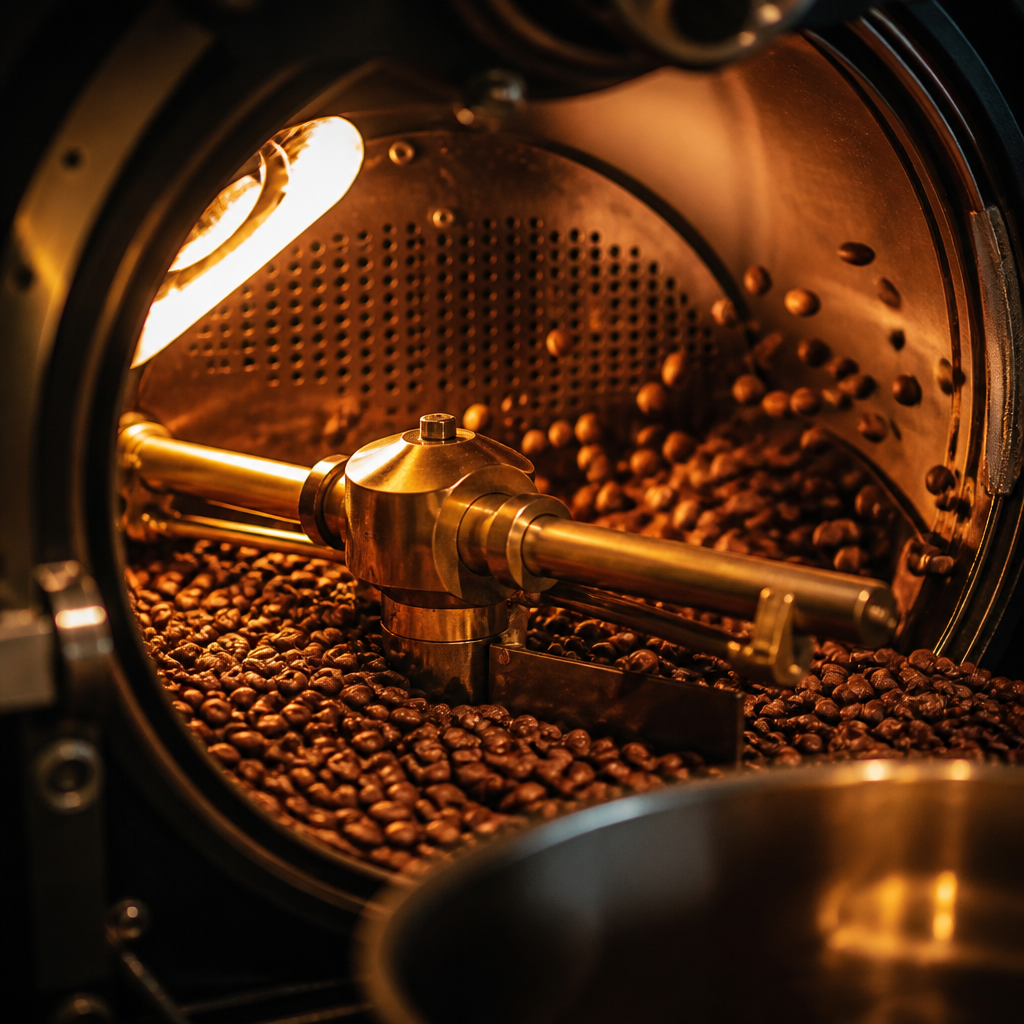
The term gets used loosely in marketing, so precision matters. Small-batch coffee roasting refers to roasting coffee in limited quantities, rather than running industrial-scale production. In practice, artisan roasters work with drums that typically hold between 5 and 30 kilograms of green coffee per cycle. Large commercial operations run machines that can process hundreds of kilograms in a single pass.
That volume difference is not just logistical. It is the root cause of almost every quality distinction between artisan and mass-market coffee. When a drum is smaller, heat transfers more evenly and consistently across every bean in the batch. The roaster can monitor colour, smell, and sound in real time, making adjustments that would be impossible to implement meaningfully at industrial scale.
Farrer's has roasted this way from Kendal since 1819, making it the UK's oldest coffee roaster by a considerable margin. The original shop on Stricklandgate was not just a retail point. It was a roastery where customers could see the process, smell the roast, and trust that what they were buying was genuinely fresh. That transparency remains the operating principle today.
Quick Takeaways
| Key Insight | Explanation |
|---|---|
| Drum size determines flavour quality | Smaller drums allow even heat distribution and real-time adjustment. Industrial drums holding hundreds of kilograms cannot offer the same roaster control. |
| The Maillard reaction is everything | This chemical process between amino acids and sugars drives flavour development. Rush it or overextend it, and the cup suffers. Small-batch roasting gives the roaster control over its timing. |
| Freshness has a precise window | For most roast types, the optimal brewing window falls between roughly one and three weeks after roasting. Coffee roasted three months ago in a warehouse cannot compete. |
| A roast profile is a fingerprint | Two coffees at the same roast level can taste entirely different depending on how they were developed. Temperature curves, development time after first crack, and drop timing all matter. |
| Single-origin coffees expose roasting quality | Blends can mask roasting inconsistencies. A single-origin roast has nowhere to hide. If the florals are vivid and the finish is clean, the roasting was done properly. |
| Your equipment is secondary to your beans | The best brewing setup in the world cannot rescue coffee that was poorly roasted or stale. Quality is built at the roastery, not at the kitchen worktop. |
| Heritage is not marketing: it is accumulated skill | Over 200 years of roasting means understanding how different origins and harvest conditions behave in the drum. That experience is not transferable to a brand launched last year. |
The Chemistry Behind the Craft
Understanding why small-batch roasting produces better flavour requires a short look at the chemistry of what actually happens inside the drum. Green coffee beans contain hundreds of flavour precursors, compounds that only become recognisable flavours once they are exposed to the right amount of heat for the right amount of time.
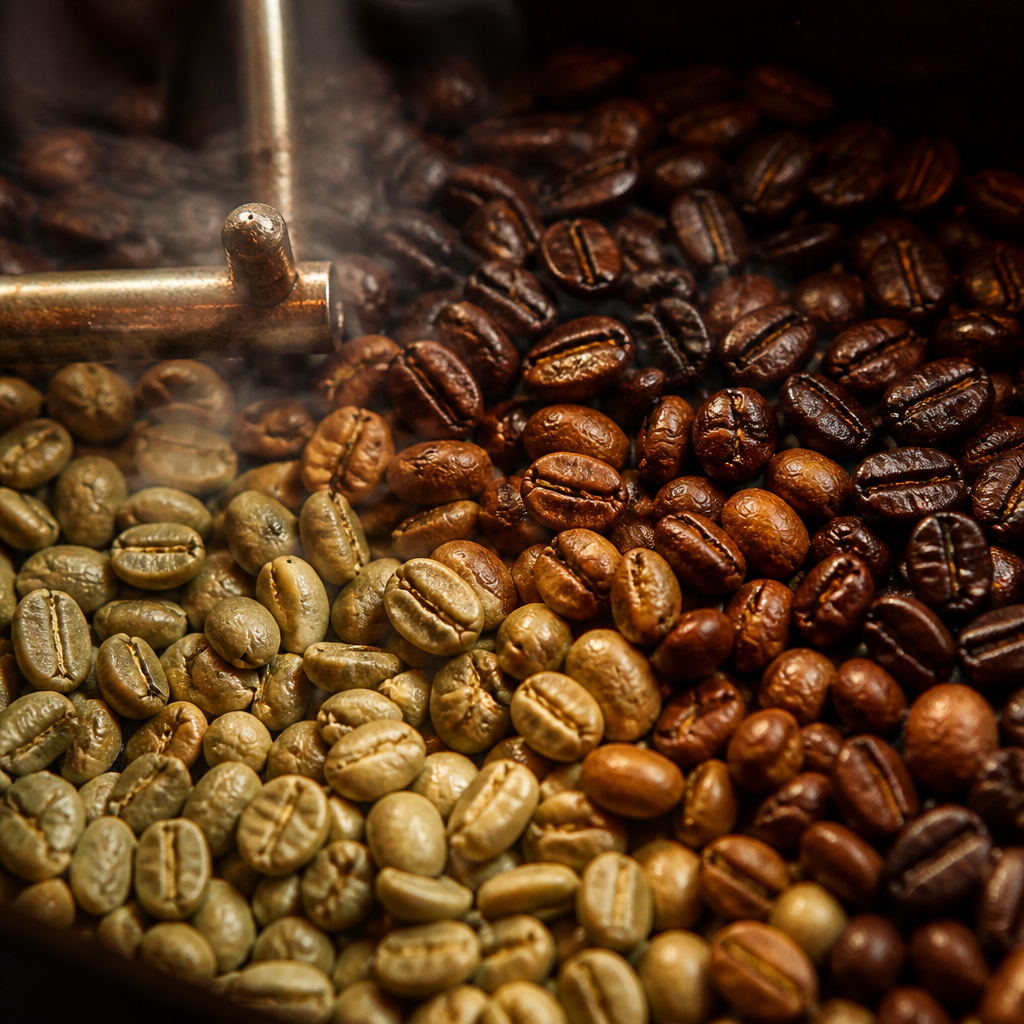
The process that matters most is the Maillard reaction: the chemical interaction between amino acids and sugars that produces the browning of the bean and the development of complex flavour compounds. The Maillard reaction is not a single event. It unfolds in stages across a temperature range, and what happens at each stage directly shapes the final cup. Push through too fast and you develop harsh, underdeveloped notes. Linger too long past the optimal window and the flavours become flat or burnt.
A roast profile is the full temperature and timing curve used to navigate this process, including how quickly the drum is charged, when the Maillard reaction begins, how long development time lasts after first crack, and when the batch is dropped. Two coffees can be at the same roast level but have been developed with entirely different profiles, and they will taste different in the cup.
The quality in the cup is built at the roastery, not at the kitchen worktop. The best brewing equipment in the world cannot rescue coffee that was roasted three months ago in a 500 kg drum and left to sit in a warehouse.
At small-batch scale, a skilled roaster can respond to the specific behaviour of each batch in real time. At industrial scale, the profile is set and the machine runs. There is no meaningful mid-roast intervention when you are processing hundreds of kilograms at once. The roaster's judgment becomes the difference, and that judgment can only be applied when the batch is small enough to actually observe.
Small-Batch vs Commercial Roasting: A Direct Comparison
The differences between small-batch and commercial roasting are not matters of degree. They are structural. The approach, the equipment, the roaster's role, and the result in the cup are fundamentally different. Here is a direct comparison across the three approaches most UK coffee buyers will encounter.
| Roasting Approach | Batch Size and Control | Typical Outcome for the Buyer |
|---|---|---|
| Small-batch artisan roasting (e.g. Farrer's of Kendal) | 5 to 30 kg per cycle. Roaster monitors colour, aroma, and sound in real time. Roast profile adjusted per origin and harvest. | Freshly roasted, hand-packed coffee with vivid aromatics, developed flavour complexity, and a clear flavour fingerprint tied to origin. |
| Specialty-scale roasting (smaller independent roasters, up to around 70 kg) | More automation at higher capacity. Some real-time control, but less granular than small-batch. Consistency is prioritised. | Good quality and reasonably fresh, though flavour profiles are sometimes more standardised than truly bespoke small-batch roasting allows. |
| Commercial and industrial roasting (large-scale brands) | Hundreds of kilograms per cycle. Fully automated. Roast profiles are fixed, not adjusted per batch. Speed and throughput are the priority. | Consistent but ceiling-limited flavour. Coffee is often warehoused for extended periods before reaching the buyer. Freshness cannot be guaranteed. |
This comparison is not an argument that commercial coffee is undrinkable. It is an argument that the ceiling for flavour quality is structurally lower when roasting at scale. If you are spending money on good coffee, the roasting process is where that investment either pays off or gets squandered.
Pro tip: When evaluating any roaster, look for a roast date on the bag, not just a best-before date. A best-before date tells you when the coffee expires. A roast date tells you when it was at its best. Any roaster who prints only a best-before date is not making freshness a priority.
Freshness and the Degassing Window
Freshly roasted coffee is not the same thing as coffee roasted this morning. This is a common misunderstanding that leads to disappointment. Immediately after roasting, beans contain a high concentration of carbon dioxide (CO2) that was produced during the roasting process. If you brew too soon, that excess CO2 disrupts the contact between water and grounds, resulting in uneven extraction and muted flavour.
Degassing is the gradual release of that CO2 through the porous structure of the bean. As degassing progresses, the coffee becomes more soluble and easier to extract evenly, allowing sweetness and complexity to develop fully in the cup. For most coffees, the optimal brewing window falls roughly between one and three weeks after roasting. Espresso, which uses pressure to extract, is more sensitive to excess CO2 than drip or pour-over methods, and many roasters recommend a rest of 10 to 14 days before pulling espresso shots.
The practical implication for how you buy coffee is significant. A bag of coffee roasted six weeks ago has already passed through its best window. A bag roasted three months ago in an industrial facility, warehoused, and then shipped to a retailer is operating well outside that window regardless of how well it was stored. Small-batch roasters who dispatch on a short cycle, such as Farrer's with next-day dispatch on qualifying orders, are structurally better positioned to get coffee to you within that optimal window.
Pro tip: Storage method matters as much as roast date. One-way valve bags allow CO2 to escape without letting oxygen in. If you transfer beans to a jar, leave the lid slightly open for the first day or two to let excess CO2 escape before sealing fully. Oxygen is the enemy of fresh coffee, and an airtight seal should come after initial degassing, not before.
What the Artisan Coffee Roaster Actually Does Differently
The word "artisan" is overused to the point of near-meaninglessness in food and drink marketing. When applied to a genuine small-batch artisan coffee roaster in the UK, it has a specific meaning: the roaster is present, engaged, and making real-time decisions that alter the outcome of every batch.
Reading the Batch as It Develops
A skilled roaster at small-batch scale is listening for first crack (the audible pop of steam escaping the bean as cell walls break), watching colour change across the drum, and tracking the aromatic shift from grassy and raw to caramelised and developed. These signals vary by origin, bean density, moisture content, and the specific harvest characteristics of that lot. None of them can be standardised away with industrial automation.
In practice, this means that a skilled roaster will adapt the profile for a high-altitude Ethiopian coffee differently from a lower-grown Brazilian natural. The Ethiopian may require a longer development time to preserve its floral and fruit-forward notes. The Brazilian may need different temperature management to bring out chocolate and nut without tipping into bitterness. The industrial approach applies a fixed profile to both. The small-batch roaster treats them as the different products they actually are.
Sourcing to Match the Roasting
Small-batch roasters tend to work with smaller quantities of green coffee from more varied and specific origins. This creates a direct relationship between sourcing and roasting. When you are roasting in batches of 5 to 30 kilograms, you can afford to work with a single-farm lot of 200 kg and give it the specific roast profile that makes it exceptional. A commercial roaster ordering tonnes of commodity-grade green coffee from a blended origin has no reason to develop a bespoke profile per lot, and often no way to do so at that scale.
Farrer's approach, sourcing from specific origins and hand-packing the result, reflects this logic. The hand-packing step also matters more than it sounds. It keeps human attention on the product right through to the final stage, rather than running batches through automated packing lines where defects go unnoticed.
How to Get the Most From Freshly Roasted Coffee
Ordering from a genuine small-batch roaster is only part of the equation. What you do with the coffee once it arrives determines whether you actually experience the quality that was built into it at the roastery.
Choosing Between Single-Origin and Blends
If you want to taste what small-batch roasting actually does, start with a single-origin coffee rather than a blend. A single-origin has nowhere for an imprecise roast to hide. If the floral notes are vivid, if the brightness is clean, and if the finish develops across the palate rather than landing flat, the roasting was done well. Blends are specifically designed to balance multiple flavour profiles against each other, which can mask inconsistencies in any individual component. They are not lesser products, but they are a harder place to evaluate roasting quality.
Grind Fresh, Grind Consistently
Freshly roasted coffee loses its volatile aromatics rapidly once ground. Pre-ground coffee roasted even two weeks ago will taste significantly less vibrant than the same coffee ground moments before brewing. If you are buying freshly roasted coffee from a quality artisan roaster and grinding it the night before, you are undercutting a substantial part of the value you paid for. A burr grinder, even a modest entry-level model, makes a meaningful difference here.
Match Brew Method to Roast Level
Light and medium roasts, which are more common from specialty small-batch roasters, perform best with brew methods that allow the water longer contact with the grounds: pour-over, Aeropress, or cafetiere. These methods let the subtle acidity and fruit-forward complexity develop. Darker roasts handle espresso preparation well, where the pressure extraction suits the lower acidity and heavier body that darker development produces.
Pro tip: If you are a cafe or hospitality buyer sourcing from a small-batch artisan coffee roaster in the UK, ask your roaster what rest period they recommend for your specific grind and brew method before serving. Roasters who know their product will give you a specific answer, not a vague one.
Frequently Asked Questions
What exactly counts as small-batch coffee roasting?
Small-batch coffee roasting generally refers to roasting in limited quantities per cycle rather than at industrial scale. Artisan roasters typically work with drums holding between 5 and 30 kilograms of green coffee per batch. Industrial operations can process hundreds of kilograms in a single pass. The distinction matters because smaller batches allow more even heat transfer and real-time roaster intervention, both of which directly affect flavour quality.
Does small-batch roasting actually taste better, or is it just marketing?
The flavour difference is structural, not marketing. Smaller batches allow more even heat distribution and give the roaster the ability to adjust temperature and timing mid-roast in response to how the specific beans are developing. Industrial roasting applies a fixed profile and cannot meaningfully respond to batch-by-batch variation. The result is a higher flavour ceiling for small-batch coffee, particularly in terms of aroma, complexity, and brightness. Whether you notice the difference depends on how you brew and what you compare it against.
How fresh should freshly roasted coffee actually be?
The optimal brewing window for most freshly roasted coffees falls roughly between one and three weeks after roasting. Immediately after roasting, beans contain high levels of CO2 that can interfere with extraction. Once that CO2 has had time to dissipate through the natural degassing process, the coffee extracts more evenly and the flavour complexity becomes fully accessible. Espresso preparation tends to benefit from a slightly longer rest period before brewing than filter methods.
What is the difference between a roast profile and a roast level?
Roast level refers to how dark or light the bean is roasted: light, medium, or dark. Roast profile refers to the full temperature and timing curve used to get there, including the rate of temperature rise, when the Maillard reaction begins, how long development time lasts after first crack, and when the batch is dropped. Two coffees can be the same roast level but taste very different because they were developed with different profiles. The profile is where the roaster's skill is most visible.
Is small-batch roasting available from UK roasters, and how do I find a genuine one?
Yes, small-batch artisan coffee roasting is well established in the UK. Farrer's of Kendal is the UK's oldest example, roasting from the Lake District since 1819. When assessing any UK roaster's credibility, look for a visible roast date on the bag, transparency about their drum size and process, and a specific origin or blend description rather than vague flavour language. A roaster who cannot tell you when and how a coffee was roasted is not prioritising the qualities that make small-batch roasting worth paying for.
Why does the roast date matter more than the best-before date?
A best-before date tells you the legal shelf limit of the product. A roast date tells you when the coffee was at peak quality and lets you calculate whether you are still within the optimal brewing window. Coffee roasted three months ago and sold with a 12-month best-before date is technically within shelf life but well past its flavour peak. Genuine artisan roasters print the roast date because it reflects confidence in their freshness and turnover, not just their packaging.
What is your experience with small-batch roasted coffee? Have you noticed a difference compared to supermarket or commercial brands? Share your thoughts in the comments below.
References
- Farrer's Coffee: Why Small-Batch Roasting Matters for Flavour and Freshness
- Small Batch Roasting UK: Advantages in Single-Origin Coffee Production
- Methodical Coffee: Freshly Roasted Coffee Explained, Including Degassing and Flavour Rest
- ICT Coffee: What Happens During the Resting Period After Roasting
- MTPak Coffee: The Maillard Reaction in Coffee Roasting Explained


