

Choosing between two espresso blends from the same roaster sounds like it should be simple. It rarely is. New England Espresso and the Classic Espresso Blend are both dark, chocolatey, and built for espresso machines, yet they pull in meaningfully different directions once you taste them side by side. One is 100% Arabica, clean and caramel-forward; the other is a darker, denser coffee-shop workhorse built to punch through milk. If you have been scrolling the Farrer's product pages wondering which to order, this comparison will give you a definitive answer, not a shrug and a "it depends."
Table of Contents
- Quick Takeaways
- What Is New England Espresso?
- What Is the Classic Espresso Blend?
- Flavour Differences That Actually Matter
- Which Brew Methods Suit Each Blend
- Head-to-Head Comparison
- Who Should Buy Which
- Frequently Asked Questions
- References
Quick Takeaways
| Key Insight | Explanation |
|---|---|
| New England Espresso is 100% Arabica | This gives it a softer, more refined flavour profile with velvety chocolate and caramel notes rather than a bold, bitter punch. |
| Classic Espresso Blend contains Robusta | The Robusta component delivers a thicker crema, a denser body, and the kind of staying power that cuts through steamed milk in a latte or flat white. |
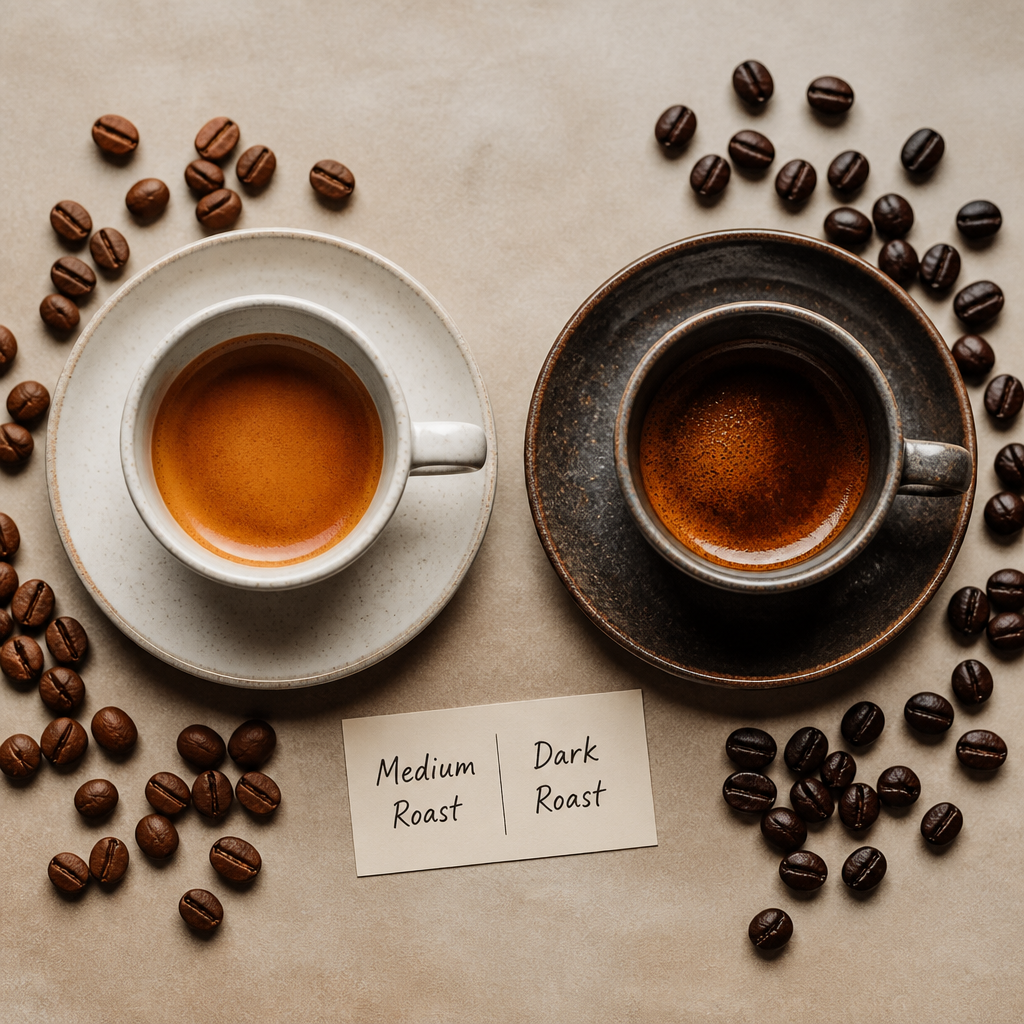
| Both blends are dark roasted | New England Espresso is classed as a dark roast; Classic Espresso Blend sits at a medium-to-high roast, but both are firmly in espresso territory. |
| New England suits black espresso drinkers | Its caramel finish and roasted nut notes are most expressive when drunk straight or as a short black, where nothing masks the nuance. |
| Classic Espresso Blend is the milk-drink choice | It is specifically described as ideal for cappuccinos, lattes, and flat whites, designed to deliver a coffee-shop experience at home or in a cafe. |
| New England works in a moka pot | Farrer's recommend stovetop and moka pot as primary brew methods alongside espresso, making it a versatile dark-roast option. |
| Both are roasted in Kendal, Lake District | Farrer's hand-packs and dispatches fresh from the same roastery that has been operating for over 200 years, so freshness is not a differentiator between the two. |
What Is New England Espresso?
The New England Espresso is described by Farrer's as "a classic take on the contemporary espresso." That phrase does a lot of work. It signals that this is not a trend-chasing light roast with fruit-forward notes, nor is it a blunt, ultra-dark crowd-pleaser. It sits in a considered middle ground: a 100% Arabica dark roast that delivers velvety chocolate flavour with a lingering caramel finish and clear roasted nut character.
The all-Arabica composition is what defines it most. Arabica beans, roasted to this level, produce a crema that is fine and aromatic rather than thick and aggressive. The cup is rich but never coarse. There is a smoothness that dark-roast Robusta blends rarely achieve. If you drink espresso straight, this smoothness is the whole point.
Farrer's recommend it for espresso machines and stovetop moka pots, which reflects its versatility at the darker end of the Arabica spectrum. It is available in both 250g and 1kg formats and can be ordered whole bean or pre-ground to your preferred method.
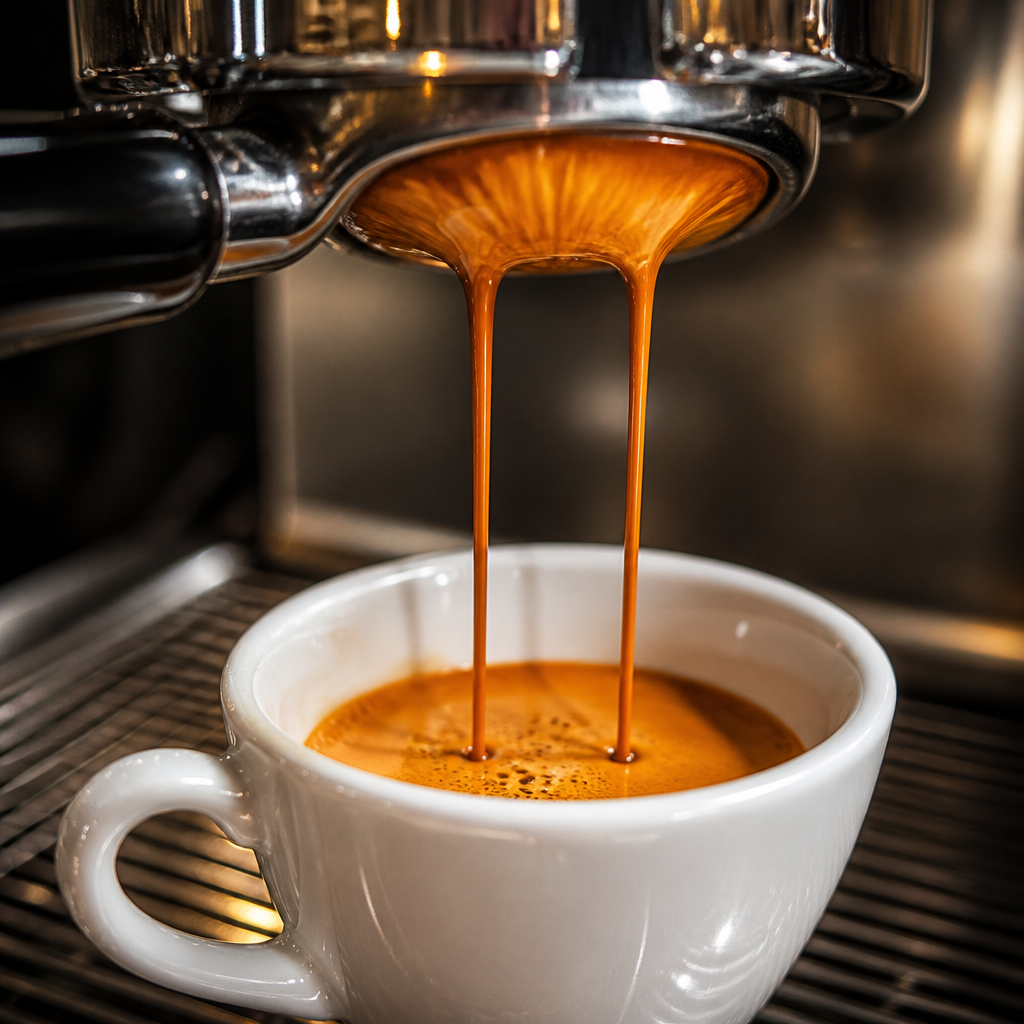
Pro tip: If you are pulling New England Espresso on a home machine, aim for a 25 to 30 second extraction. Because it is 100% Arabica, it is slightly more sensitive to grind inconsistency than a Robusta-containing blend. A burr grinder set finer than you might expect gives you the best result.
What Is the Classic Espresso Blend?
The Classic Espresso Blend is Farrer's answer to the coffee-shop cup. It is positioned as a "luxuriously dark, medium-to-high roast" with rich dark and milk chocolate flavours and a soft acidity. Where New England Espresso is refined and nuanced, the Classic Espresso Blend is built for performance, specifically the kind of performance you need when milk is part of the equation.
The Robusta component in this blend is the functional difference. Robusta adds crema density, a bolder body, and a caffeine level above what pure Arabica delivers. It also stabilises extraction, meaning the blend is more forgiving if your grind is slightly off or your tamping pressure varies. For cafe operators using Farrer's coffee in a busy service environment, this reliability matters enormously.
Farrer's explicitly call out cappuccinos, lattes, and flat whites as the intended drinks. That is not a casual recommendation. It reflects the flavour engineering behind the blend: dark chocolate notes that remain visible even when 150ml of steamed milk dilutes the shot, combined with a soft acidity that prevents the drink from tasting flat or one-dimensional.
A well-roasted Robusta-containing espresso blend, used correctly in milk-based drinks, does not taste bitter. It tastes full. The Robusta is not the problem; under-extraction is.
Flavour Differences That Actually Matter
Both blends share a chocolatey core, which makes the comparison feel closer on paper than it is in the cup. In practice, the texture and finish are where they diverge.
Chocolate Character: Velvety vs. Deep
New England Espresso gives you a velvety, soft chocolate that feels round and smooth as it coats the palate. The caramel finish is genuine and lingers without bitterness. Classic Espresso Blend delivers a deeper dark chocolate note, denser on the mid-palate, with a richness that comes from both the roast level and the Robusta content. Neither is better in absolute terms; they are calibrated for different moments.
Acidity and Aftertaste
New England Espresso has the roasted nut quality that sits alongside its caramel finish. There is a clarity to the aftertaste that Arabica delivers when roasted carefully at this level. Classic Espresso Blend has a soft acidity by design, which keeps the cup from tasting sharp even when pushed hard on a commercial machine. The aftertaste on the Classic is richer and longer, partly because of the Robusta contribution to body.
Crema Quality
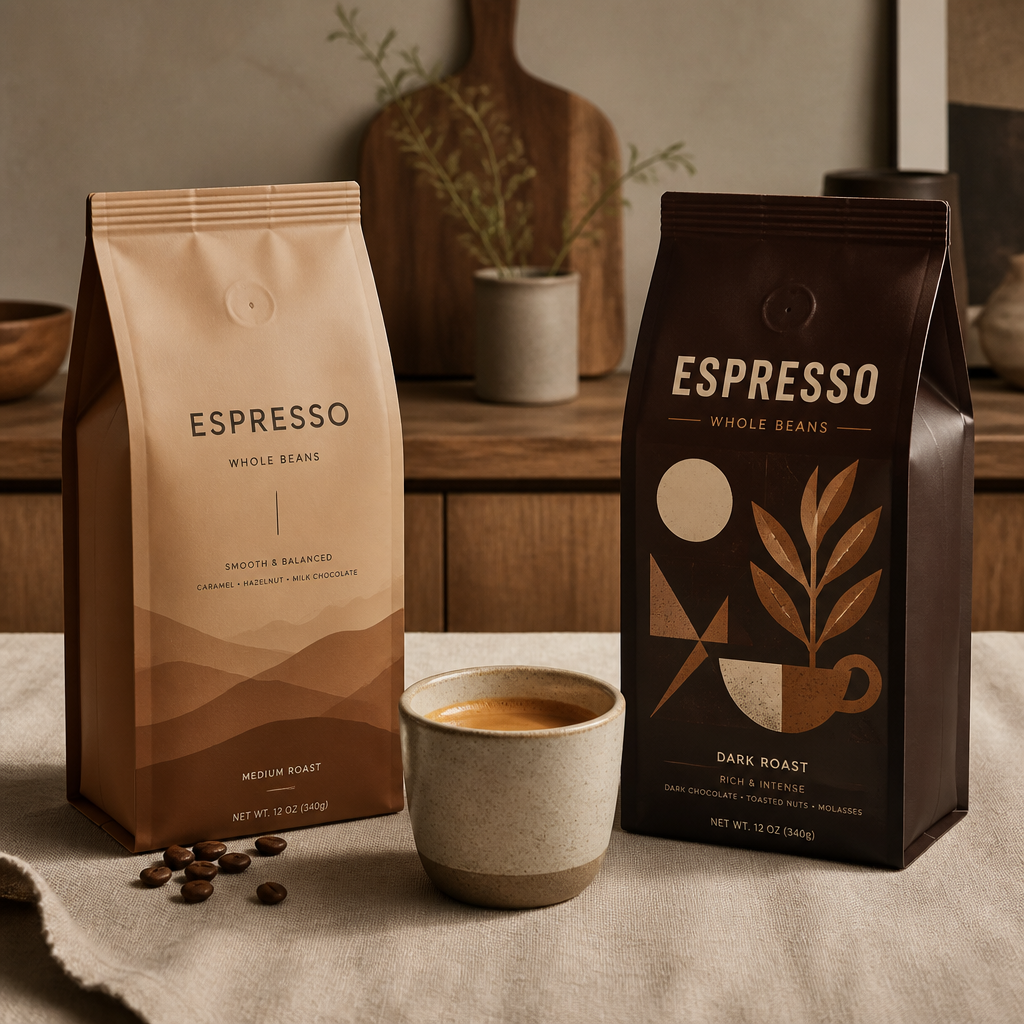
If you care about crema, the Classic Espresso Blend will give you more of it, and it will be denser. The Robusta in the blend produces a thick, persistent crema that holds its structure under milk pours. New England Espresso produces a finer crema that is more aromatic. For latte art, Classic wins. For a beautiful straight shot in a glass demitasse, New England holds its own.
Which Brew Methods Suit Each Blend
Farrer's have made their recommendations clear for New England Espresso: espresso machine and stovetop moka pot are the primary methods. The Classic Espresso Blend is set up for espresso machines in a cafe or home context, with a medium-fine grind specified for stove top use too. But there are practical choices to make beyond the official guidance.
New England Espresso Brew Guidance
The all-Arabica composition means New England Espresso responds well to a slightly longer pre-infusion if your machine supports it. Pre-infusion gently saturates the puck before full pressure builds, which helps even extraction and avoids channelling, a common problem when fine-ground, well-roasted Arabica is tamped too tightly. In a moka pot, use a medium-fine grind and avoid letting the pot boil aggressively, the softer the extraction, the better the caramel note comes through.
Classic Espresso Blend Brew Guidance
The Classic Espresso Blend is more forgiving across a range of grind sizes and machines, which is exactly what Farrer's trade customers need. Whether you are running a Synesso in a specialty cafe or a prosumer machine at home, this blend dials in quickly. For milk-based drinks, pull a slightly shorter shot ratio than you might with a lighter roast: the denser body of this blend means you do not need as much liquid espresso to anchor the flavour through the milk.
Pro tip: When using the Classic Espresso Blend for flat whites, pull your double shot to around a 1:2 brew ratio rather than stretching it. The Robusta content means the shot is already dense, and over-extracting pulls out bitterness that will push through even textured milk.
Head-to-Head Comparison
| Feature | New England Espresso | Classic Espresso Blend |
|---|---|---|
| Bean Composition | 100% Arabica | Arabica and Robusta blend |
| Roast Level | Dark | Medium-to-high (luxuriously dark) |
| Primary Flavour Notes | Velvety chocolate, caramel, roasted nuts | Dark chocolate, milk chocolate, soft acidity |
| Crema | Fine, aromatic | Thick, dense, persistent |
| Best Drink Style | Straight espresso, moka pot, short black | Cappuccino, latte, flat white |
| Grind Forgiveness | Moderate, benefits from precision | High, more tolerant of variance |
| Ideal For | Home espresso enthusiasts, moka pot drinkers | Cafes, hospitality, milk-drink lovers at home |
| Available Sizes | 250g, 1kg | 250g and trade formats |
Who Should Buy Which
The honest answer is this: if you drink espresso straight, as a short black or lungo with nothing added, buy the New England Espresso. The 100% Arabica composition and the caramel-forward finish reward attention. This is the blend for people who want to taste what Farrer's roasting skill actually does to a bean, without milk softening the picture.
If you make milk-based drinks at home, run a small cafe, or simply want an espresso blend that consistently delivers that coffee-shop flavour regardless of whether you are pulling shots on a demanding commercial machine or a domestic one-grouper, the Classic Espresso Blend is the correct choice. Its Robusta backbone gives it the body and crema density to carry through any amount of milk. It is designed for exactly that purpose.
There is also a third scenario: buy both. New England Espresso for your morning straight shots, Classic Espresso Blend for weekend cappuccinos. Farrer's next-day dispatch on orders over £35 and 1kg formats make this genuinely practical rather than extravagant.
Frequently Asked Questions
Is New England Espresso suitable for a moka pot?
Yes. Farrer's specifically recommend stovetop and moka pot as brew methods alongside espresso machines for the New England Espresso. Use a medium-fine grind, fill the basket without tamping, and heat gently to preserve the caramel and chocolate notes rather than scorching them.
Does the Classic Espresso Blend taste bitter because of the Robusta?
Not if it is brewed correctly. Robusta adds body and crema density, and when blended and roasted well, as Farrer's do with their 200-year heritage in Kendal, it contributes richness rather than harshness. Bitterness in espresso is nearly always a sign of over-extraction or too fine a grind, not of Robusta itself.
Which blend is better for a home espresso machine beginner?
The Classic Espresso Blend is more forgiving for beginners. Its Robusta content makes it less sensitive to minor grind and tamping inconsistencies, so you are more likely to pull a decent shot while you are still learning your machine. New England Espresso rewards precision and is better suited once you have your extraction dialled in.
Can I use New England Espresso for lattes and cappuccinos?
You can, but it is not what the blend is optimised for. The velvety, caramel character of New England Espresso is most expressive in a straight or short drink. In a large milk-based drink, some of that nuance gets absorbed by the milk. If milk drinks are your primary format, the Classic Espresso Blend will give you a more satisfying result.
How does Farrer's New England Espresso compare to supermarket espresso blends?
The primary difference is freshness and roast quality. Farrer's roast in small batches in Kendal and dispatch with next-day delivery on qualifying orders, meaning you receive coffee that is genuinely fresh. Supermarket espresso blends are typically roasted months before they reach a shelf. The flavour difference, particularly in the caramel finish and crema quality of New England Espresso, is real and immediately noticeable.
Which Farrer's espresso blend is used by trade and hospitality customers?
The Classic Espresso Blend is the natural choice for cafes, restaurants, and hospitality businesses. Its consistent crema production, forgiving extraction behaviour, and flavour profile that cuts through milk make it well suited to high-volume environments. Farrer's supply trade customers directly, and the blend is available in larger formats suited to professional use.
Are both blends available as whole bean and pre-ground?
Yes. Both New England Espresso and the Classic Espresso Blend are available in multiple grind options including whole bean, cafetiere, filter, stovetop, aeropress, and espresso grind. Whole bean is always recommended if you have a grinder, as it preserves freshness significantly longer after the roast date.
If you have tried either of these blends at home or in your cafe, we would genuinely like to know which you preferred and why.
References
- Farrer's New England Espresso Coffee product page: flavour notes, roast profile, and brew recommendations
- Farrer's Classic Espresso Blend Coffee product page: roast description, tasting notes, and milk-drink suitability
- Farrer's guide to Arabica versus Robusta coffee beans and how Robusta performs in espresso blends
- Farrer's complete UK guide to espresso roast coffee: Arabica, Robusta, blending, and extraction
- Farrer's coffee grind guide: matching grind size to brew method for best extraction results


