

Most coffee drinkers eventually hit the same wall: you are standing in front of a range of beautifully roasted coffees and you have no idea whether to reach for a house blend or a single origin. Both promise an exceptional cup, but they deliver it in completely different ways. If you have been drinking house blend coffee UK roasters produce without really knowing what sets it apart from a single origin, this guide will settle the question once and for all. Drawing on Farrer's own range, roasted in small batches at their Kendal roastery since 1819, here is what you actually need to know to choose well.
Table of Contents
- Key Differences at a Glance: Quick Takeaways
- What Is a House Blend Coffee?
- What Is Single Origin Coffee?
- Farrer's House Blends Explained
- Farrer's Single Origins Explained
- Which Suits Your Brewing Method?
- Blend vs. Single Origin for Trade Buyers
- Side-by-Side Comparison
- Frequently Asked Questions
- References
Key Differences at a Glance: Quick Takeaways
| Key Insight | Explanation |
|---|---|
| Blends deliver consistency | A well-crafted house blend tastes the same cup after cup, month after month, because the roaster adjusts ratios to compensate for seasonal crop variation. |
| Single origins tell a story | Single origin coffee reflects the soil, altitude, and processing method of one specific place. Farrer's Colombia, for example, delivers nuts, caramel, and a bright citrus note unique to that origin. |
| Espresso favours blends | Espresso demands balanced acidity, sweetness, body, and crema simultaneously. A house blend like Farrer's No. 1 Blend is engineered to hit all four markers under pressure. |
| Filter and pour-over favour single origins | Slower brewing methods amplify distinct flavour notes, making single origins shine in a cafetiere, AeroPress, or filter setup. |
| Trade buyers almost always want blends | Cafes and hospitality businesses need a coffee that tastes identical every service. Farrer's blends, roasted in small batches at their Kendal roastery, provide exactly that reliability. |
| Single origins are seasonal | Crop availability varies. A single origin you love today may not be available in three months, or its flavour may shift slightly in the new harvest. Blends are available year-round. |
| Neither is objectively better | Single origin is not superior to a blend. They serve different drinking occasions, palates, and brewing rituals. Choosing well means knowing which occasion you are serving. |
What Is a House Blend Coffee?
A house blend is a coffee made by combining beans from two or more origins, roasted and proportioned to achieve a specific, repeatable flavour profile. The word "house" signals that this is the roaster's signature recipe, the one that best represents their craft and philosophy.
At Farrer's, that craft goes back to 1819. Their blenders do not simply mix whatever is available. They source beans from trusted growers across South and Central America and Asia, then combine them in ratios designed to produce a particular balance of body, aroma, acidity, sweetness, and finish. When the crop from one origin runs slightly softer one season, the blend ratios shift to keep the cup profile stable. The drinker never notices. That is the whole point.
Pro tip: If you find a house blend you love, buy it by the kilogram. You will go through it faster than you expect, and the flavour will be waiting for you exactly as you left it.
What Is Single Origin Coffee?
Single origin coffee comes from one defined location, whether that is a country, a region, or in the most specific cases, a single farm or cooperative. The defining quality is traceability. You know where every bean in the bag was grown, and that place shapes everything about how the coffee tastes.
Because single origin coffees are a direct expression of their terroir, they carry flavour notes that no blend can fully replicate. A coffee from a high-altitude Colombian farm will have a brightness and fruitiness that reflects that specific growing environment. An Ethiopian natural-process coffee will taste unlike anything grown in South America, with berry and floral notes that polarise drinkers in the best possible way.
The trade-off is predictability. Single origins are seasonal. The cup you brew from last year's Colombian harvest will taste subtly different from this year's, because the climate, rainfall, and processing conditions were different. That variability is part of the appeal for enthusiasts, but it is a genuine complication for anyone who needs exact consistency.
Single origin coffee is not necessarily better than a blend, but it represents a different kind of quality: one rooted in place, transparency, and the specific conditions of a single harvest.
Farrer's House Blends Explained
Farrer's produces several distinct blends, each built for a different kind of drinker and occasion. Understanding what each one is engineered to do makes it much easier to pick the right one.
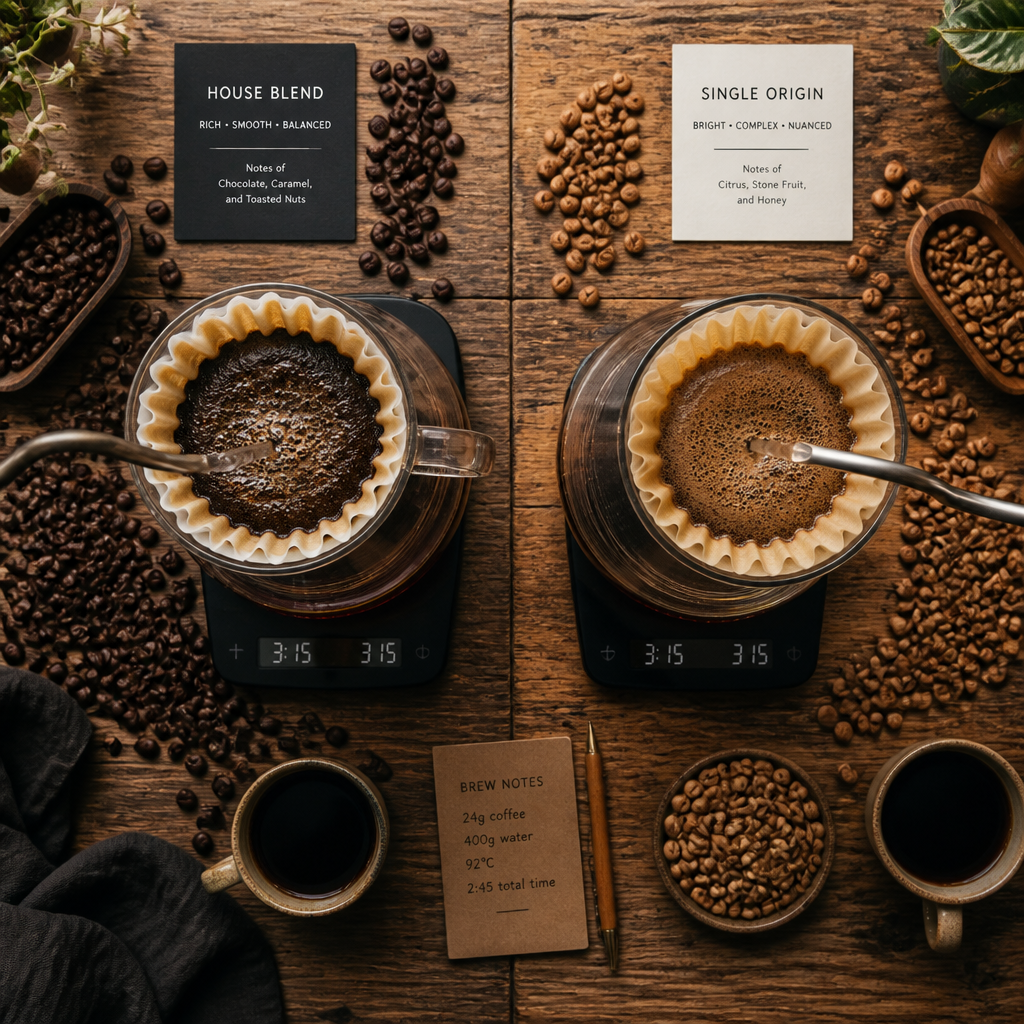
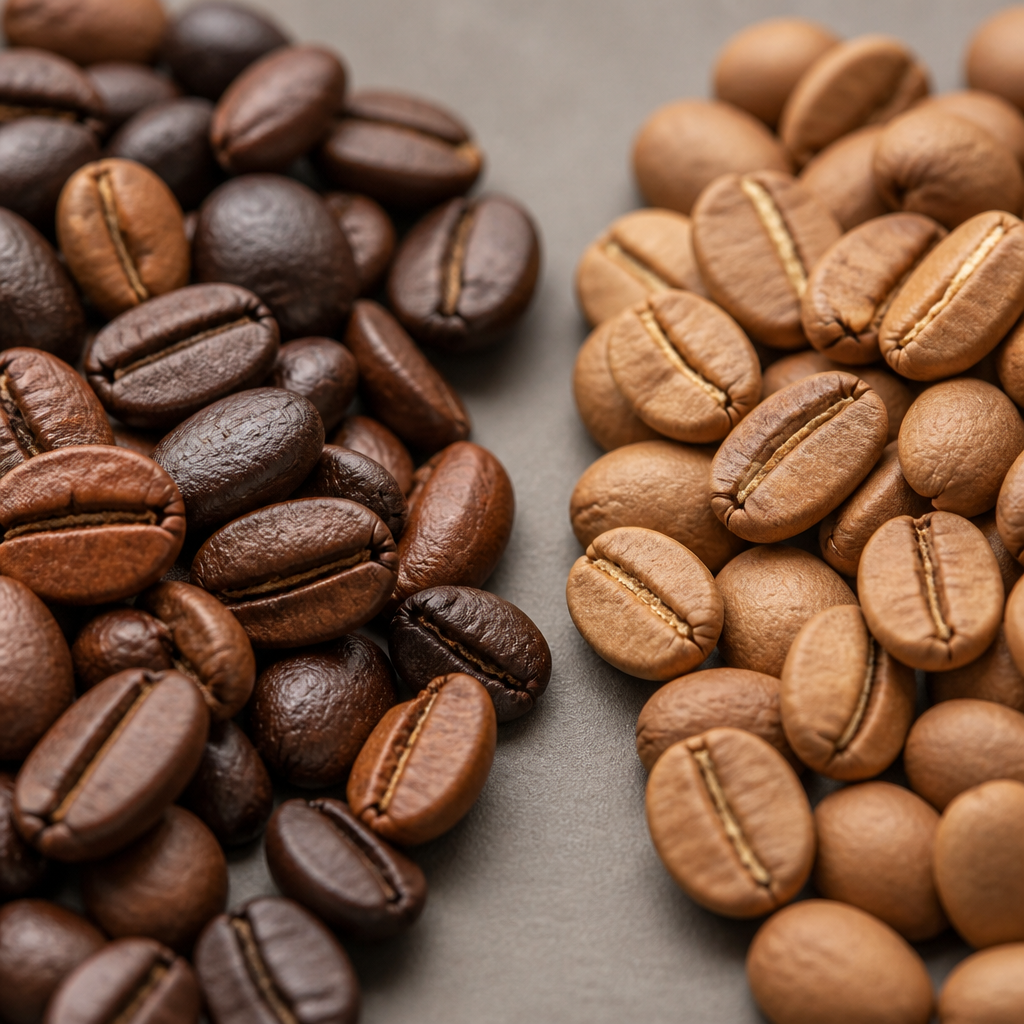
No. 1 Blend: The Everyday Benchmark
The No. 1 Blend is Farrer's signature Arabica coffee. It delivers a well-rounded body with balanced brightness, and its tasting notes run through chocolate, nuts, and a gentle citrus lift. Beans are sourced from South and Central America and Asia, giving it both the smooth, nutty backbone of Latin American coffees and the clean, complex sweetness that Asian-grown beans contribute.
This is the blend to reach for when you want a reliable, satisfying cup every single morning. It works across brewing methods but particularly excels as an espresso or in a cafetiere. If you are new to Farrer's and want a starting point, start here.
1819 Blend: The Complex Occasion Coffee
The 1819 Blend is Farrer's most ambitious blend, a hand-selected combination of five coffees from Brazil, Colombia, Guatemala, India, and Mexico. The flavour profile is genuinely layered: mellow creamy notes from Brazilian Fazenda beans, fruity character from Colombian Granja La Esperanza, and rich spiced undertones from Indian Cherry. Tasting notes include creamy, fruity, spiced, and sweet.
This is a filter or cafetiere coffee that rewards attention. Brew it slowly, give it space, and it returns something more complex than most blends deliver. It is particularly well-suited to anyone transitioning from blends toward single origins, because it introduces complexity without abandoning familiarity.
Classic Espresso Blend and Italian Blend
Farrer's also offers a Classic Espresso Blend and an Italian Blend, both engineered specifically for espresso machines. The Italian Blend skews darker and bolder, suiting drinkers who want an intense, short shot or a milk-based drink where the coffee needs to cut through without bitterness.
Pro tip: For milk-based drinks such as flat whites, lattes, and cappuccinos, always choose a blend over a single origin. Blends are specifically built to hold their flavour and acidity in balance when combined with steamed milk. Most single origins, brewed as espresso, will taste hollow or sour once milk is added.
Farrer's Single Origins Explained
Farrer's single origin range is built around traceable, award-winning coffees that showcase what a specific growing region actually tastes like when roasted with care.
Colombia Coffee: Light Roast, Daytime Drinking
The Colombia Coffee from Farrer's is a light roast offering balanced brightness with nuts, caramel, creaminess, and a citrus note. It is described as a daytime cup, which captures its character well. This is a coffee for mid-morning brewing when you want something lively and clean without the heavier body of a dark roast blend.
In a pour-over or AeroPress, the citrus and caramel notes become particularly clear. It also works beautifully as a cold brew, where the lower acidity extraction process mellows the citrus and brings the nutty sweetness forward.
Colombia Espresso: Single Origin with Espresso Intent
Not all single origins are for filter only. Farrer's Colombia Espresso is a single origin roasted specifically for espresso, delivering chocolatey and nutty notes with a citrus lift. This is the choice for specialty coffee drinkers who want full traceability even in their espresso shots, and who enjoy a cleaner, brighter pull than a traditional house blend provides.
Ethiopian Coffees: The Fruit-Forward Option
Farrer's Ethiopian offerings represent the furthest point from a classic house blend. Ethiopian coffees are known for their fruit-forward and floral character, a function of the heirloom varieties grown at altitude in the region. Where a house blend offers predictable comfort, an Ethiopian single origin from Farrer's challenges the palate in the most rewarding way.
If you have only ever drunk blends, brewing an Ethiopian coffee for the first time can feel like a revelation. It does not taste the way most people expect coffee to taste, and that is precisely why serious coffee drinkers seek it out.
Which Suits Your Brewing Method?
Your brewing equipment is one of the clearest signals for which type of coffee to buy. This is not a matter of preference alone. The method you use physically extracts flavour differently, and some roasts and origins perform better under specific conditions.
Espresso Machines
Espresso machines brew under pressure, concentrating every characteristic of the coffee. This means any sharpness or imbalance in a single origin becomes amplified. House blends are built to handle this, which is why most cafes worldwide use a blend as their house espresso. For home espresso, Farrer's No. 1 Blend, Classic Espresso Blend, or Colombia Espresso are the safest starting points.
Cafetiere and Filter
Cafetiere and filter methods brew slowly without pressure, which is ideal for extracting the subtle, layered flavour notes in both complex blends and single origins. The 1819 Blend, with its five-country profile, is exceptional here. So is the Colombia light roast, which opens up beautifully in a slow filter brew.
AeroPress and Pour-Over
These methods give you the most control over extraction and reward lighter, brighter coffees. Single origins, particularly Farrer's Colombia and Ethiopian options, are the natural choice. The AeroPress in particular can extract the citrus brightness of a Colombian coffee without any bitterness.
Blend vs. Single Origin for Trade Buyers
For cafes, restaurants, and hospitality businesses, the blend versus single origin question has a clear practical answer. You need consistency, and blends deliver it. Farrer's trade offer is built on exactly this principle: over 200 years of roasting and blending expertise, with small-batch roasting at the Kendal roastery ensuring freshness in every supply.
Farrer's blends are crafted to cut through milk for lattes and cappuccinos, which is a non-negotiable requirement for any cafe menu. A single origin that behaves unpredictably from harvest to harvest cannot anchor a cafe offering. A house blend that holds its profile year-round can.
That said, a growing number of specialty cafes are adding a single origin filter option alongside their house espresso. This gives customers who want to explore a traceable, seasonal option without destabilising the core menu. Farrer's range supports exactly this dual approach, with a selection of classic blends, single origins, and speciality coffees available to trade customers.
Side-by-Side Comparison
| Feature | Farrer's House Blend (e.g. No. 1 Blend) | Farrer's Single Origin (e.g. Colombia Light Roast) |
|---|---|---|
| Flavour consistency | High. Ratios adjusted seasonally to maintain the same profile. | Varies slightly harvest to harvest. Part of the appeal. |
| Traceability | Multi-origin. Sourced from South and Central America and Asia. | Single farm or region. Fully traceable to one origin. |
| Best brewing method | Espresso, cafetiere, milk-based drinks. | Filter, AeroPress, pour-over, cold brew. |
| Flavour character | Balanced. Chocolate, nuts, citrus in the No. 1 Blend. | Distinctive. Citrus and caramel (Colombia) or berry and floral (Ethiopia). |
| Availability | Year-round. | Seasonal. Subject to crop availability. |
| Best for | Everyday drinkers, trade buyers, milk-drink lovers. | Curious enthusiasts, specialty coffee drinkers, filter brewers. |
Frequently Asked Questions
Is house blend coffee lower quality than single origin?
No. A well-crafted house blend requires significant skill and expertise to produce consistently. Farrer's No. 1 Blend, for example, draws on over 200 years of roasting knowledge to balance beans from multiple regions into a cohesive, repeatable flavour profile. Quality is determined by sourcing and craft, not by whether a coffee is blended or not.
Can I use a single origin coffee in my espresso machine?
Yes, but choose carefully. Farrer's Colombia Espresso is a single origin roasted specifically for espresso, with chocolatey, nutty, and citrus notes that hold up well under pressure. A standard light-roast single origin that is not designed for espresso may taste sour or thin when pulled as a shot.
Which Farrer's coffee is best for a cafetiere?
The 1819 Blend is an outstanding cafetiere coffee. Its combination of Brazilian, Colombian, Guatemalan, Indian, and Mexican beans produces a layered profile that benefits from the slow, full-immersion extraction of a cafetiere. The Colombia light roast also works very well for a brighter, fruitier result.
Why do cafes tend to use blends rather than single origins?
Cafes need a coffee that tastes identical across every service, every day, throughout the year. House blends are designed precisely for this. They hold their flavour profile across seasonal crop changes, they perform consistently under espresso pressure, and they work reliably with steamed milk. Single origins, while excellent, introduce more variability than a high-volume cafe environment can easily manage.
How do I know which Farrer's coffee to try first?
Farrer's Welcome Pack is the most practical starting point. It includes their Colombia Espresso single origin, their Colombia light roast single origin, and blends from the core range, giving you a direct comparison across roast styles and origins in one order. From there, you will have a clear sense of whether you lean toward the consistency of a house blend or the character of a single origin.
Does single origin coffee from Farrer's cost more than their blends?
Farrer's coffee, both blends and single origins, is available from around £8.78 for 250g at the time of writing, though prices vary by specific product and weight. Single origins are not always priced higher than blends. The real difference is availability. A blend is stocked year-round, while a single origin depends on the harvest cycle of one specific growing region.
Have you tried both a Farrer's house blend and one of their single origins? We would love to know which direction you ended up going and what made the difference for your palate or your brewing setup.
References
- Blend vs. Single Origin Coffee: Key differences in flavour, consistency, and brewing suitability
- Single Origin vs. Blend Coffee: Everything you need to know about choosing the right roast
- How Single Origin Differs from Blends: A practical coffee guide for home and trade brewing
- Farrer's 1819 Blend Coffee: Product page with tasting notes and blend composition
- Farrer's Trade Coffee Supply: Blends, single origins, and speciality coffees for hospitality businesses


