

Most coffee drinkers who complain about bitter, flat, or watery cups are not buying bad coffee. They are grinding it wrong. The grind size is the single most controllable variable between a mediocre cup and an exceptional one, yet it gets less attention than bean origin or roast level.
This coffee grind guide cuts through the noise and gives you a practical, method-by-method breakdown so every brew you make with Farrer's freshly roasted coffee tastes the way it was meant to taste.
Table of Contents
- Why Grind Size Matters More Than Most Brewers Realise
- Quick Takeaways
- Grind Sizes Explained: From Extra Coarse to Extra Fine
- Coffee Grinding Tips by Brewing Method
- Grinder Types Compared: Blade vs Burr vs Hand Grinder
- Best Coffee Blends UK: Matching Farrer's Range to Your Grind
- Common Grinding Mistakes and How to Fix Them
- Frequently Asked Questions
- References
Why Grind Size Matters More Than Most Brewers Realise
Water extracts soluble compounds from coffee grounds at different rates depending on the surface area exposed. A finer grind creates more surface area, so water pulls out flavour faster. A coarser grind slows that process down. Get the balance wrong and you get under-extraction (sour, thin, weak) or over-extraction (bitter, harsh, astringent).
The extraction yield sweet spot sits between 18% and 22% of the coffee's soluble material, according to the Specialty Coffee Association's brewing control chart. Grind size is the most direct lever for hitting that window for your specific brewing method and water temperature.
In practice, even premium coffee from a roaster with over 200 years of craft behind it will taste disappointing if it is ground at the wrong setting. Farrer's does the roasting work. The grind is your responsibility.
Quick Takeaways
| Key Insight | Explanation |
|---|---|
| Grind size controls extraction speed | Finer grinds extract faster, coarser grinds extract slower. Match the grind to your brew time to avoid sour or bitter results. |
| Espresso demands the finest grind | With a contact time of 25 to 30 seconds, espresso needs a very fine, almost powdery grind to extract properly under high pressure. |
| French press needs coarse grounds | A 4-minute steep with no filter paper means coarse grounds are essential to prevent sediment and over-extraction. |
| Blade grinders are not suitable for quality brewing | They produce inconsistent particle sizes which cause uneven extraction, giving both under and over-extracted flavours in the same cup. |
| Pre-ground coffee loses freshness within 15 minutes | Coffee begins degassing CO2 and losing aromatic compounds immediately after grinding. Grind just before brewing wherever possible. |
| Altitude affects grind consistency | Single origin coffees from high-altitude farms tend to be denser beans that require a slightly finer adjustment than low-altitude beans at the same setting. |
| Water temperature interacts with grind size | Brewing at lower temperatures (e.g. 88C for lighter roasts) may require a slightly finer grind to compensate for slower extraction. |
Grind Sizes Explained: From Extra Coarse to Extra Fine
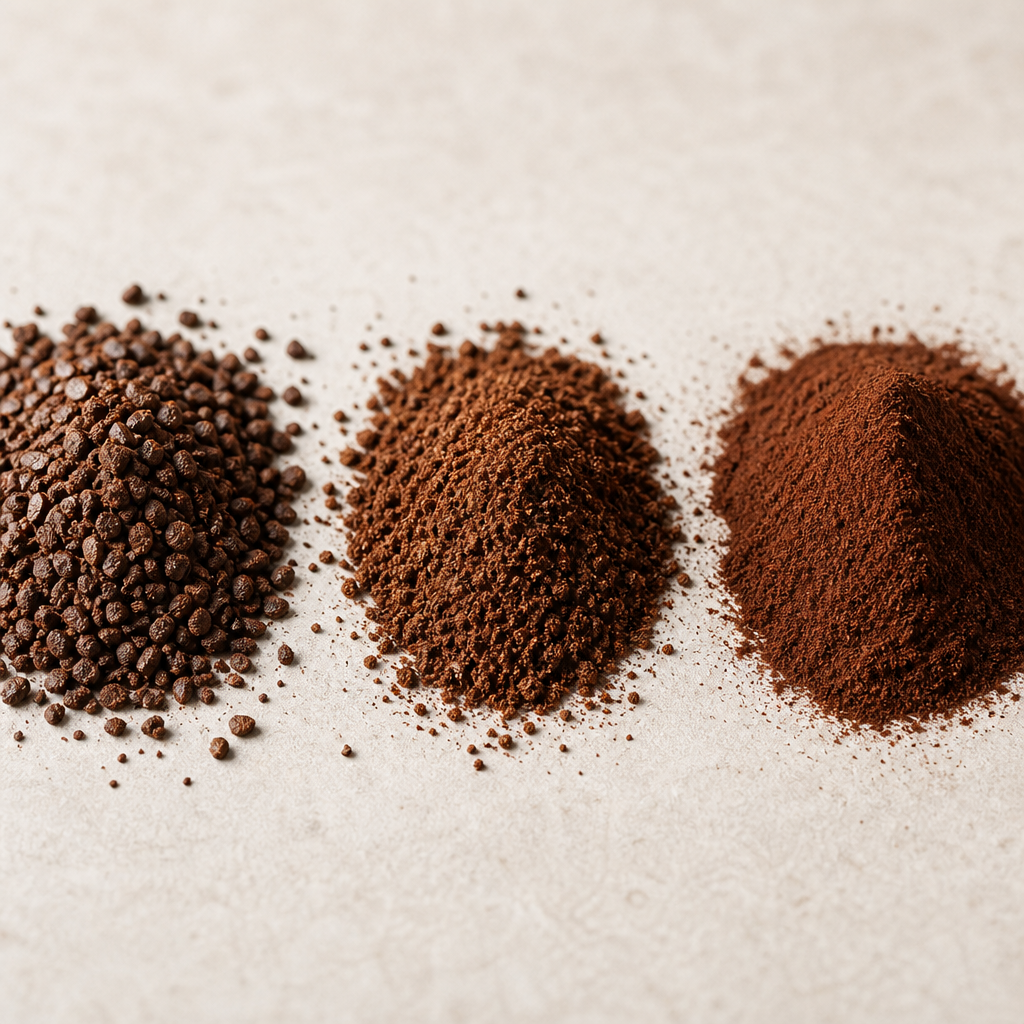
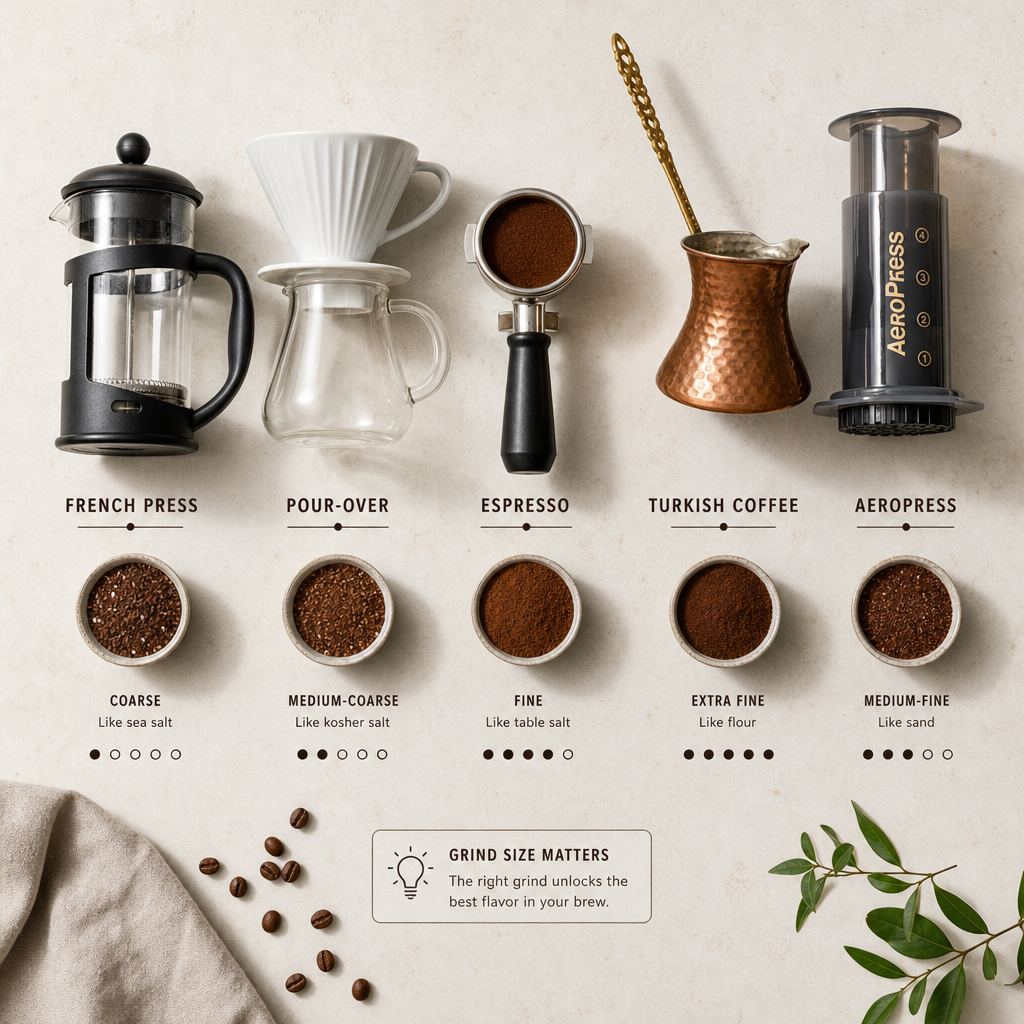
There are five practical grind size categories every home brewer should know. Each corresponds to a specific range of brewing methods and contact times.
Extra Coarse
Visually similar to coarse sea salt. Used almost exclusively for cold brew coffee, where grounds steep in cold water for 12 to 24 hours. The long extraction time compensates for the reduced solubility caused by cold water temperatures.
Coarse
Resembles rough breadcrumbs. This is the correct grind for French press and percolator brewing. With a 4-minute immersion time and no paper filter to catch fine particles, a coarse grind prevents over-extraction and keeps the cup clean.
Medium
The texture of beach sand. This is the most versatile setting and suits drip filter machines, Chemex, and clever dripper brewing. Contact time is typically 3 to 4 minutes.
Medium-Fine
Finer than sand, slightly powdery. This is the correct grind for pour-over methods like V60, where precise pouring controls a brew time of around 2.5 to 3 minutes. A common mistake here is defaulting to medium grind from a drip machine setting and wondering why the V60 tastes watery.
Fine and Extra Fine
Fine grind is used for espresso machines and moka pots. Extra fine approaches the texture of flour and is reserved for Turkish coffee. With espresso, the grind must be dialled in daily because humidity and temperature shifts in your kitchen affect how tightly grounds pack in the portafilter.
Coffee Grinding Tips by Brewing Method
These are not general guidelines. These are specific settings and signs to look for when dialling in each method. The coffee grinding tips below assume you are using a burr grinder with numbered settings.
Espresso Machine
Target a brew time of 25 to 30 seconds for a 36 to 40g yield from an 18g dose. If the shot runs in under 20 seconds, grind finer. If it stalls past 35 seconds, grind coarser. Small adjustments make a large difference at this grind level.
Humidity is a real factor. On a humid day in the Lake District, you may need to grind slightly coarser than your usual setting because moisture causes grounds to clump and pack more tightly.
Moka Pot
Use a medium-fine to fine grind, but never pack the basket as you would with an espresso portafilter. A moka pot operates at lower pressure and packing tightly will cause the safety valve to release. Fill loosely and level off.
Pour-Over (V60, Kalita Wave)
Medium-fine is the baseline. Your first pour (the bloom) should show active bubbling for 30 to 45 seconds, which confirms freshness. Total brew time should be 2.5 to 3.5 minutes. Adjust grind to land in that window before changing any other variable.
AeroPress
The AeroPress is deliberately versatile. For a standard 1 to 2 minute brew, use medium-fine. For an inverted method with a 3 to 4 minute steep, medium works better. The AeroPress rewards experimentation more than any other method.
French Press
Coarse grind, 4 minutes, then press slowly. Many people under-grind for French press and end up with a muddy, bitter cup. If there is significant sediment at the bottom of your mug, go coarser.
Pro tip: When switching between brewing methods, reset your grinder to a known reference point before adjusting. Mark your grinder settings with a marker so you can return to a proven baseline without guessing.
Grinder Types Compared: Blade vs Burr vs Hand Grinder
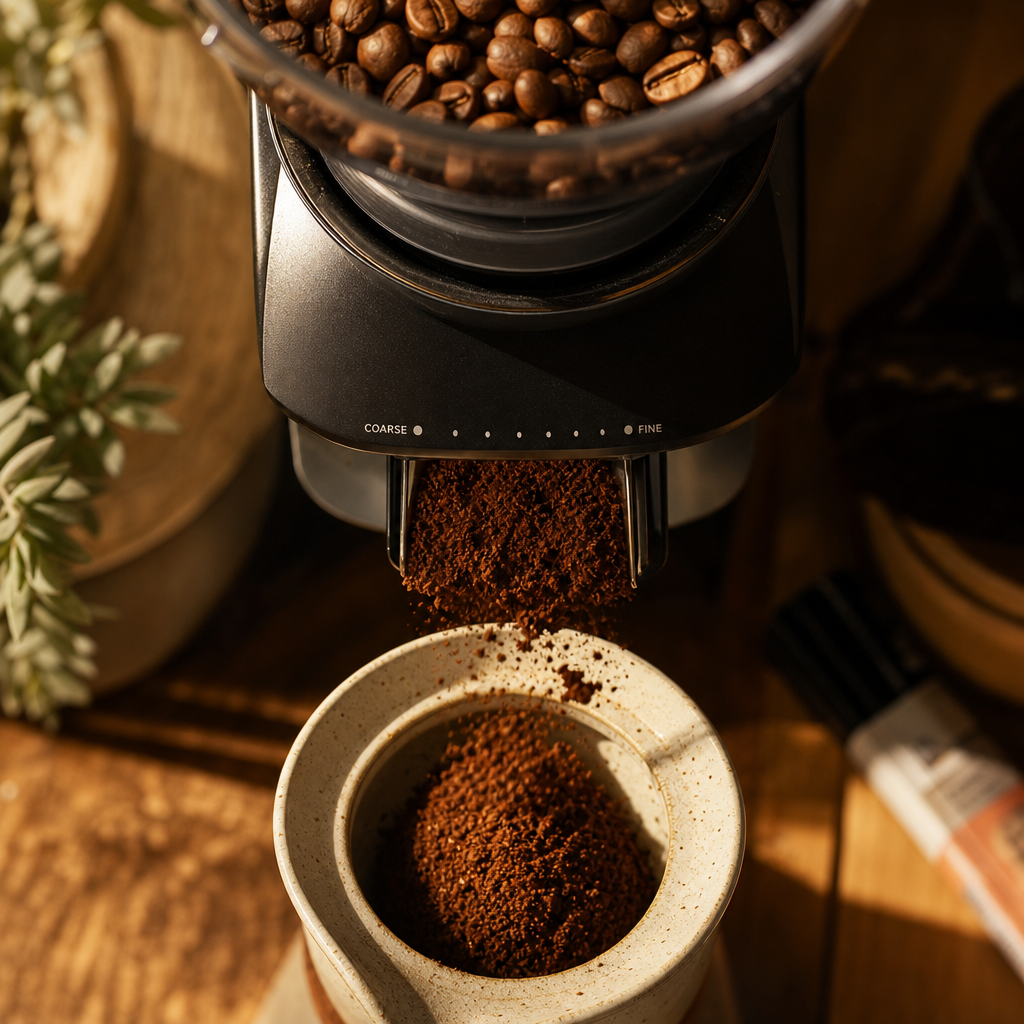
The type of grinder you use has as much impact on cup quality as the grind size setting itself. Here is a direct comparison of the three grinder types most home brewers consider.
| Grinder Type | Grind Consistency | Best For |
|---|---|---|
| Blade Grinder | Poor. Produces a wide mix of fine dust and large chunks in the same batch, causing uneven extraction. | Not recommended for any serious brewing method. Acceptable only for extremely low-stakes use. |
| Flat Burr Grinder (Electric) | Excellent. Flat burrs cut beans into uniform particles across all grind sizes. Favoured for espresso and filter. | Espresso, pour-over, drip filter. The best choice for home brewers investing in equipment. |
| Conical Burr Hand Grinder | Very good. Slightly less uniform than flat burr but significantly better than blade grinders. Quiet and portable. | Pour-over, French press, AeroPress. Excellent value for the investment and ideal for travel or small kitchens. |
In practice, a quality hand grinder in the 40 to 80 GBP range will outperform an electric blade grinder costing twice as much. The Specialty Coffee Association has consistently found that grind uniformity is a stronger predictor of cup quality than bean freshness alone.
"The grinder is the most important piece of equipment in coffee brewing. A great grinder with average beans will outperform a poor grinder with excellent beans every time." - James Hoffmann, author of The World Atlas of Coffee
Pro tip: If you are brewing Farrer's espresso blends at home and your machine has a built-in grinder, clean the burrs every two weeks. Stale coffee oils on burr surfaces introduce rancid flavours that no dialling-in adjustment can fix.
Best Coffee Blends UK: Matching Farrer's Range to Your Grind
Choosing the right grind setting also depends on the specific coffee you are working with. Darker roasts are more brittle and grind faster, so they often need a slightly coarser setting than a lighter roast at the same machine number. Farrer's range spans a variety of roast profiles, and matching grind to roast is part of getting the most from each blend.
Dark and Espresso Roasts
Farrer's traditional espresso blends are designed for machines operating between 9 and 15 bars of pressure. These blends work best at a fine grind with a consistent 25 to 30 second shot time. Because dark roasts are more porous, they can over-extract quickly, so err on the coarser side of fine if you taste bitterness.
Medium Roasts for Filter and Pour-Over
Medium roasts from Farrer's preserve more of the origin character of the bean. For a V60 or Chemex, a medium-fine grind brings out the clarity of those flavour notes without flattening them into generic coffee taste. Brew water at 93 to 96 degrees Celsius for this roast level.
Light Roasts and Single Origins
Light roasts are denser and require slightly more energy to extract. If you are brewing a single origin light roast from Farrer's on a pour-over, start with a finer-than-usual medium-fine setting and a water temperature of 94 to 96 degrees Celsius. This compensates for the harder cellular structure of lightly roasted beans.
The broader point here: the best coffee blends UK roasters produce are engineered with specific brewing methods in mind. Farrer's two-century roasting heritage means their blends are built around consistent extraction profiles. Reading the tasting notes on each blend is a practical guide to choosing both grind size and brew method.
Common Grinding Mistakes and How to Fix Them
These are the errors that come up repeatedly, whether you are a home brewer or a cafe owner setting up a new grinder for the first time.
Grinding Too Far in Advance
Coffee ground more than 30 minutes before brewing has already lost a measurable portion of its volatile aromatic compounds. The CO2 that gives freshly roasted coffee its brightness and complexity dissipates rapidly once the bean is broken open. Grind to order, always.
Never Recalibrating After a Coffee Change
A common mistake is treating a grinder setting as permanent. Every new bag of coffee, even the same blend from the same roaster, can behave slightly differently depending on the roast date, humidity during storage, and bean density. Recalibrate with each new bag.
Using the Wrong Grind for the Wrong Method
This sounds obvious but it is the most widespread problem. Using a supermarket pre-ground (which is set for drip filter) in an espresso machine will produce a fast, sour, under-extracted shot. Using a fine espresso grind in a French press will clog the plunger and result in a dangerously over-extracted, bitter brew.
Ignoring Grinder Maintenance
Burr grinders need cleaning. Coffee oils go rancid within days at room temperature and coat burr surfaces over time. A rice-grain sized dose of a grinder cleaning product like Grindz, run through the machine monthly, will make a noticeable difference to cup clarity. Disassemble and brush the burrs every three months if you grind daily.
Pro tip: When you order freshly roasted coffee from Farrer's with next-day dispatch, allow the beans to rest for 3 to 5 days before grinding espresso and 1 to 2 days for filter. Freshly roasted beans are still degassing CO2, which interferes with extraction and causes inconsistent results.
Frequently Asked Questions
What grind size should I use for a cafetiere?
Use a coarse grind for a cafetiere, sometimes called a French press. The grounds steep in water for 4 minutes without a paper filter, so coarse particles are needed to prevent over-extraction and excessive sediment in the cup. If your cafetiere coffee tastes bitter or gritty, go coarser on the grinder.
Can I use the same grind for both espresso and filter coffee?
No. Espresso requires a fine grind to create enough resistance for the 25 to 30 second extraction under 9 bars of pressure. Filter coffee needs a medium to medium-fine grind for gravity-fed extraction over 3 to 4 minutes. Using espresso grind in a filter machine will produce an over-extracted, bitter result. These are genuinely different settings and cannot be shared.
How often should I clean my coffee grinder?
For home use with one or two brews daily, brush out the grinder hopper and chute weekly and run a cleaning tablet or rice through the burrs monthly. For cafe use grinding multiple kilos per day, clean the burrs at least every two to three days. Stale coffee oil buildup is one of the most underdiagnosed causes of off-flavour in otherwise well-prepared coffee.
Does grind size affect caffeine content?
Grind size affects extraction rate, which does have a minor effect on how much caffeine ends up in the cup. A finer grind extracts more caffeine because it exposes more surface area. However, the difference between grind settings is far less significant than the difference between coffee varieties. Robusta beans contain roughly twice the caffeine of Arabica regardless of grind size.
What is the best grinder for home espresso?
A flat burr electric grinder with stepless or near-stepless adjustment gives the best results for home espresso. Entry-level models from brands like Baratza, Eureka, or Niche offer excellent burr quality at a realistic home price. Avoid any grinder without dedicated espresso range adjustment. For pour-over and filter only, a quality hand grinder with conical burrs is a cost-effective alternative that outperforms most electric blade grinders.
Why does my espresso taste sour even though I am using fresh coffee?
Sourness in espresso almost always indicates under-extraction. The most common cause is a grind that is too coarse, allowing water to pass through too quickly. Grind finer in small increments until the shot time reaches 25 to 30 seconds. Also check that your water temperature is at least 90 degrees Celsius. Brewing too cool compounds under-extraction regardless of grind size.
Is pre-ground coffee ever acceptable?
Pre-ground coffee is a practical choice when you do not own a grinder or need convenience. If you buy pre-ground, use it within two weeks of opening and store it in an airtight container away from light and heat.
For the best results, buy pre-ground from a roaster like Farrer's who grind to order rather than sourcing from a supermarket where shelf time is unknown. The quality gap between fresh-ground and pre-ground is real, but a freshly roasted and freshly ground pre-pack is far better than stale beans ground at home.
Share your own grind experiments in the comments below or tag Farrer's on social media with the setup you are using. It is genuinely useful to hear what is working for different brewing methods across different kitchens.
We would love your feedback and any insights you would share with others. What perspective would you add?
References
- Specialty Coffee Association brewing standards and extraction yield research
- Peer-reviewed food science research on coffee extraction chemistry and grind particle distribution
- Statista data and market reports on UK coffee consumption trends and home brewing equipment
- Forbes coverage of premium coffee market growth and artisan roaster positioning in the UK
- UK Food Standards Agency guidance on food storage, freshness, and consumer product labelling relevant to coffee


