

Roughly 80% of UK hospitality businesses that switch coffee suppliers do so because of inconsistent quality or unreliable delivery, not price. If you are running a cafe, restaurant, or hotel and your current trade coffee supplier UK is keeping you guessing on roast dates, minimum order quantities, or staff training support, you are already losing money on every cup you serve.
Choosing the right specialty coffee partner is one of the highest-leverage operational decisions a hospitality business makes, and most owners underestimate how much the wrong choice compounds over time.
Table of Contents
- Quick Takeaways
- Why Roast Date Matters More Than the Bag Design
- What Specialty Coffee UK Actually Means for Hospitality Menus
- Evaluating a Trade Coffee Supplier: The Six Criteria That Count
- Comparison of Supply Approaches: Volume vs. Craft vs. Heritage Roasters
- Cafe Coffee Supply Logistics: Delivery, Minimums, and Contracts
- Training and Ongoing Support: The Hidden Value in a Roaster Partnership
- Frequently Asked Questions
- References
Quick Takeaways
| Key Insight | Explanation |
|---|---|
| Roast date is non-negotiable | Coffee served more than four weeks post-roast loses CO2 and flavour rapidly. Always confirm your supplier roasts to order or dispatches within days of roasting. |
| Heritage does not mean inflexible | Long-established roasters like Farrer's combine decades of blending knowledge with modern e-commerce and next-day dispatch, offering reliability without the rigidity of large commodity suppliers. |
| Minimum order quantities shape your cash flow | A supplier requiring 50kg minimums can tie up working capital. Look for roasters who scale minimums to your weekly volume rather than their logistics convenience. |
| Barista training should be included, not upsold | Suppliers who charge separately for every training session are not invested in your success. Training programs built into trade accounts directly reduce staff turnover and customer complaints. |
| Single origin vs. house blend is a menu decision | Most cafes need both: a consistent, crowd-pleasing house blend for volume espresso and one or two single origins to signal quality and attract enthusiast customers. |
| Verified customer ratings indicate process consistency | A 4.9/5 average across hundreds of verified reviews is a stronger quality signal than any marketing claim. Ask suppliers for third-party review data, not just testimonials. |
| Specialty grade coffee drives margin, not just prestige | Cafes that can articulate origin, process, and tasting notes charge more per cup. Your supplier's product information directly affects your menu pricing power. |
Why Roast Date Matters More Than the Bag Design
The single most common mistake cafe owners make when sourcing coffee is focusing on price per kilogram while ignoring when the coffee was actually roasted. Freshness is not a marketing word. It is a chemical reality.
Freshly roasted coffee releases CO2 in a process called degassing. This CO2 creates the crema in espresso, carries volatile aromatic compounds, and contributes to the complexity of flavour that customers notice and return for.
When coffee sits in a warehouse for six to ten weeks before dispatch, as it often does with large commodity suppliers, that window is largely gone before the coffee ever reaches your grinder.
In practice, the difference between coffee roasted three days ago and coffee roasted six weeks ago is immediately detectable in blind cupping tests. You get a flat, muted espresso from stale stock regardless of how expensive the green bean was at origin.
Pro tip: Ask any prospective trade coffee supplier UK to confirm their average dispatch lag from roast date in writing. Roasters who roast to order or batch daily, as Farrer's does from their Lake District roastery, can typically dispatch within 24 to 48 hours of roasting. Suppliers who cannot confirm this figure clearly are working from warehouse stock.
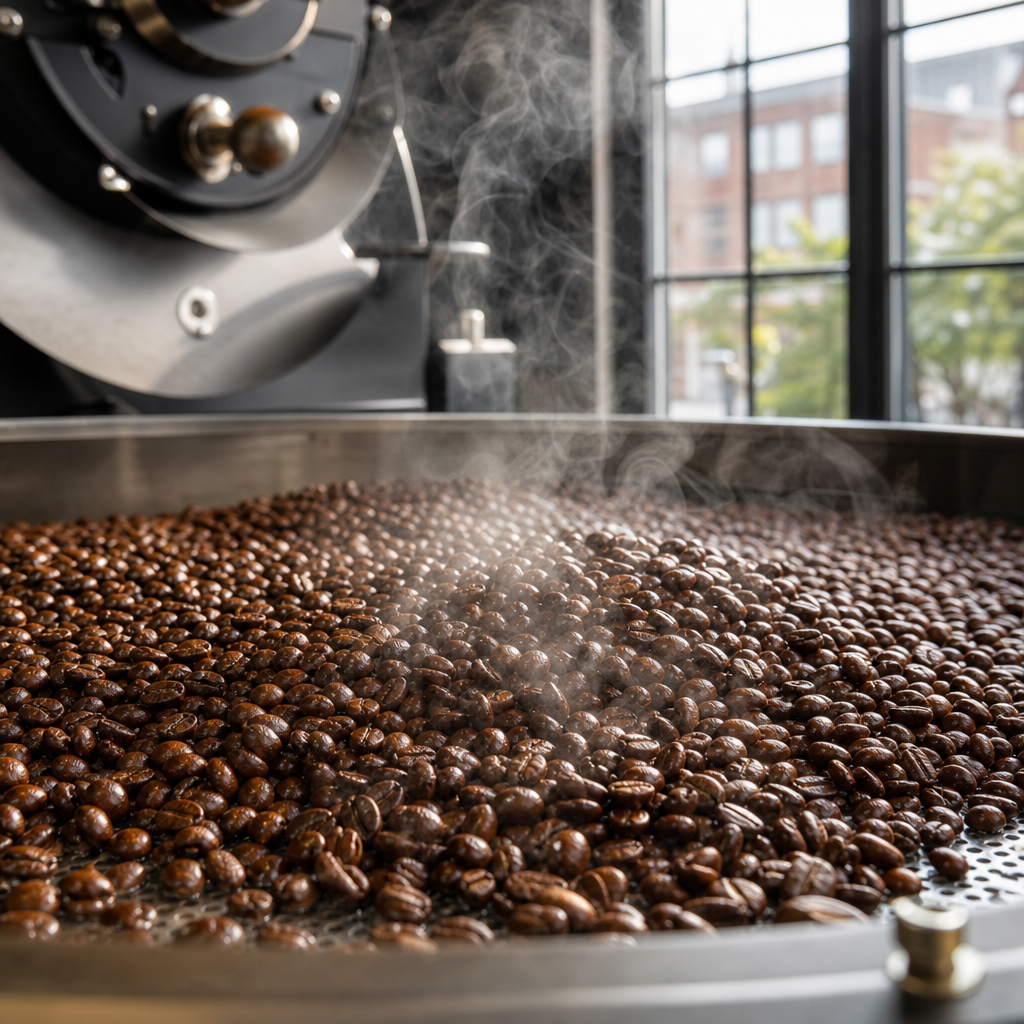
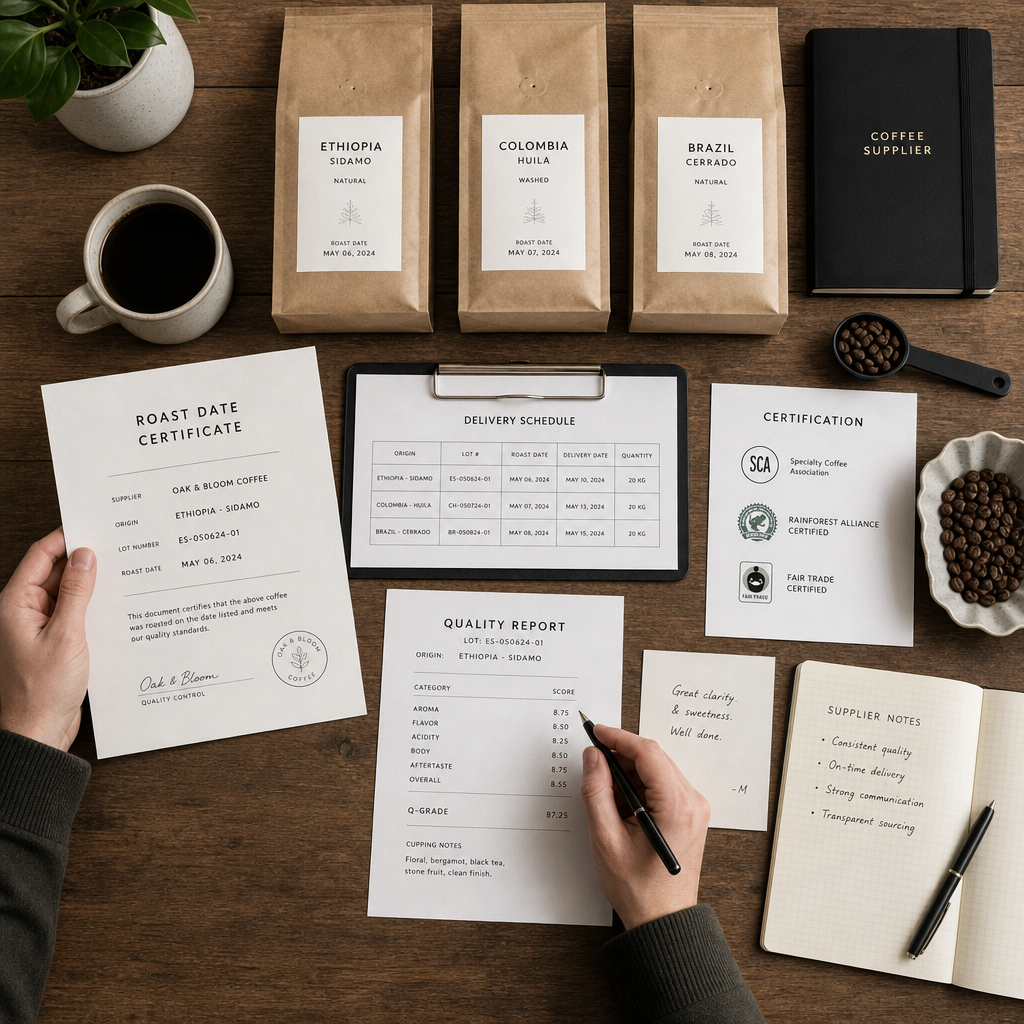
The packaging matters only insofar as it preserves freshness. One-way degassing valves on bags are a functional requirement, not a premium feature. If your current supplier is shipping coffee in plain sealed bags with no valve, the product is likely already stale on arrival.
What Specialty Coffee UK Actually Means for Hospitality Menus
The term specialty coffee has a specific technical definition from the Specialty Coffee Association. Coffee scoring 80 points or above on a 100-point cupping scale, with no primary defects in the green sample, qualifies as specialty grade. This is the threshold that separates traceable, origin-specific coffee from commercial commodity blends.
For cafe owners, this distinction has direct menu implications. Specialty coffee UK gives you something to talk about. You can tell customers the farm, the processing method, the elevation. That narrative is not marketing fluff.
According to Mintel's UK Coffee Report findings, consumers who understand origin and process are measurably more willing to pay a premium price and are more likely to repeat the purchase.
How to Build a Menu Around Specialty Grade Coffee
The practical approach for most cafes is a tiered menu structure. Your house espresso blend should be consistent, approachable, and calibrated to work across a wide range of milk textures and extraction variables. Your single origin offering should rotate seasonally, highlighting something genuinely interesting from the crop calendar.
Farrer's approach to this is instructive. Their range includes both reliable house blends developed over generations of roasting experience and more specific single origin lots that trade customers can use as limited-run specials. This gives hospitality businesses a stable foundation without requiring them to sacrifice the quality signals that attract specialty-focused customers.
A common mistake is assuming specialty coffee means complicated preparation. The best specialty roasters deliver coffees that perform consistently on commercial espresso equipment without constant dial-in adjustments. If your supplier's coffee requires daily recipe rebuilding from scratch, the roast profile is not stable enough for a busy cafe environment.
Evaluating a Trade Coffee Supplier: The Six Criteria That Count
Not all trade coffee suppliers UK operate the same way, and the differences between them have real consequences for your daily operation. Here are the six criteria that hospitality professionals consistently identify as decisive when choosing a roaster partner.
1. Roast Frequency and Dispatch Speed
Daily or weekly roasting cycles are significantly better than monthly batch production. Ask for the roast schedule and the average number of days between roast and dispatch. Next-day dispatch on orders above a certain threshold, as Farrer's offers for orders over £35, is a meaningful operational advantage for cafes managing lean stock levels.
2. Blend Consistency Across Batches
Specialty coffee is an agricultural product. Green coffee from the same farm varies between harvests. A skilled roaster compensates for this variation by adjusting roast profiles and occasionally substituting component origins within a blend to maintain a consistent flavour target. Ask suppliers how they handle seasonal green coffee variation. Vague answers here are a red flag.
3. Trade Account Flexibility
Minimum order quantities, payment terms, and account management support matter as much as the product itself. A roaster who offers flexible minimums, account managers who know your business, and the ability to adjust orders on short notice is operationally far superior to a cheaper supplier who operates rigid monthly dispatch cycles.
4. Equipment Support
Some roasters offer equipment loans or leasing arrangements as part of trade accounts. This can dramatically reduce your setup cost. Clarify what is included, what the servicing obligations are, and what happens to the equipment arrangement if you decide to change supplier.
5. Training Provision
Barista training built into your supply agreement is worth quantifying in cash terms. A single poorly extracted espresso service can generate a negative review that takes months to counteract. Roasters who invest in your team's skills are protecting the reputation of their own coffee.
6. Verified Customer Evidence
Ask for the supplier's Trustpilot profile, Google reviews, or third-party verified rating. A 4.9/5 from verified customers, as Farrer's maintains, is a meaningful differentiator. Read the negative reviews as carefully as the positive ones. Patterns of delivery complaints or quality inconsistency will appear there before they appear in your own cafe.
"The best coffee supplier relationship is one where the roaster knows your business well enough to flag a crop change before it reaches your grinder, not after your barista has already dialled in the wrong dose for three weeks." Specialty Coffee Association, Sourcing Best Practices Guide
Comparison of Supply Approaches: Volume vs. Craft vs. Heritage Roasters
Hospitality businesses typically encounter three main types of trade coffee supplier UK when they go to market. Understanding the genuine trade-offs between them prevents a costly switch six months into a contract.
| Supplier Type | Strengths | Weaknesses |
|---|---|---|
| Volume / Commodity Roaster (e.g., large national suppliers) | Consistent pricing on large volume, wide range of commodity blends, established logistics infrastructure | Long dispatch lags from roast date, limited origin transparency, minimal training support, blend quality often targets consistency over taste |
| Craft / Micro Roaster (e.g., small independent roasters with limited SKUs) | High origin transparency, passionate team knowledge, often genuinely specialty grade green coffee | Capacity limitations, inconsistent dispatch reliability, limited trade account infrastructure, can struggle to support growing cafe volume |
| Heritage Specialty Roaster (e.g., Farrer's of the Lake District) | Proven consistency over decades, specialty grade product range, structured trade account support, barista training programs, roastery experience days, next-day dispatch capability | May carry a modest price premium over commodity suppliers, range may be more curated than the widest volume suppliers |
The data consistently shows that cafes switching from volume suppliers to heritage or craft roasters report quality improvement but sometimes underestimate the logistics adjustment period. Give yourself four to six weeks of overlap when switching primary suppliers to calibrate your team to a new roast profile and grinder setting.
Pro tip: When comparing trade coffee suppliers UK, request a cupping session or sample pack before committing to a trade account. Any reputable specialty roaster will offer this. If a supplier declines to provide samples or requires a minimum order commitment before you can evaluate the product, walk away.
Cafe Coffee Supply Logistics: Delivery, Minimums, and Contracts
Cafe coffee supply logistics are where the relationship between good intentions and operational reality gets tested. A roaster who produces excellent coffee but delivers erratically will cost you more in wasted time, emergency purchasing, and staff frustration than a slightly less exciting product delivered reliably.
Delivery Frequency and Lead Times
Most cafes operate with one to two weeks of working coffee stock. This means your supplier needs to be able to turn around an order within two to three business days at most. Next-day dispatch thresholds, like the one Farrer's applies to orders over £35, are genuinely useful for smaller cafes who cannot justify holding large stock volumes.
Seasonal demand spikes around Christmas, Valentine's Day, and summer tourist peaks are worth discussing with your supplier in advance. A good trade account manager will help you anticipate stock needs before you reach an out-of-stock situation mid-service.
Contract Terms and Exit Clauses
Scrutinise any contract that ties you to minimum annual volumes with financial penalties for shortfalls. These arrangements benefit the supplier almost entirely. Flexible trade accounts that grow with your volume without penalising you for slower months are the standard to hold suppliers to.
Equipment loan agreements frequently come with implicit supply contracts. If a supplier provides your espresso machine as part of a trade arrangement, confirm exactly what happens to equipment servicing and ownership if you choose to change coffee suppliers. Some agreements create practical lock-in that is difficult and expensive to exit.
Training and Ongoing Support: The Hidden Value in a Roaster Partnership
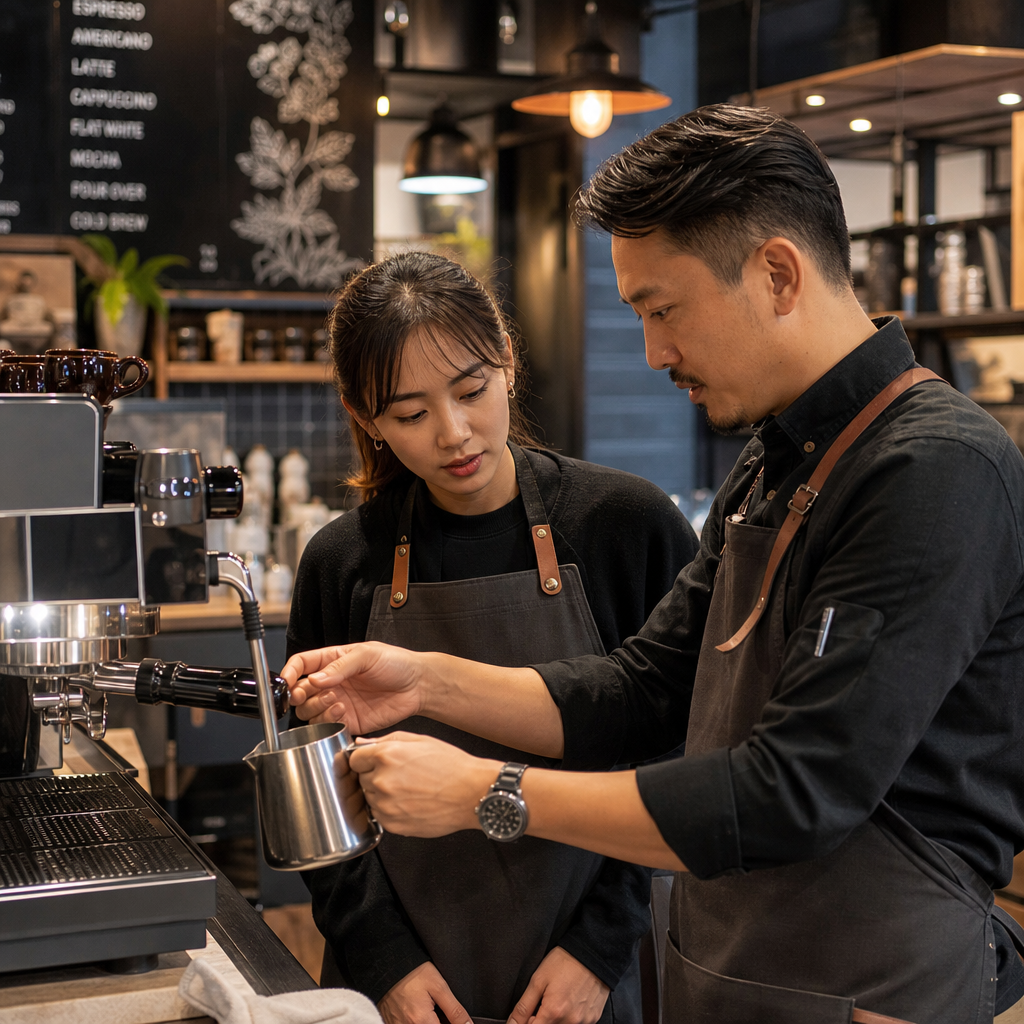
Barista skill directly determines the quality of the cup your customer receives, regardless of how good the coffee is at the bag stage. A specialty roaster who provides structured training is protecting their own product as much as they are supporting your business.
Farrer's barista training programs and roastery experience days are examples of this kind of value-add that gets underpriced when cafes compare suppliers purely on per-kilogram cost. Sending a new team member to a roastery training day costs you a few hours of their time. The resulting improvement in extraction consistency and milk technique can translate into measurable reductions in customer complaints and waste from incorrectly pulled shots.
What Good Training Support Looks Like
Good training support from a trade coffee supplier includes initial onboarding for your espresso machine and grinder setup, recipe development specific to your equipment, refresher sessions when you bring on new staff, and access to technical guidance when your extraction parameters drift between seasons. It does not look like a single PDF emailed on account setup and then silence.
Roastery experience days serve an additional purpose for hospitality teams. Staff who understand the roasting process, the origin of the green coffee, and the work that goes into a consistent blend tend to describe the product better to customers. This is where your per-cup narrative comes from and it is a real commercial advantage in competitive high street environments.
Ask prospective trade suppliers directly: what training is available to my team as a trade account holder, and is it included in the account agreement or billed separately? The answer tells you a great deal about how the supplier views the partnership.
Frequently Asked Questions
What should I prioritise when choosing a trade coffee supplier UK for the first time?
Start with roast date transparency and dispatch speed, then evaluate blend consistency and training support. Price per kilogram should be the last variable you compare, not the first. A supplier who is 10% cheaper but roasting weeks in advance will cost you in quality and customer retention.
How much specialty coffee does a typical UK cafe use per week?
A small independent cafe serving 150 to 300 covers per day typically uses between 3kg and 8kg of espresso coffee per week. This varies significantly based on milk drink volume, filter coffee offering, and whether you serve during breakfast only or across a full trading day. Understanding your weekly volume is essential before approaching any trade supplier about minimums.
Is specialty coffee UK significantly more expensive than commercial grade for trade buyers?
The green coffee cost difference between commercial and specialty grade is real, typically 20 to 40% at the raw ingredient level. However, specialty coffee commands higher menu prices and stronger customer loyalty, which more than compensates for the input cost difference. Cafes that switch to verified specialty grade coffee consistently report that they can support a price increase of 30p to 60p per cup without meaningful volume loss.
How do I evaluate a roaster's consistency if I cannot visit the roastery?
Request samples from at least two separate roast batches spaced four to six weeks apart. Cup them blind against each other. Any significant flavour deviation between batches indicates inconsistent roast profiling or poorly managed green sourcing. Also check third-party verified reviews on platforms like Trustpilot for patterns of quality complaints across multiple customers.
Do I need an equipment loan agreement to access trade pricing from a specialty roaster?
No, and you should be cautious of suppliers who present this as the only route to trade pricing. Many reputable roasters, including heritage operations like Farrer's, offer trade accounts based on volume commitments without requiring equipment arrangements that create supply lock-in. If you already own your equipment, a good trade account should simply reflect your purchasing volume in the pricing structure.
What is the difference between a house blend and a single origin for cafe coffee supply?
A house blend is a recipe combining coffees from multiple origins, designed to be consistent across seasonal crop variations and to perform reliably across different extraction methods and milk temperatures.
A single origin is sourced from one farm, cooperative, or defined region, offering more distinctive and traceable flavour characteristics. Most successful cafes use a house blend for volume espresso service and rotate single origins as a featured or filter offering.
If your cafe has made a supplier switch recently or you are currently evaluating your options, share what mattered most in your decision in the comments below. Your experience helps other hospitality operators make better choices.
References
- UK coffee market size, consumer trends, and hospitality sector data from Statista
- Forbes coverage of specialty coffee industry growth and consumer premiumisation trends
- Specialty Coffee Association resources on coffee grading, quality standards, and barista training frameworks
- UK Food Standards Agency guidance on food business supplier standards and traceability requirements
- Business Insider analysis of the UK hospitality sector and independent cafe supply chain dynamics


