

Most people choose their coffee roast by grabbing whatever looks familiar on the shelf. That is a shame, because the difference between a dark roast coffee UK drinkers love and a bright, fruity light roast is not just about strength or colour.
It is about chemistry, flavour origin, and what your brewing method can actually do with the bean. If you have ever wondered why your morning cup tastes flat, bitter, or just wrong, roast level is almost certainly part of the answer.
Table of Contents
- Quick Takeaways
- What Roast Level Actually Means
- Light Roast Coffee Explained
- Dark Roast Coffee Explained
- Medium Roast: The Middle Ground
- Roast Levels and Caffeine: The Truth
- Which Roast Works Best for Which Brew Method
- Roast Level Comparison Table
- How to Choose the Right Roast for You
- Frequently Asked Questions
- References
Quick Takeaways
| Key Insight | Explanation |
|---|---|
| Dark roast does not mean more caffeine | Roasting actually reduces caffeine content slightly. By weight, light roast has marginally more caffeine per gram. |
| Light roast preserves origin flavour | Fruity, floral, and acidic notes from the growing region survive at lower roast temperatures. Dark roasting masks them. |
| Bitterness in dark roast comes from roasting, not the bean | Prolonged heat produces bitter compounds like quinones. A poor dark roast tastes burned, not bold. |
| Espresso works with multiple roast levels | A well-developed medium-dark roast is classic for espresso, but experienced roasters like Farrer's also offer lighter espresso blends. |
| Roast date matters more than roast level | A fresh light roast beats a stale dark roast every time. Buy freshly roasted and use within four to six weeks of the roast date. |
| Acidity is not the same as sourness | In coffee tasting, acidity describes brightness and complexity, not an unpleasant sharpness. Light roasts are high in acidity; dark roasts are low. |
| Your grinder affects roast performance | Light roasts are denser and harder to grind. A burr grinder handles both roast levels better than a blade grinder. |
What Roast Level Actually Means
Coffee roasting is a controlled application of heat to raw green beans. As temperature rises, moisture evaporates, sugars caramelise, and hundreds of volatile compounds develop or disappear. The roaster decides when to stop that process, and that decision defines the coffee roast level.
Roasters listen for two audible cracks during the roast. The first crack signals that the bean has reached a light-to-medium development. The second crack indicates significant caramelisation and the start of dark roast territory. Stopping before, between, or after these cracks produces very different cups.
At Farrer's, which has been making these calls for over 200 years in the Lake District, the roast profile for each blend is developed through repeated testing, not guesswork. That experience matters because the same bean from Ethiopia behaves differently to one from Colombia, and a roast profile that flatters one origin can ruin another.
Light Roast Coffee Explained
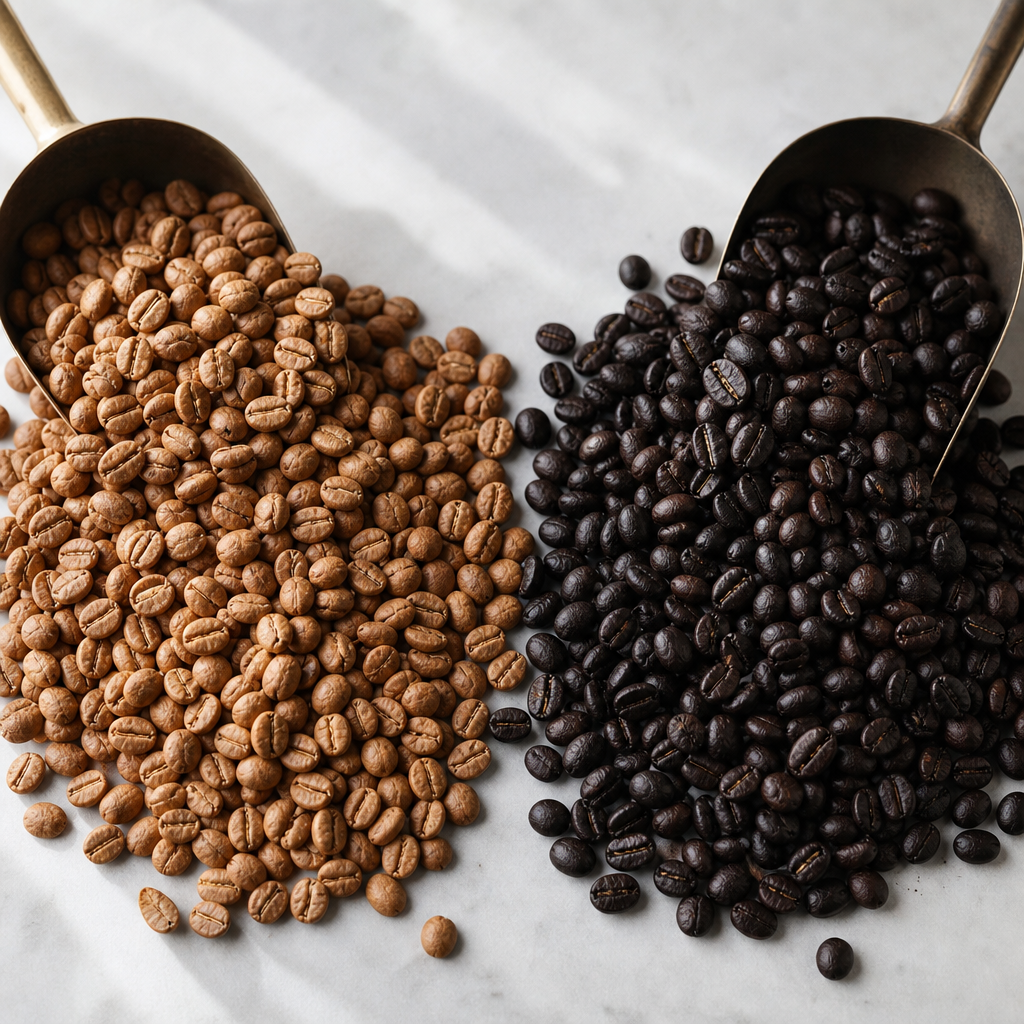
A light roast is taken off heat shortly after the first crack. The bean retains most of its original moisture and density. The outer surface is dry, light brown, and has no visible oil.
Flavour Profile of Light Roast
Light roasts deliver the clearest expression of where the coffee was grown. A Kenyan light roast might taste of blackcurrant and tomato. An Ethiopian might offer jasmine and bergamot. These flavours are genuine, not added. They exist in the raw bean and survive because the roast is short enough not to burn them away.
The acidity in a light roast is high, which some drinkers misread as sourness. A common mistake is dismissing a well-roasted light coffee as under-roasted simply because it tastes bright rather than heavy. The two things are not the same.
Who Light Roast Suits
Light roast suits anyone who brews with methods that highlight delicate flavours: pour-over, Chemex, Aeropress, and filter machines. It does not suit those who want a thick, heavy body in the cup. If you find strong, creamy espresso the gold standard, a very light roast will likely frustrate you.
Pro tip: If you are switching from dark to light roast, grind a little finer and drop your water temperature by around 5 degrees Celsius. Light beans are denser and need slightly more extraction effort to give you their best.
Dark Roast Coffee Explained
A dark roast is taken well past the second crack. The bean surface becomes oily because internal oils migrate outward under prolonged heat. Colour ranges from deep brown to almost black depending on how far the roast goes.
Flavour Profile of Dark Roast
The flavours in a dark roast coffee come primarily from the roasting process itself rather than the origin bean. You taste chocolate, smoke, caramel, and sometimes a pleasant bitterness. Origin characteristics are largely gone, which is why sourcing matters less at this level. A dark roast from a mediocre bean can still taste acceptable because the roast masks defects.
The flip side is that a poor dark roast tastes burnt and flat. The difference between a masterfully roasted dark coffee and a supermarket overwrought dark roast is stark. Farrer's approach to darker blends is to develop richness without crossing into char, which is harder to achieve than it sounds.
Who Dark Roast Suits
Dark roast suits drinkers who want a bold, low-acid cup that holds up well with milk. It is ideal for espresso-based drinks like flat whites, lattes, and cappuccinos where the coffee needs to cut through dairy without tasting thin. It also works well in a stovetop Moka pot, where the pressurised extraction complements the roast's dense, syrupy body.
Pro tip: Dark roast beans go stale faster than light roast because the cell structure is more porous after prolonged heat. Buy in smaller quantities and store in an airtight, opaque container away from heat and light. Do not refrigerate.
Medium Roast: The Middle Ground
Medium roast is stopped between the two cracks. It balances origin character with roast-derived sweetness. The body is fuller than a light roast but the acidity is lower. You get caramel and nut notes alongside some of the origin's fruit character.
In practice, medium roast is the most forgiving level for home brewers. It works across a wider range of brew methods and grind sizes. If you are new to specialty coffee and unsure where to start, a well-roasted medium is the honest recommendation. Many of Farrer's most popular blends sit in this range because they are designed to be consistently enjoyable regardless of how the customer brews at home.
"The best roast is the one that suits both the bean and the brew method. Roasting is not about applying a style to every coffee. It is about finding what each origin is trying to say." - Specialty Coffee Association, Roasting Fundamentals
Roast Levels and Caffeine: The Truth
The most persistent myth in coffee is that dark roast means more caffeine. The data consistently shows the opposite is true, though the difference is small. According to the Specialty Coffee Association, roasting degrades caffeine slightly, meaning light roast beans have marginally more caffeine by weight.
However, most people measure coffee by volume (scoops) rather than weight. Because light roast beans are denser, a scoop of light roast contains more mass and therefore more caffeine per scoop than the same scoop of a puffed-up dark roast bean. Either way, the difference is not large enough to drive a health decision. Choose your roast for flavour, not caffeine arithmetic.
Which Roast Works Best for Which Brew Method
Roast level and brew method interact directly. Getting this pairing right is one of the fastest ways to improve your cup without buying new equipment.
Espresso
Medium-dark to dark roast is the traditional choice for espresso. The high pressure and short extraction time suit beans with low acidity and developed sweetness. That said, single-origin light roast espresso is popular in specialty cafes. If you go that route, expect a brighter, more acidic shot that divides opinion sharply.
Pour-Over and Filter
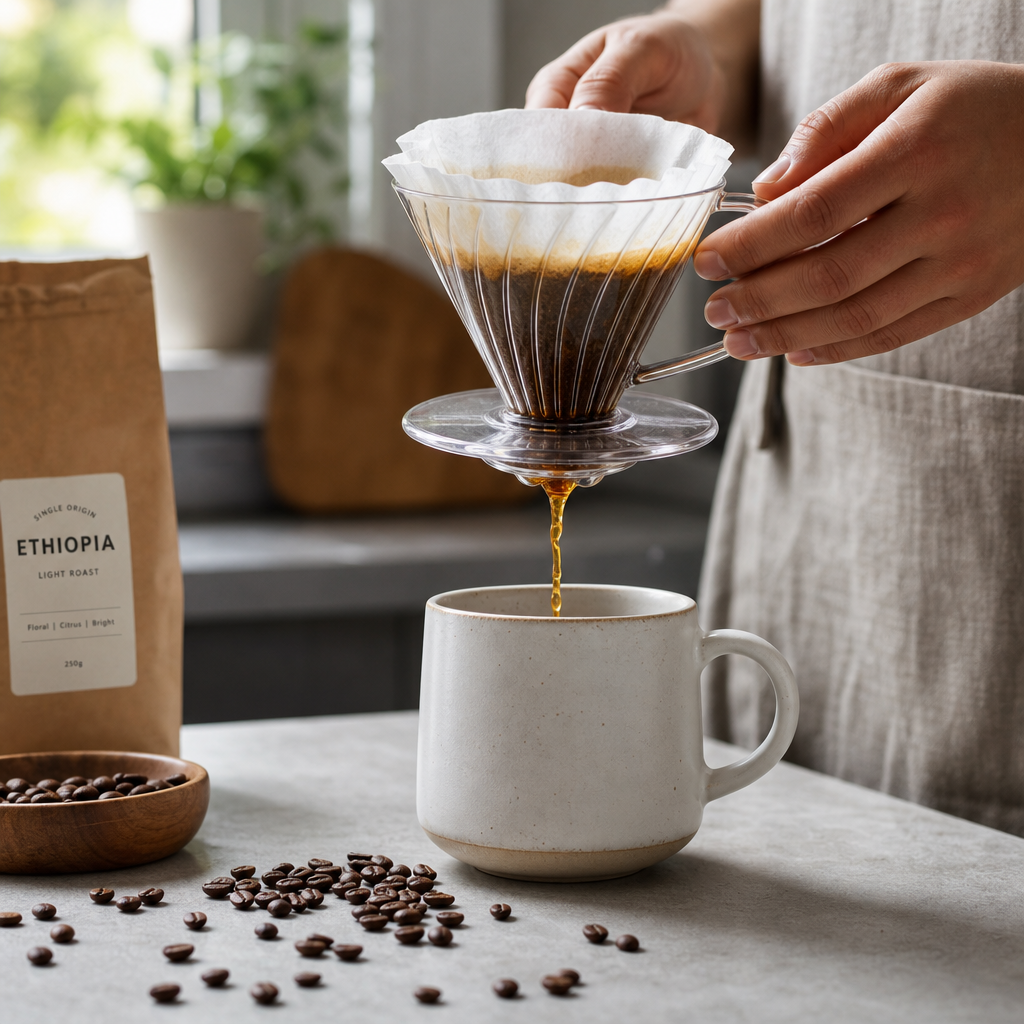
Light to medium roast performs best here. The slower, gravity-fed extraction gives you time to pull out the nuanced flavours that a light roast carries. A dark roast in a Chemex often tastes flat and one-dimensional because the extraction pulls bitterness before sweetness.
French Press and Cafetiere
Medium to dark roast works well in a French press. The full-immersion method extracts body and richness, which dark roast delivers generously. Light roast in a French press can taste thin because the immersion extracts oils that mask the delicacy you want from a light bean.
Moka Pot
Medium-dark to dark roast is the classic choice for a Moka pot. The pressurised steam extraction produces a concentrated, intense brew that benefits from the bold character of a darker roast. Farrer's has blends specifically suited to this style of brewing, worth exploring if you use a stovetop regularly.
Roast Level Comparison Table
| Feature | Light Roast | Medium Roast | Dark Roast |
|---|---|---|---|
| Flavour Origin | Primarily the growing region (terroir) | Mix of origin and roast | Primarily the roasting process |
| Acidity | High, bright | Moderate | Low |
| Body | Light, tea-like | Medium, balanced | Full, syrupy |
| Bitterness | Low | Low to moderate | Moderate to high |
| Caffeine (by weight) | Slightly higher | Middle range | Slightly lower |
| Bean Surface | Dry, light brown | Dry to slightly oily | Oily, dark brown to black |
| Best Brew Methods | Pour-over, Aeropress, filter | Most methods | Espresso, Moka pot, French press |
| Shelf Life After Roasting | 4-6 weeks | 3-5 weeks | 2-4 weeks |
How to Choose the Right Roast for You
The right roast is the one that matches your palate, your brew method, and the freshness you can source. Ignore marketing language like "smooth" or "intense" because these words mean nothing without context. Ask instead: do I want to taste the bean's origin, or the roast character?
If the answer is origin, choose light roast and pair it with a filter or pour-over method. If the answer is roast character, bold body, and tolerance for lower acidity, choose a dark roast and use espresso or Moka pot. If you genuinely do not know yet, start with a medium roast from a roaster who publishes their roast dates.
Farrer's is one of the few UK roasters that has been making these decisions long enough to understand how British water, which is often hard and high in mineral content, interacts with different roast levels.
That regional knowledge, built over two centuries in the Lake District, is not something a global brand can replicate. When you order from a roaster with that depth of experience, the roast profile has been adjusted with your brewing environment in mind, not just optimised for a generic international palate.
If you are buying for a cafe or hospitality business, roast consistency matters as much as flavour. A good roaster delivers the same profile every batch. A poor one drifts between batches, and your baristas cannot compensate for that in real service conditions. Trade customers using Farrer's report exactly this consistency as a key reason they stay with the roastery long-term.
Frequently Asked Questions
Is dark roast coffee stronger than light roast?
Not in the way most people mean. Dark roast has a bolder, more intense flavour but it does not contain significantly more caffeine. By weight, light roast actually has marginally more caffeine because roasting degrades it slightly. Strength in the cup is more a function of how much coffee you use and how you brew it than the roast level alone.
Which roast is better for people with sensitive stomachs?
Dark roast is often easier on sensitive stomachs because it is lower in acid than light roast. Some research, including a 2014 study published in Molecular Nutrition and Food Research, found that dark roasted coffee contained compounds that reduced stomach acid secretion. That said, everyone is different, and cold brewing any roast level also reduces acidity significantly.
Can I use light roast beans in my espresso machine?
Yes, but expect a very different result from what you are used to. A light roast espresso will be brighter, more acidic, and less syrupy than a dark roast shot. It is polarising. Some specialty coffee drinkers love it; others find it harsh. If you want to try it, use a slightly finer grind and a longer extraction time to balance the higher acidity.
Why do some dark roast coffees taste burnt while others do not?
The difference is roaster skill and starting bean quality. A well-developed dark roast achieves deep sweetness and chocolate notes without crossing into char. A poorly handled dark roast, or one using low-grade green beans, loses all sweetness and leaves only bitter, acrid compounds. Buying from an experienced roaster with transparent sourcing is the most reliable way to avoid burnt-tasting dark coffee.
How do I know if a coffee is freshly roasted?
Look for a roast date on the bag, not a best before date. A best before date tells you almost nothing useful about freshness. A roast date lets you calculate exactly how old the coffee is. For most brew methods, coffee is at its best between five days and four weeks after roasting. Farrer's includes roast date information and dispatches orders next day for orders over thirty-five pounds, which means what arrives at your door is genuinely fresh.
Does roast level affect how I should store my coffee?
Yes. Dark roast beans have a more porous structure because of prolonged heat exposure, which means they go stale faster and absorb odours more easily. Store dark roast in an airtight, opaque container and use within two to three weeks of opening. Light roast is slightly more forgiving but still benefits from the same conditions. Never store any roast level in the fridge as condensation degrades the flavour compounds quickly.
What roast level do you currently brew at home, and has experimenting with a different level changed what you enjoy in your cup? Share your experience below.
References
- National Institutes of Health research database covering coffee chemistry and health studies
- ScienceDirect peer-reviewed research on coffee roasting chemistry and caffeine content
- Statista market data and consumer research on coffee consumption trends in the UK
- Forbes coverage of specialty coffee industry trends and premium consumer beverage markets
- UK Food Standards Agency guidance on food labelling and caffeine content in beverages


