

Most hot chocolate made at home is a disappointment. It is thin, overly sweet, and tastes nothing like the rich, velvety cup you get at a good café. The gap between the two is not about expensive equipment.
It is almost entirely about ingredient quality and technique. With the right premium hot chocolate product and a few practitioner-level habits, you can make a café-style hot chocolate at home that beats most high street offerings. Here is exactly how to do it.
Table of Contents
- Quick Takeaways
- Why Most Homemade Hot Chocolate Falls Short
- Choosing the Right Hot Chocolate Product
- Milk Matters More Than You Think
- The Technique That Changes Everything
- Comparison: Hot Chocolate Methods
- Dairy-Free and Alternative Milk Options
- Finishing Touches That Actually Make a Difference
- Frequently Asked Questions
- References
Quick Takeaways
| Key Insight | Explanation |
|---|---|
| Cocoa solids percentage matters | A hot chocolate product with at least 50% cocoa solids delivers depth of flavour. Products with low cocoa content taste sugary and flat. |
| Never boil your milk | Milk scalded above 85°C loses its natural sweetness and takes on a cooked, slightly sulphurous flavour. Heat to 65-70°C for the best result. |
| Whisk, do not stir | Whisking introduces air and emulsifies the cocoa solids into the milk, creating the creamy texture that defines a café-style hot chocolate. |
| Whole milk outperforms skimmed | The fat content in whole milk carries flavour and creates the thick mouthfeel associated with premium hot drinks in a professional setting. |
| Pre-warm your mug | Pouring hot chocolate into a cold mug drops the temperature by around 5-8°C immediately. Pre-warming with boiled water keeps the drink hotter for longer. |
| Quality product beats quantity | Using 25g of a high-grade hot chocolate per 200ml milk outperforms using 40g of a cheap supermarket sachet. Less powder, better chocolate. |
| Oat milk requires lower heat | Oat milk separates and becomes watery if heated above 70°C. Keep it at 60-65°C and whisk vigorously for the best non-dairy result. |
Why Most Homemade Hot Chocolate Falls Short
The single biggest reason homemade hot chocolate disappoints is the product in the tin. The majority of supermarket hot chocolate powders are heavily padded with sugar, dried milk powder, and starches, with actual cocoa content sometimes as low as 20-25%. You are essentially making flavoured warm milk with very little real chocolate character.
A common mistake is assuming that using more powder fixes the problem. It does not. Using more of a low-quality product just makes the drink sweeter and thicker in texture, not richer in chocolate flavour. The fix is switching to a product built around real cocoa solids from the start.
The second issue is technique. Most people dissolve the powder in hot milk by stirring for a few seconds and calling it done. In practice, this leaves undissolved cocoa particles sitting at the bottom of the mug and produces a drink that is unevenly flavoured and thin in texture. The café kitchen approach is different, and it is reproducible at home.
Choosing the Right Hot Chocolate Product
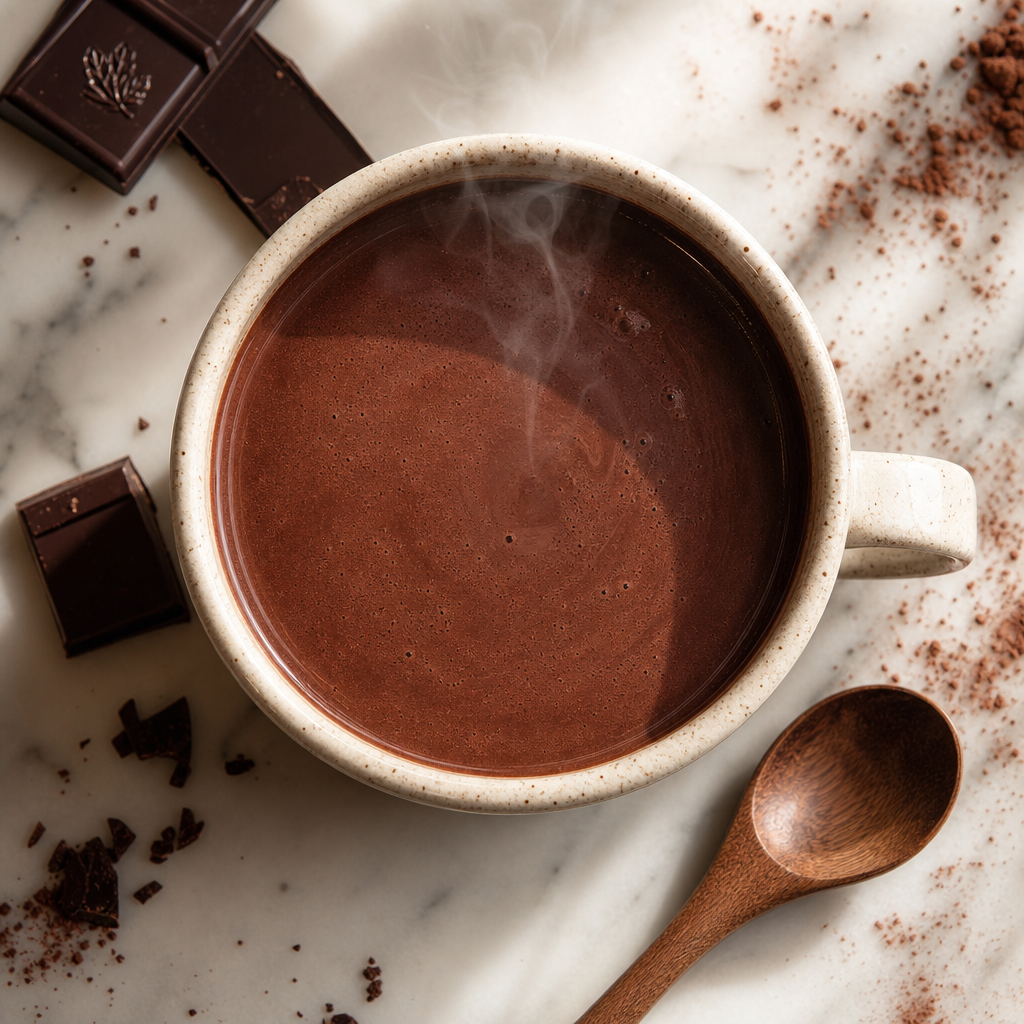
Not all hot chocolate products are built the same way, and the label tells you most of what you need to know. Look for cocoa solids listed as the first or second ingredient, not sugar. A product with 50% or higher cocoa content will have a noticeably darker colour, a more bitter raw smell, and a complex flavour once prepared.
Farrer's hot chocolate range is built with this principle in mind. As a business that has been roasting and sourcing premium ingredients since the early 1800s in the Lake District, their approach to hot chocolate reflects the same sourcing discipline applied to their coffee blends. The result is a product designed to perform in a cup, not just on a shelf.
What the ingredient label should tell you
A quality hot chocolate product will list cocoa powder or cocoa mass near the top of the ingredient list. If sugar is the first ingredient, put it back. Some premium products also include a small amount of whole milk powder to improve the body of the drink, which is a legitimate technique used in professional food service settings.
Avoid products that list cocoa as a percentage without specifying whether it refers to cocoa powder, cocoa butter, or cocoa mass. These three things have very different flavour contributions. Cocoa mass gives the deepest chocolate character. Cocoa powder alone gives intensity without fat. Cocoa butter contributes smoothness but very little flavour.
Pro tip: If you are ordering online, look for products that describe the origin of their cocoa, such as West African or Ecuadorian. Origin-specific cocoa has a defined flavour profile, which indicates the manufacturer cares about the end result rather than just commodity pricing.
Milk Matters More Than You Think
Professional baristas do not treat milk as an afterthought, and neither should you when making hot chocolate at home. The fat content, freshness, and temperature of your milk have a direct and measurable impact on the final drink.
Whole milk with a fat content of 3.5% or higher produces the richest, most café-like result. The fat carries the cocoa flavour and creates the thick, coating mouthfeel that makes a premium hot drink feel indulgent. Semi-skimmed milk produces a thinner drink with a slightly watery finish. Skimmed milk is not worth using for café-style hot chocolate at home. It simply does not have the body to carry the flavour.
Temperature precision is not optional
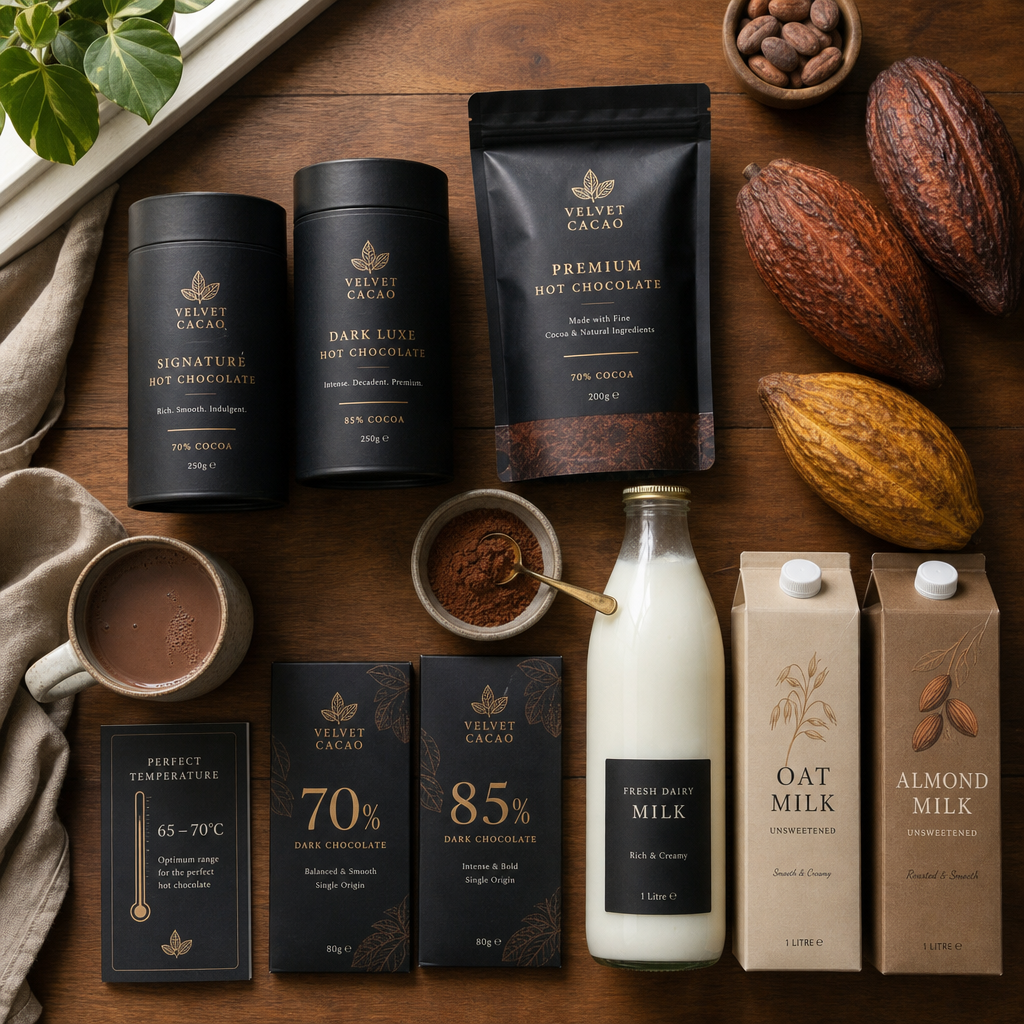
The target temperature for hot chocolate milk is 65 to 70°C. At this temperature, the milk is hot enough to fully dissolve the cocoa product and feel steaming in the cup, but not so hot that the milk proteins denature and produce off-flavours. A kitchen thermometer costs under £10 and removes all guesswork from this step.
If you do not have a thermometer, the practical test is to watch for the first wisps of steam rising steadily from the surface of the milk. At this point, small bubbles will be forming at the edges of the pan. This is the right moment. Remove the milk from the heat before it reaches a rolling simmer.
"Temperature control is the single most underestimated variable in making hot drinks at home. Most people overheat milk and wonder why their drink tastes flat." - Specialty Coffee Association, Barista Skills Training Framework
The Technique That Changes Everything
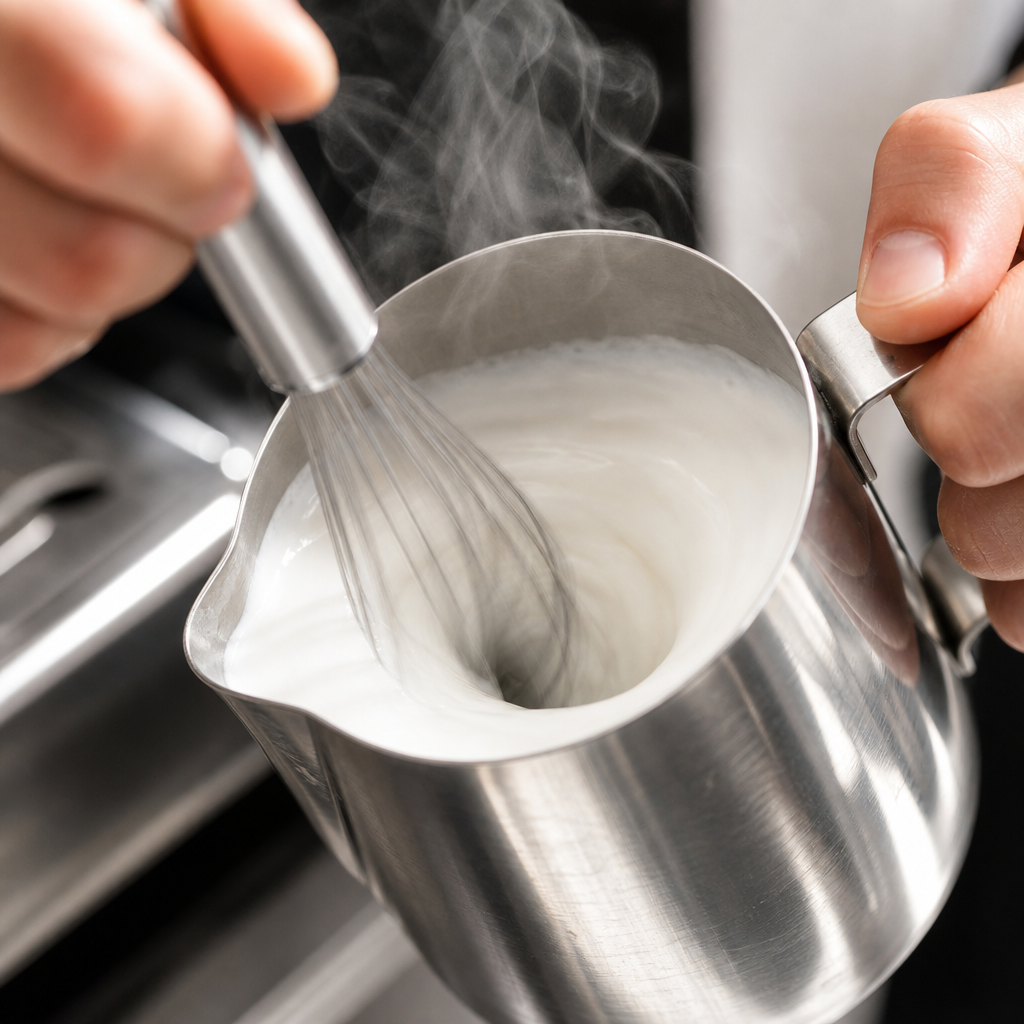
The café method for hot chocolate does not require a commercial milk steamer. It requires a small amount of structure and the right tool, which is a hand whisk or a small milk frother.
Start by placing your hot chocolate powder into the mug first. Add a small amount of hot water, roughly 30ml, and stir aggressively until you have a smooth, lump-free paste. This step is called blooming, and it ensures the cocoa solids are fully hydrated before the milk is added. Skipping this step is why most homemade hot chocolate has a slightly gritty texture at the bottom of the cup.
The two-stage whisk method
Once your cocoa paste is ready, heat your milk to 65-70°C. Pour roughly a quarter of the milk into the mug and whisk or froth vigorously until fully combined with the paste. Then add the remaining milk in a slow, steady pour while continuing to whisk. This two-stage approach prevents lumping and builds the emulsified, velvety texture that defines café-style hot chocolate.
In practice, the total whisking time is about 60 to 90 seconds. It is not long. But it is the difference between a good hot chocolate and an excellent one.
Pro tip: A battery-powered milk frother, available from Farrer's and most kitchen shops for under £8, does this job better than a hand whisk and takes 20 seconds. It is the single most impactful small piece of kit for making premium hot drinks at home.
Comparison: Hot Chocolate Methods
| Method | Texture and Flavour Result | Best Suited For |
|---|---|---|
| Stir directly into hot milk (standard home method) | Thin, inconsistently mixed, often gritty at the bottom. Cocoa not fully emulsified into milk. | Speed over quality. Acceptable with high-sugar supermarket products that dissolve easily. |
| Bloom paste then two-stage whisk (recommended method) | Smooth, velvety, fully integrated. Cocoa flavour distributed evenly throughout the cup. Café-style result achievable at home. | Anyone using a premium hot chocolate product who wants a genuinely café-quality result. |
| Saucepan method with grated chocolate | Rich and very thick. Deeply flavoured but more time-intensive. Closer to a drinking chocolate than a barista-style hot chocolate. | Weekend treats. Works best with high-quality dark chocolate at 70% cocoa or above. |
Dairy-Free and Alternative Milk Options
The premium hot drinks category has shifted significantly toward plant-based milk options, and this is relevant for anyone making hot chocolate at home. According to Statista, the UK plant-based milk market was valued at over £400 million in 2023 and continues to grow. This means more options, but also more variability in how well each milk type performs in a hot chocolate recipe.
Oat milk is the most widely recommended alternative for hot chocolate. Barista-edition oat milk, which has added oil to improve frothing and body, works particularly well. It has a naturally mild sweetness that complements rather than competes with cocoa flavour. Heat it carefully, keeping it under 70°C, and froth it immediately before pouring.
Milks that work and milks that do not
Coconut milk from a tin produces a thick, sweet, and richly flavoured hot chocolate with a tropical edge. It works well with darker, more bitter cocoa products because the sweetness of the coconut balances the bitterness effectively. Use a 50:50 blend of tinned coconut milk and water to avoid the drink being overwhelmingly rich.
Almond milk is the most difficult alternative to work with for hot chocolate. It is naturally thin, tends to separate when heated, and has a flavour that can clash with some cocoa profiles. If almond milk is your preference, use a barista-edition product and accept that the texture will be closer to a thin drinking chocolate than a velvety café-style result.
Soy milk performs well technically, with good protein content for frothing, but its flavour can be polarising when paired with certain hot chocolate products. Test it with your specific cocoa product before committing.
Finishing Touches That Actually Make a Difference
The gap between a good hot chocolate and a great one is often in the details that take ten extra seconds each. These are not decorative choices. They have a measurable effect on flavour and experience.
A small pinch of sea salt added to the cocoa paste before blooming amplifies the chocolate flavour noticeably. Salt suppresses bitterness and enhances sweetness without making the drink taste salty. This is a well-established technique in professional pastry and chocolate work.
Spices that enhance rather than mask
A small amount of ground cinnamon, roughly a quarter of a teaspoon per cup, adds warmth and complexity without overpowering the cocoa. Cayenne pepper, used very sparingly at around one-eighth of a teaspoon, creates a Mexican-style hot chocolate with a slow heat that builds after each sip. Both spices should be added to the cocoa paste at the blooming stage so they integrate fully rather than floating on the surface.
Vanilla extract, half a teaspoon per cup, rounds out the flavour and adds a subtle sweetness that reduces the need for added sugar. Use a real extract rather than vanilla flavouring. The difference in quality is significant and detectable in the cup.
On the question of toppings: whipped cream, a dusting of cocoa powder, and a few marshmallows are legitimate pleasures. But treat them as additions to an already excellent drink, not as a way to disguise a mediocre one. When your base is built on a quality hot chocolate product and correct technique, the toppings enhance rather than compensate.
Frequently Asked Questions
What is the difference between hot chocolate and drinking chocolate?
Hot chocolate is made from cocoa powder or cocoa mass mixed into hot milk, producing a richer, more intense drink with higher cocoa content and lower sugar. Drinking chocolate typically refers to a sweeter product with added sugar and dried milk, designed to dissolve easily in hot water or milk with minimal preparation. Premium hot drinks made at home almost always use a hot chocolate product rather than a drinking chocolate for a more complex, less sugary result.
How much hot chocolate powder should I use per cup?
For a 200ml cup of whole milk, use 20-25g of a high-quality hot chocolate powder. This equates to roughly 2 heaped tablespoons. With lower-quality products, recipes often call for more powder to compensate for weak cocoa flavour, but with a premium product, using the correct amount produces a balanced, rich cup without excessive sweetness.
Can I make hot chocolate at home without a milk frother?
Yes. A small balloon whisk works well and produces a similar result to a frother if you whisk vigorously for 60 to 90 seconds after combining the cocoa paste with the milk. A jar with a lid also works: add the hot milk and cocoa paste, seal the lid, and shake for 30 seconds. The frother is simply faster and more consistent, not strictly necessary.
Why does my hot chocolate taste bitter even with a good product?
Bitterness in hot chocolate usually comes from one of three sources: milk that has been overheated above 80°C, cocoa powder that has been measured too generously without balancing sweetness, or a cocoa product with a very high percentage of raw cocoa solids used without adjustment. Add a small pinch of salt and a half teaspoon of vanilla extract to the cocoa paste before blooming. This reliably reduces perceived bitterness without adding significant sweetness.
Is hot chocolate at home significantly cheaper than buying from a café?
Yes, substantially. A single serving of café-style hot chocolate at home using a premium product costs roughly 60-80 pence in ingredients, including the milk. A comparable hot chocolate from a specialist café typically costs £3.50 to £5.00 in the UK. Over a month of daily hot chocolates, making it at home saves between £80 and £120 without any compromise in quality when the right product and technique are used.
What mug size gives the best result for hot chocolate at home?
A 250-300ml mug is the ideal size for a café-style hot chocolate. Smaller mugs cool too quickly, especially if not pre-warmed. Larger mugs above 400ml dilute the flavour ratio and make it harder to maintain the right milk-to-powder balance. Pre-warming the mug with boiled water for 60 seconds before making the drink keeps the temperature stable for longer and noticeably improves the drinking experience.
What does your current hot chocolate routine look like, and what is the one thing that has made the biggest difference to the result? Share your experience in the comments.
References
- UK plant-based milk market data and consumer trend statistics from Statista
- Forbes coverage of premium hot drinks and the growth of artisan food and beverage in the UK
- UK Food Standards Agency guidance on food labelling, cocoa content declarations, and ingredient listing rules
- Peer-reviewed food science research on cocoa flavonoid composition, emulsification behaviour, and temperature effects on milk proteins
- BBC Food's reference resource for cocoa varieties, drinking chocolate history, and home preparation techniques


