

Most people have no idea they've been drinking stale coffee. The bag looks fine. The label says "freshly roasted." But the flat, bitter cup in your hand tells a different story. Stale coffee is more common than the industry likes to admit, and it quietly ruins what should be one of the best parts of your day.
Research from the Specialty Coffee Association shows that coffee begins losing its optimal flavour compounds within days of roasting if not properly sealed and stored. Here are the five signs you've been buying stale coffee, and exactly what to do about it.
Table of Contents
- Quick Takeaways
- Sign 1: Your Coffee Doesn't Bloom When You Brew It
- Sign 2: The Aroma Is Flat or Cardboard-Like
- Sign 3: The Taste Is Bitter, Hollow, or Just Plain Dull
- Sign 4: There's No Roast Date on the Bag
- Sign 5: The Bag Has No One-Way Degassing Valve
- How to Fix It: Switching to Freshly Roasted Coffee
- Why a Coffee Subscription UK Makes Stale Coffee a Thing of the Past
- Comparing Your Coffee Buying Options
- Frequently Asked Questions
- References
Quick Takeaways
| Key Insight | Explanation |
|---|---|
| No bloom means no freshness | Fresh coffee releases CO2 when hot water hits it, creating a bloom. No bloom means the CO2 has already escaped, which only happens with stale coffee. |
| Aroma is the first thing to go | Volatile aromatic compounds degrade within 7 to 10 days of roasting if coffee is stored in poor conditions. A flat-smelling bag is a clear warning sign. |
| Roast date beats best-before date | Best-before dates can be 24 months out. A roast date tells you when the coffee was actually alive. Always look for the roast date. |
| Supermarket coffee is often months old at purchase | From roasting to warehouse to shelf to your basket, supermarket coffee commonly sits for 6 to 12 months before you open it. |
| One-way valves are a quality indicator | A degassing valve lets CO2 out without letting oxygen in. No valve usually means the roaster waited for degassing to finish before packing, which takes weeks. |
| Freshly roasted coffee has a sweet spot | Most specialty roasters recommend brewing between 5 and 21 days after roast. Too fresh and it's gassy; too old and it's flat. |
| A regular delivery schedule solves the problem entirely | A coffee subscription UK ensures you receive coffee within days of roasting, on a schedule that matches your consumption rate. |
Sign 1: Your Coffee Doesn't Bloom When You Brew It
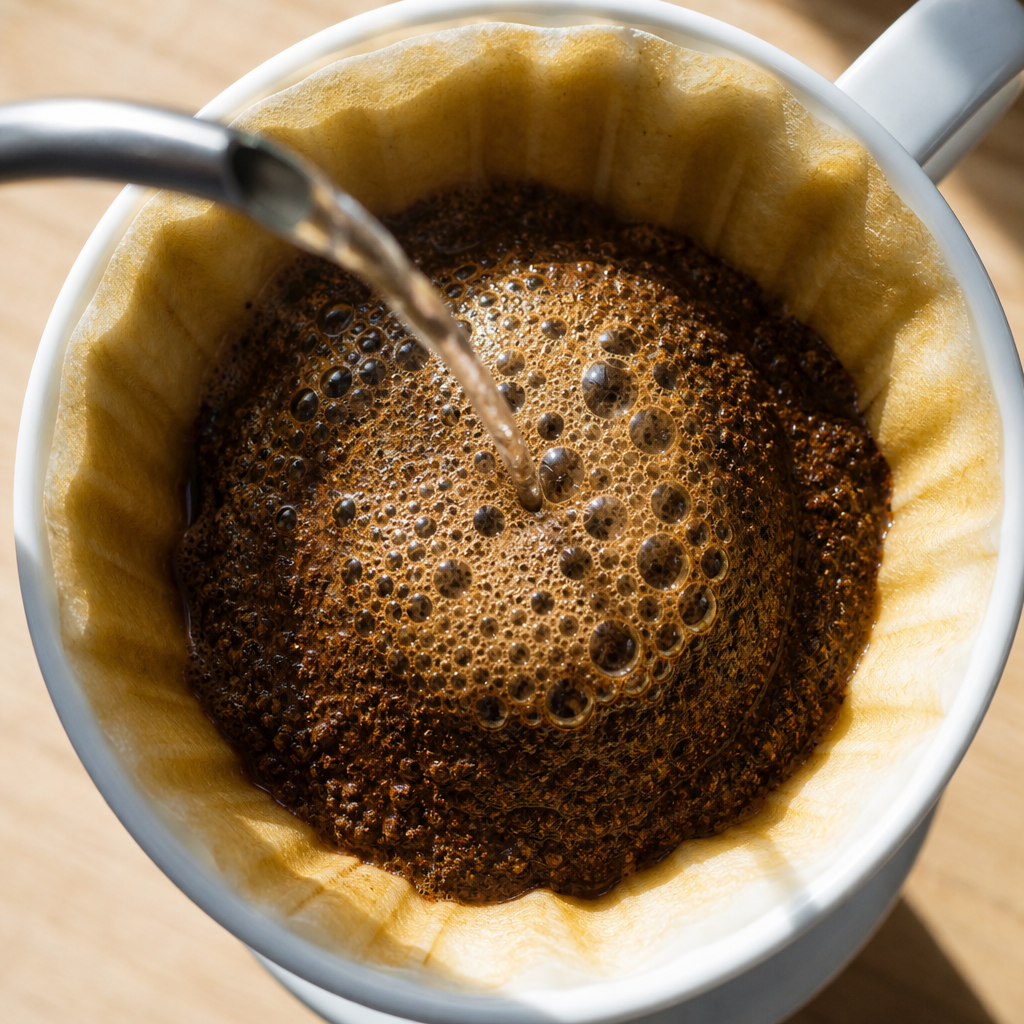
Pour hot water over your ground coffee and watch what happens. If you're using a pour-over, cafetiere, or AeroPress, fresh coffee will visibly swell and bubble. This is called the bloom, and it's caused by CO2 escaping rapidly from recently roasted beans. It's not cosmetic. It's chemical proof that your coffee is alive.
If nothing happens, if the grounds just sit there looking flat and grey, your coffee has already off-gassed completely. That CO2 left the building weeks or months ago. What remains is oxidised, stale coffee that will produce a hollow, muted cup no matter how precise your brewing technique is.
In practice, a strong bloom that lasts 30 to 45 seconds during a pour-over pre-infusion is a reliable indicator of coffee roasted within the past two to three weeks. At Farrer's, beans are roasted and hand-packed to order, which means the bloom is almost always visible and vigorous when they arrive.
Pro tip: Test your current coffee right now. Use 15g of grounds and 50ml of water at 93 degrees Celsius. If you see less than 5mm of rise and no bubbling within 20 seconds, your coffee is stale and no brewing trick will fix it.
Sign 2: The Aroma Is Flat or Cardboard-Like
Open your coffee bag right now and take a deep breath. What do you smell? Fresh, well-roasted coffee has a complex, immediate aroma. Depending on the origin, you might catch notes of dark chocolate, caramel, citrus, berries, or stone fruit. The smell should be strong enough to hit you before your nose reaches the bag.
Stale coffee smells like almost nothing, or worse, it smells like cardboard, wet paper, or damp grain. Those are the smells of oxidation and moisture absorption. The volatile aromatic compounds that make coffee smell incredible are among the most fragile elements of a roasted bean, and they deteriorate faster than almost anything else.
Why Supermarket Coffee Smells Weak
A common mistake is assuming that a well-known brand on a supermarket shelf equals quality. In practice, the coffee on that shelf was roasted months before you bought it.
The journey from roaster to regional warehouse to national distribution centre to store shelf to your basket routinely takes six to twelve months. No seal, no valve, and no clever packaging slows the aroma loss enough to matter after that kind of timeline.
Freshly roasted coffee from an independent roaster, dispatched within 24 to 48 hours of roasting, smells completely different. It's not a subtle difference. It's the difference between a fresh loaf of bread and a two-week-old cracker.
Sign 3: The Taste Is Bitter, Hollow, or Just Plain Dull
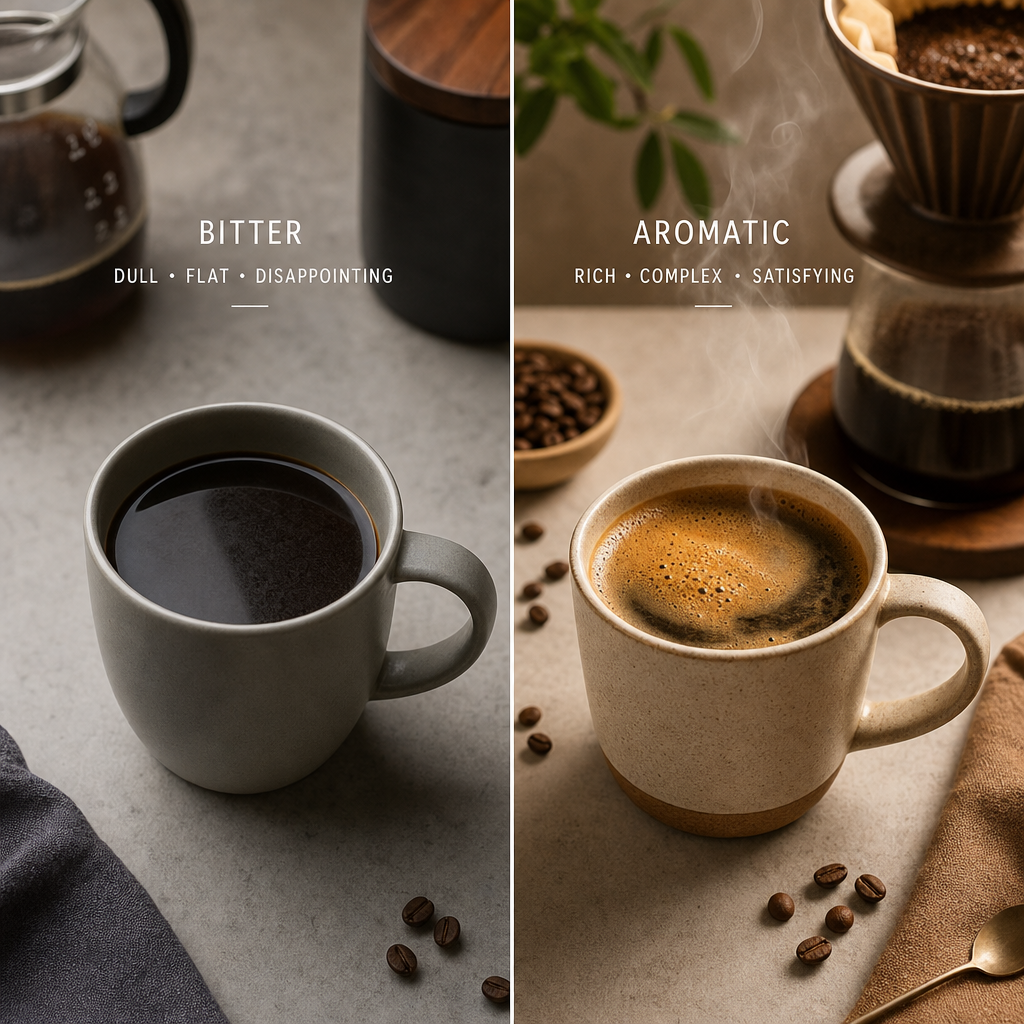
Bitterness in coffee is not just about roast level or brewing temperature. Over-extraction and staleness both produce bitterness, but they feel different on the palate. Over-extracted coffee is aggressively bitter and astringent. Stale coffee is bitter and hollow. There's no sweetness underneath, no finish, no complexity. It tastes like it's been through a process that stripped everything interesting out of it.
If you've been blaming your grinder, your kettle, or your technique for years and the cup still disappoints, the coffee itself is almost certainly the problem. The data consistently shows that freshness accounts for the majority of perceived cup quality in blind taste tests conducted by specialty coffee organisations.
What Good Coffee Actually Tastes Like
A properly fresh cup of a well-sourced blend should have a perceptible sweetness, even in a black coffee with no sugar. This comes from the Maillard reaction during roasting, which creates compounds that taste sweet, nutty, or caramel-like. Stale coffee loses those compounds to oxidation. What's left is predominantly bitter chlorogenic acid degradation products.
Farrer's blends, including their flagship Lake District Blend, are specifically profiled to highlight this sweetness and body when brewed fresh. If you're drinking a blend described as smooth and sweet but your cup tastes flat and bitter, freshness is the variable to fix first.
Sign 4: There's No Roast Date on the Bag
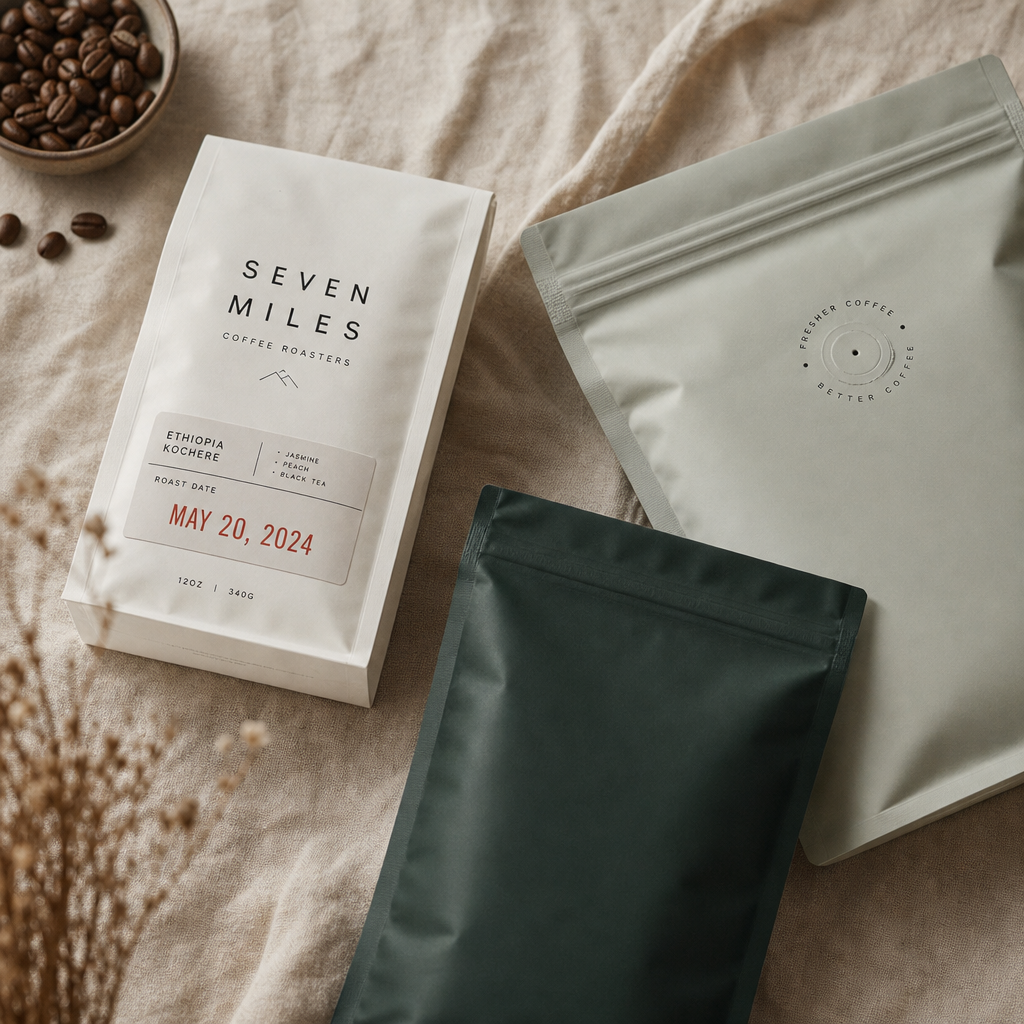
This one is a hard rule. If a coffee bag does not display a roast date, not a best-before date, but an actual roast date, walk away. The roaster is either hiding something or doesn't think freshness matters enough to advertise. Neither option is acceptable when you're paying premium prices for specialty coffee.
Best-before dates are legally required on food products but they tell you nothing about freshness at the time of purchase. A bag roasted 18 months ago with a best-before date of 24 months is technically within date but practically worthless for serious coffee drinking.
"The roast date is the single most important piece of information on a coffee bag. Without it, you're making a blind purchase." -- James Hoffmann, World Barista Champion and author of The World Atlas of Coffee
Independent roasters who take freshness seriously, including Farrer's, always print the roast date on every bag. It's a mark of transparency that separates genuine craft roasters from commodity coffee packagers who would rather you not think too carefully about when the coffee was made.
Pro tip: When ordering freshly roasted coffee online, look for roasters who roast to order rather than from pre-roasted stock. Farrer's roasts and packs by hand before dispatch, which means the date on your bag reflects the actual day your specific batch was roasted.
Sign 5: The Bag Has No One-Way Degassing Valve
Freshly roasted coffee releases CO2 for days after roasting. If you seal it immediately in an airtight bag without a one-way degassing valve, the CO2 builds up pressure and can rupture the seal. The valve allows CO2 to escape without letting oxygen in, protecting the beans during that active degassing window.
A bag with no valve usually means one of two things. Either the roaster waited weeks after roasting for degassing to finish before sealing, or the packaging doesn't prioritise oxygen exclusion at all. Both scenarios result in coffee that has aged significantly before it reaches you.
This is not a minor technicality. Oxygen is the primary enemy of roasted coffee. Once oxygen contacts the oils and aromatic compounds on the surface of roasted beans, degradation starts immediately. A one-way valve isn't a gimmick. It's a functional requirement for delivering genuinely fresh coffee.
How to Fix It: Switching to Freshly Roasted Coffee
The fix is direct and immediate. Stop buying coffee from supermarkets or multi-channel retailers who can't tell you when the coffee was roasted. Start buying from a craft roaster who roasts to order, prints the roast date on the bag, and dispatches within 24 to 48 hours.
Beyond sourcing, store your coffee correctly once it arrives. Keep it in its original valve bag, sealed, at room temperature away from direct sunlight. Do not refrigerate or freeze whole beans unless you're storing a large quantity for more than a month, in which case freezing in an airtight container is acceptable. The freezer introduction of moisture on thawing is the risk, not the cold itself.
Grinding Fresh vs. Pre-Ground Coffee
Whole beans retain freshness significantly longer than pre-ground coffee. Once ground, the surface area of coffee exposed to oxygen increases by roughly 10,000 times, and flavour degradation accelerates from weeks to minutes. If you're serious about fixing stale coffee, investing in a burr grinder and grinding immediately before brewing is not optional. It's the second most impactful change you can make after sourcing freshly roasted beans.
That said, Farrer's offers both whole bean and freshly ground options, with grinding done to order on dispatch. For customers without a grinder, freshly ground and dispatched within 24 hours is still a dramatic improvement over supermarket pre-ground sitting on a shelf for months.
Why a Coffee Subscription UK Makes Stale Coffee a Thing of the Past
A coffee subscription UK solves the staleness problem structurally, not just once but every single delivery. Instead of buying coffee reactively when you run out (which often means grabbing whatever's convenient, usually stale supermarket stock), a subscription delivers freshly roasted coffee on a schedule calibrated to your actual consumption rate.
The compounding advantage is consistency. When every bag arrives within days of roasting, you develop a calibrated sense of what good coffee actually tastes like. Returning to supermarket coffee after a month on a quality subscription is genuinely shocking. The difference is that pronounced.
Farrer's offers a coffee subscription with next-day dispatch on orders over £35, roasted and hand-packed to order. For trade customers, cafes, and restaurants, the subscription model also provides cost predictability and eliminates the risk of serving guests coffee that's been sitting in a cupboard for three months.
Comparing Your Coffee Buying Options
| Buying Method | Typical Freshness at Purchase | Verdict |
|---|---|---|
| Supermarket shelf coffee (major brands) | 6 to 18 months post-roast. No roast date provided. Best-before date only. | Avoid for any quality-focused brewing. Acceptable only as a last resort. |
| Online specialty roaster (roast to order) | 1 to 5 days post-roast at dispatch. Roast date always printed. One-way valve packaging standard. | The correct choice for home enthusiasts and trade buyers who care about cup quality. |
| Coffee subscription UK (e.g., Farrer's) | 1 to 5 days post-roast, delivered on a regular schedule aligned to consumption rate. | Best option for consistent freshness without the effort of remembering to reorder. Eliminates stale coffee entirely. |
Frequently Asked Questions
How long does freshly roasted coffee stay fresh after opening?
Whole bean coffee is at its best between 5 and 21 days after roasting, and once opened, you have roughly 2 weeks before meaningful flavour degradation becomes noticeable. Pre-ground coffee degrades much faster, often within 20 to 30 minutes of grinding if left exposed to air. Seal your bag tightly after every use and store it away from heat and light.
Is stale coffee harmful to drink?
Stale coffee is not harmful in the sense of being unsafe. It will not make you ill. However, oxidised coffee contains higher concentrations of degraded chlorogenic acids and lipid oxidation products that contribute to bitterness, digestive discomfort in sensitive individuals, and a genuinely unpleasant cup. The harm is to taste and experience, not to health.
Does expensive coffee mean fresh coffee?
Not automatically. Price reflects origin, processing method, and brand positioning, none of which guarantee freshness. A £20 bag of single-origin coffee roasted six months ago is worse than a £9 bag roasted last week. Always prioritise roast date over price when evaluating a coffee purchase.
Can you revive stale coffee beans?
No. Once coffee has oxidised, you cannot reverse the chemical changes. Roasting stale beans again would simply burn them further. The only solution is to buy fresher coffee. Some people add stale beans to cold brew, where the long extraction and dilution with milk or water masks the flatness, but this is damage limitation, not restoration.
How does a coffee subscription UK work at Farrer's?
Farrer's subscription delivers freshly roasted, hand-packed coffee on a schedule you choose, typically weekly, fortnightly, or monthly depending on how quickly you go through it. Orders over £35 qualify for next-day dispatch. You can select from their range of blends and single origins, and the coffee is roasted to order before it's packed and sent, meaning freshness is built into the model rather than being an afterthought.
What grind size should I use for freshly roasted coffee?
Freshly roasted coffee that is still actively degassing is slightly more resistant to extraction than coffee that has rested for a few days. A common adjustment is to grind slightly coarser for the first 3 to 5 days after roast, then return to your standard grind setting. This is particularly relevant for espresso, where even small grind changes significantly affect extraction pressure and flavour.
Have you tested the bloom on your current coffee? Share what you found in the comments, it's one of the quickest ways to find out whether your coffee supplier is actually delivering on freshness.
References
- Specialty Coffee Association research on coffee freshness standards and flavour degradation
- Statista data on UK coffee consumption trends and specialty coffee market growth
- Forbes coverage of the specialty coffee industry and consumer shift toward artisanal roasters
- UK Food Standards Agency guidance on food labelling including best-before and use-by date regulations
- Peer-reviewed research on coffee oxidation chemistry and post-roast flavour compound degradation


