

Most people who drink good coffee have never stood inside a working roastery. They buy the bag, they brew the cup, and the gap in between stays invisible. That gap is exactly where quality is made or lost, and at Farrer's coffee roastery in Kendal, it has been navigated with practiced precision since 1819.
What happens inside those walls is not mysterious, but it is specific, and understanding it gives you a sharper eye for why some coffees taste the way they do and why so many others disappoint. This is as close to a full day behind the scenes as you can get without booking a ticket.
Table of Contents
- Quick Takeaways
- The Setting: Kendal and Why It Matters
- Green Bean Intake: The First Decision That Shapes the Cup
- Inside the Roast: What the Drum Actually Does
- Hand Packing: Why It Is Not Just a Marketing Phrase
- The Blends That Come Out of This Process
- Roastery Experience Days and Barista Training
- Roasting Approaches Compared
- Frequently Asked Questions
- References
Quick Takeaways
| Key Insight | Explanation |
|---|---|
| Farrer's has roasted in Kendal since 1819 | It is the UK's oldest active coffee roastery, with over 200 years of continuous operation, not a revival or a rebrand. |
| Kendal's location improves post-roast quality | The cool, low-pollution air of Cumbria reduces oxidative stress on freshly roasted beans during the critical cooling and packing stages. |
| Green bean grading precedes every roast | Beans are assessed on defect count, moisture content, and screen size before they go anywhere near a drum. No roasting technique fixes a poorly sourced bean. |
| Hand packing protects freshness in a measurable way | Individual staff weigh, fill, and seal each bag, reducing the dwell time between roasting and sealing, which preserves CO2 and aromatic compounds. |
| Peak flavour window is 4 to 21 days post-roast | Buying directly from the roastery, with next-day dispatch on orders over £35, means you receive beans well within that window. |
| Four master roasters work on a team of 16 | The ratio of expertise to output is high. Many team members are from in and around Kendal, which gives the operation genuine local continuity. |
| Roastery Experience Days let you see every stage in person | Visitors are guided through the full journey from green bean intake to cupping, and leave with a personal blend they created themselves. |
The Setting: Kendal and Why It Matters
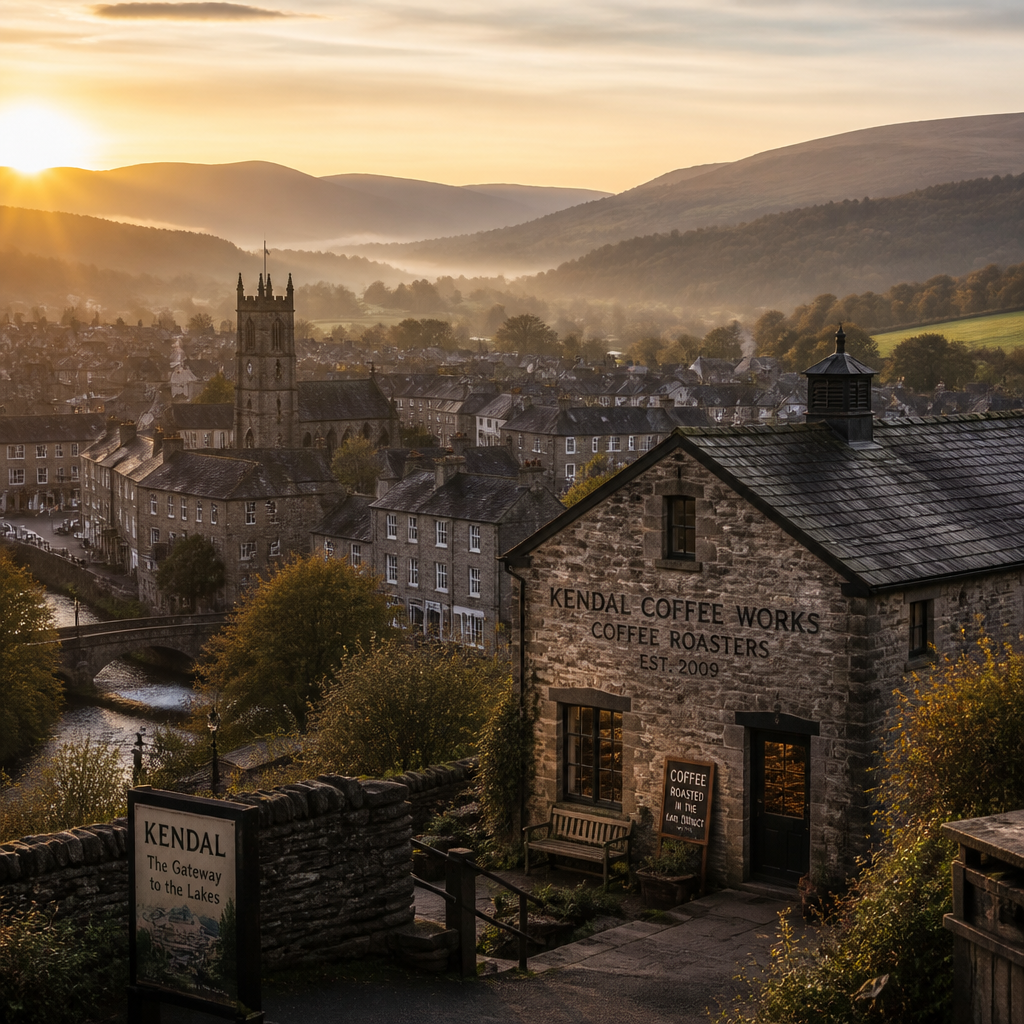
Kendal sits at the southern gateway to the Lake District. That geography is not incidental to coffee quality. Ambient conditions inside a roastery directly affect the post-roast stabilisation of beans, and the relatively cool, low-pollution air of Cumbria reduces the oxidative stress on freshly roasted coffee during the cooling and packing stages, when beans are at their most chemically active.
Roasteries in dense urban environments deal with higher ambient temperatures and particulate air quality that can accelerate staling. A working roastery in a rural Cumbrian setting holds a real environmental advantage at exactly the stages that matter most. This is not a selling line. It is a physical reality of how coffee chemistry behaves after roasting.
What began in 1819 as a small shop on Stricklandgate grew alongside the town itself. The current operation is now housed in a modern, state-of-the-art roastery on the edge of Kendal, with the same town and the same surrounding landscape providing the working environment.
That distance from the trends that dominate London's specialty coffee scene has historically produced restraint. The core blends at Farrer's have remained consistent for generations, not because the roastery has been standing still, but because it has never chased fashion at the expense of quality.
"No roasting technique rescues a poorly sourced bean." The sourcing decision is made weeks before a customer ever opens a bag, and everything downstream depends on getting it right.
Green Bean Intake: The First Decision That Shapes the Cup
The roasting process starts long before any bean enters a drum. Green bean selection is the single most consequential decision a roastery makes, and it is invisible to the end customer. Farrer's approach is deliberate and prioritises consistent supply relationships over chasing single-origin novelty for its own sake.
How Beans Are Graded Before Roasting
Incoming green coffee is graded on three factors: defect count, moisture content, and screen size. The Specialty Coffee Association grades specialty-level coffee against a 350-gram sample standard: zero primary defects and a maximum of five secondary defects qualifies a batch as specialty grade. This assessment is done before roasting begins. A batch that does not meet the threshold does not go into the drum.
Moisture content matters because water inside the bean affects how heat transfers during roasting. Too high and the bean steams from the inside rather than developing properly. Too low and the batch risks scorching before the internal temperature reaches the right development range. Screen size, which refers to the physical diameter of the bean, matters because uniformity of size within a batch ensures even heat distribution. Mixed-size batches produce inconsistent roasts within the same drum load.
Pro tip: When you see a coffee described as "specialty grade," it means the green beans passed this grading before roasting. It does not automatically mean the roasting was done well, but it does mean the raw material cleared a defined quality bar.
Sourcing Relationships Over Trend-Chasing
Farrer's sources from trusted partners, including producers in South and Central America and Asia. Long-term relationships with producers matter because they give a roastery reliable access to consistent lots year after year. A coffee that is available once and gone is a poor foundation for a blend that has to taste the same every time a customer reorders.
Inside the Roast: What the Drum Actually Does
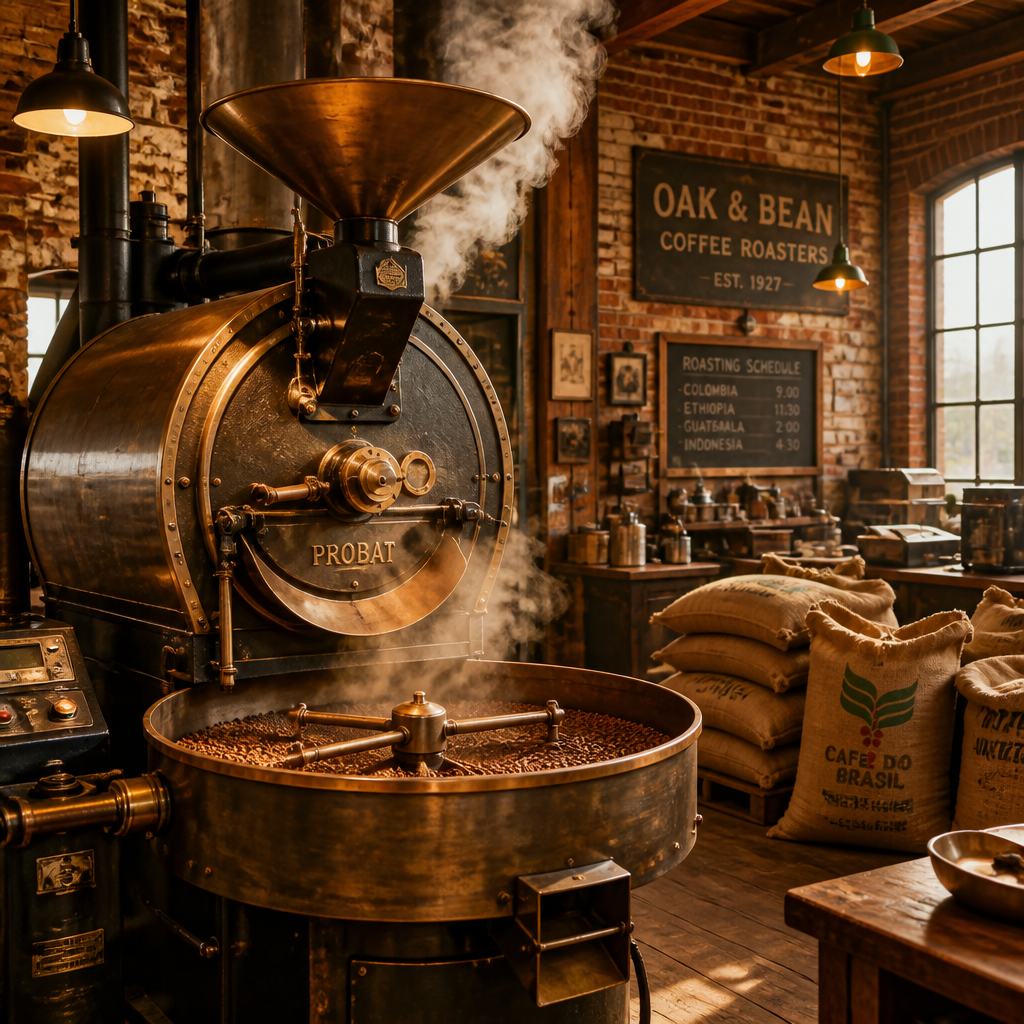
Watching a roast in progress is one of those experiences that permanently changes how you think about the bag sitting in your kitchen. Green beans go into the drum grey-green and dense. Over the course of the roast, they lose moisture, expand in size, and undergo a cascade of chemical reactions that produce the flavour compounds you actually taste in the cup.
The Stages a Roaster Monitors
The roaster monitors temperature, time, and the visual and audible signals the beans give off. The first crack, a popping sound caused by expanding steam and CO2 breaking through the bean structure, marks the boundary between an underdeveloped roast and a fully developed one. Everything after first crack is a decision about how much development to add. Roasting further past first crack takes the beans toward medium and then dark profiles, increasing body and decreasing the acidity of the origin character.
Batch roasting, rather than large continuous production runs, is how Farrer's operates. Batch sizes are kept considered, which means each drum load gets the attention it requires rather than being fed through a high-volume production line. The practical consequence is that the roaster can adjust parameters between batches based on what the incoming green lot demands, rather than applying a fixed programme regardless of the raw material's condition that day.
Pro tip: If you receive a bag of freshly roasted coffee and the valve on the pack is hard to press, that is the CO2 that was preserved by fast packing after roasting. That pressure is a sign of freshness, not a defect. Do not store the bag sealed without the valve venting, or it will pressurise.
Why Small Batches Produce Better Consistency
A common mistake when evaluating a roaster is to assume that more equipment and faster throughput equals better quality. It does not. Smaller batches give a roaster finer control over the heat curve and more opportunity to respond to variations in the green lot. Four master roasters working in a team of 16 means the ratio of experienced human judgement to output is high. That is a structural advantage over automated high-volume operations, not a romantic story about artisanship.
Hand Packing: Why It Is Not Just a Marketing Phrase
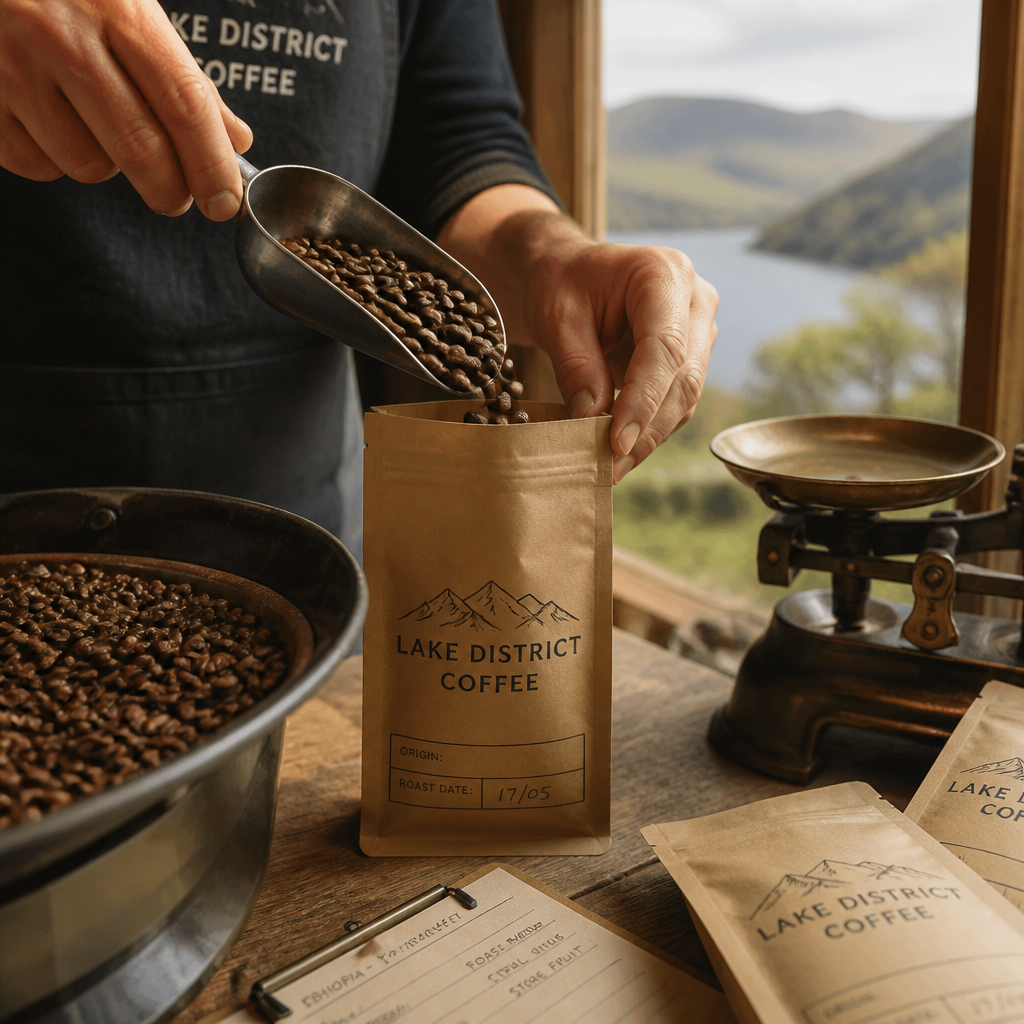
Once the roasted beans have been cooled, they move to packing. Farrer's packs by hand. This means individual staff members weigh, fill, and seal each bag rather than an automated volumetric line. The practical benefit is reduced dwell time between roasting and sealing, which preserves CO2 and the aromatic compounds that have just been developed in the drum.
Automated packing lines, particularly high-volume ones, often involve holding roasted beans in intermediate storage hoppers before they reach the bag. Every hour in an open or semi-open hopper accelerates staling, especially if the holding environment is warm. Hand packing collapses that window. Beans go from cooling tray to sealed valve bag in a short timeframe.
It is genuinely harder to tolerate a stale supermarket bag once you have seen freshly roasted beans go straight into a hand-packed valve bag. That direct comparison is available to anyone who books a Roastery Experience Day and sees the packing stage in person.
The Blends That Come Out of This Process
The sourcing, roasting, and packing disciplines described above produce a range of coffees that have been refined over generations. The No.1 Blend draws on beans from South and Central America alongside Asia: the South and Central American element brings a rich, smooth, nutty backbone, while the Asian component adds a clean, complex, sweet character. The two origins are balanced across the roast rather than allowed to compete.
The Westmorland Blend is a medium roast built for versatility. It works across brewing methods without demanding a specific technique, and its flavour profile of nuts and mild chocolate is designed for consistency rather than novelty. This is a blend intended for people who found something they like and want it to taste the same every time they order. That is not a lower ambition than chasing rotating single origins. For most home brewers and almost all café operators, reliability is the higher priority.
The consistency across the range is a direct result of what happens in the roastery. Blends handed down through generations have been refined but never rushed. They reflect over 200 years of accumulated understanding of how specific origins behave under heat and how to combine them to produce a predictable result. A subscription to a Farrer's blend is built on that institutional knowledge, not on a recipe that was invented last year.
Roastery Experience Days and Barista Training
Farrer's offers two structured ways to engage directly with what happens inside the roastery, each suited to a different level of interest and professional need.
The Roastery Experience Day
The Roastery Experience Day is a guided visit that takes you through the history from 1819 to the present day, then into the working roastery itself. You see how green coffee is taken through its full journey into roasted beans. The session includes coverage of how coffee is grown, processed, and harvested, then moves into cupping: tasting coffees from different origins to develop your sensory understanding. The day finishes with creating a personal blend to take home. The adult ticket is priced at £40.
This is not a marketing tour. It is the fastest way to develop a calibrated opinion about what you are tasting in your cup. Seeing the green bean intake, the roast, and the packing in sequence removes the abstraction from any quality claim a bag makes on its label.
Barista Training for Trade and Home
The barista training programme is available both at the roastery in Kendal and on-site at your business. It is accredited by the Beverage Standards Association (BSA). The full-day course covers espresso preparation, milk steaming and foaming, and preparing a range of coffees, with customer interaction around coffee and tea also covered. It is delivered at the BSA-approved centre in Kendal or brought to your site.
For café and hospitality operators who use Farrer's coffee, the training is a logical complement to supply. Understanding what went into producing the beans, and then knowing how to extract them properly, is the only way to honour the quality of what comes out of the roastery.
Roasting Approaches Compared
| Approach | What It Involves | Impact on the Cup |
|---|---|---|
| Small-batch artisan roasting (Farrer's approach) | Considered batch sizes, master roasters adjusting parameters per lot, hand packing direct after roasting | Higher consistency within a blend, better preservation of aromatics, faster route from drum to sealed bag |
| High-volume automated roasting | Large continuous production runs, standardised programmes across all lots, automated packing via holding hoppers | Throughput is high but variation in green lot quality is averaged out rather than addressed; more dwell time before sealing accelerates staling |
| Micro-roasting (very small experimental batches) | Extremely small batch sizes, frequent profile experimentation, often single-origin focused with rotating availability | High ceiling for exceptional individual cups but poor consistency across orders; not suited to trade supply or subscription reliability |
Frequently Asked Questions
What makes Farrer's a Lake District coffee roaster rather than just a Kendal business?
Kendal sits at the southern gateway to the Lake District, so Farrer's roastery sits at the entry point of the national park. The Cumbrian environment, including the cool air and low pollution levels, directly affects the quality of post-roast cooling and packing. The regional identity is physical, not just promotional.
How long has Farrer's been roasting coffee in Kendal?
Farrer's was established in Kendal in 1819 by John Farrer and has operated continuously since then. That makes it the oldest active coffee roastery in the UK, verified through historical records and the company's documented history. The current roastery is a modern, state-of-the-art facility on the edge of Kendal, not the original Stricklandgate premises.
Can I visit the roastery and see coffee being roasted?
Yes. Farrer's offers bookable Roastery Experience Days where you are guided through the working roastery, learn how coffee is grown, processed, and harvested, watch the roasting process in action, take part in a cupping session, and create a personal blend to take home. The adult ticket is £40. Details and booking are available on the Farrer's website.
Why does hand packing matter for coffee freshness?
Hand packing reduces the time between roasting and the bag being sealed. Automated production lines often hold roasted beans in intermediate hoppers, and every hour of open-air exposure accelerates the staling process. When individual staff members weigh, fill, and seal each bag directly after roasting, the CO2 and aromatic compounds developed in the drum are preserved rather than lost before the coffee even reaches a customer.
What is the best time to drink freshly roasted coffee after it has been roasted?
Coffee is at peak flavour between 4 and 21 days post-roast. Buying directly from Farrer's, which dispatches next-day on orders over £35, means your beans typically arrive well within that window. Supermarket stock can be months old by the time it reaches a shelf, which puts it far outside the optimal period regardless of how the coffee was originally roasted.
Is the barista training at the Kendal roastery open to non-trade customers?
The barista training programme is available at the roastery in Kendal and can also be delivered on-site at your business. It is accredited by the Beverage Standards Association. While it is particularly relevant for café and hospitality operators, anyone wanting professional-level barista skills can take the course. Contact Farrer's directly for current course availability and dates.
What is the difference between a blend and a single-origin coffee, and which should I buy from Farrer's?
A blend combines beans from multiple origins to produce a consistent, predictable flavour profile across every batch. A single origin features beans from one source and reflects the character of that specific region and harvest. For most home brewers and all café operators who need consistency across hundreds of cups, a well-developed blend such as the Westmorland Blend or the No.1 Blend is the more practical and reliable choice. Single origins are worth exploring once you know what you are tasting for.
If you have visited the Farrer's roastery or taken part in a Roastery Experience Day, share what stood out about the process in the comments below.
We would love your feedback and any insights you would share with others. What perspective would you add?
References
- From Bean to Bag: Inside Farrer's Kendal Roastery, covering green bean grading, roasting conditions, and hand packing
- Visit Lake District listing for John Farrer and Co., detailing the team, master roasters, and roastery background
- Farrer's Roastery Experience Day product page, including what visitors learn and what is included
- Farrer's barista training programme page, covering BSA accreditation, course content, and delivery options
- Farrer's blog post on the history of the UK's oldest coffee roaster, from 1819 to the present day


