

You can spend a fortune on specialty beans, buy the most expensive espresso machine on the market, and still end up with a cup that tastes flat, bitter, or sour. The culprit, more often than not, is grind size.
A proper coffee grind size guide is the single most important piece of knowledge a home brewer or café operator can have, because grind size controls how fast water pulls flavour from coffee grounds.
Get it wrong, and no amount of expensive equipment or premium beans will save the cup. Get it right, and even a modest setup can produce something genuinely excellent.
Table of Contents
- What Is Grind Size and Why Does It Matter?
- Quick Takeaways
- The Science of Extraction: What Your Grind Is Actually Doing
- Grind Size by Brew Method: The Definitive Breakdown
- Burr Grinder vs. Blade Grinder: Why It Is Not Really a Fair Fight
- Diagnosing Your Cup: Is It Under-Extracted or Over-Extracted?
- Grind Size Comparison Table
- Dialling In Espresso: The Finest Margin in Home Brewing
- Frequently Asked Questions
- References
What Is Grind Size and Why Does It Matter?
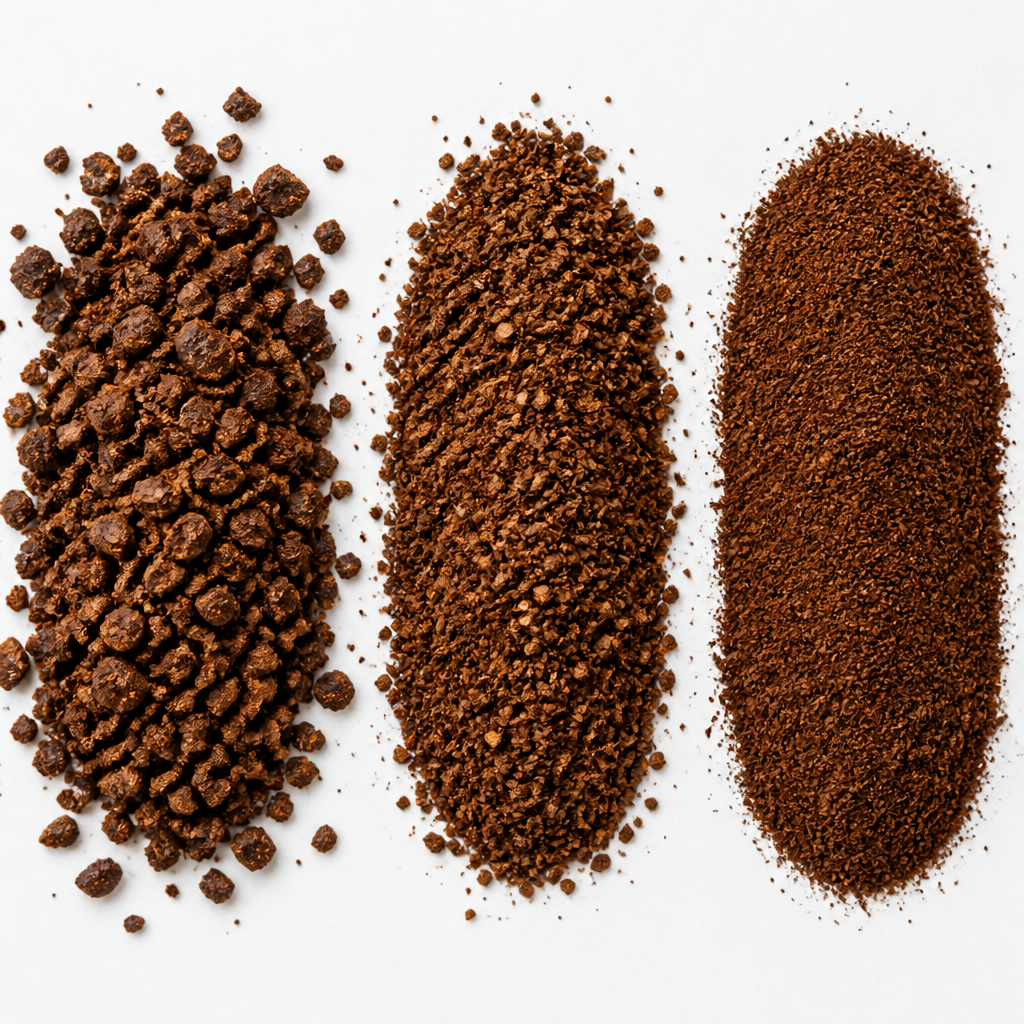
Grind size refers to the physical particle size of your coffee grounds after they pass through a grinder. It is measured in microns, though in practice most home brewers think in terms of coarse, medium, and fine.
The reason it matters so much comes down to surface area. Finer grounds expose more of the coffee particle to water, which speeds up extraction. Coarser grounds expose less surface area, slowing extraction down.
This relationship between particle size and extraction speed is the entire foundation of brewing. Every brew method has a different contact time between water and grounds. Match the grind to that contact time, and you get a balanced, flavourful cup. Mismatch them, and the water either pulls too much from the coffee or not enough, producing results that taste either harsh or hollow.
At Farrer's, we have been roasting coffee from the Lake District for over two hundred years. One thing that has never changed: the coffee itself is only part of the story. How you grind it determines the rest.
Quick Takeaways
| Key Insight | Explanation |
|---|---|
| Grind size controls extraction speed | Finer grounds have more surface area and extract faster. Coarser grounds slow extraction down. Match the grind to your brew method's contact time. |
| Espresso demands a fine, precise grind | Espresso grounds typically fall in the 200 to 400 micron range. Even a small deviation causes under- or over-extraction at a much higher rate than other brew methods, because high pressure amplifies every inconsistency. |
| French press needs a coarse grind | A coarse grind of roughly 800 to 1,100 microns prevents grounds from passing through the mesh filter and avoids over-extraction during the 4-minute steep. |
| Bitter coffee almost always means too fine or too long | Bitterness is a sign of over-extraction. The fix is grinding coarser, not buying different beans. |
| Sour or weak coffee usually means too coarse | Under-extraction produces sour, thin, and sometimes salty flavours. Grinding finer increases surface area and allows more complete extraction. |
| Burr grinders produce consistent particles, blade grinders do not | Blade grinders produce a chaotic mix of fine powder and large chunks. That inconsistency means simultaneous over- and under-extraction in the same cup. |
| Freshness and grind work together | Grinding fresh, just before brewing, preserves volatile aromatics. Pre-ground coffee loses those compounds quickly, so the grind size advantage is compounded by freshness. |
The Science of Extraction: What Your Grind Is Actually Doing
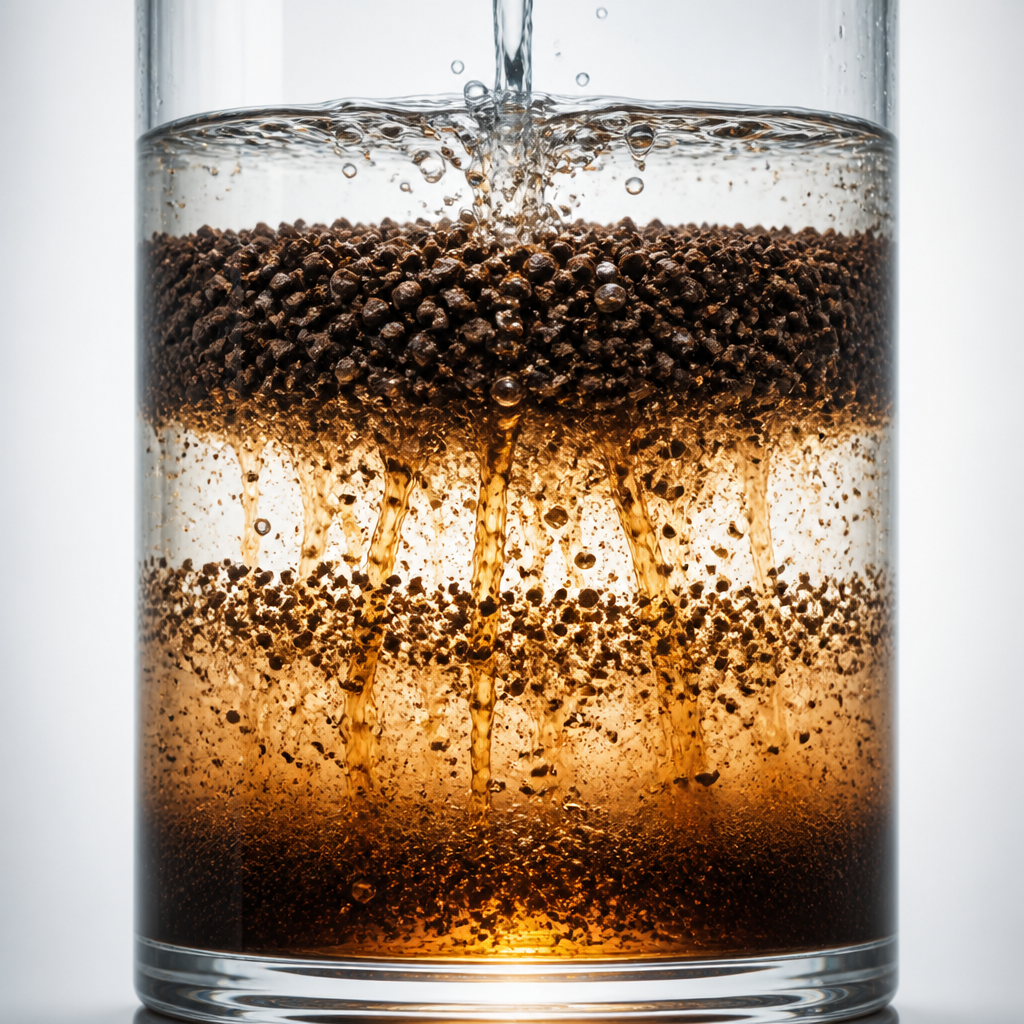
When hot water meets coffee grounds, it does not extract everything at once. Extraction happens in distinct chemical phases, and grind size determines how quickly you move through each of them. Understanding this sequence is the difference between guessing at adjustments and knowing exactly what to change.
The first phase is acid extraction. Citric, malic, and phosphoric acids dissolve quickly, producing the brightness and fruit notes that make a good cup lively. If your grind is too coarse and brew time too short, you stop here, and the coffee tastes sour and thin. Next comes sugar extraction, where sucrose and reducing sugars develop the sweetness and body that define a balanced cup. A finer grind reaches this phase faster, but also exits it faster, which is why precision matters so much. The final phase releases the heavier, more bitter compounds. Push extraction too far with a grind that is too fine for your brew time, and those bitter notes dominate everything that came before.
Grind size is the single most important variable for controlling extraction. Everything else, water temperature, brew time, dose, is a secondary adjustment layered on top of getting the grind right first.
In practice, this means that adjusting your grind size is the fastest and most reliable way to fix a cup that tastes wrong. Before changing water temperature, brew time, or dose, change the grind. It is the lever with the most impact and the clearest feedback.
Pro tip: When you are dialling in a new bag of coffee, change only the grind size first. Keep everything else constant. That way you know exactly what caused the improvement or the problem, and you build genuine skill rather than happy accidents.
Grind Size by Brew Method: The Definitive Breakdown
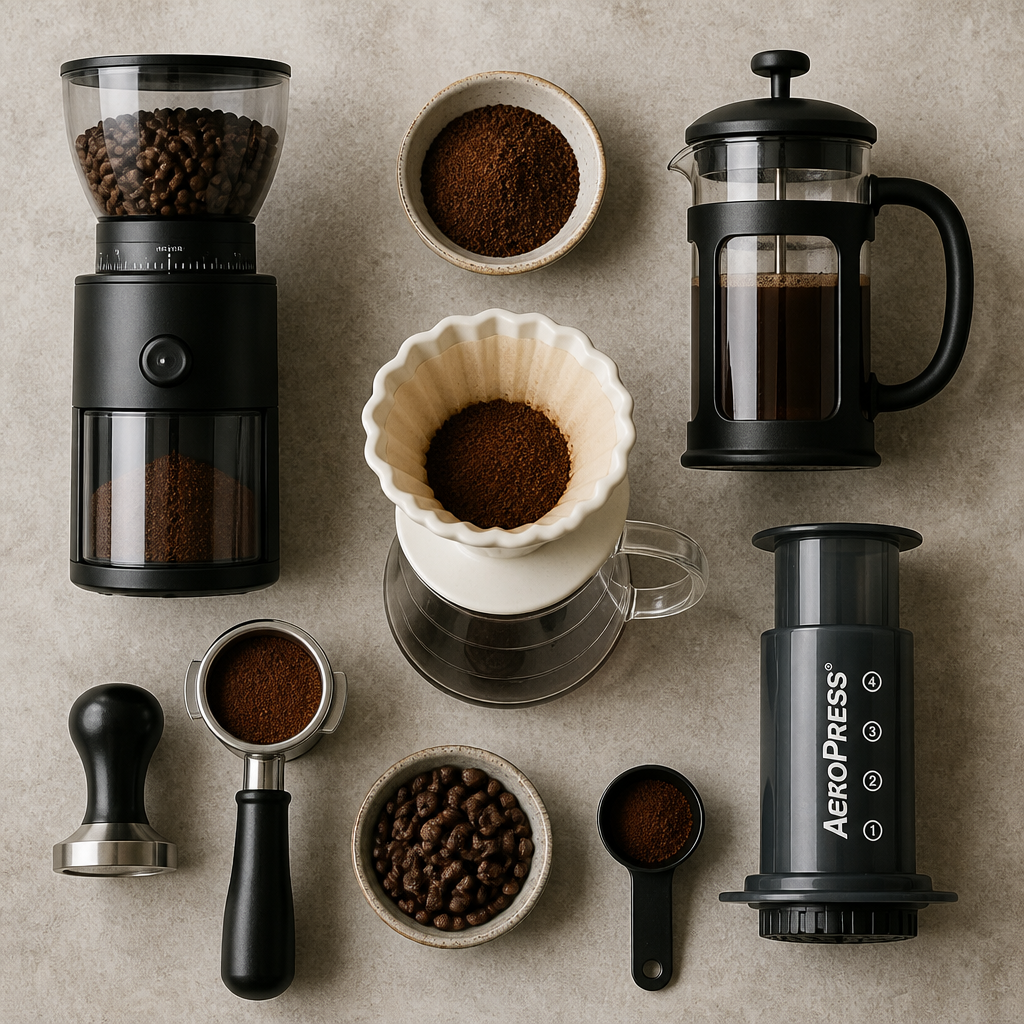
Every brew method has an ideal grind range. The principle is consistent: longer contact time between water and grounds requires a coarser grind to prevent over-extraction. Shorter contact time requires a finer grind so enough flavour compounds are extracted before the water moves on.
Espresso: Fine, 200 to 400 Microns
Espresso machines push water through coffee at high pressure in a short window. Without a fine enough grind to pack the coffee bed tightly, pressurised water shoots through too quickly, producing a weak, under-extracted shot. At the same time, a grind that is too fine causes channelling and over-extraction. Espresso is the brew method most sensitive to grind changes, which is exactly why dialling in matters so much.
Pour-Over and Filter: Medium-Fine, 400 to 600 Microns
Pour-over methods like the V60 work well in the medium-fine range. For single-serve pour-overs using less water, grinding slightly finer helps extract efficiently. The resistance from the finer particles also slows the drip rate, giving the water more time to work. If you are brewing larger batch filter coffee, move slightly coarser to avoid over-extracting through the longer total brew time.
AeroPress: Medium to Fine, 300 to 500 Microns
The AeroPress is forgiving by design. Its combination of pressure, immersion, and short brew time makes it adaptable across a range of grind sizes depending on your preferred recipe. A medium-fine grind works for most standard recipes, but the AeroPress rewards experimentation. It is one of the best brew methods for developing an intuitive feel for how grind size affects flavour.
French Press: Coarse, 800 to 1,100 Microns
French press immersion brewing needs a coarse grind for two reasons: the metal mesh filter allows fine particles through, and the four-minute steep time is long enough to extract efficiently from larger particles. Using a finer grind results in over-extraction and muddy, bitter coffee. It also means more sediment in the cup, which affects texture as much as taste.
Cold Brew: Extra Coarse, 1,000 Microns and Above
Cold brew steeps for twelve to twenty-four hours. That extended contact time means even coarse grounds will give up a significant amount of flavour. Going too fine with cold brew produces an intensely bitter concentrate with unpleasant astringency. Grind as coarse as your grinder allows and let time do the work.
Pro tip: If you brew with an AeroPress or a V60 and the cup tastes right but the brew time feels off, use the timing as your diagnostic tool. Faster than expected means grind finer. Slower than expected means grind coarser. Taste confirms the direction; time tells you the magnitude.
Burr Grinder vs. Blade Grinder: Why It Is Not Really a Fair Fight
The grinder you use matters as much as the grind size you target. A burr grinder uses two abrasive surfaces, either flat or conical, to crush coffee beans into consistently sized particles. A blade grinder uses a spinning blade to chop beans, producing a chaotic mix of fine powder and large chunks.
The problem with inconsistent particle sizes is that small particles over-extract and large particles under-extract simultaneously, in the same brew. You end up with a cup that is somehow both bitter and sour, or flat with a harsh finish. No adjustment of water temperature or brew time can fix this, because the problem exists at the particle level.
Burr grinders offer adjustable settings and produce a narrow, consistent particle distribution. That consistency is what gives you repeatable results and meaningful feedback when you make adjustments. Blade grinders are cheaper, but the savings come at the cost of cup quality and the ability to diagnose or improve your brewing.
For anyone serious about getting better coffee at home, a burr grinder is the single most impactful purchase you can make. Farrer's stocks hand burr grinders alongside other home brewing equipment, and a quality hand grinder at a modest price point outperforms a mid-range blade grinder every time. Browse the home brewing equipment range at Farrer's to find grinders suited to your preferred method.
Diagnosing Your Cup: Is It Under-Extracted or Over-Extracted?
Learning to diagnose your cup by taste is the skill that separates a good home brewer from a great one. Grind size is almost always the first place to look when something tastes wrong.
Signs of Under-Extraction
Under-extracted coffee tastes sour, thin, and sometimes salty. There may be a sharpness on the front of the palate with very little sweetness or body. The coffee finishes quickly and leaves no pleasant aftertaste. This happens when the grind is too coarse, the brew time is too short, or the water is not hot enough. In most cases, grinding finer is the first fix to try.
Signs of Over-Extraction
Over-extracted coffee is bitter, dry, and hollow. It may have an astringent quality that dries out the mouth. The finish is harsh and lingers unpleasantly. This happens when the grind is too fine for the brew method and contact time, or when the brew time runs too long. Grinding coarser resolves most cases of over-extraction.
When It Is Both at Once
If your cup tastes simultaneously sour and bitter, the problem is uneven extraction caused by inconsistent particle sizes. Some particles are over-extracting while others are under-extracting in the same brew. This is a grinder problem, not a recipe problem. A better grinder, or cleaning the one you have, is the fix here. No adjustment to recipe variables will solve an inconsistency that exists at the grinding stage.
Grind Size Comparison Table
The table below summarises the three most common home brew methods, their ideal grind range, and what goes wrong when the grind is off.
| Brew Method | Ideal Grind Size | Most Common Mistake |
|---|---|---|
| Espresso | Fine (200 to 400 microns) | Grinding too coarse, producing a weak, watery shot that runs too fast. Or too fine, causing a slow, over-extracted, bitter result. |
| Pour-Over / V60 | Medium-Fine (400 to 600 microns) | Using pre-ground espresso coffee, which is far too fine and makes the brew stall and over-extract. Or using filter pre-ground for espresso, producing a channelled shot. |
| French Press | Coarse (800 to 1,100 microns) | Using a medium grind, which passes through the mesh filter and produces a muddy, bitter, over-extracted cup with heavy sediment. |
Dialling In Espresso: The Finest Margin in Home Brewing
Espresso is where grind size precision matters most, and where small adjustments produce the clearest and most immediate feedback. The high pressure of an espresso machine amplifies every inconsistency, which means even a grind setting that is one or two steps off can mean the difference between a balanced shot and something undrinkable.
The practical approach to dialling in espresso is to start with the manufacturer's recommended grind setting for your machine, then adjust based on taste and shot time. A standard espresso of roughly 36 to 40ml from 18g of ground coffee should take around 25 to 30 seconds to extract. If your shot runs faster, grind finer. If it runs slower and tastes bitter, grind coarser.
The grind for espresso also changes with the coffee itself. A darker roast, which is more porous and brittle, will extract faster than a light roast at the same grind setting. When you open a new bag, you will almost always need to readjust. This is not a sign of failure. It is a sign that you are working with freshly roasted, hand-packed coffee that changes with the crop and the roast. Farrer's full range of coffee blends includes options roasted specifically for espresso, which makes the dialling-in process more predictable because the roast profile is designed around espresso extraction.
For trade customers and café operators, Farrer's barista training and trade support covers grind calibration as part of the full setup process, because even the best commercial grinder needs to be dialled in to the specific coffee being used.
Frequently Asked Questions
What grind size should I use for a cafetière or French press?
Use a coarse grind, roughly in the 800 to 1,100 micron range. The coarse particle size prevents grounds from slipping through the metal mesh filter and stops the long steeping time from over-extracting the coffee. If your French press coffee tastes bitter or gritty, your grind is almost certainly too fine.
Why does grind size matter more than water temperature?
Both matter, but grind size has a more immediate and dramatic effect on flavour. Water temperature fine-tunes extraction; grind size sets the ceiling for how much extraction is possible at all. A correct grind at the right temperature produces great coffee. The wrong grind at any temperature still produces the wrong cup. Start with grind before adjusting anything else.
Can I use pre-ground coffee and still get good results?
You can, especially if you buy freshly roasted, high-quality pre-ground coffee matched to your brew method. The limitation is that pre-ground coffee loses volatile aromatics quickly after the bag is opened, and you cannot adjust the grind if something tastes off. Freshly ground coffee from a burr grinder gives you both freshness and control. If you use pre-ground, store it in an airtight container and use it within a week or two of opening.
How do I know if my espresso grind is correct?
Time your shot. A standard espresso of around 36 to 40ml should extract in roughly 25 to 30 seconds. If it runs faster, grind finer to create more resistance. If it runs longer and tastes bitter and dry, grind coarser to allow faster flow. Taste is the final confirmation: a correctly extracted espresso is balanced, sweet, and has a pleasant bittersweet finish without harsh astringency.
Is a hand grinder good enough for home espresso?
A quality hand burr grinder produces excellent, consistent particle sizes and is capable of grinding fine enough for espresso. The limitation is throughput and physical effort, not grind quality. For home use where you are making one or two shots at a time, a good hand grinder is a genuinely capable tool, and in many cases outperforms inexpensive electric blade grinders significantly.
How often should I clean my grinder?
For home use, a thorough clean every two to four weeks is reasonable, with a quick brush-out of the chute after each session. Coffee oils build up on the burrs and in the chute, turning rancid over time. Rancid oils produce a stale, bitter flavour that no amount of grind adjustment will fix. A clean grinder is a baseline requirement for consistent results, not an optional extra.
Does grind size affect caffeine content?
Grind size affects how quickly caffeine is extracted, but the brewing method and total contact time are bigger factors. Finer grinds extract caffeine faster, but if the brew time and dose remain the same, the total caffeine in the cup is broadly similar. The practical takeaway is not to use grind size as a caffeine management tool. Use it to control flavour, which is where it has the clearest and most predictable effect.
If you have been adjusting your grind size lately, we would love to know which brew method you are working with and what difference it has made to your cup.
References
- Detailed guide to coffee grind sizes, extraction phases, and micron ranges by brew method
- Coffee grind size chart with practical micron ranges from espresso to French press and cold brew
- Plain-language explanation of how grind size controls extraction speed for home brewers
- Comprehensive grind size reference covering Turkish coffee, espresso, and coarse brewing methods
- How to identify and fix over-extracted and under-extracted coffee through grind adjustments


