

When the light drops and the mornings turn sharp, the drink in your hand stops being routine and starts being the whole point of the moment. Autumn coffee recipes are not about novelty tricks or Instagram aesthetics. They are about matching what is in the cup to what the season actually feels like.
Farrer's has been roasting coffee and blending tea in Kendal, at the gateway to the Lake District, for over 200 years. That kind of experience does not stay abstract. It shows up in the body of a blend, in the depth of a loose leaf tea, and in knowing exactly which flavours belong together when the temperature falls. These five drinks are built around that knowledge.
Quick Takeaways
| Key Insight | Explanation |
|---|---|
| Whole spices beat ground for depth | Cinnamon sticks, cardamom pods, and cloves steeped in hot milk produce a cleaner, rounder warmth than ground spice powders stirred in at the end. |
| Dark, full-bodied blends hold up to autumn additions | A delicate light roast gets overwhelmed by honey, maple, or spice. Choose a blend with natural dark berry or caramel notes so the coffee stays present. |
| Chai tea as a base, not a flavouring syrup | Using real loose leaf chai tea rather than flavoured syrups gives your latte genuine spice character and genuine tea tannins that balance the milk. |
| Milk temperature is the most common mistake | Milk above 70°C tastes scorched and flat. Aim for 60 to 65°C for maximum natural sweetness and a smooth texture that does not fight the coffee. |
| Sweetness should accent, not mask | Honey or maple syrup added in small amounts (half a teaspoon to start) enhances the coffee's natural sweetness. More than a teaspoon usually buries the roast character. |
| Hot chocolate and coffee are not the same category | High-quality hot chocolate made with real cocoa is a standalone autumn drink, not just a backup for non-coffee drinkers. Treat it with the same care as your espresso. |
| Freshness is still the foundation | No autumn recipe compensates for stale coffee. Farrer's next-day dispatch and batch roasting mean the flavour in the bag is as close to roast day as home delivery allows. |
Why Seasonal Drinks Are Worth Making Properly
There is a tendency to treat autumn coffee recipes as seasonal novelties, something to try once and move on. That is the wrong way to think about them. The underlying principle is simple: certain flavour combinations work better in colder weather because our palates shift. We crave warmth and body, not brightness and acidity. A well-made seasonal drink leans into that shift instead of fighting it.
The other reason to do this properly is that it is genuinely not difficult. Every recipe below uses straightforward technique with ingredients available from Farrer's core range. Nothing requires specialist equipment beyond what most home kitchens already have. What it does require is attention to the basics, which is the same thing that separates a well-made everyday coffee from a forgettable one.
The best seasonal drink is not a complicated one. It is a well-chosen combination of good ingredients, made with enough care that the flavours are actually present in the cup.
Farrer's range across coffee blends, loose leaf teas, and hot chocolate means you have everything needed for all five drinks in one place. That consistency of sourcing matters more than it might seem. When every ingredient is selected by the same people with the same standards, the drinks you make at home taste coherent rather than assembled from random supermarket shelves.
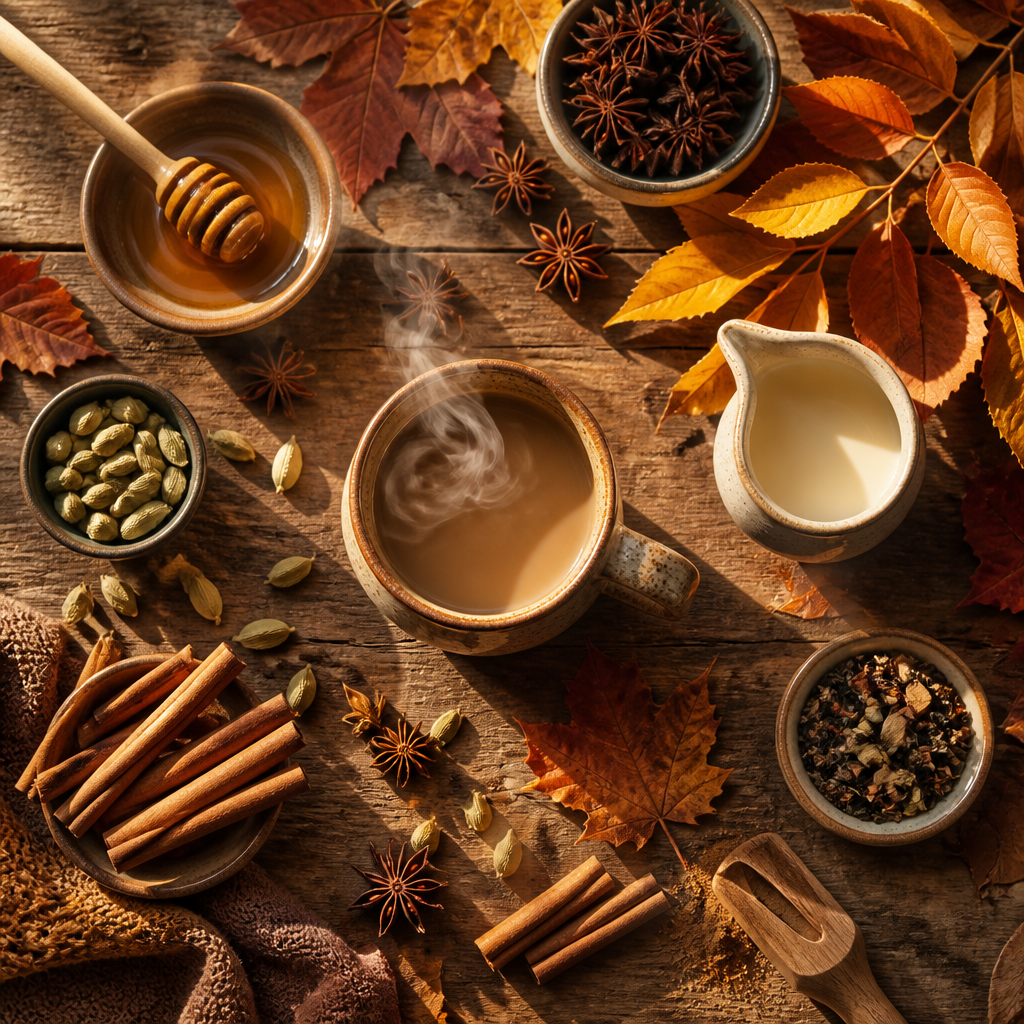

Spiced Chai Latte With Farrer's Loose Leaf Chai Tea
A properly made chai latte is one of the best hot drink recipes the UK autumn has to offer, and it is also one of the most frequently made badly. The version in most high-street cafes uses a syrup concentrate. This recipe uses Farrer's loose leaf chai tea, which means actual tea and actual spices, steeped directly in hot milk.
Ingredients (serves 2)
- 2 heaped teaspoons of Farrer's loose leaf chai tea
- 300ml whole milk (or oat milk for a dairy-free version)
- 150ml freshly boiled water
- 1 cinnamon stick
- 2 cardamom pods, lightly crushed
- Half a teaspoon of honey per cup, to taste
Method
Steep the chai tea in the freshly boiled water for four minutes. While the tea brews, warm the milk in a small saucepan over a medium-low heat with the cinnamon stick and crushed cardamom pods until it reaches around 65°C. Do not let it boil. Strain the brewed tea into the warm milk, stir in the honey, and froth gently with a small whisk or milk frother. Pour into warmed mugs and finish with a pinch of ground cinnamon on top.
The key difference between this and a café-style version is the layering: you are brewing the tea separately and then combining it with spiced milk, which gives you control over the strength of each component.
Pro tip: If your chai latte tastes flat, the problem is almost always the tea steep time. Four minutes is the minimum for Assam-based chai to release enough tannin and spice to stand up to milk. Less than that and the whole drink tastes watered-down regardless of how much spice you add to the milk.
Lakeland Honey and Cinnamon Coffee
This is the simplest recipe in the list and the one most likely to become a daily habit through October and November. It takes a full-bodied Farrer's coffee blend and adds two things: raw honey and a cinnamon stick used as a stirrer. That is the entire recipe. The result tastes genuinely different from black coffee with sugar, because the honey brings floral warmth and the cinnamon infuses slowly as you drink.
What blend to use
This recipe needs a coffee with natural caramel or dark fruit notes. A blend with bright, citrus-forward acidity will clash with the honey rather than complement it. Farrer's fuller-bodied blends, designed to cut through milk and hold their character under pressure, work well here even as a black coffee with accompaniments.
Method
Brew your coffee as you normally would, whether that is French press, filter, moka pot, or espresso. Add half to one teaspoon of raw honey while the coffee is hot, stir with a cinnamon stick, and leave the stick in the cup while you drink. The cinnamon should infuse over three to four minutes, so the flavour develops rather than hitting all at once.
This is also an excellent way to use a Farrer's coffee subscription to its full potential. When you know your blend is arriving fresh every few weeks, you are more likely to put the effort into making something like this rather than just pouring and drinking.
Pro tip: Use raw or lightly set honey rather than clear runny honey. Raw honey has a more complex flavour and does not turn the coffee watery the way very liquid honey can at high temperatures.
Spiced Hot Chocolate With Cardamom and Nutmeg
Hot chocolate deserves its own category in the autumn drinks repertoire and should not be treated as an afterthought for people who are not in the mood for coffee. A spiced version made with high-quality cocoa and whole spices is a genuinely different drink from the powder-and-hot-water version that most people grew up with.
Farrer's carries hot chocolate as part of its core range, and it is worth using that base for this recipe rather than a supermarket alternative. The quality of the cocoa sets the ceiling on what the spices can do. Good cocoa has enough depth to carry cardamom and nutmeg without those flavours feeling like they are filling a gap.
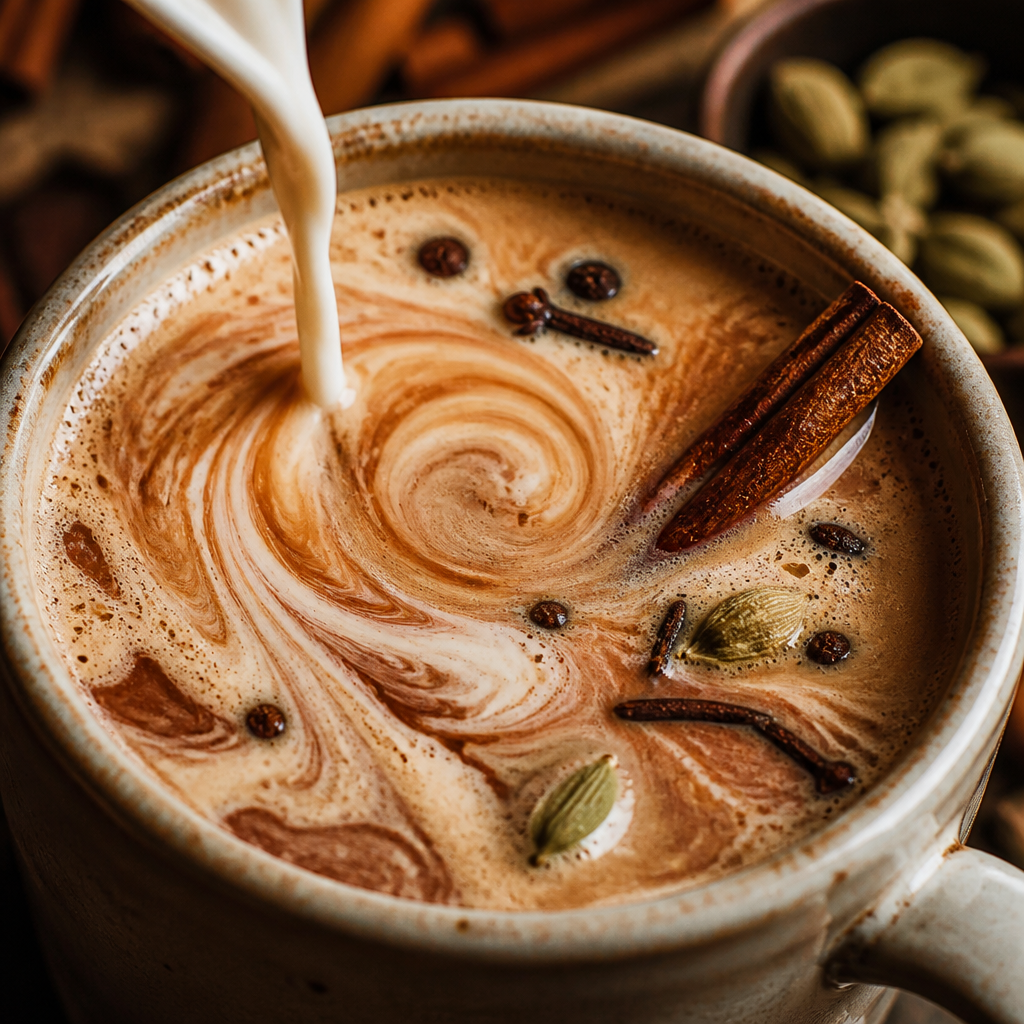
Ingredients (serves 2)
- 4 tablespoons of Farrer's hot chocolate powder
- 500ml whole milk
- 3 cardamom pods, lightly bashed
- A pinch of freshly grated nutmeg
- A short cinnamon stick
- A pinch of fine sea salt
Method
Combine the milk, cardamom pods, cinnamon stick, and nutmeg in a saucepan. Heat on medium, stirring regularly, until the milk reaches a low simmer. Remove the whole spices, then whisk in the hot chocolate powder until fully dissolved. Add the pinch of salt, which sharpens the chocolate flavour more than you expect. Pour into warmed mugs and finish with a grating of fresh nutmeg.
The salt is not optional. It is the detail that separates a one-dimensional sweet drink from something with actual complexity.
Moka Pot Maple Latte
The moka pot produces a concentrated, intensely flavoured coffee that sits between espresso and filter in body, and it is one of the most useful pieces of kit for autumn coffee recipes because the strength of the brew handles additions without losing itself. A small amount of maple syrup stirred into moka pot coffee produces a result that tastes genuinely autumnal without the artificial sweetness of flavoured syrups.
Getting the moka pot right
Use an espresso-ground or moka pot-specific grind from Farrer's. Water should be hot before it goes into the base chamber, not cold, which reduces the time the coffee spends on heat and prevents the bitter, metallic taste that makes people think they do not like moka pot coffee. Fill the basket to the top without pressing the grounds down. Assemble and place over a medium-low flame.
Assembling the drink
Froth 150ml of milk to around 65°C while the moka pot brews. Add half a teaspoon of good maple syrup (not maple-flavoured syrup, which is mostly corn syrup) to your warmed mug. Pour in the moka pot coffee, then add the frothed milk. The maple should be stirred through the coffee before the milk goes in, not added on top, because it needs heat to dissolve properly.
This is a good recipe for anyone who has Farrer's brewing equipment but tends to use it for the same drink every morning. The moka pot maple latte takes about three minutes more than a basic brew and tastes genuinely different.
Pro tip: Warming your mug before you build the drink matters more for this recipe than for most. Moka pot coffee cools fast and a cold mug drops the temperature before the milk even goes in, which makes the whole drink taste flat.
Warming Earl Grey Tea Latte
The Earl Grey tea latte is sometimes called a London Fog, though the name matters less than the drink. It is one of the most underrated seasonal coffee drinks in the UK because it combines the floral bergamot notes of Earl Grey with warm frothed milk in a way that is completely distinct from either a standard tea or a milky coffee. It also suits the later parts of the day better than a coffee-based drink.
Use Farrer's loose leaf tea here. The bergamot character in a good loose leaf Earl Grey is cleaner and more defined than it is in a tea bag, and that clarity matters when the tea is paired with milk rather than drunk black.
Ingredients (serves 1)
- 2 teaspoons of Farrer's loose leaf Earl Grey tea
- 120ml freshly boiled water (not boiling, around 90 to 95°C)
- 150ml whole or oat milk
- Half a teaspoon of vanilla extract
- Honey to taste
Method
Steep the Earl Grey in the water for three to four minutes. While it steeps, froth the milk with the vanilla extract until warm and lightly foamy. Strain the tea into a warmed mug, add a small drizzle of honey, then pour the frothed vanilla milk over the top. The vanilla rounds out the bergamot and stops it from tasting soapy, which is the most common complaint about Earl Grey in milk.
This is an excellent option for the afternoon or evening when you want something warm and satisfying without the caffeine intensity of a coffee-based drink. It sits naturally alongside Farrer's broader tea range and is worth exploring once you have tried the chai latte version above.
Comparison: Brewing Methods for Autumn Drinks
Not every autumn recipe calls for the same brewing approach. Below is a direct comparison of three brewing methods most relevant to the recipes above, with an honest assessment of where each one works best for seasonal coffee drinks.
| Brewing Method | Best For | Key Consideration |
|---|---|---|
| French Press (Cafetiere) | Honey and cinnamon coffee, full-bodied black coffee recipes | Produces a rich, full-bodied brew with natural oils present. Use a coarse grind and steep for four minutes. The body it produces pairs well with additions like honey and cinnamon. |
| Moka Pot | Maple latte, any recipe calling for concentrated coffee | Produces an intense, espresso-adjacent brew. Start with hot water in the base to avoid bitterness. Best with a fine to medium grind from Farrer's espresso or moka pot range. |
| Loose Leaf Steeping (for tea recipes) | Chai latte, Earl Grey tea latte | Requires patience on steep time. Under-steeping is the most common mistake. Four minutes minimum for black tea bases. Use a temperature just off the boil (90 to 95°C) to avoid astringency. |
Frequently Asked Questions
What is the best Farrer's coffee blend for autumn recipes?
Full-bodied blends with dark berry, caramel, or chocolate notes work best for autumn coffee recipes because they hold their character when honey, maple syrup, or spiced milk is added. Light roasts with high acidity tend to get overwhelmed by sweet additions. Farrer's range of coffee blends includes options roasted specifically for body and balance, which is exactly what you want here.
Can I make these hot drink recipes UK-style without an espresso machine?
Yes, and in most cases you should. A French press, moka pot, or V60 filter all produce excellent results for these recipes. The moka pot maple latte specifically works better with a moka pot than a home espresso machine because the slightly higher body and different extraction character suits the drink. Farrer's home brewing equipment covers all these methods.
What makes a chai latte recipe different from just adding chai spice to coffee?
When you brew actual loose leaf chai tea and combine it with spiced milk, you get tea tannins, genuine spice character, and a different kind of warmth than you get from adding a spice blend to coffee. The tea and the spices interact differently with milk than coffee does. It is a distinct drink with a distinct flavour profile, not just a variation on a latte. For a proper chai latte recipe, use Farrer's loose leaf chai tea rather than a syrup or powder.
How do I stop my frothed milk from making the drink too sweet?
The natural sweetness of frothed milk increases as temperature rises because the lactose becomes more perceptible. If your drinks consistently taste too sweet without any added sweetener, your milk is almost certainly getting too hot. Keep it at 60 to 65°C and the sweetness stays balanced. Above 70°C it starts to taste cloying and the texture becomes flat rather than silky.
Are these seasonal coffee drinks suitable for cafes and hospitality businesses?
Several of these recipes, particularly the chai latte and spiced hot chocolate, translate directly to a café menu with minor scaling. Farrer's serves both home customers and trade customers from the same roastery in Kendal, and its trade offer includes barista training and equipment support. For hospitality businesses looking to add a seasonal drinks menu, the combination of Farrer's coffee, loose leaf teas, and hot chocolate covers the full range needed.
What loose leaf teas from Farrer's work best for autumn tea-based drinks?
Chai tea and Earl Grey are the two clearest fits for the recipes above, but Farrer's range of black teas also provides a strong base for any spiced tea latte you want to build from scratch. Assam-style black teas are the standard foundation for chai because of their body and astringency, which hold up to the spices and the milk without tasting thin. Explore the full loose leaf range to find the base that suits your preference.
How long will Farrer's coffee stay fresh once opened?
Whole bean coffee stays fresh longer than pre-ground because ground coffee has a much larger surface area exposed to air. Stored in a sealed container away from direct sunlight and heat, whole beans hold their quality for several weeks after opening. Pre-ground coffee is best used within two weeks of opening for full flavour. Farrer's subscription service is designed around this, dispatching fresh-roasted coffee on a cycle that matches your consumption rather than leaving you working through a stale bag.
We would love to know which of these autumn drinks you try first, and whether you put your own spin on any of the recipes. Share your experience in the comments or tag Farrer's on social media.
We would love your feedback and any insights you would share with others. What perspective would you add?


