

Most people assume Italian blend coffee UK and French Continental are two labels for the same bitter, dark cup. They are not. These two roast styles differ in origin philosophy, roast temperature, flavour profile, and the brewing methods that genuinely suit them.
Pick the wrong one for your espresso machine or cafetière and you end up with a cup that tastes flat, carbonised, or just wrong. As the UK's oldest coffee roaster, with over 200 years of small-batch roasting from the Lake District, Farrer's knows both styles intimately. This guide cuts through the confusion with direct, specific comparisons so you can choose the right dark roast for your cup.
Table of Contents
- Quick Takeaways
- What Is Italian Blend Coffee?
- What Is French Continental Coffee?
- Roast Level and Bean Composition
- Flavour Profiles Side by Side
- Which Brewing Method Suits Each?
- Quick Comparison: Italian Blend vs French Continental
- How Farrer's Approaches Both Roasts
- Frequently Asked Questions
- References
Quick Takeaways
| Key Insight | Explanation |
|---|---|
| Italian blend is built for espresso pressure | The Arabica-Robusta mix and roast level are calibrated specifically for crema production and intensity under espresso extraction. |
| French Continental suits cafetière and filter | Its deeper roast and fruit-forward notes open up fully with immersion brewing and longer contact times, not the fast pressure of espresso. |
| Robusta in Italian blend is functional, not cheap | A quality 10 to 20 percent Robusta inclusion contributes oils for a stable crema and adds structural complexity, not harshness. |
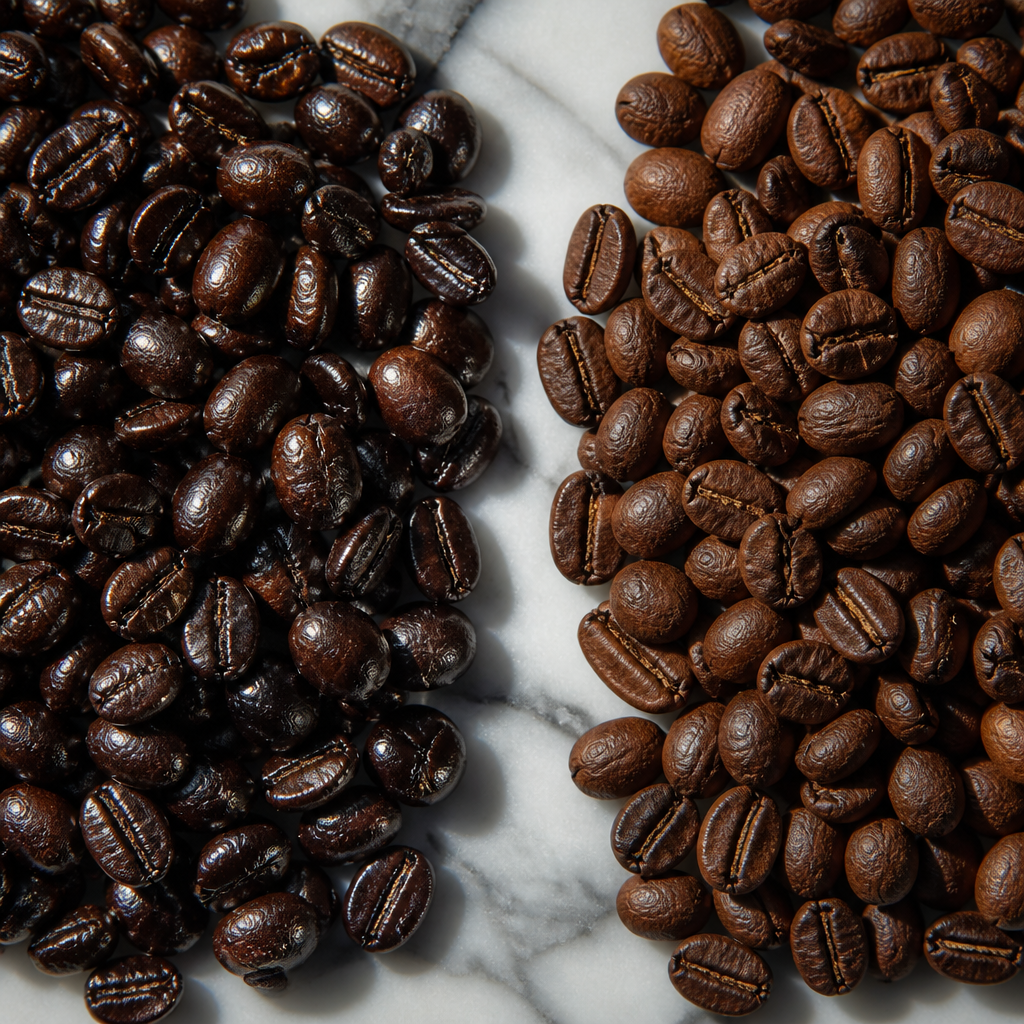
| French Continental is generally roasted darker | It is taken well into or past second crack, producing a drier, darker bean with an oilier surface and a more intense, smoky-sweet character. |
| Italian blend anchors milk-based drinks | Its bittersweet depth holds up through steamed milk in lattes and flat whites without being diluted or overwhelmed. |
| French Continental works for a continental breakfast occasion | Farrer's French Continental is roasted to complement rich food pairings, with dark fruit and almond notes that sit well alongside bread, pastry, and cheese. |
| Roast control separates quality from imitation | Both styles fail when the beans are pushed too far and sugars fully carbonise. Small-batch roasting, as Farrer's practises, is what prevents that outcome. |
What Is Italian Blend Coffee?
An Italian blend coffee is not defined by geography. It is defined by a roasting philosophy that originated in the espresso culture of northern Italy and spread globally wherever espresso became the dominant coffee format. The beans, almost always a mix of Arabica and some percentage of Robusta, are taken to a dark roast level that sits roughly at or just before second crack in the roasting process.
The result is a bean with a dry to slightly oily surface, a rich bittersweet flavour, and enough body to support a dense, persistent crema under espresso pressure. In practice, a well-executed Italian blend delivers notes of dark chocolate, toasted walnut, and a whisper of caramel in the finish. What it should not deliver is the carbonised, acrid bitterness that low-quality imitations produce.
The key is roast control. The beans need to reach the right internal temperature without being pushed so far that the sugars fully carbonise. That distinction separates a genuinely well-made Italian blend from the burnt, flat offerings that gave dark roast coffee a bad reputation among specialty drinkers.
Pro tip: When buying Italian blend coffee in the UK, ask your roaster what percentage of Robusta is in the blend and where it originates. A quality roaster will tell you. If the answer is evasive, the Robusta is probably low-grade filler, not a deliberate flavour decision.
What Is French Continental Coffee?
French Continental coffee is a roast style that pushes beans well into or past second crack, producing a darker, drier bean with an oilier exterior than most Italian blends. The name reflects a historical association with the continental European style of drinking strong, deeply roasted coffee with a full, enveloping body rather than the sharp espresso intensity of the Italian tradition.
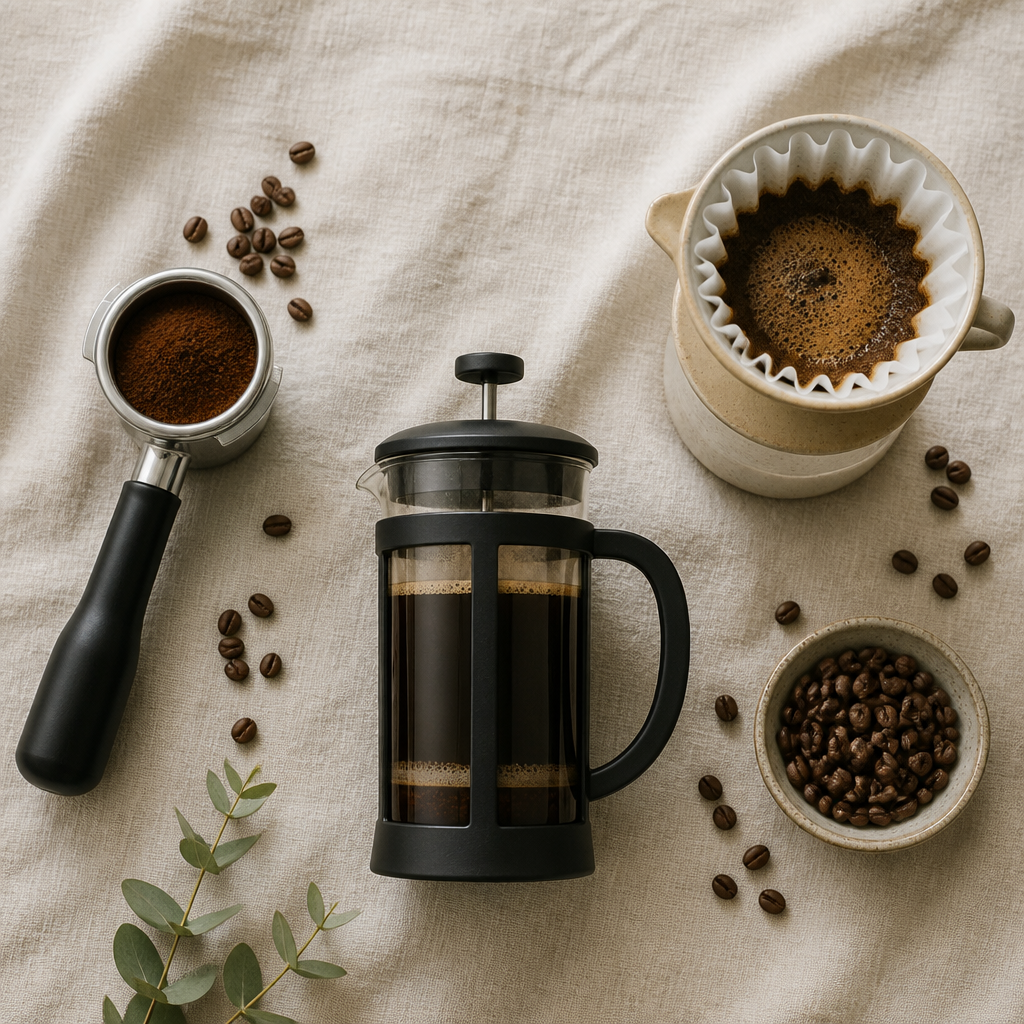
Where Italian blend is designed for pressure-based extraction, French Continental was historically prepared in a cafetière or filter pot. The longer contact time of immersion brewing allows the flavour compounds to develop without the sharpness that espresso pressure would create at this roast level. The result is a cup that is rich and smooth rather than intense and pointed.
Flavour character of a French Continental roast
Farrer's French Continental Blend delivers dark fruits and almonds with a full, creamy body. The fruit notes are not bright or acidic in the way lighter roasts are. They are deep and almost dried-fruit sweet, a product of the extended caramelisation that happens at the darker end of the roast curve. The lingering finish is one of the things drinkers notice most, a quality that makes it particularly well-suited to slow morning occasions rather than a quick shot.
A darker roast does not mean a better roast. It means a different set of trade-offs. The skill is knowing which trade-offs produce the cup you actually want.
Roast Level and Bean Composition
Both styles are dark roasts, but they occupy different positions on the roast spectrum. The Italian blend sits at a darker-than-medium position, typically reaching or just approaching second crack. The French Continental pushes further, into a zone where more of the bean's inherent acidity and origin character is replaced by roast-driven sweetness, smoke, and body.
Why Robusta matters in an Italian blend
Robusta contains significantly more chlorogenic acids than Arabica, which contribute to a thicker, more stable crema. A blend using 10 to 20 percent high-quality Robusta will produce a denser, longer-lasting crema than an equivalent 100 percent Arabica blend. It also adds an earthy, woody backbone that some drinkers describe as giving the shot more structure.
The critical word is quality. Low-grade Robusta is harsh, rubbery, and introduces off-flavours that no amount of blending skill can fully mask. When a heritage roaster like Farrer's includes Robusta in a blend, it is selecting from quality sources that contribute positively rather than simply reducing cost. That distinction is not always visible on a label, which is why roaster transparency matters.
Bean composition in French Continental
French Continental blends typically use Arabica beans grown at high altitudes, where cooler temperatures slow the bean's development and create the density that supports a darker roast. Farrer's French Continental sources beans grown at high altitude, sun-dried to increase sweetness before being roasted to the deeper continental profile. That starting point, a naturally sweeter green bean, is what allows the finished roast to carry dark fruit notes rather than just bitterness.
Pro tip: If you are grinding French Continental coffee for espresso and finding it too heavy or flat, try it in a cafetière first. The brewing method mismatch is often what creates the disappointment, not the coffee itself.

Flavour Profiles Side by Side
A quality Italian blend produces dark chocolate, roasted almonds, and a caramel finish. There is bitterness, but it is rounded rather than sharp. The aftertaste lingers pleasantly rather than coating the palate with astringency. Farrer's Italian Blend sits firmly in this tradition, roasted in small batches in the Lake District to a profile that maintains sweetness alongside the expected dark roast depth.
The French Continental offers something adjacent but distinct. The dark fruit notes, the almond character, and the creamy body create a cup that feels more enveloping and less pointed. There is less immediate intensity and more sustained richness. For drinkers who find straight espresso too sharp even from a quality Italian blend, the French Continental prepared in a cafetière often becomes the preferred daily cup.
A common mistake is treating bitterness as a flavour fault in dark roasts. Managed bitterness, the kind that provides counterpoint to sweetness rather than dominating everything else, is a feature. The problem arises when roast level is pushed past the point of sugar caramelisation into full carbonisation. That produces a thin, acrid cup regardless of bean quality. Both Farrer's blends avoid this because small-batch roasting allows the kind of batch-level control that large industrial roasters cannot replicate at scale.
Which Brewing Method Suits Each?
The extraction chemistry that works for an Italian blend in an espresso machine is not the same as what works for a French Continental in a cafetière, and using the wrong combination is one of the most common errors home brewers make.
Italian blend: espresso, moka pot, and milk-based drinks
The Italian blend is calibrated for pressure-based extraction. Espresso machines, moka pots, and AeroPress with a short brew time all suit this style. The crema production from the Robusta content is part of the design. In a latte, flat white, or cappuccino, the bittersweet intensity of the Italian blend cuts through steamed milk without disappearing. That is precisely the quality a café operator needs when the espresso shot has to anchor a four-ounce milk drink.
Farrer's Italian Blend is available as whole bean or pre-ground, and for espresso use the whole bean option ground fresh immediately before brewing will always outperform pre-ground coffee. The oils that create crema degrade quickly once the bean is ground, and no packaging can fully arrest that process.
French Continental: cafetière, filter, and slow brewing
The French Continental responds best to immersion and filter methods. A cafetière with a four-minute steep, a filter dripper with a medium-coarse grind, or even a classic percolator all allow the deeper roast character to express itself without the harsh edges that espresso pressure can amplify at this roast level.
Farrer's French Continental is described as lending itself well to accompany a continental-style breakfast. That occasion-based framing is useful guidance: this is a coffee for a slower pace, a longer cup, and food pairings that include bread, almonds, and rich flavours rather than a standalone espresso shot.
Quick Comparison: Italian Blend vs French Continental
| Attribute | Italian Blend | French Continental |
|---|---|---|
| Roast level | Dark, at or just before second crack | Very dark, into or past second crack |
| Bean composition | Arabica and Robusta (typically 10-20% Robusta) | Primarily high-altitude Arabica |
| Key flavour notes | Dark chocolate, roasted almond, caramel | Dark fruit, almond, creamy body |
| Acidity | Low, rounded bitterness | Very low, smooth and mellow |
| Best brewing method | Espresso, moka pot, AeroPress | Cafetière, filter, slow immersion |
| Milk-based drinks | Excellent: holds up through steamed milk | Works, but flavour integration is gentler |
| Occasion | Morning espresso, café service, busy kitchen | Slow morning, continental breakfast, leisurely cup |
How Farrer's Approaches Both Roasts
Farrer's has been roasting coffee since 1819, from the same base in Kendal in the Lake District. That longevity is not a marketing exercise. It reflects a roasting discipline that has kept both the Italian Blend and the French Continental consistent across generations of customers, not by chasing trends, but by understanding what each style is supposed to do and executing it precisely.
The small-batch approach is the practical mechanism behind that consistency. When a roaster operates at scale, individual batch variation gets averaged out across thousands of kilograms. At Farrer's, each batch is monitored individually, which means roast curves can be adjusted for the actual behaviour of the beans rather than following a generalised programme.
Both blends are hand-packed and dispatched fresh, with next-day dispatch on orders over £35. For anyone who has experienced the difference between coffee roasted weeks ago and coffee roasted days ago, that freshness gap is not a minor detail. It is the difference between the crema forming properly in an Italian blend espresso and the shot pulling flat.
If you are buying for a café or hospitality setting and need consistency across high-volume service, Farrer's trade supply is worth looking at alongside the retail range. The same roasting standards apply, and the same batch control that produces the right crema in your home espresso machine will do the same in a commercial group head.
Pro tip: If you are trying to decide between the two for the first time, start with the Italian Blend if you have an espresso machine and the French Continental if you have a cafetière. Once you know what each tastes like under ideal conditions, you will have a much clearer sense of which direction suits your palate.
Frequently Asked Questions
Is Italian blend coffee stronger than French Continental?
In terms of espresso intensity and crema production, yes. The Italian blend is calibrated for pressure extraction and has a more pointed, bittersweet impact in the cup. French Continental is generally roasted darker but brewed with immersion methods, producing a richer, smoother cup rather than a sharper one. "Strength" in this context depends on whether you mean caffeine, intensity, or body.
Can I use French Continental coffee in an espresso machine?
You can, but the results are often disappointing. The very dark roast level of a French Continental is optimised for slower brewing methods. Under espresso pressure, the deeper roast character can produce an overly heavy, flat, or bitter shot. If you want a dark espresso, the Italian blend is the better choice for that specific application.
Why does Farrer's Italian blend contain Robusta?
Robusta serves a functional role in an Italian blend, not just a cost-cutting one. It contributes higher oils that produce a denser, more stable crema during espresso extraction, and it adds structural complexity to the flavour profile. Farrer's selects quality Robusta for this reason, using it to enhance the blend rather than to reduce the cost of the recipe.
What food pairs well with Farrer's French Continental Blend?
Farrer's describes the French Continental as well-suited to a continental-style breakfast. In practice, the dark fruit and almond notes in the cup work well with bread, pastries, almond-based biscuits, and aged cheeses. The creamy body of the brew integrates well with rich, fatty foods in a way that a sharper espresso-style coffee would not.
How does Farrer's dark roast coffee differ from supermarket dark roast options?
The primary differences are freshness and batch control. Supermarket coffee is typically roasted weeks or months before it reaches the shelf, and the roasting process is industrial in scale, meaning individual batch variation is not managed in the same way. Farrer's roasts in small batches and dispatches fresh, which directly affects crema formation, flavour clarity, and the overall quality of the cup.
Which of Farrer's dark roasts is better for milk-based coffee drinks?
The Italian Blend is the stronger performer in milk-based drinks. Its bittersweet intensity and crema production hold up through steamed milk, making it the right choice for lattes, flat whites, and cappuccinos. The French Continental can work in a long black with a splash of milk, but it was not designed with espresso-based milk drinks in mind.
If you have tried either of Farrer's dark roasts, we would love to know how you are brewing them and which flavour notes stood out most in your cup.
We would love your feedback and any insights you would share with others. What perspective would you add?
References
- Farrer's guide to Italian blend vs French Continental coffee: key differences in roast, flavour, and brewing method
- Farrer's French Continental Blend product page: tasting notes, roast intensity, and brewing guidance
- Farrer's comparison of their No.1 Blend and Italian Blend: roast level, crema production, and ideal drinker profiles
- Independent overview of French roast vs Italian roast: roast temperatures, bean characteristics, and flavour differences


