

Most chai lattes made at home taste flat, watery, or oddly sweet because the method is rushed and the base ingredient does not do enough of the heavy lifting. A proper chai latte recipe UK home brewers will actually repeat starts with one thing: a chai powder that is built to dissolve into frothy, spiced milk with minimal fuss.
The Farrer's chai range, stocked and dispatched from Kendal in the Lake District, solves that problem before you even lift a spoon. This guide covers exactly how to use it, what milk choices do to the final cup, and the small adjustments that separate a forgettable drink from one you will make every single morning.
Table of Contents
- Quick Takeaways
- What Makes a Chai Latte Different from a Plain Chai Tea
- The Farrer's Chai Range: What You Are Actually Working With
- Step-by-Step Chai Latte Recipe at Home
- Milk Guide: Which Type Works Best and Why
- Method Comparison: Powder vs. Loose Leaf vs. Concentrate
- Common Mistakes That Ruin a Homemade Chai Latte
- How to Make an Iced Chai Latte
- Frequently Asked Questions
- References
Quick Takeaways
| Key Insight | Explanation |
|---|---|
| Use hot milk, not hot water, as your base | Dissolving chai powder directly into heated milk produces a creamier body and better spice integration than adding milk to a water steep. |
| Temperature matters more than most people think | Milk heated to around 60-65°C froths well and does not scald. Above 70°C, sweetness drops and a cooked flavour appears. |
| Farrer's Artisan Blend is 99% caffeine free | This makes it a solid afternoon or evening option without disrupting sleep, unlike most black-tea-heavy chai bases. |
| Stir for a full 30 seconds | Under-stirring leaves unmixed powder at the bottom. The Farrer's Artisan Blend dissolves cleanly, but it does need active mixing. |
| Oat milk is the best plant-based pairing | Barista-formula oat milk emulsifies well with spiced powder, producing a foam that holds its texture through the full drink. |
| One scoop into 200ml is the correct ratio | Going above this makes the drink cloying. Going below makes the spice profile too thin to register properly. |
| Iced chai needs four teaspoons of powder, not three | Cold dilutes flavour. The additional powder compensates for the reduction in aromatic volatility when served over ice. |
What Makes a Chai Latte Different from a Plain Chai Tea
The word "chai" simply means tea in Hindi, borrowed from the Mandarin "cha." When people use the phrase chai latte, they mean masala chai, a blend of black tea and warming spices including cardamom, cinnamon, ginger, cloves, and black pepper, prepared with milk rather than water alone. The latte format involves frothed or steamed milk added to that spiced base, producing a drink closer in texture to a flat white than to a standard mug of tea.
The distinction matters practically. Plain chai tea is steeped in water and served strong. A chai latte is a milk-forward drink where spice and sweetness are balanced against the fat content and natural sugars of the milk. Get the ratio wrong and you end up with either a sugary milkshake or a cup of warm water with a vague cinnamon note. This guide is about getting that balance right every time.
The best homemade chai latte is not a simplified café recreation. It is a better drink, because you control the spice level, the milk type, and the sweetness from start to finish.
The spice profile in masala chai traces back to Ayurvedic herbal traditions, with cardamom, ginger, and cinnamon used historically for their warming properties. When British tea cultivation expanded in Assam in the 1800s, black tea was incorporated into those existing spice infusion traditions. The result is a drink with genuine depth, not just warmth.
The Farrer's Chai Range: What You Are Actually Working With
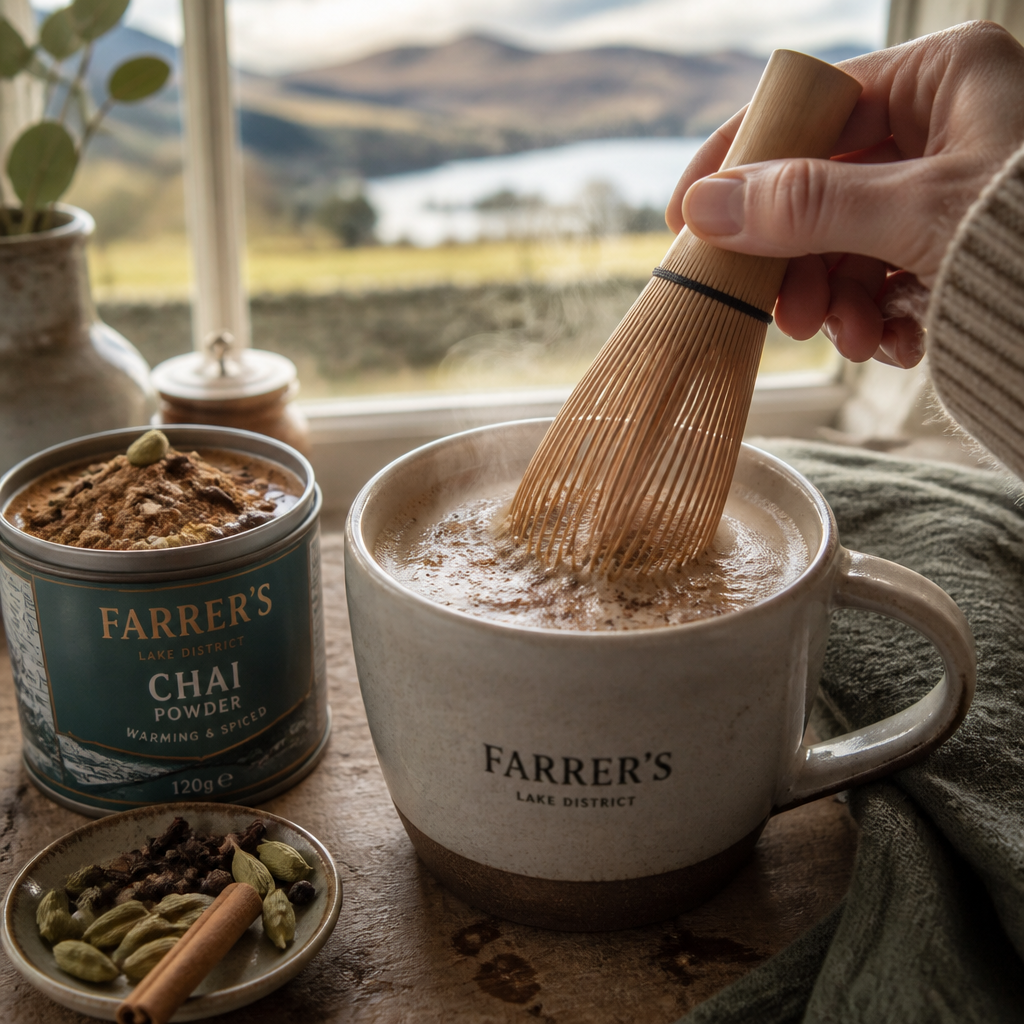
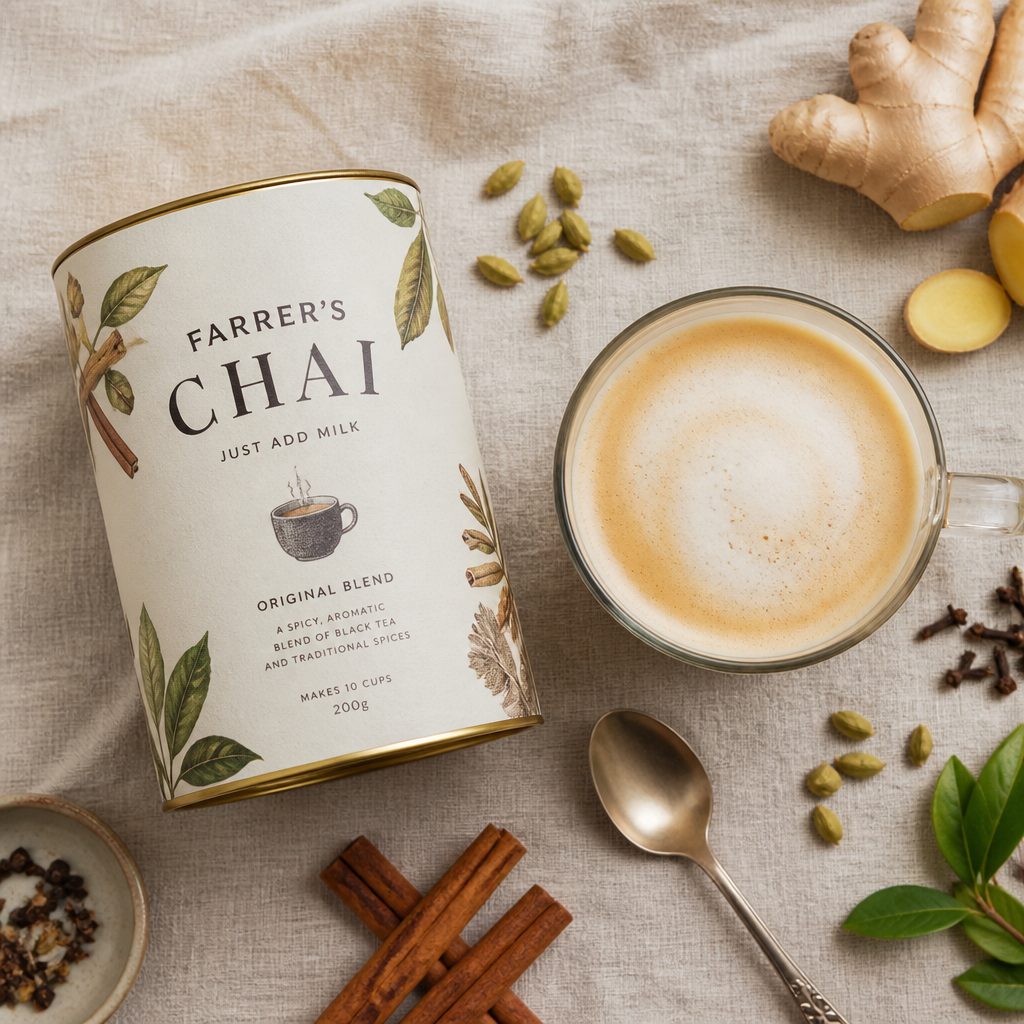
Farrer's stocks two chai products through its Kendal roastery: the Drink Me Chai Artisan Blend Chai Latte (1kg) and the Drink Me Chai Vanilla Chai Latte (1kg), both priced at £18.20. These are purpose-built chai latte powders, not instant tea granules, and the difference in how they behave in the cup is significant.
Artisan Blend: The Everyday Workhorse
The Artisan Blend contains black tea, cinnamon, and a proprietary spice mix. It is non-dairy, gluten free, 99% caffeine free, and contains no artificial colours or preservatives. Each cup clocks in at around 76 kcal when made with water, though milk use brings that figure up depending on the type chosen. It is CQUIN compliant, which matters to café and hospitality buyers as much as to health-conscious home users.
In practice, this powder dissolves cleanly and produces a naturally frothy texture when stirred into hot milk. It does not require any specialist equipment. The spice balance is warming and direct without tipping into aggressive heat. This is the version to reach for when you want something comforting without a coffee hit.
Vanilla Chai: When You Want Softer Edges
The Vanilla Chai Latte powder follows the same format but adds a vanilla note that rounds off the sharper spice edges. It works especially well with oat milk, where the vanilla and the slightly sweet character of the milk create a drink that does not need any added sugar. If you are new to how to make chai at home and want a forgiving starting point, this is it.
Pro tip: Both Farrer's chai powders are sold in 1kg tins, which is a practical format for trade buyers and regular home drinkers. If you are a café owner or running a small hospitality business, the 1kg size means consistent dosing without constant reordering. Farrer's offers next-day dispatch on orders over £35, so you will not be caught short mid-service.
Step-by-Step Chai Latte Recipe at Home
This method uses the Farrer's Artisan Blend or Vanilla Chai powder and produces a single serving. No espresso machine required.
What You Need
One scoop (approximately 3 heaped teaspoons) of Farrer's chai powder, 200ml of your chosen milk, a small saucepan or milk frother, a mug, and a spoon. That is the entire kit.
The Method
Heat your milk in a small saucepan over a medium heat until it reaches approximately 60-65°C. You will see steam rising and small bubbles beginning to form at the edges, but the milk should not be simmering. Remove from heat immediately at this point.
Add one scoop of Farrer's chai powder directly to your mug. Pour a small splash of the hot milk over the powder first and stir it into a paste. This prevents clumping when the rest of the milk goes in. Pour the remaining milk into the mug and stir continuously for 30 seconds. The powder dissolves cleanly and the drink will develop a light, natural froth from the stirring action.
If you own a handheld milk frother, use it after combining the powder and milk. Thirty seconds of frothing produces a noticeably thicker foam layer. A French press works in a similar way: add the mixed drink and pump 50 to 60 times. Neither method requires a steam wand.
Pro tip: Dissolve the powder in a small splash of hot milk before adding the rest. Tipping powder into a full mug of liquid and then trying to stir it out leads to lumps at the bottom, particularly if your mug is deep. The paste method eliminates this entirely.
Sweetness Adjustments
The Artisan Blend already contains caramelised sugar, so the drink is lightly sweet by default. Taste it before adding anything. If you want more sweetness, a half-teaspoon of honey integrates naturally without masking the spice profile. Avoid refined white sugar as the first choice, it sharpens the sweetness in a way that fights the cinnamon rather than complementing it.
Milk Guide: Which Type Works Best and Why
Milk choice changes the final drink more than most home brewers expect. The fat content, protein structure, and natural sweetness of each option interact directly with the spice powder.
Full-Fat Dairy Milk
Full-fat dairy milk produces the richest body and the most forgiving foam. The fat content cushions the spice and creates a rounded, slightly creamy mouthfeel. If you want a chai latte that is as close to a café-quality drink as possible, full-fat dairy is the reference point. The flavour is full and the foam is stable.
Oat Milk (Barista Formula)
Barista-formula oat milk is the best plant-based choice for a spiced chai latte. Its emulsification properties allow it to hold foam and its natural sweetness complements the vanilla and cinnamon notes in both Farrer's chai variants. Standard oat milk (non-barista formula) tends to be thinner and produces a less stable foam, though it still works well for a simpler stirred drink.
Almond Milk
Almond milk produces a lighter drink with a slightly nutty background note. It froths less effectively than oat or dairy milk, so the texture is thinner. It is a reasonable choice if you prefer a less heavy drink, but it is not the best pairing for the Artisan Blend's fuller spice profile.
Soy Milk
Soy milk can foam well, but it is sensitive to heat and may split if pushed past 65°C. Keep the temperature controlled and it behaves reliably. The neutral flavour does not add or subtract much from the spice character, making it a solid functional choice.
Method Comparison: Powder vs. Loose Leaf vs. Concentrate
| Method | Ease of Use at Home | Flavour Control |
|---|---|---|
| Farrer's Chai Powder (Artisan or Vanilla Blend) | High. One scoop into hot milk, stir for 30 seconds. No extra equipment needed. | Consistent batch to batch. Adjust sweetness with honey or leave as-is. |
| Whole Spice Loose Leaf Method (toasting and steeping whole cinnamon, cardamom, cloves, ginger, black tea) | Low. Requires toasting, 10-15 minutes steeping, straining, and separate milk steaming. | High but variable. Each batch differs. Demands practice to nail the spice balance. |
| Liquid Chai Concentrate (pre-brewed, sold in bottles) | Medium. Mix concentrate with milk at a set ratio. No steeping or dissolving needed. | Limited. The ratio is fixed by the manufacturer. No meaningful adjustment possible. |
The powder method wins for everyday home use on every practical measure. The whole spice method is genuinely rewarding if you have 20 minutes and want to geek out on spice ratios, but it is not a sustainable daily routine for most people. The concentrate method is fast but inflexible. Farrer's chai powder sits in the optimal position: near-instant preparation, café-quality result, genuine spice character.
Common Mistakes That Ruin a Homemade Chai Latte
There are four mistakes that appear repeatedly when people first try making chai at home. All four are easy to fix once you know what to look for.
Using Water Instead of Milk
Some chai powder packaging suggests dissolving in water first and adding milk afterwards. This produces a weaker drink with less spice integration. Add the powder directly to hot milk for a fuller, more coherent flavour in a single step.
Overheating the Milk
Milk above 70°C loses natural sweetness and develops a cooked, slightly sulphurous note that competes with the chai spices. Keep the temperature in the 60-65°C range. If you do not own a thermometer, remove the milk from heat the moment you see consistent steam and small bubbles forming at the pan edges.
Not Stirring Long Enough
Thirty seconds of active stirring is the minimum. A cursory three-second stir leaves unmixed powder clinging to the bottom of the mug. You will taste it as a gritty, over-sweet sludge in the last third of the drink. Set a timer once if you need to build the habit.
Adding Too Much Powder
One scoop into 200ml is the calibrated ratio. Doubling the powder does not double the flavour, it produces a cloying, overly sweet drink where the individual spice notes collapse into a single undifferentiated hit of sweetness. If you want a stronger chai note, reduce the milk slightly rather than increasing the powder.
How to Make an Iced Chai Latte
Iced chai is a genuinely different drink from hot chai, not just a cooled version of it. Cold temperature suppresses aroma and perceived sweetness, which means the preparation method must compensate.
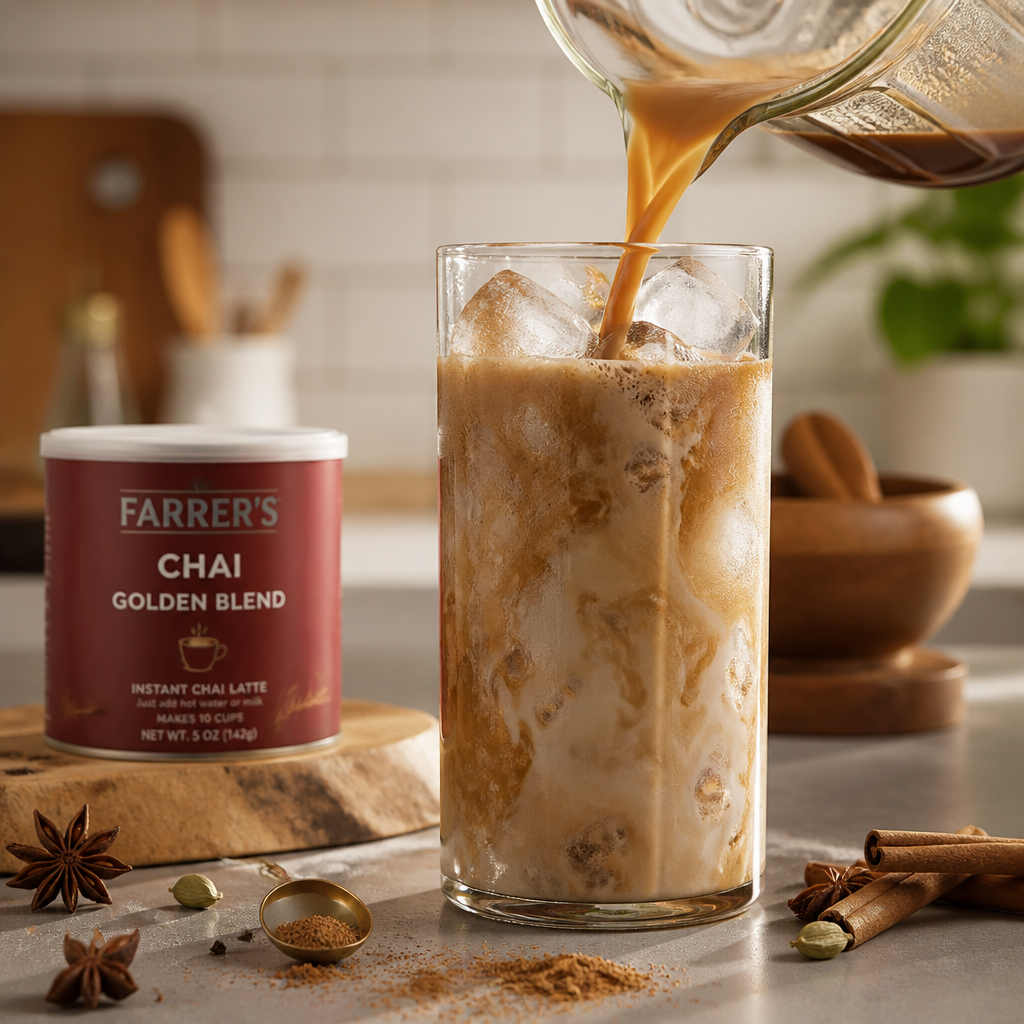
Use four heaped teaspoons of Farrer's chai powder rather than three. Add the powder to a tall glass and pour in a small amount of cold milk. Whisk or use a handheld frother for 20 seconds to form a paste, then add the remaining cold milk. Fill the glass with ice cubes and stir once to combine. The frother creates a fine foam that sits on top of the cold milk and ice.
Oat or full-fat dairy milk works best here. The colder temperature means lighter milks (almond, for example) produce a very thin drink with little texture. If you prefer a sweeter iced chai, a half-teaspoon of vanilla extract or a small pour of maple syrup added to the paste stage integrates well with the Artisan Blend's existing spice profile.
Pro tip: Make a double batch of the paste (powder plus a splash of milk) and store it in a small sealed container in the fridge for up to 24 hours. Each morning you can tip the paste into a glass, add cold milk, and ice within 90 seconds. It is a practical system for weekday mornings where brewing from scratch feels like too much.
Frequently Asked Questions
What is the best chai latte recipe for beginners in the UK?
Start with Farrer's Vanilla Chai Latte powder and full-fat dairy or barista oat milk. Add one scoop to your mug, dissolve in a small splash of hot milk to form a paste, then pour in 200ml of heated milk and stir for 30 seconds. This method requires no equipment beyond a spoon and produces a consistent result from the first attempt. The vanilla version is more forgiving than the Artisan Blend because the spice profile is softer and the sweetness level does not need adjustment.
Can I use Farrer's chai powder to make a vegan chai latte?
Yes. Both the Artisan Blend and Vanilla Chai Latte powder from Farrer's are non-dairy, which means the powder itself is fully vegan. Pair it with oat milk (barista formula), almond milk, or soy milk for a completely plant-based drink. Barista oat milk produces the closest texture to a full-fat dairy chai latte.
How do I make a frothy chai latte without a coffee machine?
A handheld battery-powered milk frother is the simplest tool and costs very little. Heat your milk in a saucepan, combine with the dissolved chai powder, then froth directly in the mug for 20-30 seconds. A French press also works: add the combined chai and milk, then pump the plunger rapidly 50 to 60 times. Both methods produce a noticeable foam layer without any steam wand or espresso machine.
Is Farrer's chai latte powder suitable for cafés and hospitality use?
The 1kg tin format and CQUIN compliance make both Farrer's chai products practical for café and hospitality environments. The dosing is consistent, the powder dissolves quickly under service conditions, and Farrer's offers next-day dispatch on orders over £35 to keep stock levels manageable. Trade buyers can also access Farrer's barista training programs if staff need support with milk texturing and drink preparation.
How does the Artisan Blend differ from the Vanilla Chai Latte powder?
The Artisan Blend leads with a cleaner, more direct spice profile built around cinnamon and cardamom. It is slightly drier in flavour and works well for people who prefer their chai without a strong vanilla note. The Vanilla Chai Latte powder adds a rounded sweetness that softens the spice edges and pairs especially well with oat milk. Neither version needs added sugar in most cases, but the Vanilla variant is the one to choose if you are serving guests who are less familiar with chai spice.
Can I use Farrer's chai powder in baking or cooking?
Yes. The powder format makes it easy to incorporate into baked goods. Stir it into cake batter, sprinkle over porridge, mix into a crumble topping, or blend into an overnight oats jar. The Artisan Blend's cinnamon-forward profile works particularly well in anything with apple or pear. Use it as you would a mixed spice or ground cinnamon, starting with one to two teaspoons per batch and adjusting to taste.
Have you tried making a chai latte at home with Farrer's? We would love to hear how you adapted the method and what milk pairing worked best for you.
References
- Farrer's Drink Me Chai Artisan Blend product page with ingredients, nutrition, and brewing instructions
- Farrer's full chai collection including Artisan Blend and Vanilla Chai Latte powders
- Twinings guide to what chai latte is, its origins in the Indian subcontinent, and the classic spice composition
- Arla UK chai latte recipe covering spice steeping times and milk preparation method
- The Kitchn step-by-step chai tea latte method including spice selection, sweetener timing, and batch preparation tips


