

Most independent cafés switching coffee suppliers are not looking for a lower price per kilo. They are looking for fewer headaches: consistent roasting, reliable delivery, someone who picks up the phone when the grinder is off, and a coffee story that actually means something on a menu.
That is where choosing the right trade coffee supplier UK makes or breaks your drinks offer. Farrer's, founded in Kendal in 1819, is the UK's oldest coffee roaster, and it has spent over two centuries building exactly the kind of partnership infrastructure that independent hospitality businesses need but rarely find.
Table of Contents
- Why Heritage Actually Matters for a Trade Partnership
- What Farrer's Trade Offer Actually Includes
- Barista Training and BSA Accreditation
- Choosing the Right Coffee for Your Menu
- Comparing Trade Coffee Suppliers: What to Actually Look For
- How to Get Started as a Farrer's Trade Partner
- Frequently Asked Questions
- References
Why Heritage Actually Matters for a Trade Partnership
There is a cynical version of the "heritage" argument that amounts to nothing more than a pretty logo and some sepia photography. Then there is the version that actually changes what you receive as a trade customer. Farrer's falls into the second category.
Over 200 years of buying, roasting, and blending from the same Lake District roastery in Kendal means something concrete: blend consistency, deep supplier relationships, and institutional knowledge that newer brands are still working to build. When you put a coffee on your menu, your customers form an expectation. Inconsistent roasting erodes that trust faster than almost anything else. A roaster with two centuries of practice at the same craft is not going to get a blend wrong because a head roaster left last quarter.
Most artisan coffee brands operating in the UK today were founded in the last 20 to 30 years. Farrer's has been refining its blends and sourcing relationships for well over two centuries. That longevity is not a marketing angle. It is a structural advantage that shows up in the cup.
"Displaying the Farrer's name on your menu or machine puts a 200-year story behind every cup, signalling craft, consistency and quality your customers can trust."
For independent cafés trying to differentiate from high-street chains, that provenance is a genuine selling point. It gives your staff something honest to say when a customer asks about the coffee. And in a market where consumers are increasingly sceptical of vague claims about "artisan" or "craft," a verifiable 1819 founding date carries weight that newer suppliers simply cannot replicate.
What Farrer's Trade Offer Actually Includes
Farrer's supplies wholesale coffee, tea, and equipment to cafés, hotels, restaurants, farm shops, pubs, and offices across the UK. The roastery is in Kendal, the gateway to the Lake District, but the reach is national. This is not a regional-only arrangement.
Coffee, Tea, and a Complete Hot Drinks Menu
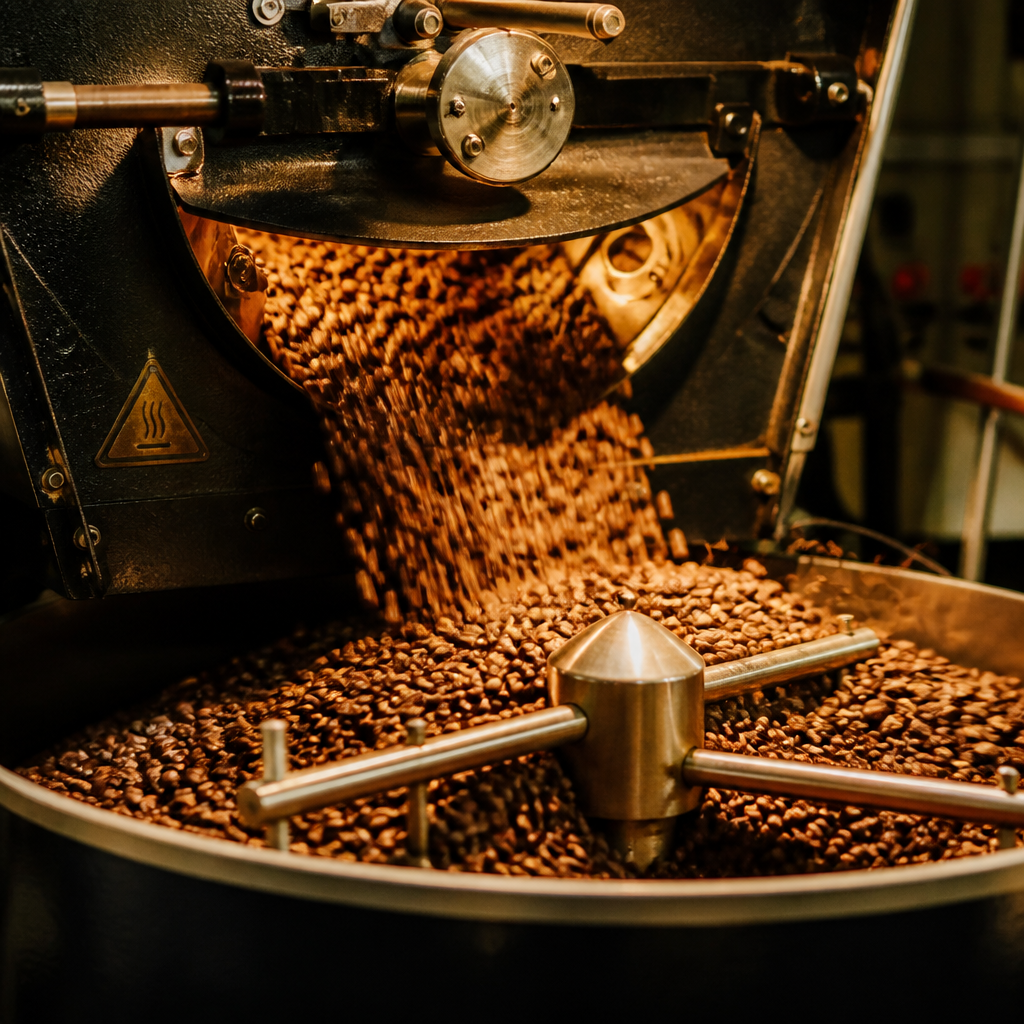
All coffee is roasted in small batches at the Kendal roastery. The range covers classic blends, single origins, and speciality coffees, including options specifically roasted to cut through milk for lattes and cappuccinos. For a busy café, that specificity matters: a blend that tastes good as an espresso but goes flat under steamed milk is a problem you solve at the sourcing stage, not at the machine.
The tea range is specially selected and blended with Lakeland water conditions in mind, covering everyday favourites, speciality blends, and herbal infusions. Farrer's also supplies hot chocolate and syrups, giving trade partners a genuinely complete hot drinks menu rather than forcing you to cobble together separate supplier relationships.
Equipment Supply, Servicing, and Engineering Support
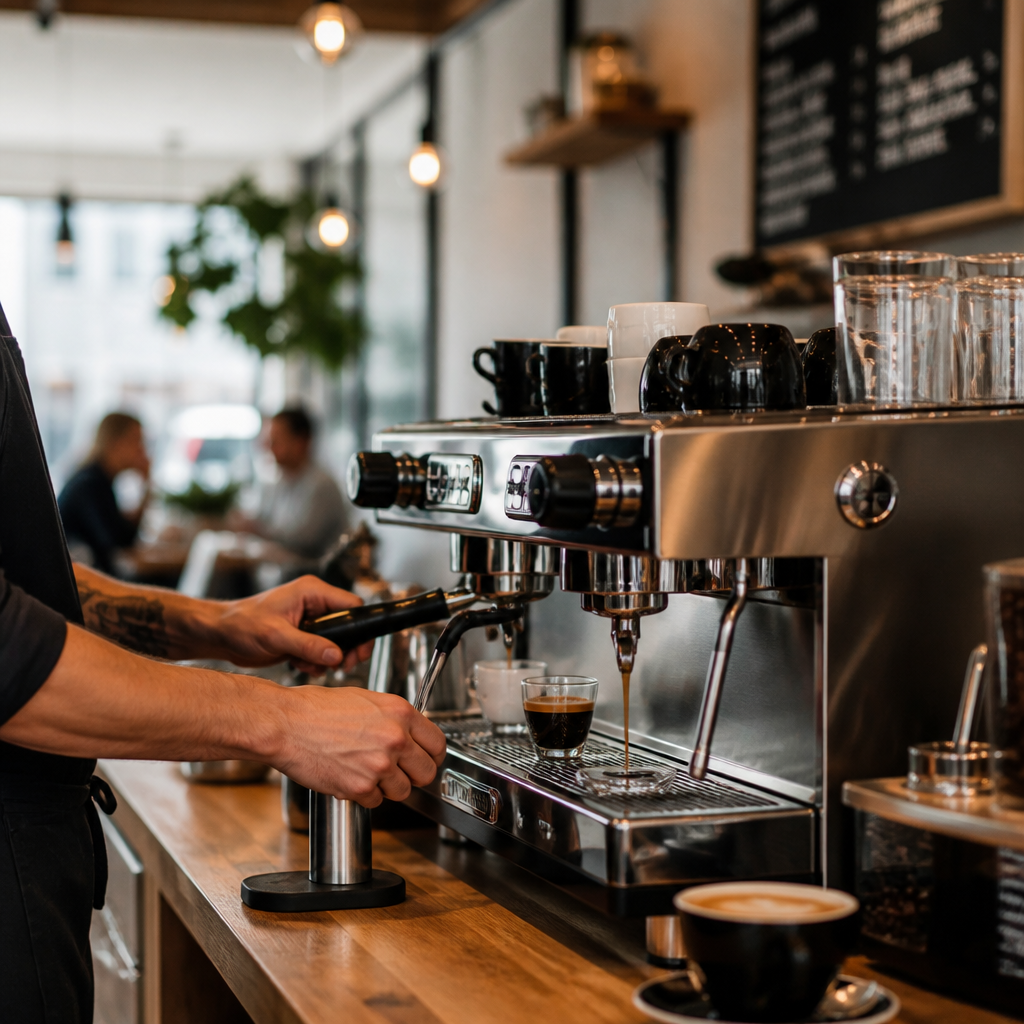
Farrer's supplies and supports a full range of commercial coffee and tea equipment, from traditional espresso machines to bulk brew filter systems and tea brewing gear. The team handles installation, calibration, and ongoing support. If you need a compact two-group machine for a small counter or a high-capacity workhorse for a busy bar, they will help you match the right kit to your menu, volume, and space.
The engineering support is not outsourced. Machinery sales, maintenance, and repairs are provided by Farrer's own engineering team. For an independent café, that single point of contact for both coffee and equipment means fewer dropped balls when something goes wrong mid-service.
Farrer's can also help trade partners introduce cold brew and nitro coffee to their menus, with equipment for smooth, refreshing coffee on tap. For venues building a modern drinks offer or adding coffee cocktails, this is a straightforward way to extend the menu without bringing in a second supplier.
Pro tip: When you first enquire about a trade account, ask specifically about espresso machine options and service turnaround times. A supplier who sells you a machine but cannot service it quickly is a liability during peak service periods.
Barista Training and BSA Accreditation
This is where Farrer's trade offer separates itself from most wholesale coffee suppliers. Training is not an afterthought bolted onto a product catalogue. It is a structured programme with genuine professional credentials attached.
Farrer's operates a BSA-approved (Beverage Standards Association) training centre in Kendal. The training suite, known as the Wessex Training Suite, is the North West's only Beverage Standards Association accredited centre. That is not a minor distinction. BSA accreditation means the training meets industry-recognised standards and the qualifications earned there carry genuine weight when your staff apply for roles or when you are communicating your quality standards to customers.
What the Training Courses Cover
The barista training offer runs from entry-level through to advanced certification. A free, half-day basic barista skills session is available to all wholesale customers and those using Farrer's traditional espresso machines. That free session covers coffee selection, dialling in the grinder, coffee dosage, shot times, and milk texturing and steaming. It also includes time on making teas and cold drinks, which is practical for any café that wants consistent standards across the whole drinks menu, not just espresso.
Beyond the free introduction, Farrer's offers a full-day BSA accredited course covering the role of a professional barista, espresso preparation, milk steaming and foaming, preparing a range of gourmet coffees, and customer interaction around coffee and tea. There is also an in-depth, industry-recognised qualification covering practical and theoretical assessment, the history and production of coffee, tea, chocolate, smoothies, and juices, advanced drink preparation, and customer service. This is delivered through a City and Guilds VRQ Level 2 Barista Trainer qualification.
The training centre has four individual workstations, each with a commercial espresso machine, digital grinder, knock box, and all the accessories needed for a realistic working environment.
Pro tip: If you are opening a new café or onboarding staff with limited barista experience, the free half-day session for wholesale customers is the logical first step. Use it to assess skill levels before deciding whether individual staff members need the full accredited certification.
Choosing the Right Coffee for Your Menu
A common mistake among independent cafés switching suppliers is treating the coffee selection as a single decision: pick a house blend, done. In practice, a well-built menu requires at least two distinct profiles: a blend for espresso-based milk drinks, and either a second blend or single origin for filter and black coffee. These are different briefs and a good trade supplier should be helping you think through both.
Farrer's trade team offers menu advice and dial-in support as part of the partnership, not as an add-on. Whether you are a café, hotel, restaurant, pub, or office, they will work with you to build a coffee and tea range that fits your style, budget, and customer base. That is a meaningful distinction from suppliers who send you a price list and leave you to figure it out.
The Provenance Argument on a Menu Board
Menu boards that credit a named roaster with a verifiable origin story perform better with customers who care about provenance. Saying "coffee roasted by the UK's oldest roaster, Farrer's of Kendal, since 1819" is a concrete claim that a curious customer can look up and find true. It also connects your café to a regional identity, the Lake District, that carries strong positive associations with quality, landscape, and craftsmanship.
For venues that serve a mix of locals and tourists, especially in the north of England, that Lake District connection is a natural fit. But even for cafés in London or Birmingham, the provenance story is an honest differentiator in a market full of vague "artisanal" claims.
Comparing Trade Coffee Suppliers: What to Actually Look For
When evaluating a wholesale coffee UK supplier, the price per kilo is the least interesting number on the page. What actually determines whether the relationship works is the support infrastructure around the coffee. The table below compares the key dimensions you should be assessing.
| Supplier Factor | Farrer's (Kendal, est. 1819) | What to Watch For With Other Suppliers |
|---|---|---|
| Roasting consistency | Small-batch, in-house roasting at the same Kendal roastery for over 200 years | Outsourced roasting or rapid scaling can introduce batch-to-batch variation |
| Barista training | Free half-day session for all wholesale customers; BSA-accredited full courses; City & Guilds VRQ Level 2 available | Many suppliers offer no training, or charge for basic sessions with no accreditation |
| Equipment support | Own engineering team handles sales, installation, servicing, and repairs | Suppliers who sell equipment but outsource servicing create slow repair turnaround |
| Product breadth | Coffee, tea, hot chocolate, syrups, cold brew equipment, takeaway supplies | Coffee-only suppliers require additional trade accounts for tea and ancillaries |
| Menu and dial-in support | Ongoing menu advice, grinder dial-in support, and equipment guidance included | Transactional suppliers send a price list; ongoing support depends on rep relationship |
| Provenance story | Verifiable 1819 founding; Lake District roastery; named blends with genuine history | Generic "artisan" positioning without specific, verifiable history |
The honest summary: if you are choosing between a supplier whose selling point is a very low kilo price and a supplier who provides consistent roasting, in-house engineering, and accredited training, the low price will cost you more over twelve months in staff errors, equipment downtime, and blend drift.
How to Get Started as a Farrer's Trade Partner
Getting started does not require a lengthy procurement process. Farrer's has a dedicated trade page at farrerscoffee.co.uk/pages/trade where you can submit an enquiry directly. You can also call the team on +44 (0)1539 720020 or email hello@farrerscoffee.co.uk.
What to Prepare Before You Get in Touch
Before your first conversation, it is worth having a rough answer to a few practical questions: what type of venue you are running, what your approximate daily coffee volume is, whether you already have an espresso machine or need one, and whether your team has any barista training already. None of these need to be precise figures, but they will help the Farrer's team point you towards the right blend profile and equipment from the first conversation rather than the third.
Tasting Visit and Roastery Access
If you are based within reach of Kendal or are happy to make the trip, Farrer's encourages trade partners to arrange a tasting visit. The roastery also offers bookable Coffee Roastery Experience Days where you can step inside the working roastery, learn how they roast, taste coffees from around the world, and create your own blend. For a café owner who wants to genuinely understand what they are serving and tell a credible story to customers, this is a more useful few hours than any brochure.
Farrer's supplies artisan coffee suppliers across the hospitality spectrum, from independent cafés and farm shops to hotels and restaurants, so the trade offer is designed to scale with your business rather than being built for one type of venue.
Pro tip: Even if you are not yet ready to switch suppliers, arrange the tasting visit first. Tasting the range in context, with the roastery team explaining the blend profiles, will give you a much clearer brief for your menu than working from a PDF.
Frequently Asked Questions
Does Farrer's supply coffee to businesses outside the Lake District?
Yes. While Farrer's roots are firmly in Kendal and the Lake District, the company supplies coffee, tea, and supporting products to cafés, hotels, restaurants, farm shops, and offices across the UK. The trade relationship is not geographically restricted to the North West.
What does a Farrer's trade account include beyond the coffee itself?
Trade partners get access to the full product range at competitive pricing, plus menu advice, equipment guidance, dial-in support, and certified barista training. The company's own engineering team also handles equipment sales, installation, servicing, and repairs, so you are not managing separate supplier relationships for coffee and machines.
Is the barista training free for wholesale customers?
A free half-day introduction to barista skills session is available to all wholesale customers and those using Farrer's espresso machines. This covers coffee selection, grinder dialling, dosage, shot times, and milk work. More advanced accredited courses, including a full-day BSA-accredited programme and a City and Guilds VRQ Level 2 qualification, are also available at Farrer's Kendal training centre.
Can Farrer's supply a complete hot drinks menu, or just coffee?
Farrer's supplies coffee, a full range of teas, hot chocolate, and syrups, giving trade partners a complete hot drinks offer. The tea range is specifically selected and blended with UK water conditions in mind and covers everyday favourites, speciality blends, and herbal infusions. Cold brew and nitro coffee equipment is also available for venues building a modern drinks menu.
What makes Farrer's different from other artisan coffee suppliers in the UK?
The core difference is longevity and what that longevity actually produces. Founded in 1819, Farrer's has over 200 years of continuous roasting and blending from the same Kendal roastery. That produces blend consistency, deep sourcing relationships, and institutional craft knowledge that newer roasters, however skilled, are still developing. The in-house engineering team, BSA-accredited training centre, and complete product range (coffee, tea, hot chocolate, equipment) make it a genuinely full-service trade partner rather than just a bag-drop supplier.
How do I contact Farrer's to discuss a trade account?
The easiest route is through the dedicated trade page at farrerscoffee.co.uk/pages/trade. You can also call +44 (0)1539 720020 or email hello@farrerscoffee.co.uk. The team can arrange a tasting visit or roastery tour for trade prospects who want to meet the product before committing to a supplier switch.
If you run an independent café or hospitality business and have switched trade coffee suppliers recently, we would love to hear what made the difference for your team. Share your experience in the comments below.
We would love your feedback and any insights you would share with others. What perspective would you add?
References
- Farrer's Trade and Wholesale Coffee Supply page, including equipment, training, and product range details
- Farrer's Barista Training courses at the BSA-accredited Kendal centre, including course descriptions and certification levels
- Tea and Coffee Trade Journal coverage of Farrer's training centre, Wessex Training Suite, and free wholesale barista sessions
- Farrer's brand history and story, from the 1819 founding in Kendal to the modern trade and roastery offer


