

Most people who own a French press, or cafetière as it is known throughout the UK, are not getting the most out of it. The grind is too fine, the water too hot, and the plunger gets pushed down the moment the timer goes off. The result is a cup that is either muddy, bitter, or thin, none of which reflects what this brewing method is actually capable of.
Done properly, French press coffee produces a rich, full-bodied cup with texture and depth that a paper-filtered brewer simply cannot replicate. This French press coffee guide covers everything from grind size and ratio to technique and coffee selection, so every brew you make from here on delivers the cup you are actually after.
Table of Contents
- What Makes a French Press Different from Other Brewers
- Quick Takeaways
- Grind Size for French Press: Why Coarse Is Non-Negotiable
- Coffee-to-Water Ratio and Measurements
- Water Temperature, the Bloom, and Steep Time
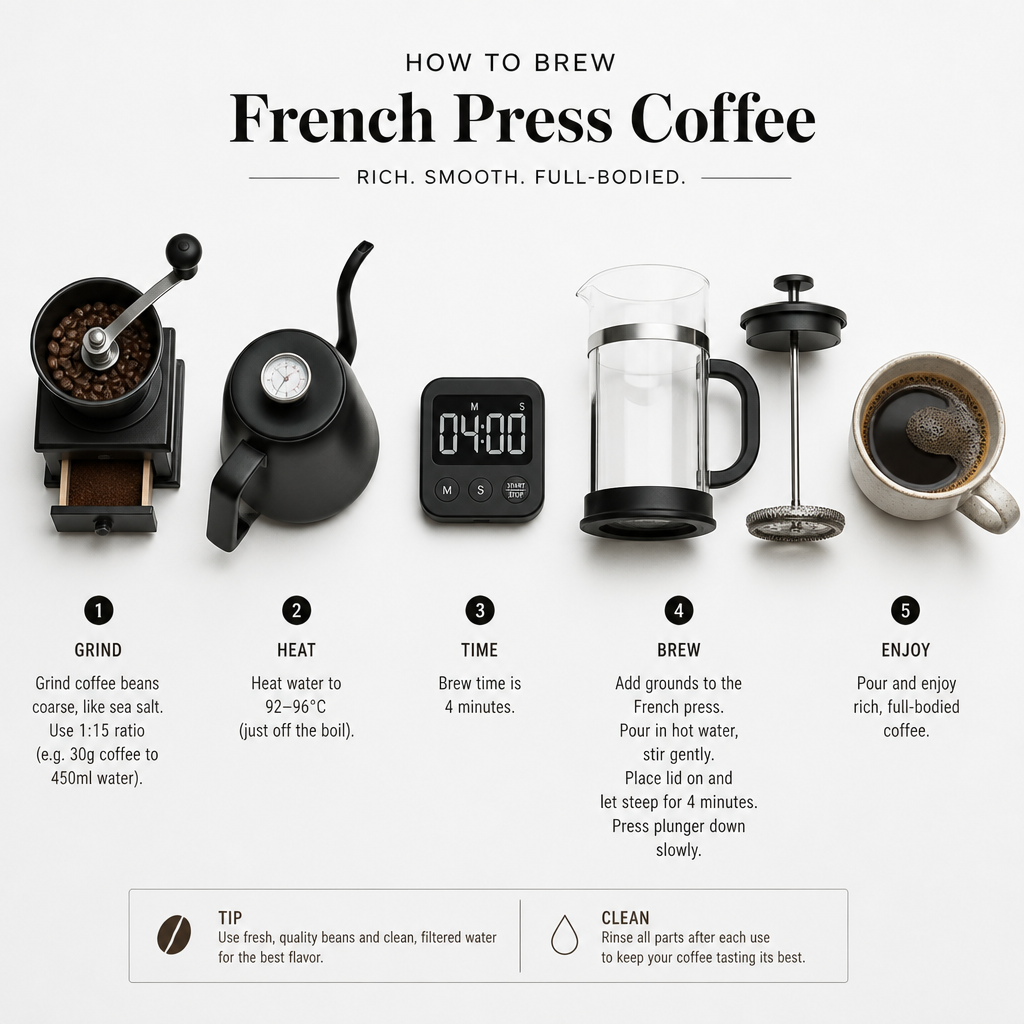
- Step-by-Step Cafetière Brewing Method
- Best Coffee for French Press: Roast, Origin, and Blend
- French Press vs. Other Brewing Methods: A Direct Comparison
- Troubleshooting Common French Press Problems
- Frequently Asked Questions
- References
What Makes a French Press Different from Other Brewers
The French press is an immersion brewer. The coffee grounds sit fully submerged in hot water for the entire steeping period, rather than having water pass through them once as with a pour-over or filter machine. A metal mesh filter then separates the grounds from the liquid when you press down the plunger.
That metal mesh is the key detail. Unlike paper filters, it does not trap the natural coffee oils or the fine particles that give the cup its body and weight. The result is a heavier, rounder mouthfeel that coffee drinkers describe as full-bodied, with a slight texture that distinguishes it from a clean, bright filter cup.
This is not a flaw. It is what the French press is designed to produce. If you want a sparkling, fruit-forward clarity in your cup, a pour-over is a better choice. If you want warmth, depth, and the sense that you are drinking something genuinely substantial, the cafetière is the right tool.
Quick Takeaways
| Key Insight | Explanation |
|---|---|
| Grind coarse, not medium | A fine or medium grind causes over-extraction and produces a bitter, muddy cup. Coarse grounds, similar in texture to coarse sea salt or breadcrumbs, are essential for clean immersion brewing. |
| Use a 1:15 coffee-to-water ratio as your starting point | One gram of coffee per 15ml of water gives a balanced, full-bodied result. For a richer cup, try 1:13. Adjust by taste, not by guesswork. |
| Water temperature matters | Water at a rolling boil (100°C) scorches the grounds and amplifies bitterness. Allow freshly boiled water to rest for 30 to 60 seconds before pouring, bringing it to around 93 to 96°C. |
| Four minutes is the target steep time | Four minutes gives enough contact time for proper extraction without pulling out the harsh, bitter compounds that appear with longer steeping. |
| Let the coffee bloom first | Pouring a small amount of water over the grounds first and waiting 30 seconds allows CO2 to escape. This produces more even extraction and a cleaner flavour. |
| Do not leave coffee on the grounds | Once pressed, pour the coffee immediately. Leaving it in contact with the grounds continues extraction and turns the cup bitter within minutes. |
| Medium to medium-dark roasts work best | These roasts express the body and chocolate or nutty notes that suit immersion brewing. Very light roasts can taste thin and sour in a French press; very dark roasts tip into harsh bitterness. |
Grind Size for French Press: Why Coarse Is Non-Negotiable
The most common French press mistake is grinding too fine. A fine grind increases the surface area of the coffee exposed to water, which accelerates extraction. In a short brew like espresso, that is useful. In a four-minute immersion brew, it means over-extraction, resulting in a bitter, astringent cup with a thick layer of sludge at the bottom.
The correct grind for a cafetière is coarse ground, roughly the texture of coarse sea salt or raw breadcrumbs. At this size, the grounds extract at a rate that matches the four-minute steep time, producing a balanced cup without excessive bitterness. The coarser particle size also allows the metal mesh plunger to press down cleanly without resistance.
Burr Grinder vs. Blade Grinder
If you are grinding at home, a burr grinder produces consistently sized particles, which is what you need for even extraction. A blade grinder chops unevenly, producing a mix of coarse chunks and fine dust. That fine dust will over-extract and muddy the cup regardless of your other variables.
If buying pre-ground coffee, specify cafetière grind or coarse grind when ordering. Farrer's allows you to select your grind at the point of purchase, which removes the guesswork entirely.
Pro tip: If your French press coffee is consistently bitter and gritty regardless of steep time, the grind is almost certainly the culprit. Switch to a coarser setting before adjusting anything else.
Coffee-to-Water Ratio and Measurements
Ratios matter more than people expect. Brewing by eye, or by the vague instruction to "add a heaped tablespoon," produces inconsistent results because coffee density varies depending on the roast, origin, and grind size.
The standard starting point for cafetière brewing is 1 gram of coffee per 15ml of water, or roughly 1:15 by weight. For most French press sizes, this works out as follows.
| Press Size | Water Volume | Coffee at 1:15 Ratio |
|---|---|---|
| 3-cup (350ml) | 350ml | 23g |
| 4-cup (500ml) | 500ml | 33g |
| 8-cup (1 litre) | 1000ml | 65g |
A kitchen scale accurate to one gram removes the inconsistency that comes with scoops and spoons. Coffee scoops vary between manufacturers, and the same scoop can hold significantly different weights depending on how loosely the coffee is packed.
If your brewed cup tastes weak, increase the coffee dose slightly rather than extending the steep time. Longer steeping does not just add strength, it also adds bitterness from the compounds that extract last.
Water Temperature, the Bloom, and Steep Time
Water temperature directly controls extraction rate. Water at 100°C extracts everything quickly, including the bitter, harsh compounds you do not want. Allowing freshly boiled water to rest for 30 to 60 seconds brings it to approximately 93 to 96°C, the range that extracts the flavour compounds efficiently while leaving the harsher elements behind.
The Bloom: Why It Improves Every Cup
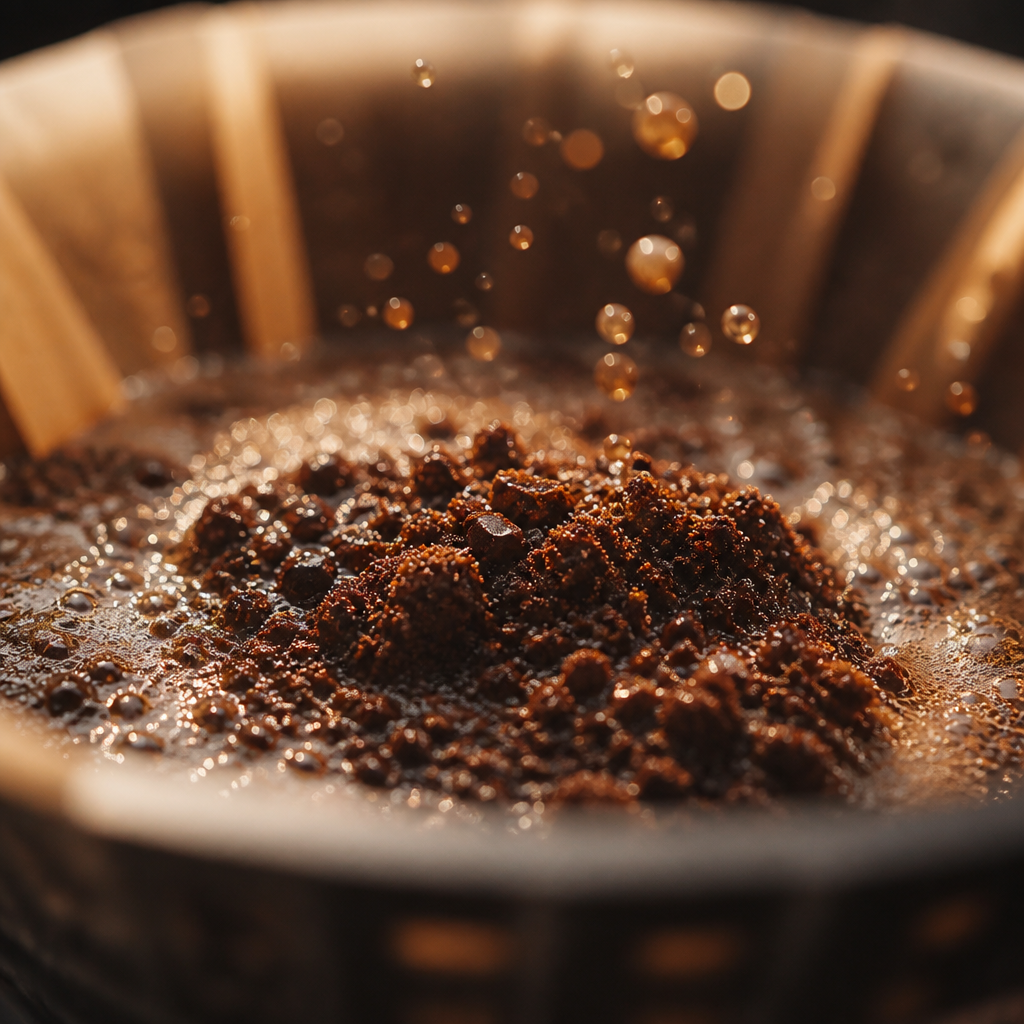
Freshly roasted coffee contains carbon dioxide trapped in the bean's cell structure. When you pour hot water over the grounds, CO2 escapes rapidly, creating a foamy, bubbling crust on the surface. If you pour all your water in at once, the CO2 creates uneven channels through the grounds and interferes with extraction.
The solution is a bloom pour. Add approximately twice the weight of the coffee in hot water (so, 46ml of water for 23g of coffee), stir gently, and wait 30 seconds. The CO2 releases first, and the remaining water you add then contacts the grounds evenly, producing more consistent extraction and a cleaner flavour.
The bloom step costs 30 seconds and meaningfully improves the texture and evenness of the final cup. It is the single easiest upgrade to any cafetière routine.
Steep Time: Four Minutes Is the Target
Four minutes is the standard steep time for cafetière coffee. This allows enough contact between the water and grounds to extract the sweetness, body, and complexity you are after without crossing into the territory where bitter, harsh tannins dominate the cup.
You can adjust slightly based on your taste. Three and a half minutes produces a slightly lighter, less intense cup. Four and a half minutes deepens the body but increases the risk of bitterness. Going beyond five minutes with a coarse grind is rarely worthwhile.
Step-by-Step Cafetière Brewing Method
This is the method that consistently produces a clean, full-bodied French press cup. Follow the steps in order the first time, then adjust the ratio and steep time to match your taste preferences.
Step 1: Preheat the press. Rinse the cafetière with hot water and discard it. This prevents the cold glass or steel from dropping the water temperature during brewing, which slows extraction unevenly.
Step 2: Add your coffee. Weigh out your grounds at the 1:15 ratio and add them to the press. Place the press on a scale and zero the display.
Step 3: Start the timer and bloom. Pour hot water (off the boil by about 30 to 60 seconds) over the grounds at twice the coffee weight. Stir gently to saturate all the grounds. Wait 30 seconds.
Step 4: Pour the remaining water. Slowly add the rest of your water in a circular motion to ensure even saturation. Place the lid on the press with the plunger pulled up. Do not press down yet.
Step 5: Steep for four minutes. Let the coffee steep undisturbed. The lid traps heat and keeps the temperature stable throughout the steep.
Step 6: Break the crust and skim. After four minutes, remove the lid and use a spoon to break the floating crust of grounds. Skim off the grounds and foam that float to the surface. This step reduces the sediment in your cup significantly.
Step 7: Press slowly and pour immediately. Press the plunger down gently and steadily over about 20 to 30 seconds. Pressing too fast agitates the grounds and forces fine particles through the mesh. Pour immediately into cups or a separate preheated vessel.
Pro tip: Pouring the brewed coffee into a separate insulated jug or preheated serving vessel stops the extraction immediately and keeps the coffee at drinking temperature without it continuing to brew on the sediment.
Best Coffee for French Press: Roast, Origin, and Blend
The French press is not a neutral brewing method. Its immersion process and metal filter amplify body, texture, and heavier flavour compounds. This means the coffee you choose has a pronounced effect on the final cup, more so than with a paper-filtered method where the filter smooths out some of the rougher edges.
Roast Level
Medium and medium-dark roasts are the strongest performers in a cafetière. They carry enough body and sweetness to express well through immersion brewing, and their flavour profiles of chocolate, nuts, caramel, and dried fruit translate cleanly into the cup. Light roasts can taste thin or sour in a French press because the method amplifies acidity and the roast has not developed the sugars that balance it. Very dark roasts risk tipping into harshness because the French press extracts everything, including the bitter notes that a shorter brew time might leave behind.
Freshness and Grind
Coffee degrades from the moment it is roasted. Pre-ground coffee loses its freshness much faster than whole beans because the increased surface area accelerates oxidation. For cafetière brewing specifically, freshness matters because stale coffee produces a flat, muddy cup even when every other variable is correct. Use coffee within four to six weeks of its roast date where possible, and grind immediately before brewing if you own a grinder.
Farrer's Blends for Cafetière Brewing
Farrer's Westmorland Blend is the natural choice for cafetière brewing. It is a medium roast with a flavour profile of toasted nuts, mild chocolate, and a clean, rounded finish. It holds its character in an immersion brew without becoming bitter or harsh, and the balanced roast level means it works whether you take it black or with milk.
The French Continental Blend is, as the name suggests, tailored specifically for this brewing method. A fuller, heavier roast that produces a bold, rich cup with genuine depth. If you prefer your cafetière coffee strong and unapologetic, this is where to start. The blend performs particularly well with a four to five minute steep at just off-boiling water temperature, which gives it time to express its full, heavy body without sharpness.
Both blends are available pre-ground to cafetière specification, hand-packed and dispatched fresh from Farrer's roastery in Kendal. For those who grind at home, ordering whole beans and grinding coarse immediately before brewing will always produce a noticeably better cup.
French Press vs. Other Brewing Methods: A Direct Comparison
Understanding where the French press sits relative to other methods helps you decide when to reach for it and when another brewer might better suit your needs or the coffee you have chosen.
| Brewing Method | Cup Character | Best Coffee Choice |
|---|---|---|
| French Press (Cafetière) | Full-bodied, rich, textured, heavier mouthfeel, natural oils present. Slightly less clarity than filtered methods but more depth and warmth. | Medium to medium-dark roasts, blends with chocolate and nut notes, coarse ground. Farrer's French Continental Blend or Westmorland Blend. |
| Pour-Over / Filter | Clean, bright, high clarity, fruit and floral notes expressed clearly. Thinner body. Paper filter removes oils and sediment entirely. | Light to medium roasts, single origins with distinct acidity or florals. Coarser grind than espresso but finer than French press. |
| AeroPress | Versatile: can produce espresso-style concentrate or a cleaner, lighter cup depending on technique. Fast brew time. Low sediment with paper filter, more body with metal filter. | Adaptable to almost any roast level. Works well with medium roasts and single origins. Very coarse grind for short steep variations. |
The French press is not trying to compete with a pour-over for clarity or brightness. It is the right tool when you want coffee with weight and warmth, something that feels substantial in the cup, particularly in cooler weather or as a morning coffee with or without milk.
Troubleshooting Common French Press Problems
Most French press problems have a single clear cause. Here is how to diagnose and fix the most common ones.
Bitter, Harsh Taste
The grind is almost certainly too fine, or the steep time is too long, or both. Start by coarsening the grind. If that does not resolve it, reduce the steep time to three and a half minutes and check whether you are pouring water that is still at a rolling boil. A combination of fine grind, full boiling water, and a five-minute steep will produce a reliably unpleasant cup.
Weak or Watery Cup
Either the coffee dose is too low, or the grind is too coarse and under-extracting. Increase the coffee weight slightly before adjusting anything else. Extending the steep time past four minutes to compensate for a weak dose tends to add bitterness rather than strength.
Muddy, Gritty Sediment in the Cup
This is usually caused by a grind that is too fine, pressing too fast, or skipping the crust-breaking step. Coarsen the grind, press slowly and steadily, and take 30 seconds to skim the floating grounds from the surface before pressing. These three adjustments together will significantly reduce sediment in the cup.
Coffee Goes Cold Too Fast
Preheating the cafetière with hot water before adding the grounds makes a real difference. Pouring into a preheated cup and transferring the brewed coffee to an insulated vessel immediately after pressing will keep the temperature consistent for longer.
Pro tip: If you regularly make more than you can drink in one sitting, brew directly into a preheated thermal carafe rather than leaving it in the French press. The coffee stops extracting the moment it leaves the grounds, and you avoid the bitter aftertaste that comes from a cup that has been sitting on sediment.
Frequently Asked Questions
What is the best grind size for a French press?
Coarse ground is the correct grind size for a French press or cafetière. The grounds should resemble coarse sea salt or rough breadcrumbs. A medium or fine grind over-extracts in the four-minute steep time and produces bitterness and excessive sediment. If you are buying pre-ground coffee, specify cafetière grind.
How long should I steep coffee in a French press?
Four minutes is the standard and most reliable steep time. It allows the water to extract the flavour compounds that give the cup its body and sweetness without pulling out the harsh, bitter tannins that emerge with longer contact. You can adjust to three and a half minutes for a lighter cup or four and a half for more intensity, but going beyond five minutes rarely improves the result.
What coffee-to-water ratio should I use for cafetière brewing?
Start with 1 gram of coffee per 15ml of water. For a standard 8-cup cafetière holding one litre, that means 65 to 67 grams of coffee. For a richer, stronger cup, move to 1:13. Measuring by weight rather than scoops gives you consistent results because coffee density varies by roast and grind.
Can I use any coffee in a French press?
Technically yes, but medium to medium-dark roasts produce the best results. The immersion method and metal filter amplify body and heavier flavour compounds, which suits roasts with chocolate, nut, and caramel notes. Very light roasts can taste sour and thin; very dark roasts risk bitterness. A well-crafted blend like Farrer's Westmorland or French Continental is specifically suited to this brewing method.
Why does my French press coffee taste bitter?
Bitterness in a cafetière cup almost always comes from one of three things: the grind is too fine, the water is too hot (at a full rolling boil rather than just off the boil), or the steep time is too long. Fix the grind first. If the coffee is still bitter after moving to a genuinely coarse grind, reduce the steep time and allow the boiled water to rest for 30 to 60 seconds before pouring.
How do I reduce sediment in my French press coffee?
Coarsening the grind is the most effective step. Beyond that, break the floating crust of grounds after the four-minute steep and skim the grounds and foam from the surface before pressing. Then press slowly and steadily, taking at least 20 to 30 seconds. Rapid pressing forces fine particles through the mesh and directly into your cup.
Does freshness of the coffee matter for French press brewing?
Yes, significantly. Freshly roasted coffee within four to six weeks of its roast date produces a noticeably more complex, aromatic cup than stale coffee. The French press amplifies what is in the coffee, which means fresh beans show their quality clearly and stale beans show their flatness just as clearly. Buying in smaller quantities more frequently, as Farrer's next-day dispatch makes practical, is a better approach than stockpiling a large bag.
What does your go-to cafetière brew look like, and is there a grind or ratio tweak that made the biggest difference for your cup? Share your experience below.
References
- French press brewing ratios, grind size, and steep time explained by Drink Trade
- Detailed how-to guide for French press brewing including bloom technique from Bean Box
- Practical cafetière brewing guide from a UK coffee roaster covering common mistakes and fixes
- French press coffee guide covering water temperature, bloom, and roast selection from Pro Coffee Academy


