

Something shifted in British kitchens around 2020, and it has not shifted back. Sales of specialty coffee in the UK climbed sharply during the pandemic, and consumer research from the British Coffee Association shows the UK now drinks approximately 98 million cups of coffee every single day.
What changed was not just volume. It was expectation. A growing segment of UK consumers stopped accepting whatever came out of a jar and started asking where their beans were roasted, how recently, and by whom. That shift is what the specialty coffee UK market is riding right now, and it shows no sign of reversing.
Table of Contents
- Quick Takeaways
- What Is Driving the At-Home Barista Trend
- The Role of Freshly Roasted Coffee in Home Brewing
- Equipment the At-Home Barista Actually Needs
- How Heritage Roasters Compete with Big Coffee Brands
- Comparing Home Brewing Methods for Specialty Coffee
- Common Mistakes Home Brewers Make with Specialty Coffee
- Frequently Asked Questions
- References
Quick Takeaways
| Key Insight | Explanation |
|---|---|
| Roast date matters more than origin label | Freshly roasted coffee, ideally used within 4 to 6 weeks of roast date, produces dramatically better results than beans sitting in a warehouse regardless of origin story. |
| The UK specialty coffee market is growing at pace | The Specialty Coffee Association reports consistent double-digit growth in the UK specialty segment, outpacing mainstream coffee sales by a wide margin. |
| Home espresso is not the only path | Pour-over, Aeropress, and French press deliver excellent specialty coffee results without a four-figure machine investment, making the at-home barista lifestyle accessible at almost any budget. |
| Grind quality is the single biggest variable | A consistent burr grinder improves cup quality more than upgrading from a mid-range to a high-end espresso machine. Most home brewers get this backwards. |
| Heritage roasters offer provenance big brands cannot | Roasters like Farrer's, operating from the Lake District for over 200 years, provide verifiable craft and regional identity that multinational brands structurally cannot replicate. |
| Social media is fuelling equipment curiosity | Searches for espresso machines, milk frothers, and specialty beans consistently spike after viral content cycles, directly converting social audiences into at-home baristas. |
| Trade and home markets now overlap in expectations | Home enthusiasts increasingly expect the same bean quality and roast freshness that professional cafes demand, closing the gap between consumer and trade-grade purchasing behaviour. |
What Is Driving the At-Home Barista Trend
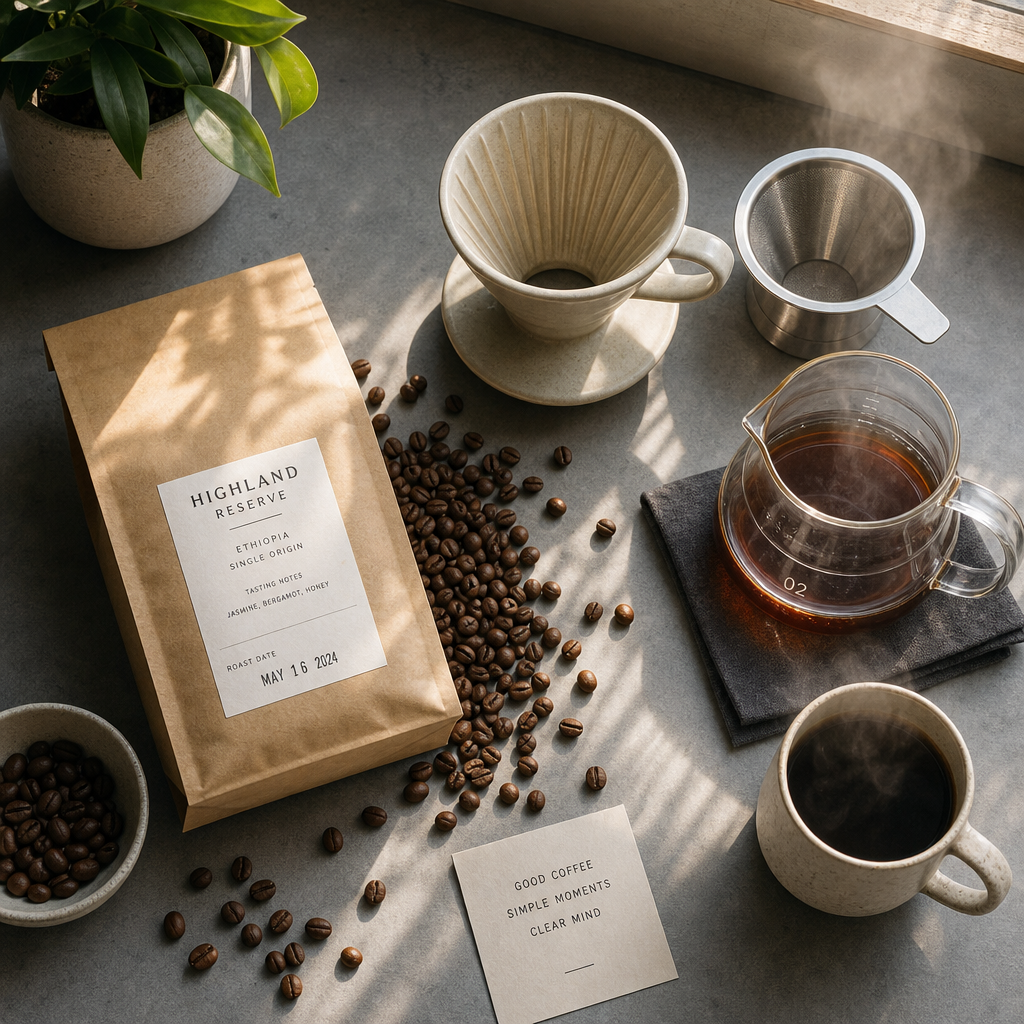
The at-home barista movement is not a hobbyist niche anymore. It is a mainstream consumer behaviour driven by three overlapping forces: rising cafe prices, elevated taste expectations from a generation that grew up drinking flat whites, and the social media visibility of home brewing setups.
According to Statista, the UK out-of-home coffee market has faced consistent pressure from cost-conscious consumers since 2022, with a notable portion of regular cafe visitors reducing their frequency and investing that money instead in home equipment and premium beans. When a daily flat white in London costs upward of £4.50, the economics of a quality home setup start looking very different within six months.
The pandemic accelerated what was already a gradual trend. People who had previously relied on the office coffee machine or a nearby cafe were suddenly home all day with time, curiosity, and a reason to spend money on something enjoyable.
Many of them never went back to their old habits. In practice, the consumers who discovered specialty coffee during lockdown periods represent a permanently converted segment, not a temporary spike.
Why Taste Expectations Have Permanently Changed
The UK cafe scene spent the 2010s educating an entire generation of consumers. Independent specialty coffee shops in cities like London, Manchester, Edinburgh, and Bristol set a taste benchmark that people took home with them. Once you have had a properly extracted single-origin filter coffee, instant coffee does not satisfy in the same way.
This is not anecdotal. The British Coffee Association notes that the proportion of UK adults who describe themselves as "interested in coffee quality" has risen significantly over the past decade. That interest does not stay in the cafe. It follows people to their kitchens.
Pro tip: If you are just starting your home brewing journey, spend your first £50 on a quality hand grinder before you upgrade anything else. The difference a consistent grind makes is not subtle, and you will taste it immediately in your first cup.
The Role of Freshly Roasted Coffee in Home Brewing
Freshly roasted coffee is not a marketing phrase. It is a technical requirement for getting the most out of any brewing method. Coffee begins off-gassing CO2 immediately after roasting, and the window during which it performs optimally is genuine and measurable.
For espresso, most roasters recommend using beans between 7 and 21 days post-roast. For filter methods, the window is slightly more forgiving, between 5 and 30 days. Beyond 6 weeks, even well-stored coffee loses brightness, aromatic complexity, and sweetness in the cup. What you are left with is flat, dull, and one-dimensional regardless of how good the original bean was.
This is why hand-packed, small-batch roasting from a producer like Farrer's makes a functional difference to what arrives in your cup. A freshly roasted 250g bag dispatched next-day is categorically not the same product as beans that sat in a distribution centre for eight weeks before hitting a supermarket shelf. The difference is not a matter of preference. It is chemistry.
Why Roast Date Transparency Matters
A common mistake among newer specialty coffee buyers is focusing exclusively on origin, processing method, or flavour notes without checking the roast date. Some brands use harvest year or best-before dates that obscure how long ago the beans were actually roasted, which can be months.
Reputable specialty roasters print the exact roast date on every bag. That transparency is a quality signal in itself. If a supplier will not tell you when the beans were roasted, that is information worth having.
"Freshness is not a premium feature. It is a baseline requirement. Roast date transparency is the simplest way a roaster demonstrates respect for their customer." - Specialty Coffee Association, Roaster Certification Guidelines
Equipment the At-Home Barista Actually Needs
The equipment conversation in specialty coffee tends to spiral quickly into expensive territory, which puts off newcomers unnecessarily. The data consistently shows that most at-home baristas achieve excellent results with a modest, well-chosen setup rather than a comprehensive and expensive one.
The non-negotiables are a burr grinder, a brewing device suited to your preferred method, a kettle with temperature control if you are brewing filter, and a reliable set of scales. Everything beyond that is optional improvement, not essential infrastructure.
Entry-Level Versus Enthusiast Setups
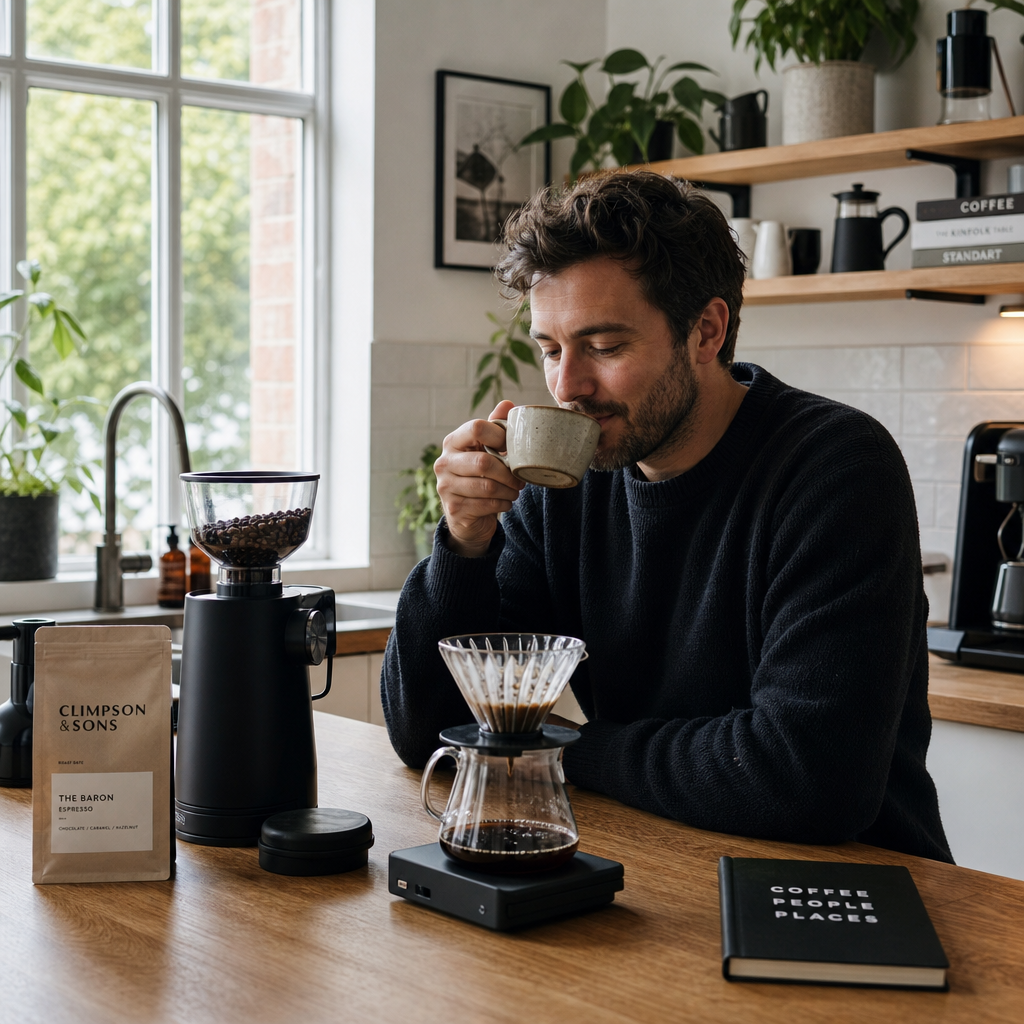
An entry-level at-home barista setup focused on filter coffee, including a hand grinder, a Hario V60 or French press, a gooseneck kettle, and a bag of freshly roasted beans from a quality roaster, costs under £150. This setup produces coffee that beats most commercial espresso bar offerings on flavour clarity and freshness.
An enthusiast espresso setup, including a semi-automatic machine and a decent electric grinder, starts around £600 to £1,000 and rises sharply from there. This is a meaningful investment, but for people who would otherwise spend £5 a day at a coffee shop, the payback period is under a year.
Pro tip: Farrer's offers brewing equipment alongside their coffee range, which means you can match your beans to your brewing method from a single source that understands how both interact. That joined-up approach matters more than most people realise when they are starting out.
How Heritage Roasters Compete with Big Coffee Brands
The specialty coffee UK market is not a fight between equals on volume, but it is increasingly a fight that heritage roasters are winning on value and loyalty. Large multinational brands like Lavazza compete on distribution scale and brand familiarity. What they cannot do is offer provenance, craft, or genuine roaster expertise embedded in a specific place and tradition.
Farrer's has operated from the Lake District for over 200 years. That is not a marketing hook. It is operational knowledge of how to select, roast, and blend coffee that accumulates across generations.
When a customer in Glasgow orders a bag of freshly roasted Fairtrade blend and it arrives the next day from Cumbria, they are buying something that Origin Coffee in Cornwall or Tru Start Coffee cannot replicate either, because the specific heritage, geography, and institutional knowledge are unique.
Why Verified Customer Ratings Matter in This Market
Trust is the core currency of specialty coffee. Farrer's 4.9 out of 5 verified customer rating is not incidental to their competitive position. In a market where consumers cannot taste before they buy, verified social proof from real purchasers is the primary trust mechanism.
Compare this to supermarket coffee brands, which rarely display verified post-purchase reviews with any transparency. The specialty roaster model, where roasters stand behind every bag with their name and reputation, creates accountability that commodity brands structurally avoid.
Comparing Home Brewing Methods for Specialty Coffee
Not every specialty coffee suits every brewing method, and understanding the difference saves at-home baristas from blaming the beans when the real issue is the technique or the method mismatch. The three most commonly used home methods each have distinct strengths and requirements.
| Brewing Method | Best For | Key Requirement |
|---|---|---|
| Pour-Over (V60, Chemex) | Single-origin beans with floral or fruity notes; showcasing brightness and clarity in filter roasts | Temperature control between 90 and 96 degrees Celsius; consistent medium-fine grind; freshly roasted beans within 30 days of roast date |
| French Press | Full-bodied blends with chocolate or nutty profiles; forgiving method for everyday drinking | Coarse, even grind to avoid over-extraction and sediment; 4-minute steep time; beans between 10 and 40 days post-roast |
| Espresso (Home Machine) | Concentrated, intense flavour; milk-based drinks like flat whites, lattes, and cappuccinos | High-quality burr grinder with consistent dose control; espresso-roasted or dark-medium beans 7 to 21 days post-roast; 9 bar extraction pressure |
The most important column in that table is the last one. A common mistake is purchasing excellent specialty beans and then brewing them in a method they are not suited for. A light-roasted Ethiopian washed natural designed for filter will taste sour and underwhelming in an espresso machine without significant grind and recipe adjustments.
Common Mistakes Home Brewers Make with Specialty Coffee
The gap between enjoying specialty coffee in a cafe and replicating it at home is mostly a gap in habit and knowledge rather than equipment or expense. Most home brewing failures trace back to a small number of repeatable errors that are straightforward to correct once you know what to look for.
Using pre-ground coffee is the most common and most damaging mistake. Coffee begins staling within minutes of grinding. Pre-ground coffee sold in bags has already done the majority of its flavour degradation before it reaches your kitchen. There is no way to compensate for this with technique or equipment.
Water Temperature and Water Quality
UK tap water varies considerably in mineral content depending on the region. Hard water, which is common in London and the South East, contains high calcium and magnesium levels that can interact poorly with specialty coffee's more delicate compounds. In hard water areas, using filtered water or a dedicated water softening solution produces a noticeably cleaner and more nuanced cup.
Temperature matters equally. Boiling water, at 100 degrees Celsius, scorches lighter roasts and kills the volatile aromatics that make specialty coffee interesting. For filter brewing, 93 to 96 degrees Celsius is the target. For espresso, 90 to 93 degrees works well for most blends. A temperature-controlled kettle is a genuinely useful tool rather than a luxury.
Storing Specialty Coffee Correctly
An airtight container at room temperature, away from direct light, is the correct storage method for whole bean specialty coffee. The refrigerator is actively harmful. It introduces moisture and absorbs fridge odours into the beans. The freezer works only for long-term storage of sealed, unopened bags, not for daily-use coffee.
Farrer's hand-packed bags with resealable closures are designed for this purpose. Keeping your beans in the bag they arrived in, resealed after each use, is a perfectly adequate storage solution for a 250g bag you will consume within two to three weeks.
Frequently Asked Questions
What makes coffee qualify as specialty coffee in the UK?
Specialty coffee is officially defined by the Specialty Coffee Association as green (unroasted) beans that score 80 points or above on a 100-point grading scale assessed by a certified Q Grader.
The grading accounts for aroma, flavour, aftertaste, acidity, body, balance, uniformity, clean cup, sweetness, and absence of defects. In the UK, most consumer-facing specialty coffee is presented with traceable origin information, named roast dates, and processing method details that commodity coffee does not provide.
Is freshly roasted coffee really worth the price premium over supermarket coffee?
Yes, without qualification. The difference is not subjective or marginal. Supermarket coffee is often roasted months before purchase, and the flavour compounds that define quality, including soluble aromatics and organic acids, degrade continuously after roasting. Freshly roasted coffee from a small-batch roaster like Farrer's, dispatched within days of roasting, retains complexity and brightness that supermarket beans have already lost by the time they are packed.
What is the best brewing method to start with as a beginner at-home barista?
French press is the most forgiving starting point because it requires no special equipment beyond the press itself and a coarse grind, tolerates slight temperature and timing variations without ruining the cup, and delivers a full-bodied result that showcases quality beans clearly. Once you are comfortable with the fundamentals of dose, grind, water temperature, and timing, pour-over methods like the V60 offer a more nuanced brewing experience worth exploring.
How does the UK specialty coffee market compare to Europe and the US?
The UK specialty coffee market is considered one of the most sophisticated in Europe, partly because of the density and quality of London's independent coffee shop scene, which acted as a consumer education engine for over a decade.
According to the Specialty Coffee Association, the UK ranks consistently among the top European markets for specialty coffee adoption by volume and per-capita spend. The US market is larger by absolute volume but the UK has historically led on espresso-based specialty culture outside of North America.
Can I get trade-quality coffee delivered at home from UK roasters?
Absolutely. Many UK specialty roasters, including Farrer's, supply both trade and home customers from the same roasting and packing operation. The beans a restaurant or cafe orders are the same beans a home customer receives.
Farrer's next-day dispatch on orders over £35 means home customers are not compromising on freshness relative to trade buyers. The practical difference between home and trade supply is volume and packaging format, not bean quality or roast standards.
Does water quality in the UK significantly affect specialty coffee at home?
Water quality has a measurable impact on extraction quality and final cup flavour. The Specialty Coffee Association recommends water with a total dissolved solids count between 75 and 250 parts per million and a neutral pH of around 7.
Most UK tap water falls within acceptable parameters, but heavily chlorinated water in urban areas or very hard water in the South East can flatten flavour or create bitter, chalky notes. A basic jug filter or a dedicated coffee water solution like Third Wave Water addresses this at minimal cost.
What brewing method are you currently using at home, and has switching to freshly roasted specialty coffee changed what you taste in the cup? Share your experience in the comments.
References
- Statista: UK coffee market size, consumer spending trends, and out-of-home coffee frequency data
- Forbes: Coverage of specialty coffee market growth, consumer premiumisation trends, and artisan food sector analysis
- Specialty Coffee Association: Green coffee grading standards, roaster certification guidelines, and global market research on specialty coffee adoption
- British Coffee Association: UK coffee consumption statistics, industry reports, and consumer trend data specific to the British market
- Ahrefs Blog: Search trend analysis for coffee-related keywords, at-home barista equipment searches, and consumer interest data in the UK food and drink sector


