

Most coffee drinkers pick a brewing method by accident, grab whatever equipment was on sale, and then wonder why their cup never quite matches what they get at a specialty café. The difference is almost never the coffee itself. It is the method.
French press coffee, pour over, and AeroPress each extract flavour in fundamentally different ways, and choosing the wrong one for your taste preferences or lifestyle is the single fastest way to waste good beans.
At Farrer's, we have been roasting and hand-packing coffee in the Lake District for over 200 years, and this guide is built on direct experience watching customers use all three methods with our blends.
Table of Contents
- Quick Takeaways
- What Makes Each Method Different
- French Press Coffee: The Full-Bodied Choice
- Pour Over Coffee: Precision in Every Cup
- AeroPress: The Forgiving, Fast Brewer
- Side-by-Side Comparison
- Which Brewing Method Suits Your Coffee?
- Matching Your Farrer's Coffee to the Right Method
- Frequently Asked Questions
- References
Quick Takeaways
| Key Insight | Explanation |
|---|---|
| French press delivers the richest mouthfeel | No paper filter means oils and fine particles remain in the cup, producing a heavy, textured brew that suits dark, full-bodied blends. |
| Pour over rewards patience and precision | Controlled pouring and paper filtration produce a clean, bright cup that highlights origin flavours and delicate single-origin notes. |
| AeroPress is the most forgiving method for beginners | Short brew time and adjustable pressure mean small mistakes in grind or temperature rarely ruin the result. |
| Grind size is non-negotiable | French press needs coarse; pour over needs medium-fine; AeroPress works across a wide range but medium is safest. Wrong grind size overrides everything else. |
| Water temperature differs per method | Pour over benefits from 92-96°C to extract delicate acids; French press and AeroPress perform well at 88-92°C, reducing bitterness risk. |
| Brew time directly affects bitterness | French press at 4 minutes extracts enough without over-pulling; pour over takes 3-4 minutes naturally; AeroPress can be done in under 2 minutes. |
| The best method depends on your coffee, not just preference | A high-altitude Kenyan single origin shines in pour over; a robust espresso-style blend from Farrer's will taste better in an AeroPress or French press. |
What Makes Each Method Different
Every brewing method is essentially a controlled extraction. You are pulling soluble compounds, acids, oils, and sugars out of ground coffee using hot water. The variables are time, temperature, pressure, and filtration. Change any one of them and you change the cup entirely.
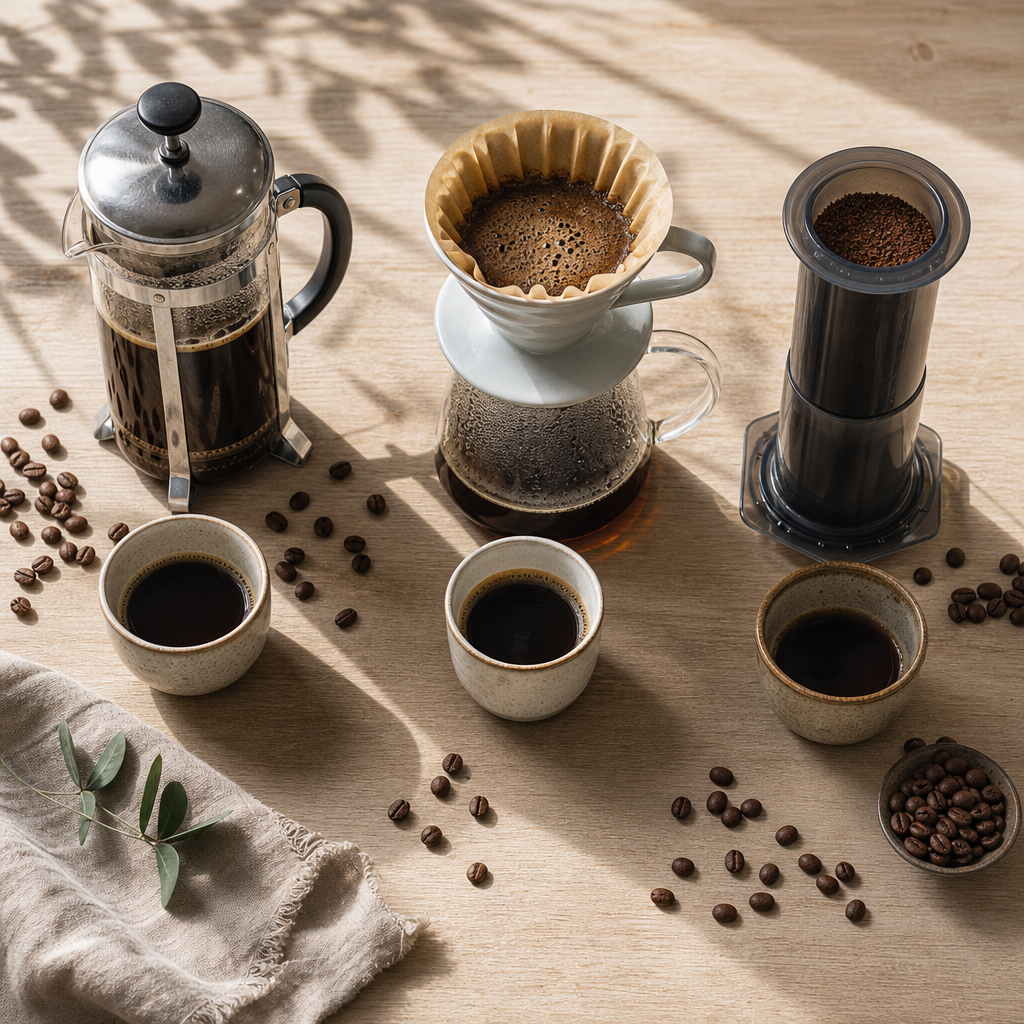
French press uses immersion brewing, where coffee steeps fully submerged in water. Pour over uses percolation, where water flows through the grounds once and drains. AeroPress is a hybrid that uses both immersion and pressure-driven filtration. These are not stylistic choices. They are different physical processes that produce structurally different cups.
Understanding this matters because it determines which of Farrer's blends will perform best in each method. A coffee roasted for filter brewing will taste flat in a French press. A bold, chocolatey blend designed for espresso-style drinks will turn sour and thin in a slow pour over. The method and the coffee have to work together.
French Press Coffee: The Full-Bodied Choice
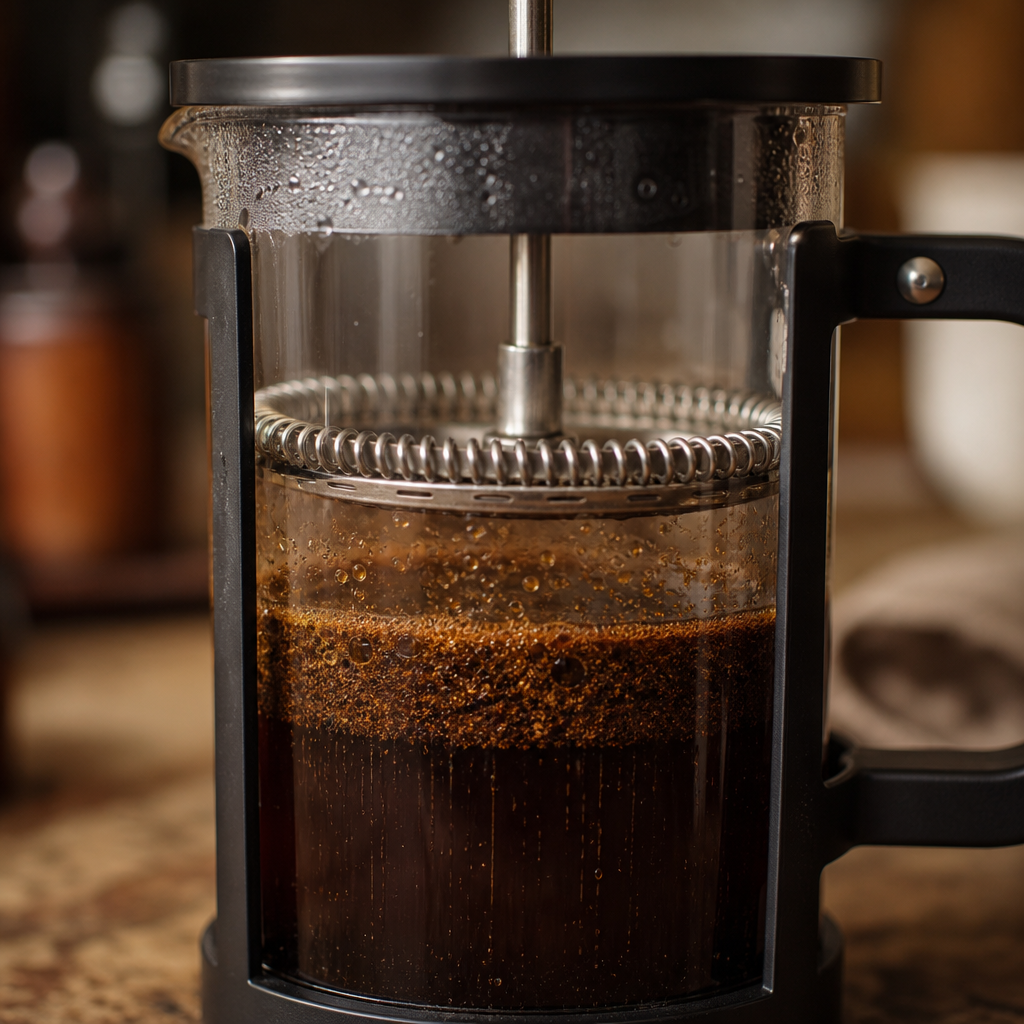
French press coffee is the most straightforward method in terms of equipment, but it punishes lazy technique more than most people expect. The absence of a paper filter is both its greatest strength and its most significant risk.
Why the Oil Retention Matters
Coffee oils carry fat-soluble flavour compounds and aromatic molecules that paper filters strip out completely. In a French press, those oils stay in your cup, producing a heavier body, a lingering finish, and a texture that feels almost creamy compared to filtered alternatives. For anyone drinking Farrer's darker roasts, such as a traditional Lakeland blend or a rich espresso-style coffee, this oil retention amplifies exactly the characteristics you want: chocolate, walnut, caramel.
The downside is that the same oils that add richness can turn rancid or overpowering if the brew time runs long. A common mistake is leaving the plunger depressed on a French press and continuing to pour from it over 20-30 minutes. The coffee keeps extracting even after plunging. Pour everything out immediately after brewing.
Getting the French Press Grind Right
Use a coarse, even grind. Think sea salt, not table salt. Fine particles in a French press lead to over-extraction and sludge in the bottom of the cup. If your French press coffee tastes bitter and gritty, the grind is too fine before you blame the beans.
Brew ratio to start with: 1:15 coffee to water by weight. For a 350ml French press, that is roughly 23g of coffee to 350ml of water at 90°C. Steep for exactly 4 minutes, stir once at the 1-minute mark, then plunge slowly and pour immediately.
Pro tip: If you are using Farrer's pre-ground coffee in a French press grind, always check the bag label. Farrer's offers grind options at the point of purchase, and French press grind is noticeably coarser than filter or espresso grind. Ordering the wrong grind is the most common issue we see from new customers.
Pour Over Coffee: Precision in Every Cup
Pour over is not difficult, but it rewards deliberate technique in a way that French press does not. The process is simple: you pour hot water over coffee grounds held in a paper filter, and gravity draws the liquid down into a vessel below. What makes it complex is that every variable matters more than in immersion brewing.
What a Paper Filter Actually Does to Flavour
Paper filters remove oils and micro-fines, producing a cup that is optically clear and texturally light. This clarity is not a flaw. It is precisely what allows the origin character of a coffee to come through. A washed Ethiopian natural, for example, with its floral and stone fruit notes, will express those qualities far more transparently in a pour over than in a French press where the oil and body compete with those delicate flavours.
Research published in the European Journal of Preventive Cardiology found that filtered coffee was associated with lower cardiovascular risk compared to unfiltered brewing, specifically because diterpenes (the oils retained in French press) were removed. This is worth knowing if you drink multiple cups daily.
"Filtered coffee is safer than no coffee, and it appears to be even healthier than unfiltered coffee." - Dr. Dag Thelle, senior author, University of Gothenburg study on coffee filtration and heart health.
The Bloom Step Is Not Optional
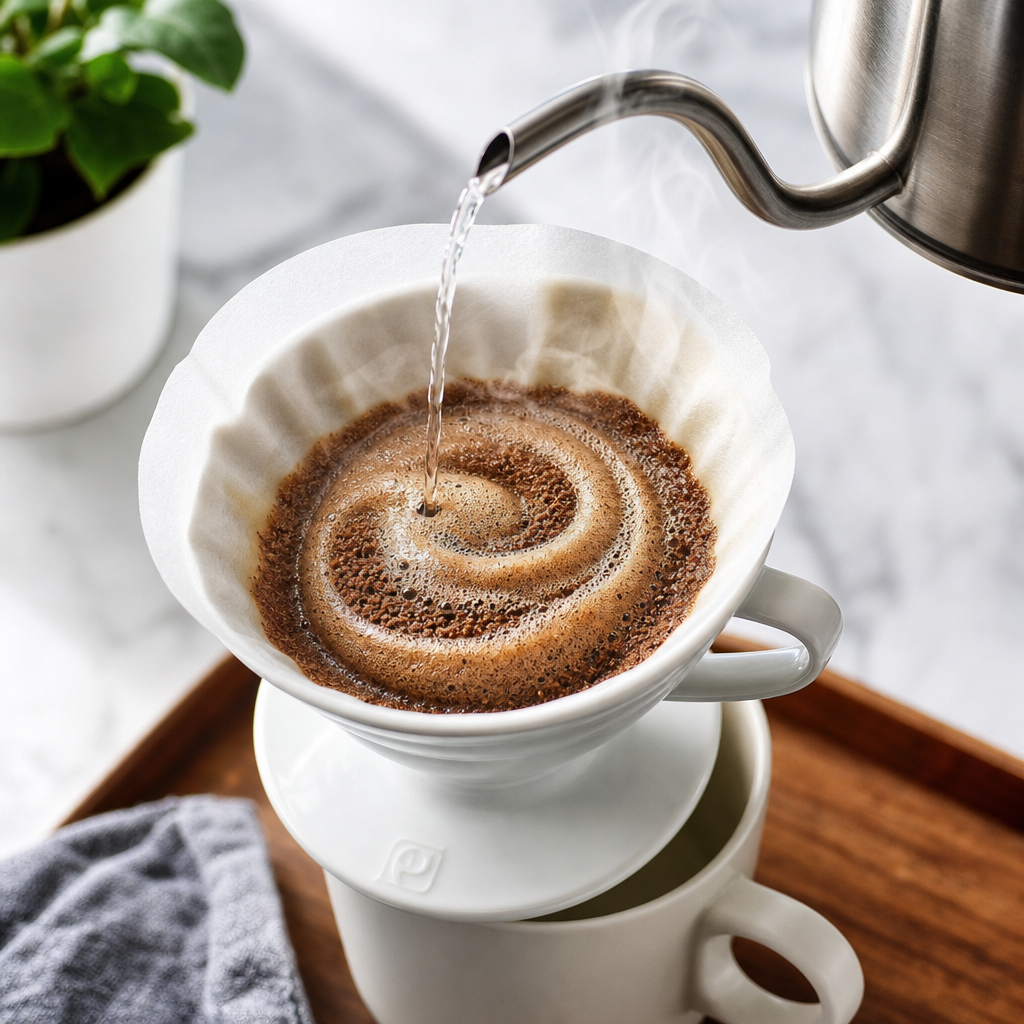
The most important technique in pour over is the bloom. Pour twice the weight of water to coffee (so 2g water per 1g coffee) and wait 30-45 seconds before continuing. This degasses the grounds and allows even saturation. Skip the bloom and you will have an uneven extraction with dry pockets in the bed, which produces sourness in one part of the cup and bitterness in another.
In practice, freshly roasted coffee blooms dramatically, with visible CO2 bubbling through the grounds. If there is no bloom, the coffee is stale. This is one reason buying freshly roasted coffee from a roaster like Farrer's with next-day dispatch makes a measurable difference to pour over quality.
Pro tip: Rinse your paper filter with hot water before adding coffee. This removes the papery taste, preheats the dripper, and ensures your first pour contacts grounds rather than an insulating dry paper layer. It takes 10 seconds and is one of the highest-impact habits in pour over coffee.
AeroPress: The Forgiving, Fast Brewer
The AeroPress was invented in 2005 by Alan Adler, an engineer at Aerobie, and it has since developed one of the most dedicated competition communities in specialty coffee. The World AeroPress Championship has been running annually since 2008, which tells you something about how seriously people take it.
Why AeroPress Works for Almost Every Coffee Style
The AeroPress uses a combination of immersion and manual pressure to force water through the grounds in 1-2 minutes. This short contact time combined with pressure produces a concentrated, syrupy extraction that sits somewhere between espresso and French press in body. Dilute it with hot water and you have a long black. Use a metal filter instead of paper and you add oils back in.
The single biggest advantage of AeroPress is its tolerance for error. If your grind is slightly off, your water is a few degrees too cool, or your timing is inconsistent, the AeroPress still produces a drinkable, often excellent cup. French press and pour over punish mistakes more noticeably.
Inverted vs Standard Method
The standard AeroPress method risks dripping before you are ready to press, especially with lighter roasts that have wider grounds. The inverted method, where you flip the AeroPress upside down so water cannot escape during steeping, gives you full control over contact time. Most experienced AeroPress users default to inverted for this reason.
Start with 15g of medium-fine ground coffee, 200ml of water at 88-90°C, steep for 1 minute 30 seconds, then press for 30 seconds. This is a reliable baseline that works well with Farrer's medium roast blends.
Side-by-Side Comparison
The following table gives you a direct comparison across the variables that matter most for everyday brewing decisions. These are practical benchmarks, not theoretical ideals.
| Factor | French Press | Pour Over | AeroPress |
|---|---|---|---|
| Brew Time | 4 minutes | 3-4 minutes | 1.5-2 minutes |
| Grind Size | Coarse | Medium-fine | Medium to medium-fine |
| Water Temperature | 88-92°C | 92-96°C | 88-92°C |
| Body and Texture | Full, oily, heavy | Light, clean, clear | Medium-full, smooth |
| Equipment Cost | Low (£15-£40) | Low-medium (£20-£60) | Low (£30-£45) |
| Skill Level Required | Low to medium | Medium to high | Low |
| Best For | Dark, bold blends; everyday drinking | Single origins; light roasts; nuanced flavours | Versatility; travel; experimentation |
| Filtration | Metal mesh (oils retained) | Paper (oils removed) | Paper or metal (interchangeable) |
Which Brewing Method Suits Your Coffee?
The honest answer is that no single method is universally best. But there are clear right answers for specific situations, and sitting on the fence does not help anyone choose equipment or get a better cup.
If you primarily drink dark, full-bodied blends and you want a rich, textured cup with minimum effort, French press is the right choice. It is also the best option if you are brewing for two or more people at once, since most French presses hold 600ml to 1 litre.
If you have invested in high-quality single-origin or light-roasted coffee and you want to taste why it is expensive, pour over is the correct method. It will reveal character that French press buries under body and oil. This matters particularly if you are exploring Farrer's more nuanced filter-specific coffees.
If you want one piece of equipment that can produce multiple styles, handles travel, and tolerates imperfect technique, buy an AeroPress. It is the most adaptable brewing tool available at its price point, and it genuinely works well with both light and dark roasts.
Matching Your Farrer's Coffee to the Right Method
At Farrer's, every blend and single origin we roast is developed with specific brew profiles in mind. The roast level, processing method, and origin of the bean all influence which extraction method will produce the best result.
Our darker, traditional blends, which are roasted to bring out chocolate and walnut character with low acidity, are built for immersion and pressure methods. French press and AeroPress extract the sweetness and body without pulling the harsh tannins that a pour over might at higher temperatures.
Our lighter filter roasts, designed specifically for pour over or batch brewing, are roasted to preserve floral and fruity acidity. Run those through a French press and you will get a cloudy, flat, oddly heavy cup that does not represent the coffee well. Pour over lets the roaster's intentions reach your palate.
When you order from Farrer's, the product descriptions and recommended brew methods are not marketing filler. They are roastery guidance based on how each coffee was developed. Following those recommendations is the fastest way to get a noticeably better cup without changing anything else.
Pro tip: If you are buying coffee as a gift or for a café setting and you are unsure which method the recipient uses, order whole bean and let them grind fresh. Freshness matters more than the perfect grind size, and a good burr grinder on a coarse setting will always outperform pre-ground coffee that has been sitting open for a week.
Frequently Asked Questions
Is French press coffee stronger than pour over?
French press coffee feels stronger because of its heavier body and oil content, but the actual caffeine content per cup is comparable when using the same coffee-to-water ratio. Strength perception is largely driven by texture and bitterness, not just caffeine. If you want genuinely higher caffeine extraction, use a finer grind and longer contact time regardless of method.
Can I use the same coffee for all three brewing methods?
Technically yes, but the results will vary significantly. A medium roast works reasonably across all three. A very light roast will taste sour and underdeveloped in a French press at standard temperatures. A very dark roast will taste acrid and thin in a high-temperature pour over. Using coffee matched to the method is not pedantry. It produces a noticeably better cup.
Which method produces the least bitter coffee?
AeroPress produces the least bitter coffee for most users because the short brew time limits bitter compound extraction and the lower recommended water temperature reduces harsh tannin release. Pour over can also produce low-bitterness cups when technique is dialled in. French press is most prone to bitterness when brew time runs over 5 minutes or the grind is too fine.
Do I need expensive equipment to brew good coffee at home?
No, but a decent burr grinder matters more than the brewer itself. A £30 AeroPress and a £60 hand grinder will outperform a £200 automatic machine with a blade grinder. Consistent particle size is the single biggest driver of extraction quality, regardless of method. If you are spending money on premium coffee from a roaster like Farrer's, protect that investment with a burr grinder first.
How does water quality affect these brewing methods?
Water quality affects all three, but pour over is the most sensitive. The mineral content of water, specifically magnesium and calcium, directly affects how coffee compounds dissolve. Very soft water produces flat, underwhelming extraction. Very hard water can produce chalky, dull cups. Aim for water with a total dissolved solids (TDS) reading between 75 and 150 ppm. If you are in a hard water area of the UK, filtered water makes a measurable difference in pour over quality specifically.
Which method is best for making coffee for a group?
French press is the most practical method for brewing multiple cups simultaneously. A standard 1-litre French press produces four to five cups in a single brew with no additional technique required. Pour over requires either a large-format dripper or multiple sequential brews. AeroPress produces a single concentrated serving each time. For cafés or hospitality settings, batch brew filter machines are the practical solution, but for home groups, French press wins on simplicity and volume.
If you have tried all three methods and have a strong opinion about which suits Farrer's coffee best, share your experience in the comments or tag us on social media. We genuinely want to know which method our customers are getting the best results with.
We would love your feedback and any insights you would share with others. What perspective would you add?
References
- Statista: Global coffee consumption data and specialty coffee market trends
- Forbes: Coverage of specialty coffee industry growth and consumer brewing habits
- ScienceDirect: Peer-reviewed research on coffee extraction chemistry and brewing variables
- American Heart Association: Research findings on filtered versus unfiltered coffee and cardiovascular health
- PubMed / National Institutes of Health: Studies on coffee oil compounds, diterpenes, and health outcomes


