

Most coffee drinkers have no idea that the bag of beans sitting in their supermarket trolley may have been roasted three to six months ago. That is not a minor detail. It fundamentally changes what ends up in your cup.
Small batch coffee roasting exists precisely to solve this problem, and the difference it makes is not subtle. Farrer's has been proving this point for over 200 years in the Lake District, hand-packing freshly roasted coffee with a level of attention that industrial roasters structurally cannot match. This article explains exactly why, with no vague generalities.
Table of Contents
- What Is Small-Batch Coffee Roasting?
- Quick Takeaways
- The Science of Freshness: What Happens After Roasting
- Heat Control and Flavour Development
- Artisan Coffee in the UK: Why Origin and Traceability Matter
- Small-Batch vs. Mass Production: A Direct Comparison
- What Freshly Roasted Coffee Actually Tastes Like
- Who Benefits Most from Small-Batch Roasting?
- Frequently Asked Questions
- References
What Is Small-Batch Coffee Roasting?
Small-batch coffee roasting refers to roasting relatively small quantities of green coffee beans in a single session, typically between 1 kg and 30 kg per batch, rather than the hundreds of kilograms processed in a single industrial run. The defining characteristic is not just volume. It is the level of control the roaster has over every variable during the roast.
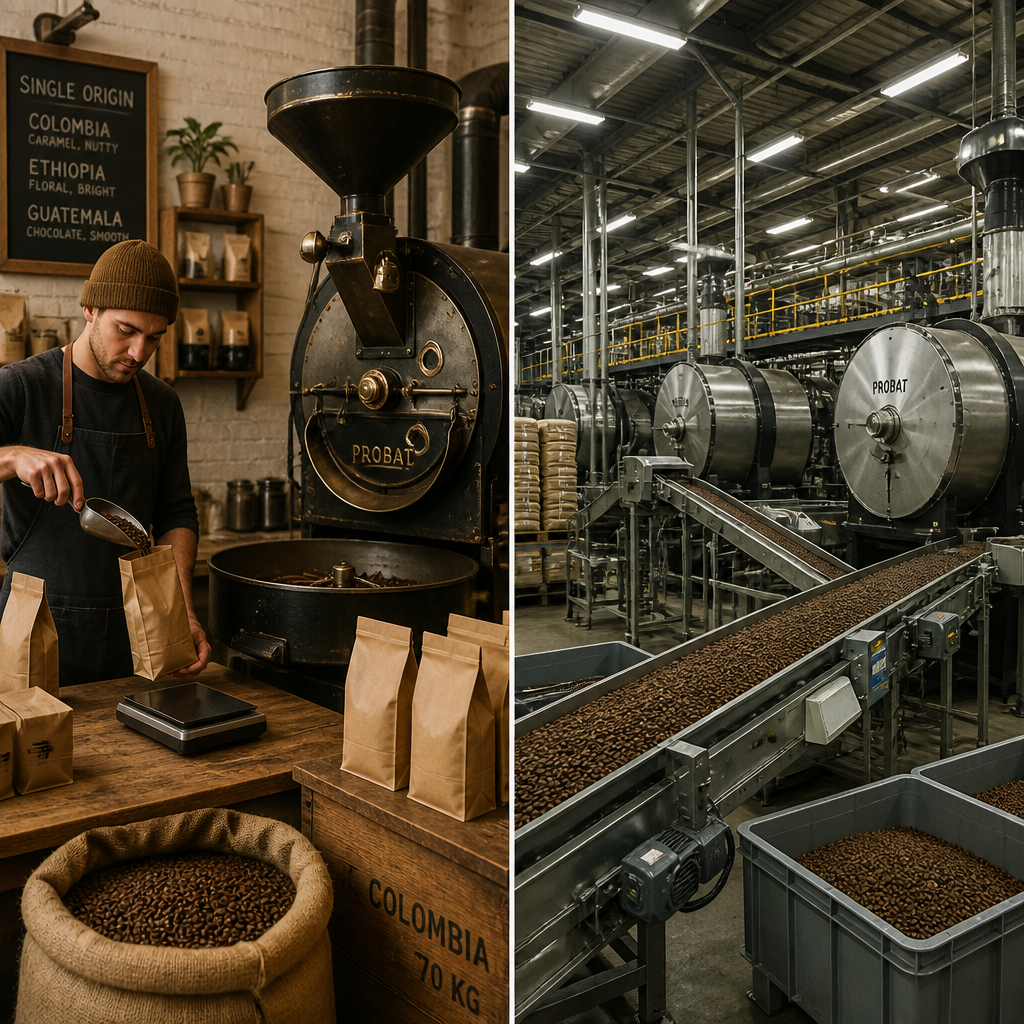
In practice, a small-batch roaster adjusts airflow, drum speed, and temperature in real time based on the specific lot of beans being roasted. Each batch gets individual attention. Industrial operations cannot do this. Their economics require consistent throughput, which means the roast profile is set once and repeated at scale, regardless of variation in the green coffee.
Quick Takeaways
| Key Insight | Explanation |
|---|---|
| Freshness is the single biggest quality factor | Coffee begins losing volatile aromatic compounds within days of roasting. Small-batch roasters dispatch within 24-48 hours. Mass producers ship stock that may be months old. |
| Heat consistency determines flavour clarity | Small batches allow roasters to hit precise temperature curves for each bean variety. Industrial drums running at capacity generate uneven heat distribution. |
| Traceability is built into the process | Small-batch roasters typically know the farm, altitude, and processing method for every lot. Mass producers blend across origins to maintain a consistent supermarket flavour profile. |
| Defect sorting is more rigorous | Artisan roasters often hand-sort green beans before roasting to remove defects that would introduce bitter or off-flavours. This step is economically impractical at industrial scale. |
| Roast-to-order models eliminate shelf waste | Farrer's dispatches next day on orders over £35, meaning what arrives at your door was roasted for your specific order, not warehouse stock. |
| Blending craft requires precise batch control | Creating a repeatable, balanced blend means roasting each component separately at its ideal profile, then blending. Industrial lines cannot separate components at this level. |
| Trade customers get a measurable product advantage | Cafes and restaurants using freshly roasted small-batch coffee produce espresso with better crema, more aromatic filter coffee, and fewer customer complaints about flat or bitter flavour. |
The Science of Freshness: What Happens After Roasting
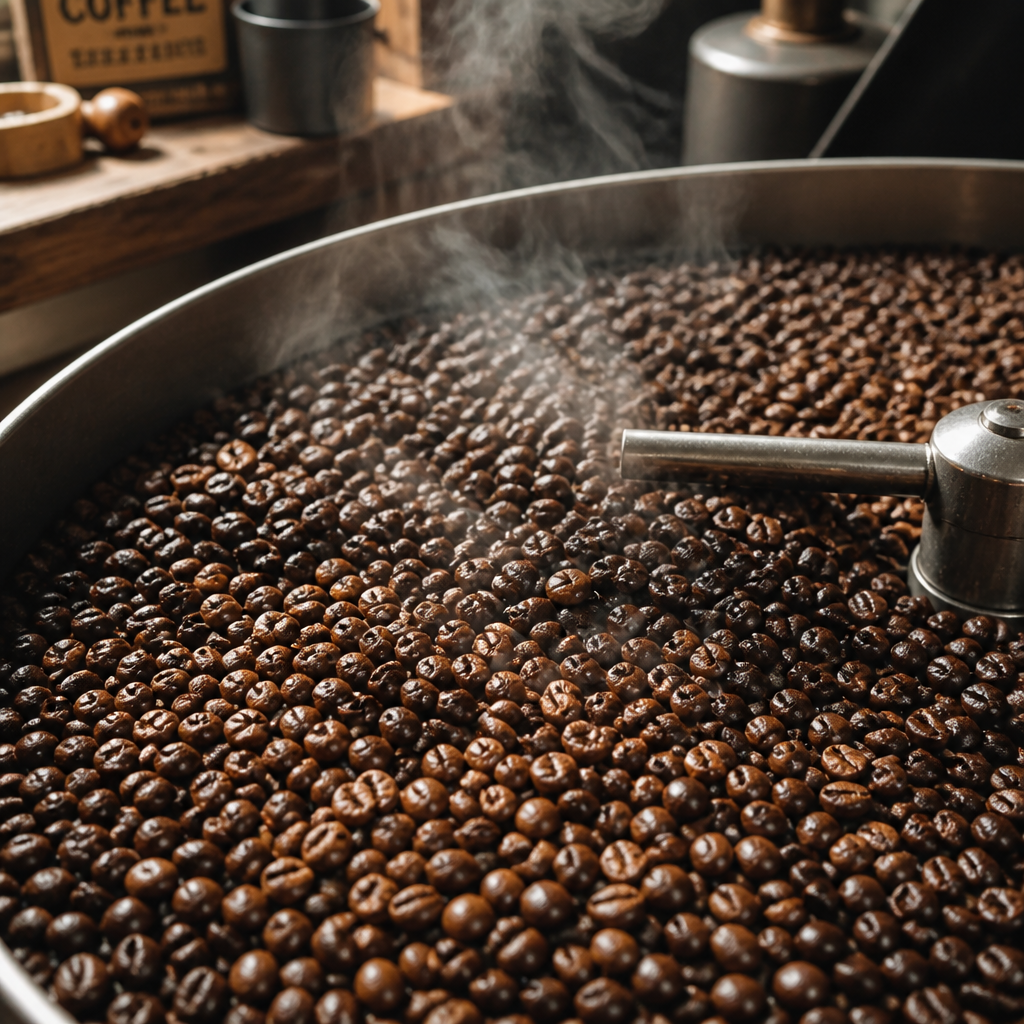
The roasting process triggers a cascade of chemical reactions inside the coffee bean. Around 800 to 1,000 volatile aromatic compounds are created during roasting, and they begin dissipating almost immediately. Carbon dioxide, produced during roasting, also begins degassing, and this process carries aromatic compounds with it.
Research published in food science literature consistently shows that the majority of flavour-active volatile compounds in roasted coffee degrade significantly within four to six weeks of roasting, with the steepest decline occurring in the first two weeks. Oxygen accelerates this process dramatically, which is why packaging technology matters, but it cannot substitute for starting with a freshly roasted product.
"The flavour of coffee is a highly complex mixture of volatile and non-volatile compounds formed during roasting. The rate of staling is directly proportional to the time elapsed since roasting and the conditions of storage." - Adapted from research in the Journal of Agricultural and Food Chemistry, a peer-reviewed publication covering food compound analysis.
A common mistake consumers make is assuming that vacuum-sealed packaging keeps coffee indefinitely fresh. It slows staling significantly, but it cannot reverse the loss of volatile aromatics that occurred before packaging. Freshly roasted coffee, dispatched within 24 to 48 hours of roasting and consumed within four to six weeks, is categorically a different product from supermarket coffee roasted months prior.
Pro tip: When buying coffee online, look for a roast date printed on the bag, not just a best-before date. A roast date tells you exactly how fresh the product is. If the seller does not print a roast date, that omission is informative.
Heat Control and Flavour Development
The Maillard reaction and caramelisation are the two primary chemical processes that create coffee's flavour during roasting. Both are highly sensitive to temperature and time. Hit the right temperature curve for a specific bean density and moisture content, and you develop sweetness, body, and complexity. Miss it, even by a small margin, and you get underdeveloped grassiness or over-roasted bitterness.
Why Drum Capacity Changes Everything
In a large industrial drum loaded to capacity, beans on the outer edges of the mass experience different heat exposure than beans in the centre. This is a physics problem that scale makes worse, not better. The result is uneven development: some beans are roasted correctly while others in the same batch are under or overdeveloped.
Small-batch roasters load their drums at significantly lower percentages of maximum capacity, typically 50 to 70 percent. This allows heat to circulate evenly around every bean. The practical outcome is a more consistent roast degree across the entire batch, which translates directly into a cleaner, more balanced cup.
Real-Time Adjustment During the Roast
An experienced small-batch roaster monitors bean surface colour, listens to first and second crack (audible events indicating internal temperature milestones), and watches rate-of-rise data on a thermometer probe inside the drum. They make live adjustments throughout the 10 to 14 minute roast window.
Industrial operations rely on pre-programmed profiles executed automatically. This is not laziness. It is the only way to manage a throughput of thousands of kilograms per day. But it means that a lot of green coffee with higher-than-average moisture content, or from a slightly different altitude than the previous shipment, gets roasted on the same settings as everything else. Artisan coffee in the UK produced by small-batch roasters avoids this by treating each lot individually.
Pro tip: If you run a cafe or hospitality business, ask your coffee supplier for the specific roast profile used for the blend you are buying. A serious small-batch roaster will know this information immediately. If they cannot tell you, they are not giving you a hand-crafted product.
Artisan Coffee in the UK: Why Origin and Traceability Matter
The UK specialty coffee market has grown substantially over the past decade. According to data from the Specialty Coffee Association, the global specialty coffee market was valued at over $83 billion in 2023, with premium and artisan segments growing at a faster rate than commodity coffee. UK consumers are increasingly willing to pay more for provenance and quality, and the artisan coffee sector is responding.
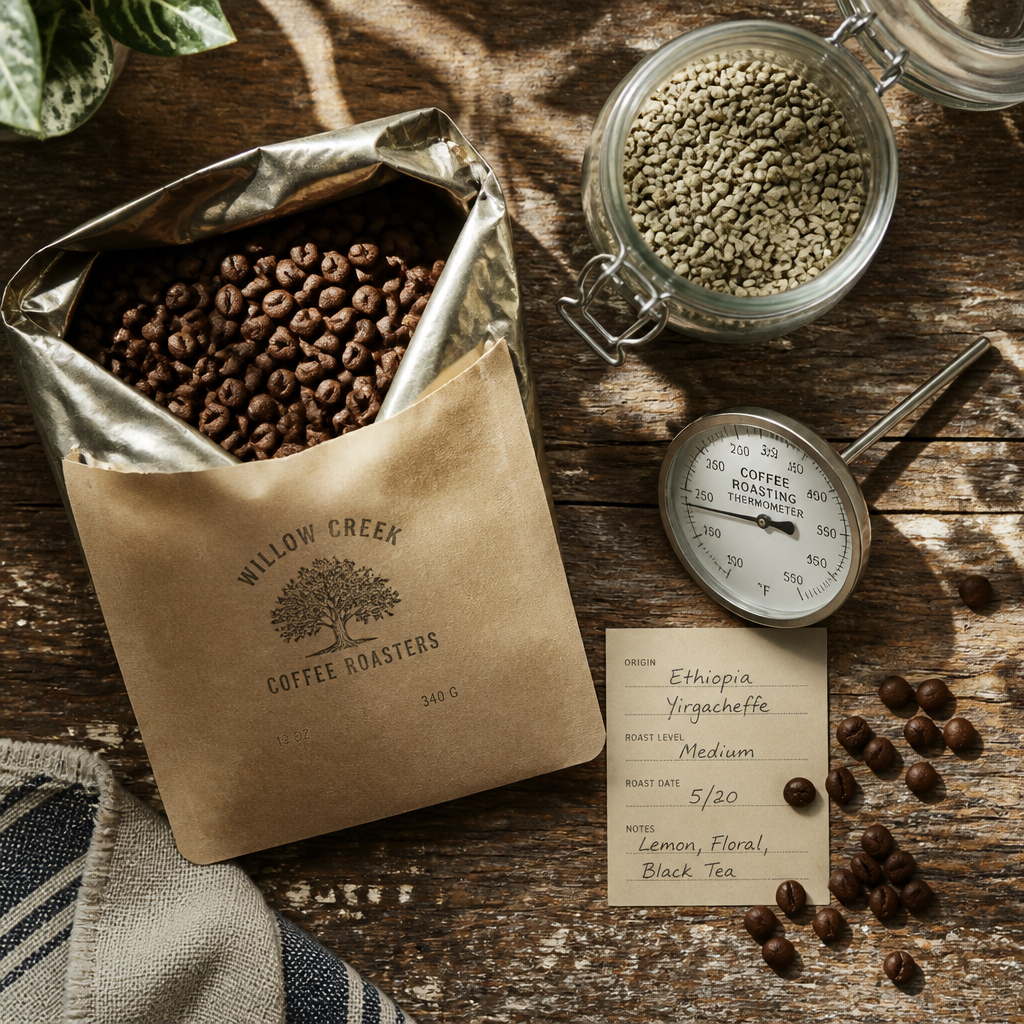
Small-batch roasters like Farrer's source from specific farms or cooperatives, which means they know the altitude the coffee was grown at, the processing method (washed, natural, or honey), and the harvest date.
This information directly affects how the bean should be roasted. A naturally processed Ethiopian coffee requires a different approach than a washed Colombian of similar screen size.
Mass producers cannot offer this level of specificity because they aggregate coffee from multiple origins and harvests to hit a consistent price point and flavour profile year-round. Consistency is their priority, and there is a market for that. But flavour complexity, origin character, and seasonal variation are all sacrificed in the process.
For home enthusiasts who want to taste the difference between a washed Kenyan and a natural Brazilian, or for cafes that want their house blend to have a distinctive, identifiable character, small batch coffee roasting is the only route to those outcomes.
Small-Batch vs. Mass Production: A Direct Comparison
The table below compares three distinct production approaches across the most relevant quality and service factors for coffee buyers.
| Factor | Small-Batch Artisan Roasting (e.g., Farrer's) | Mid-Scale Specialty Roasting (e.g., Origin Coffee) | Industrial Mass Production (e.g., Lavazza) |
|---|---|---|---|
| Time from roast to dispatch | 24-48 hours | 2-7 days | Weeks to months |
| Batch size | 1-30 kg per roast | 30-150 kg per roast | 500+ kg per roast |
| Roast profile customisation | Per lot, adjusted in real time | Per lot, semi-automated | Fixed profile, fully automated |
| Origin traceability | Farm or cooperative level | Farm or region level | Country or blend level |
| Packaging approach | Hand-packed, roast-dated | Automated, roast-dated | Automated, best-before only |
| Trade support | Barista training, custom blends | Training, wholesale programme | Equipment leasing, branded support |
| Price per 250g | £6-£14 | £8-£18 | £3-£7 |
What Freshly Roasted Coffee Actually Tastes Like
The difference between freshly roasted and stale coffee is not a matter of preference. It is a matter of what compounds are physically present in the cup. Fresh coffee contains active volatile aromatics that create the top notes you perceive in the first seconds after pouring. These are the floral, fruity, and bright acidity notes that make a cup interesting.
Stale coffee retains body and bitterness, because those are produced by non-volatile compounds that do not degrade as quickly. The result is a flat, one-dimensional cup that relies on milk and sugar to be palatable. This is why most people who drink instant or supermarket coffee add substantial milk and sweetener. They are compensating for absent aromatics.
In practice, customers who switch to freshly roasted coffee from a small-batch roaster consistently report that they reduce or eliminate milk and sugar additions within a few weeks. The coffee simply tastes complete on its own. This is not marketing language. It reflects the presence of flavour compounds that were not there before.
Who Benefits Most from Small-Batch Roasting?
Home enthusiasts benefit immediately and obviously. The improvement in cup quality when switching from supermarket coffee to freshly roasted small-batch coffee is the kind of difference that does not require a trained palate to detect. It is noticeable on the first cup.
Trade customers, including cafes, restaurants, and hotels, benefit in ways that directly affect their bottom line. A cafe serving freshly roasted coffee produces better espresso, with denser crema and more aroma in the cup. Customer satisfaction scores improve, repeat visits increase, and the business has a genuine quality story to tell. The data consistently shows that hospitality businesses that invest in premium coffee experience higher average spend per customer and stronger retention.
Farrer's barista training programme and roastery experience days give trade customers not just a better product but the knowledge to extract it correctly, which means the investment in quality coffee actually reaches the customer's cup rather than being wasted through poor preparation technique. That combination, quality product plus extraction knowledge, is what separates serious coffee operations from those simply buying the cheapest wholesale supply.
Frequently Asked Questions
How long does freshly roasted coffee stay fresh after opening?
Once a bag is opened, freshly roasted coffee is best consumed within two to three weeks if stored in an airtight container away from direct light and heat. The roast date on the bag is your reference point. Farrer's prints roast dates precisely because freshness is the product, not a marketing claim.
Is small-batch roasted coffee significantly more expensive than supermarket coffee?
The price difference is real but frequently overstated when calculated on a cost-per-cup basis. A 250g bag of quality small-batch coffee at £8 to £10 produces approximately 15 to 17 cups. That works out to under 65 pence per cup, compared to a purchased cafe coffee at £3 to £4.50. The economics favour brewing quality coffee at home, even at premium price points.
What is the difference between small-batch roasting and specialty coffee?
Small-batch roasting is a production method. Specialty coffee is a grading standard, referring to green beans that score 80 or above on the Specialty Coffee Association's 100-point scale. Most small-batch roasters source specialty-grade green coffee, but not all specialty coffee is roasted in small batches. The two concepts overlap significantly but are not identical.
Can I tell if coffee was mass-produced just by looking at the packaging?
The most reliable indicator is the absence of a roast date. Mass-produced coffee almost never prints a roast date because it would reveal how old the product is. A best-before date that is 18 to 24 months from purchase suggests industrial production and warehouse storage. Any coffee displaying a specific roast date is almost certainly from a smaller, quality-focused operation.
Why do some artisan coffee brands cost more than others if they are all small-batch?
Green coffee quality varies enormously. A micro-lot from a high-altitude Ethiopian farm, hand-picked and carefully processed, costs substantially more per kilogram than commodity-grade coffee, even before roasting. Additionally, operations that invest in barista training, roastery experience programmes, and genuine customer support have higher operating costs, which are reflected in price. You are paying for the full supply chain of care, not just the roasting step.
Does small-batch roasting make a difference for espresso specifically?
Espresso is the most demanding brewing method in terms of freshness requirements. The pressurised extraction amplifies every flavour present, including stale, flat notes from aged coffee. Freshly roasted coffee, typically rested for five to ten days post-roast to allow carbon dioxide to degas, produces espresso with substantially better crema structure, more aromatic complexity, and a cleaner finish. This is why serious espresso bars are almost universally sourcing from small-batch roasters rather than industrial suppliers.
If you have made the switch from supermarket coffee to freshly roasted small-batch coffee, we would genuinely like to know what difference you noticed in your first week of brewing.
We would love your feedback and any insights you would share with others. What perspective would you add?
References
- Specialty Coffee Association: research and standards on coffee grading, freshness, and industry data
- Statista: market size data and consumer trend reports for the global and UK specialty coffee industry
- Forbes: business analysis of the premium food and beverage market, including artisan coffee growth
- ScienceDirect: peer-reviewed food science research on coffee volatile compound degradation and roasting chemistry
- UK Food Standards Agency: guidance on food labelling, date marking, and best-before requirements for roasted products


