

Finding a reliable wholesale coffee UK supplier is harder than it looks. Most hospitality buyers have been let down at least once: a roaster that promised freshness but shipped from ageing stock, a supplier that disappeared when the espresso machine needed urgent attention, or a generic blend that worked fine in isolation but collapsed the moment a barista tried to dial it in on a busy Saturday morning.
Farrer's, the UK's oldest coffee roaster with over 200 years of continuous operation from Kendal in the Lake District, solves each of those problems in a way that newer entrants simply cannot replicate. Here is why cafés and restaurants across the country are making the switch.
Table of Contents
- Quick Takeaways
- Heritage That Means Something to Your Customers
- Blends Built for Busy Service
- Trade Supply: What You Actually Get
- Freshness and Dispatch: Why Timing Matters in Trade
- Barista Training and Technical Support
- Beyond Coffee: A Complete Drinks Offer
- Frequently Asked Questions
- References
Quick Takeaways
| Key Insight | Explanation |
|---|---|
| Over 200 years of blending expertise | Farrer's has refined roast profiles and blend ratios across two centuries, giving trade buyers consistency that no newer roaster can match through sourcing alone. |
| Small-batch roasting at the Lake District roastery | Every bag is roasted in Kendal, not in a centralised distribution warehouse. Trade customers receive genuinely fresh coffee, not product that has been sitting in transit. |
| Blends specifically crafted to cut through milk | Farrer's espresso and milk-based options are formulated with café service in mind, performing consistently across lattes, cappuccinos, and flat whites at volume. |
| Free half-day barista training for wholesale customers | Trade accounts get access to a professional barista training centre in Kendal, covering grinder setup, extraction, and coffee selection at no extra cost. |
| Complete drinks offer from a single supplier | Farrer's supplies wholesale coffee, premium loose leaf tea, hot chocolate, syrups, and takeaway equipment so you avoid managing multiple accounts. |
| Next-day dispatch on qualifying orders | Orders over £35 are dispatched next day, meaning urgent restocks do not turn into a missed morning service. |
| UK-wide supply from a specialist in both trade and home | Farrer's serves cafés, hotels, restaurants, farm shops, and offices across the UK without diluting the quality or attention given to trade accounts. |
Heritage That Means Something to Your Customers
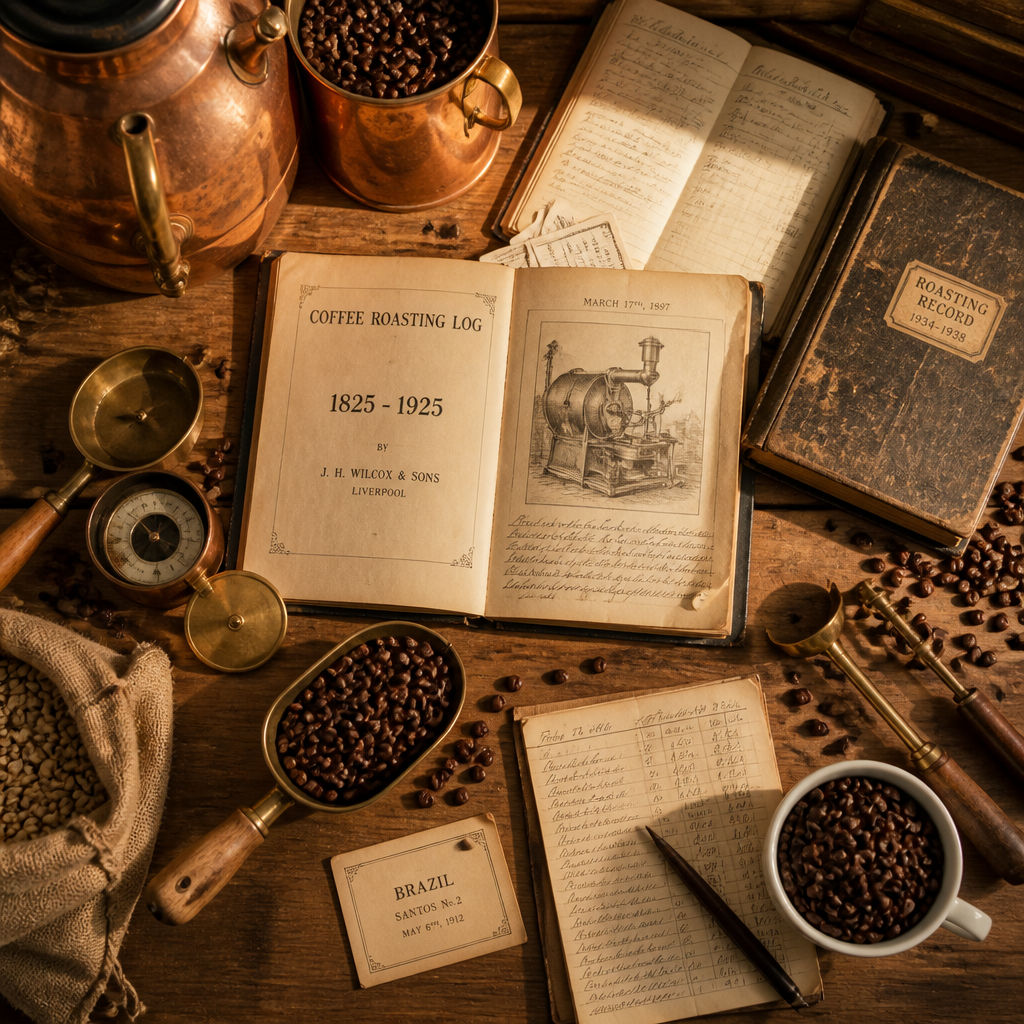
Most marketing claims about coffee heritage are vague. Farrer's is not vague: the roastery has been operating continuously from Kendal for over 200 years, making it the UK's oldest independent coffee roaster. That is a provenance story you can actually put on a menu, a chalkboard, or a social media post, because it is verifiable and specific.
For hospitality businesses competing in an environment where customers increasingly care about the origin and craft behind what they are drinking, the ability to say "we use the UK's oldest roaster" is a genuine differentiator. It is not a lifestyle claim. It is a fact backed by centuries of continuous operation.
There is also something more functional in that heritage. Over 200 years of buying, roasting, and blending at the same Lake District roastery means the institutional knowledge is deep. Blend ratios and roast profiles have been tested, adjusted, and refined across generations of roasters, not across one ambitious founder's first few years. A café choosing Farrer's as its coffee supplier for cafes UK is choosing a business with a track record that no amount of modern branding can manufacture.
A roaster with two centuries of continuous operation has solved problems that newer entrants have not yet encountered. The consistency that comes from that depth of experience is not incidental. It is built into every bag.
Pro tip: When briefing your front-of-house staff on what to say about your coffee offering, specific heritage facts land better than vague quality claims. "Roasted in the Lake District since the early 1800s" is a sentence a customer remembers.
Blends Built for Busy Service
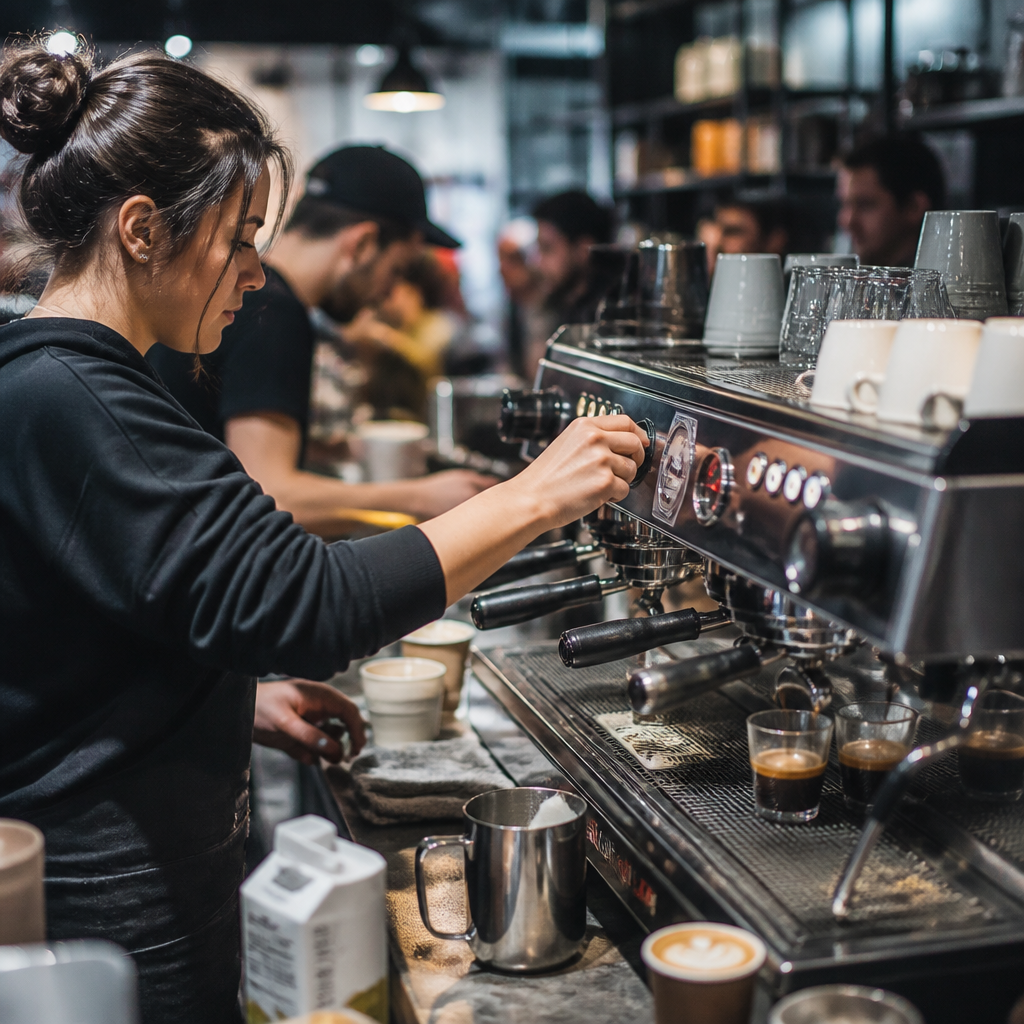
The failure mode of many artisan roasters at the trade level is the same: the coffee is genuinely excellent when brewed carefully by someone who knows what they are doing, but it falls apart under the pressures of a real café service. Staff turnover, variable grinder calibration, multiple extraction methods running simultaneously, and the demand for a consistent cup at 8am and 6pm alike require blends that are engineered for repeatability, not just peak performance.
Espresso and Milk-Based Performance
Farrer's trade range includes blends specifically crafted to cut through milk, which is exactly what a café menu built around lattes, cappuccinos, and flat whites demands. A blend that tastes balanced as a straight espresso but disappears into milk is a commercial liability. Farrer's Classic Espresso Blend, for example, is built with enough body and roast character to remain present in milk-based drinks without becoming harsh as a straight shot, giving baristas a forgiving working range rather than a narrow extraction window.
The roastery also offers classic blends, single origins, and speciality coffees, so a restaurant wanting a house espresso with broad appeal and a café wanting a rotating single-origin filter option can both be served from the same account.
The No.1 Blend as a Versatile House Coffee
Farrer's No.1 Blend is a practical choice for trade buyers who need a single coffee that performs well across multiple brew methods, including espresso, cafetière, and filter, without polarising customers. It delivers balanced flavour that works across a full day of service without palate fatigue, which matters when you are selling the same coffee from breakfast through to afternoon. For a restaurant that wants a capable house coffee without dedicating a staff member to daily extraction adjustments, it is a low-maintenance, high-quality option.
Trade Supply: What You Actually Get
Choosing a wholesale coffee partner involves more than comparing prices per kilo. The real cost of a supplier relationship includes the time spent chasing orders, dealing with inconsistent roast quality across batches, training staff from scratch every time they join, and covering gaps when equipment fails. The table below compares what a full-service artisan trade supplier provides against the two most common alternatives hospitality buyers consider.
| Factor | Full-Service Artisan Roaster (Farrer's) | Large Commercial Brand | Small Local Micro-Roaster |
|---|---|---|---|
| Batch consistency | High. Blend ratios refined over 200+ years with repeatable roast profiles. | High. Large-scale blending is consistent but often prioritises cost over quality. | Variable. Quality can be exceptional but small batch sizes increase roast-to-roast variation. |
| Roast freshness | Small-batch roasting at the source roastery, next-day dispatch on qualifying orders. | Centralised roasting and distribution often means longer time from roast to cup. | Often very fresh, but supply reliability can be an issue at scale. |
| Barista training | Free half-day training for wholesale customers at a dedicated barista centre in Kendal. | Sometimes provided, but rarely personalised and often product-promotional in tone. | Varies widely. Many micro-roasters do not have the capacity for formal training provision. |
| Range breadth | Coffee, tea, hot chocolate, syrups, and takeaway equipment from one account. | Strong on coffee, limited or absent on tea and equipment. | Usually coffee-only; supplementary products require additional suppliers. |
| Provenance story for customers | UK's oldest roaster. Over 200 years of continuous operation. Specific, verifiable, compelling. | Brand recognition without genuine craft provenance. | Local story can be compelling but lacks the depth of multi-generational heritage. |
The point is not that large commercial brands or micro-roasters are always wrong choices. It is that for a café or restaurant that wants the combination of consistent batch quality, full-service support, genuine provenance, and operational reliability, a full-service artisan roaster with deep trade experience covers more of those requirements in a single supplier relationship.
Freshness and Dispatch: Why Timing Matters in Trade
In a retail context, slightly stale coffee is a disappointment. In a trade context, it is a reputational risk. Customers paying café prices for a flat white expect a result that reflects the quality claim behind it. If the coffee sitting in your hopper has been in transit or storage for too long, the best barista in the world cannot fix it at the machine.
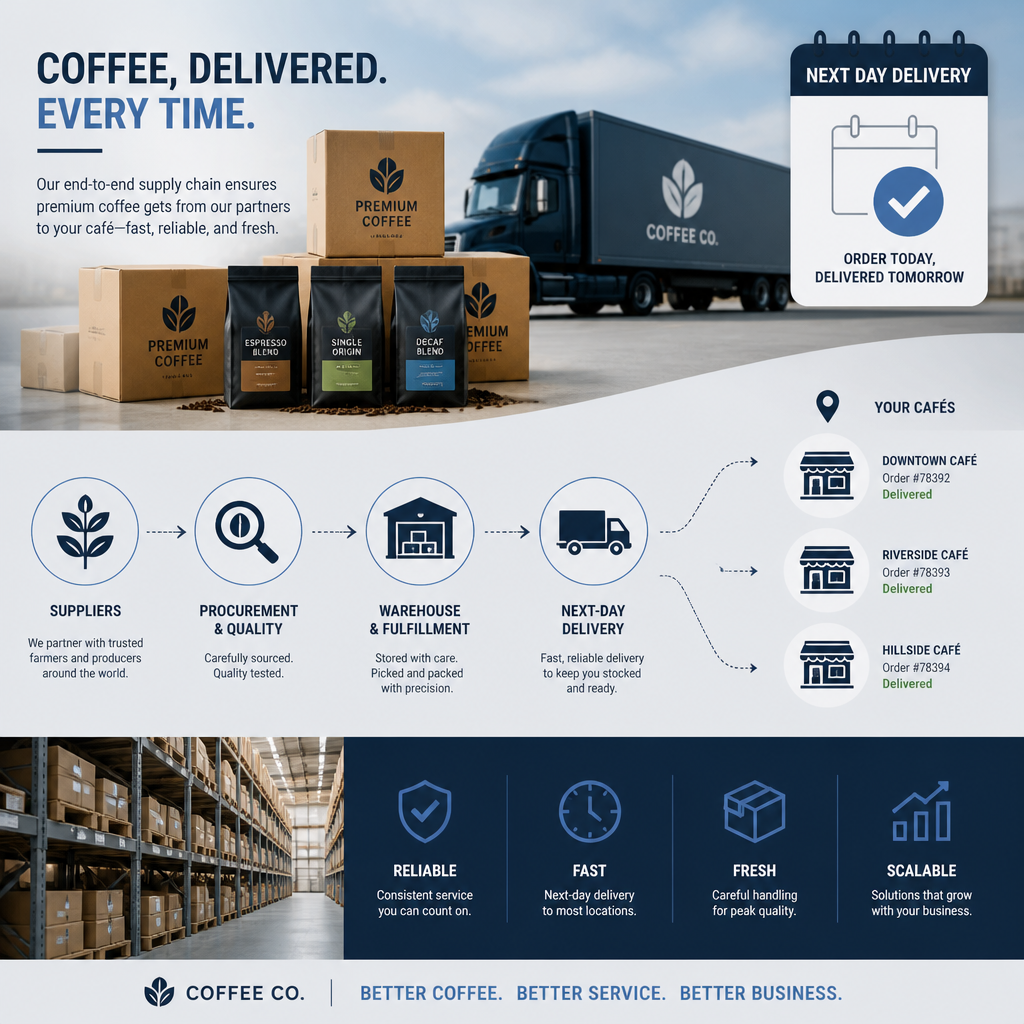
Farrer's dispatches next day on orders over £35. For a trade coffee supply relationship, that operational detail matters more than it might appear. It means a café that underestimates a busy week's consumption on a Thursday can have fresh stock by Friday morning. It means emergency restocking before a large event does not require a crisis. It means the coffee you serve on Monday was roasted recently, not weeks ago.
Small-batch roasting at the Kendal roastery is the structural reason Farrer's can make this commitment. When roasting happens in volume at a centralised facility and product travels through a distribution network before reaching trade customers, freshness is compromised by design. Farrer's model avoids that entirely.
Pro tip: When setting up a trade account with Farrer's, discuss your weekly or fortnightly usage volumes upfront so you can structure orders to stay consistently above the next-day dispatch threshold. It is a simple operational adjustment that eliminates the freshness variable entirely.
Barista Training and Technical Support
Staff skill is the most underrated variable in a café's coffee quality. A competent roaster can supply an excellent product, but if the barista does not understand how to dial in the grinder, manage extraction time, or calibrate the machine for seasonal variation in the beans, the quality on the counter will be inconsistent regardless of what is in the bag.
Free Half-Day Training for Wholesale Customers
Farrer's offers a free half-day basic barista skills session to all wholesale customers. This covers coffee selection, grinder setup, extraction principles, and the practical knowledge needed to produce a consistent cup in a live service environment. The training is delivered at Farrer's barista centre in Kendal, an eight-person capacity facility specifically designed to develop skills at every level from complete beginner to experienced barista looking to refine technique.
For a new café opening or an existing business onboarding a new team member, that training provision is direct operational value. It is not a promotional event dressed up as education. It is a practical session designed to reduce the gap between the quality in the bag and the quality in the cup.
Industry-Recognised Certification Courses
Beyond the free introductory session, Farrer's barista school in Kendal delivers industry-recognised, certified courses covering advanced drink preparation, coffee and tea theory, and customer service. For a hospitality business that wants to develop a genuinely skilled coffee team rather than simply adequate ones, the pathway from the free session to full certification runs through the same roastery, with the same instructors, using the same coffee your business already serves every day. That coherence is valuable. Training on the product you actually use produces better results than generic barista courses taught on equipment and blends that bear no relation to your service environment.
Beyond Coffee: A Complete Drinks Offer
Running multiple supplier accounts for a café's drinks range is an administrative burden that is easy to underestimate until you are doing it. Coffee from one account, tea from another, hot chocolate from a third, takeaway cups from a fourth. Each has its own minimum order, invoicing cycle, and contact when something goes wrong.
Farrer's trade supply covers the full drinks category. Alongside its wholesale coffee range, the company supplies premium loose leaf teas specially selected and blended for a broad range of customers, including everyday favourites, speciality blends, and herbal infusions. Hot chocolate and syrups are available for a complete beverages offer. Takeaway equipment for professional service is also part of the supply relationship.
For a café, hotel, or restaurant that wants to consolidate its artisan coffee for restaurants and premium drinks supply under a single account with a supplier it trusts, Farrer's removes the fragmentation without compromising on quality across any category. The teas are selected with the same care as the coffees. The hot chocolate and syrups are chosen to complement the overall drinks offer rather than added as afterthoughts.
Farrer's also works with a range of business types beyond cafés: hotels, pubs, farm shops, and offices across the UK are all part of the trade customer base. That breadth of experience across different service environments means the advice you receive on product selection is grounded in what actually works in practice, not in theory.
Frequently Asked Questions
How do I set up a trade account with Farrer's?
You can contact Farrer's directly through their dedicated trade and wholesale enquiry page at farrerscoffee.co.uk/pages/trade, by calling +44 (0)1539 720020, or by emailing hello@farrerscoffee.co.uk. Farrer's will help you choose the right coffees, teas, and formats for your business type, whether you are a café, hotel, restaurant, pub, or office, and can arrange a tasting visit if you want to assess the range before committing.
Does Farrer's supply outside the Lake District and Cumbria?
Yes. While Farrer's roastery is based in Kendal at the gateway to the Lake District, the company supplies wholesale coffee, tea, equipment, and supporting products to cafés, hotels, restaurants, farm shops, and offices across the UK. Distance from Kendal is not a barrier to setting up a trade account.
What coffee formats does Farrer's offer for wholesale customers?
Farrer's wholesale range includes classic espresso blends, single origins, and speciality coffees, with options available in formats suited to different brewing methods and service environments. Blends designed specifically to cut through milk for espresso-based drinks are part of the range, alongside options suited to filter, cafetière, and batch brew. Farrer's will advise on the best format for your specific setup.
Is the free barista training included with a wholesale account?
Yes. Farrer's offers a free half-day basic barista skills session to all wholesale customers and those using Farrer's traditional espresso machines. This is delivered at Farrer's training centre in Kendal and covers coffee selection, grinder setup, extraction, and the practical skills needed for consistent service. More advanced industry-recognised certification courses are also available for teams wanting to develop further.
What is the minimum order for next-day dispatch?
Next-day dispatch applies to orders over £35. For trade customers ordering at professional volumes, structuring orders to consistently meet that threshold is straightforward, and ensures that your coffee arrives as fresh as possible rather than sitting in transit or a distribution centre for an extended period.
Can Farrer's supply tea and hot chocolate as well as coffee?
Yes. Farrer's trade supply covers coffee, premium loose leaf tea, hot chocolate, and syrups, as well as takeaway equipment for professional service. This allows cafés and hospitality businesses to consolidate their drinks supply under a single artisan supplier rather than managing multiple accounts for different product categories.
If your café or restaurant is currently weighing up wholesale coffee suppliers in the UK, we would genuinely like to hear what factors matter most to your buying decision - leave a comment or share your experience below.
We would love your feedback and any insights you would share with others. What perspective would you add?
References
- Farrer's trade and wholesale coffee supply page: products, training, and how to enquire
- Tea and Coffee Trade Journal: overview of Farrer's barista training centre in Kendal
- Lumina Intelligence: UK coffee shop market size, growth and statistics for 2024 and 2025
- Fresh Ground: analysis of UK coffee market growth and the rise of premium and specialty segments


