

Most people buy coffee brewing equipment in the wrong order. They spend £300 on a shiny espresso machine, then grind their beans with a £15 blade grinder and wonder why their coffee tastes flat. The reality is that the biggest improvements to your cup rarely come from the most expensive piece of coffee brewing equipment UK retailers stock.
They come from understanding which tools do what, at which price points they start to perform, and in which order you should actually buy them. Whether you are setting up a home brew station from scratch or upgrading a café kitchen, this guide cuts through the noise and gives you a clear, honest path through the choices.
Table of Contents
- Quick Takeaways
- Why Your Grinder Matters More Than Your Brewer
- Budget Tier: Best Coffee Equipment for Home Under £50
- Mid-Range Tier: Serious Home Brewing, £50 to £200
- Premium Tier: Espresso and Beyond, £200 Plus
- Brewing Method Comparison
- What Trade and Café Buyers Need to Know
- Matching Your Equipment to Your Coffee
- Frequently Asked Questions
- References
Quick Takeaways
| Key Insight | Explanation |
|---|---|
| Buy the grinder first | A burr grinder has more impact on cup quality than almost any brewer upgrade. Start here before spending on anything else. |
| The French press is the best value entry point | Affordable, forgiving, and capable of a genuinely excellent full-bodied cup when paired with good beans and a coarse grind. |
| Moka pots are not espresso machines | They produce strong, concentrated coffee but without true crema or espresso pressure. Excellent for bold stovetop brews at low cost. |
| The AeroPress punches above its price point | Compact, fast, and extraordinarily versatile. One of the most forgiving brewers for beginners who want to experiment. |
| Pour-over methods reward precision | A V60 or similar dripper produces a clean, nuanced cup, but requires a consistent grind, a gooseneck kettle, and attentive pouring technique. |
| Cleaning discipline extends equipment life | Simpler brewers need less upkeep, but all equipment benefits from regular cleaning to prevent residue affecting flavour. |
| Buy coffee gear alongside fresh coffee | Even the best equipment underperforms with stale or poorly roasted beans. Equipment and coffee quality must rise together. |
Why Your Grinder Matters More Than Your Brewer
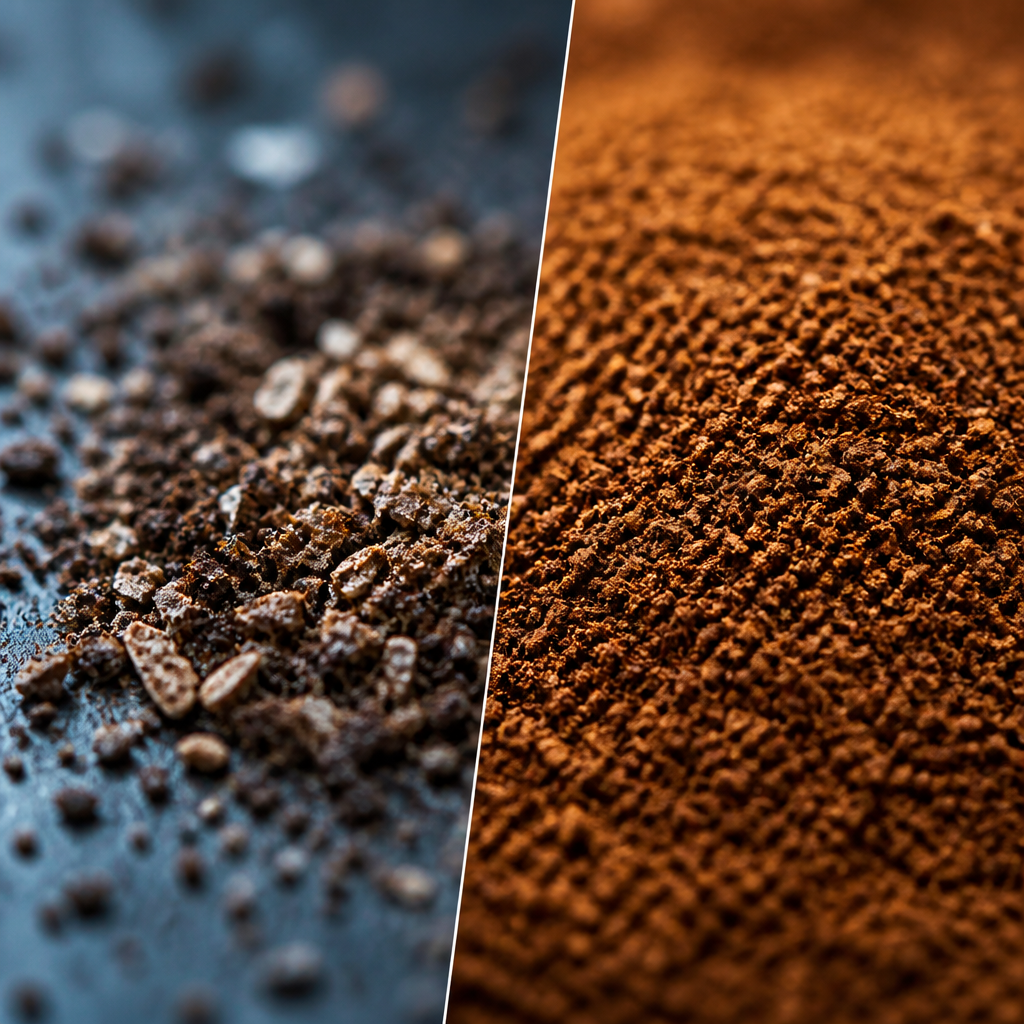
This point deserves blunt treatment before anything else: your grinder is the most important piece of equipment in your setup, regardless of which brewing method you use. A blade grinder chops beans unevenly, producing a mix of fine powder and large chunks in the same batch. When that inconsistent grind hits water, the fine particles over-extract and turn bitter, while the larger pieces under-extract and add sourness. The result is a muddled, harsh cup that no quality bean can save.
A burr grinder, by contrast, crushes beans between two abrasive surfaces to produce a uniform particle size. That uniformity is what allows water to extract evenly, producing coffee that tastes clean and balanced. The good news is that you do not need to spend a fortune to make the jump. A solid entry-level burr grinder represents a bigger improvement to your daily cup than upgrading from a £20 French press to a £200 one.
Pro tip: If you are buying your first burr grinder, prioritise grind consistency over step count. A grinder with fewer but more precise grind settings will always outperform one with 50 vague "steps" that barely differ from one another.
Budget Tier: Best Coffee Equipment for Home Under £50
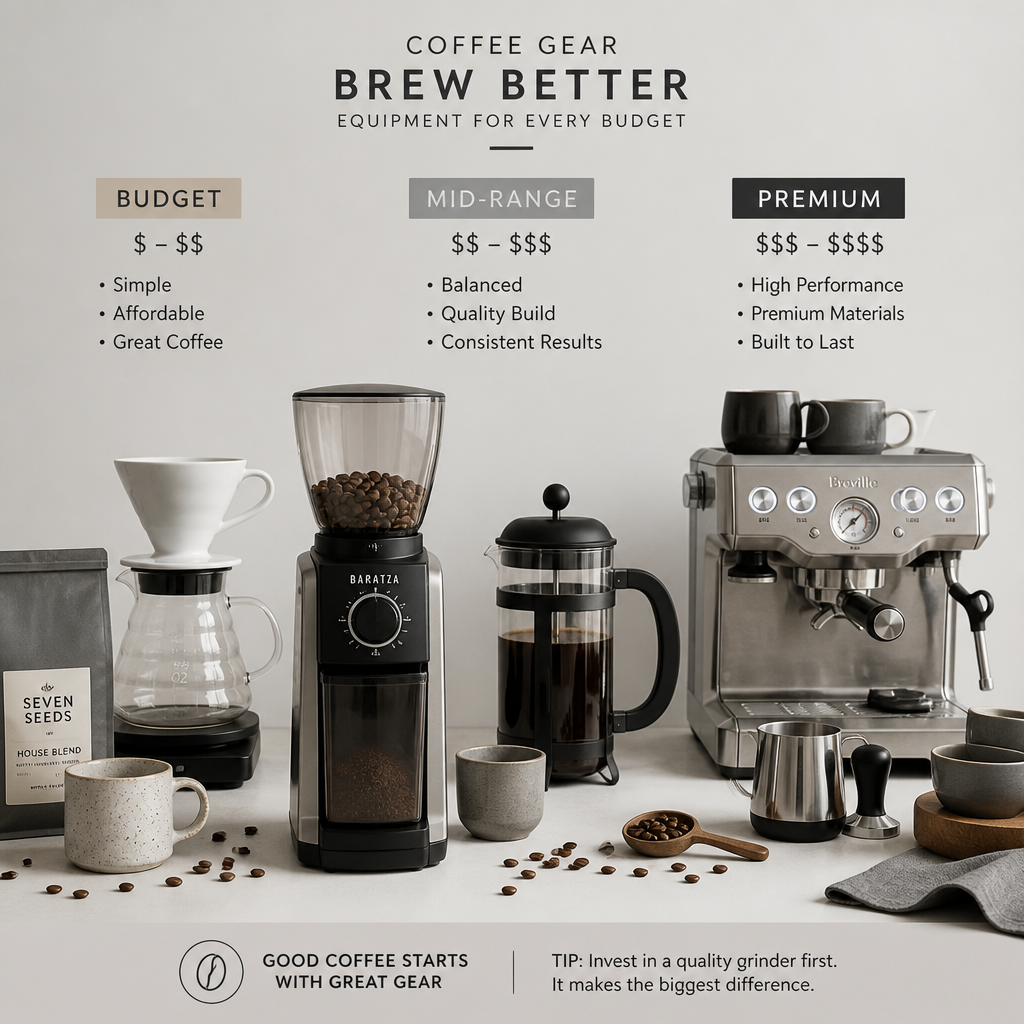
At this price point, the honest truth is that you should not be trying to make espresso. Instead, lean into brewing methods that perform brilliantly without pressure mechanics or fine calibration. The French press and the moka pot are your best options here, and both will serve you extremely well when used with freshly roasted, correctly ground coffee.
French Press: The Forgiving Full-Body Brewer
The French press uses full-immersion brewing, meaning ground coffee steeps directly in hot water before a metal mesh plunger separates the grounds. It produces a rich, full-bodied cup with natural oils intact. It requires a coarse grind, takes around four to five minutes, and is as close to foolproof as brewing gets. Cleanup involves rinsing the plunger assembly and emptying the grounds, nothing more complex than that.
If you are the type of person who wants a large, satisfying morning coffee with minimal fuss, the French press is the right call. It also scales up easily: a larger model brews for two or four people with no extra effort.
Moka Pot: Stovetop Intensity Without the Machine
The moka pot brews through pressure, though not the same level of pressure as a proper espresso machine. Water in the bottom chamber is heated on the hob, creating steam pressure that forces water up through a middle basket of ground coffee and into the top chamber. The result is a strong, concentrated, espresso-style coffee with real intensity of flavour.
A moka pot suits anyone who wants bold, strong coffee without investing in a full espresso setup. It does require some practice to get right: grind size, heat level, and timing all affect the result. But once you have dialled it in, the consistency is excellent. Pair it with one of Farrer's espresso blends for the best results, since those beans are roasted specifically for pressure-brewed methods.
Pro tip: With a moka pot, remove it from the heat as soon as you hear the gurgling sound from the top chamber. Leaving it on the heat past this point scorches the coffee still in contact with the base and introduces a bitter, burnt note that no amount of good beans will mask.
Mid-Range Tier: Serious Home Brewing, £50 to £200
This is where the coffee gear guide gets genuinely exciting. Between £50 and £200, you can build a setup that produces coffee as good as most specialist cafés. The key is allocating budget intelligently across a grinder, a brewer, and, depending on your method, a decent kettle.
AeroPress: Speed, Versatility, and Forgiveness
The AeroPress is a compact, lightweight brewer that uses a combination of immersion and pressure. You steep ground coffee in hot water inside a cylinder, then push a plunger through to force the brew through a paper or metal filter into your cup. The whole process takes under two minutes. It produces a clean, concentrated cup that can be diluted to taste or drunk straight. You can also use the inverted method, placing the plunger in from the start so the coffee steeps fully before being pressed, which produces a result closer to a French press in body.
The AeroPress is remarkably forgiving on grind size and water temperature, which makes it an excellent learning tool for anyone developing their palate. It is also genuinely portable, which matters if you travel frequently or want quality coffee at work.
Pour-Over Drippers: Clarity and Complexity
A V60 or similar pour-over dripper produces what many coffee professionals consider the best expression of a well-roasted single origin bean. Water passes through a paper filter and coffee bed in a controlled, even flow, producing a cup that is clean, bright, and nuanced. The natural oils are filtered out, so the result is lighter-bodied than a French press but more transparent in flavour.
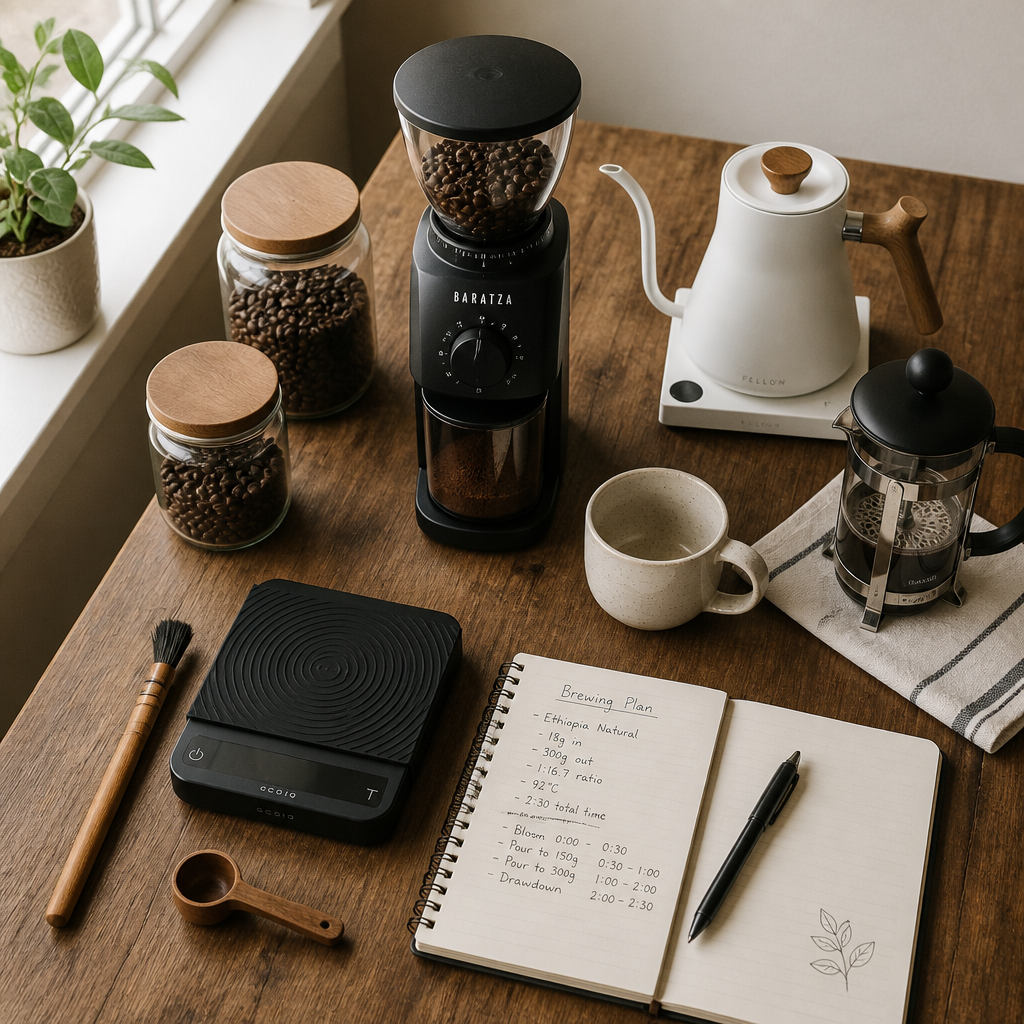
The trade-off is that pour-over rewards precision. You need a consistent grind, a gooseneck kettle to control your pour rate, and attentive technique. A digital scale is also genuinely useful here. None of these are expensive items individually, but the learning curve is steeper than with an AeroPress or French press. Once you have it, though, the results are exceptional, particularly with Farrer's single origin or lighter-roasted filter coffees.
The brewer shapes the cup, but the bean determines the ceiling. No piece of equipment can produce flavour that was never in the coffee to begin with.
Premium Tier: Espresso and Beyond, £200 Plus
Espresso machines are the most complex, most expensive, and most maintenance-intensive piece of coffee gear a home brewer can own. They force hot water through finely ground, tamped coffee at around nine bars of pressure, producing a concentrated shot with crema. The results, when everything is calibrated correctly, are outstanding. But "when everything is calibrated correctly" is doing a lot of work in that sentence.
What You Actually Need for Home Espresso
A home espresso machine requires a capable grinder as a companion. Espresso demands an extremely fine, consistent grind, and this is where many people go wrong: they spend £400 on a machine and pair it with a grinder that cannot produce the grind quality needed. The grinder for espresso needs to be capable of fine, stepless or near-stepless adjustment. Budget accordingly for both pieces together, not just the machine.
For home use, a semi-automatic machine gives you control over extraction without requiring full manual skill. You load, tamp, and pull the shot, but the machine manages temperature and pressure. This is the best balance of control and consistency for most home users. Bean-to-cup machines automate the entire process and work well if convenience is the priority, but they give you less control over the extraction.
Gooseneck Kettles and Digital Scales: The Invisible Upgrades
For filter brewing methods, a gooseneck kettle is not optional if you want precision. Standard kettles pour too quickly and too heavily for controlled pour-over technique. A gooseneck kettle gives you a slow, steady stream directly over the coffee bed. Pair it with a digital scale and you move from guesswork to repeatable, improvable recipes.
These two items, a gooseneck kettle and a scale, cost relatively little and improve pour-over and AeroPress results significantly. They are often overlooked by buyers focused on the headline brewer, but they deserve a place in any serious home setup.
Brewing Method Comparison
| Brewing Method | Flavour Profile and Body | Best For |
|---|---|---|
| French Press | Full-bodied, rich, with natural oils. Medium to strong strength. Coarse grind, 4 to 5 minutes. | Home brewers who want a satisfying, low-effort daily cup. Great for Farrer's blended and dark-roasted coffees. |
| AeroPress | Clean and concentrated, adjustable body depending on method and dilution. Fast, under 2 minutes. | Curious home brewers who want to experiment. Excellent for travel. Works with a wide range of grind sizes and roast levels. |
| Moka Pot | Strong, espresso-style intensity. Shorter, bolder cup without crema. Fine to medium-fine grind, 5 to 10 minutes. | Anyone wanting strong coffee without an espresso machine. Works best with Farrer's espresso-style blends. |
| Pour-Over (V60 / Dripper) | Clean, bright, and nuanced. Lower body, higher clarity. Reveals origin character clearly. Medium grind, 3 to 4 minutes. | Coffee enthusiasts who want to explore single origins and lighter roasts. Rewards attention to technique. |
| Espresso Machine | Highly concentrated, full crema, intense and layered flavour. Foundation for milk drinks. Fine grind, under 30 seconds per shot. | Home baristas and trade buyers who want café-quality shots. Requires a good grinder as a companion purchase. |
What Trade and Café Buyers Need to Know
The considerations shift significantly when you are buying coffee brewing equipment UK for a commercial setting. Volume, consistency, and speed are the priorities. A two-group traditional espresso machine suits a mid-sized café with table service and experienced baristas. A bean-to-cup machine suits a hotel, office, or self-service environment where consistency at the push of a button matters more than manual skill.
Farrer's trade support goes beyond selling equipment. The team helps match the right machine to your menu, volume, and available space, and can arrange installation, calibration, and ongoing support. For high-volume sites that need speed and consistency, bulk brew filter systems are also worth considering, particularly for breakfast service or anywhere filter coffee needs to flow fast without a dedicated barista at the machine.
The single biggest mistake trade buyers make is purchasing equipment without considering the ongoing coffee supply alongside it. Equipment and coffee need to be calibrated together. A machine dialled in for one blend will need adjustment when you change suppliers. Working with a roaster like Farrer's means you have access to dial-in support and barista training on the same site where your coffee is roasted, which removes a significant source of inconsistency from your operation.
Pro tip: If you run a café and are considering a bean-to-cup machine for self-service areas, make sure the supplier can provide plumbed-in options as well as tank-fed models. Plumbed-in machines reduce the daily maintenance burden significantly and prevent the service interruptions that come with tanks running dry during peak periods.
Matching Your Equipment to Your Coffee
Equipment choices and coffee choices are inseparable. The same bean brewed through a French press and a V60 will taste noticeably different, and neither result is wrong, they are just different expressions. The practical point is that your brewing method should inform which coffees you buy, and vice versa.
For immersion methods like the French press, Farrer's fuller-bodied blends and darker roasts work particularly well. The body and natural oils that immersion brewing preserves complement a rich, classic roast character. For pour-over and AeroPress filter brewing, lighter or medium roasts allow origin character to shine through the clean filter cup. For moka pots and espresso machines, purpose-roasted espresso blends designed for pressure extraction deliver the best results. You can browse Farrer's full coffee range to find specific coffees matched by roast level and intended brew method.
Cleaning is the part of equipment ownership that most people underinvest in, to their own cost. Residue builds up in every brewer over time, and even small amounts of stale oils affect flavour noticeably. Simpler brewers like the French press and the AeroPress require minimal cleaning, just a thorough rinse after each use and occasional deeper cleaning of the plunger seal and body. Espresso machines and bean-to-cup machines require more structured maintenance, including regular descaling and cleaning of the group head and portafilter. The rule is simple: if your coffee has started tasting bitter or flat despite using fresh beans and correct technique, clean your equipment first before adjusting anything else.
Farrer's brewing equipment range includes options across all the methods covered in this guide, making it straightforward to buy equipment and coffee in one place, from a roaster with over 200 years of experience matching the two together. If you are unsure which direction to take, the contact page connects you directly with the team for advice, or you can explore trade support if you are buying for a commercial setting.
Frequently Asked Questions
What is the best coffee brewing equipment for a complete beginner in the UK?
A French press paired with a basic burr grinder is the best starting point. It is affordable, forgiving, and produces genuinely good coffee without requiring precise technique. Once you are comfortable with grind size and water temperature, an AeroPress is a logical and inexpensive next step that opens up more experimentation.
Do I really need a burr grinder, or will a blade grinder do?
A burr grinder makes a measurable, immediate difference to cup quality. Blade grinders produce uneven particle sizes that result in simultaneous over-extraction and under-extraction in the same brew. If you are serious about tasting what a good coffee actually offers, a burr grinder is not optional. Even a budget entry-level model outperforms a blade grinder in consistency.
Is a moka pot the same as an espresso machine?
No. A moka pot produces a strong, espresso-style coffee but does not operate at the same pressure as an espresso machine, which means you will not get the same crema or the same layered extraction. It is an excellent way to make bold, concentrated coffee at very low cost, but it is a different drink from a true espresso shot.
How much should I spend on a home espresso machine in the UK?
Budget for the machine and grinder together, not just the machine alone. A capable semi-automatic machine and a grinder that can reliably hit espresso fineness together represent a more meaningful investment than a premium machine paired with an inadequate grinder. The grinder is where consistent espresso quality begins, so do not underspend on it relative to the machine.
What coffee works best with a pour-over brewer like a V60?
Pour-over brewing produces a clean, filter cup that reveals origin character clearly. It suits lighter and medium roasts particularly well, especially single origin coffees where you want to taste the specific characteristics of the growing region. Fuller, darker roasts can work well too, but the transparency of the pour-over method means any flaws in the coffee are more visible.
Can I buy coffee brewing equipment and coffee from the same UK supplier?
Yes, and it is generally the better approach. Buying from a roaster who also supplies brewing equipment means your coffee and your kit are matched from the start. Farrer's, as the UK's oldest coffee roaster, offers both, along with barista training and hands-on roastery experience days for customers who want to understand the full picture from bean to cup.
How often should I clean my coffee brewing equipment?
Every time you use it, at minimum a thorough rinse. For French presses and AeroPress brewers, deeper cleaning every one to two weeks keeps flavour clean. Espresso machines and bean-to-cup machines require more frequent structured maintenance including descaling and group head cleaning. If your coffee tastes bitter or stale despite using fresh beans, cleaning your equipment should always be the first step.
Have you recently upgraded your home coffee setup or discovered a brew method that changed how you think about coffee? Share your experience in the comments below.


