

Most coffee drinkers have never tasted coffee at its actual peak. They buy a bag from a supermarket shelf, brew it at home, and wonder why it tastes flat, bitter, or oddly hollow. The answer is almost always age.
Freshly roasted coffee contains a complex chemistry of volatile aromatic compounds that begin degrading within days of roasting. By the time a mass-produced bag reaches your cup, weeks or months have passed.
At Farrer's, the UK's oldest coffee roaster operating from Kendal in the Lake District for over 200 years, we have watched this problem repeat itself across every generation of coffee drinkers. This guide explains precisely what happens to coffee after roasting and why freshness is not a marketing term but a measurable, flavour-defining fact.
Table of Contents
- Quick Takeaways
- The Chemistry of Fresh Coffee
- What Goes Wrong with Stale Coffee
- The Roast-to-Cup Timeline
- How Farrer's Approaches Freshness
- Comparing Coffee Freshness Sources
- Storage and Brewing Tips for Maximum Freshness
- Frequently Asked Questions
- References
Quick Takeaways
| Key Insight | Explanation |
|---|---|
| Coffee peaks between 4 and 14 days post-roast | Carbon dioxide degassing slows after day 4, allowing aromatic compounds to stabilise and deliver their best flavour. |
| Oxygen is the primary enemy of fresh coffee | Oxidation breaks down chlorogenic acids and volatile aromatics, producing the flat, cardboard-like taste in stale beans. |
| Supermarket coffee is often 6-12 months old at purchase | Long supply chains, warehouse storage, and 12-month shelf-life labelling mean freshness is gone before the bag is opened. |
| Grind size and grind timing affect freshness acutely | Ground coffee loses volatile compounds up to 60 times faster than whole beans. Always grind immediately before brewing. |
| Roast date matters more than best-before date | A best-before date tells you about safety, not flavour. Always look for a roast date on artisan coffee packaging. |
| Hand-packing preserves more aroma than automated lines | Slower, careful packing reduces heat and physical stress on freshly roasted beans, retaining more of the surface oils that carry flavour. |
| Next-day dispatch closes the freshness gap dramatically | When roasters dispatch within 24 hours, the coffee arriving at your door can be under a week old, which no supermarket can match. |
The Chemistry of Fresh Coffee
Coffee is one of the most chemically complex beverages humans consume. Researchers have identified over 1,000 distinct aromatic compounds in roasted coffee, more than are found in wine.
The roasting process itself is a transformation: green beans containing sugars, amino acids, and chlorogenic acids are exposed to temperatures between 180 and 230 degrees Celsius. The result is a Maillard reaction cascade and caramelisation process that creates those 1,000-plus compounds from scratch.
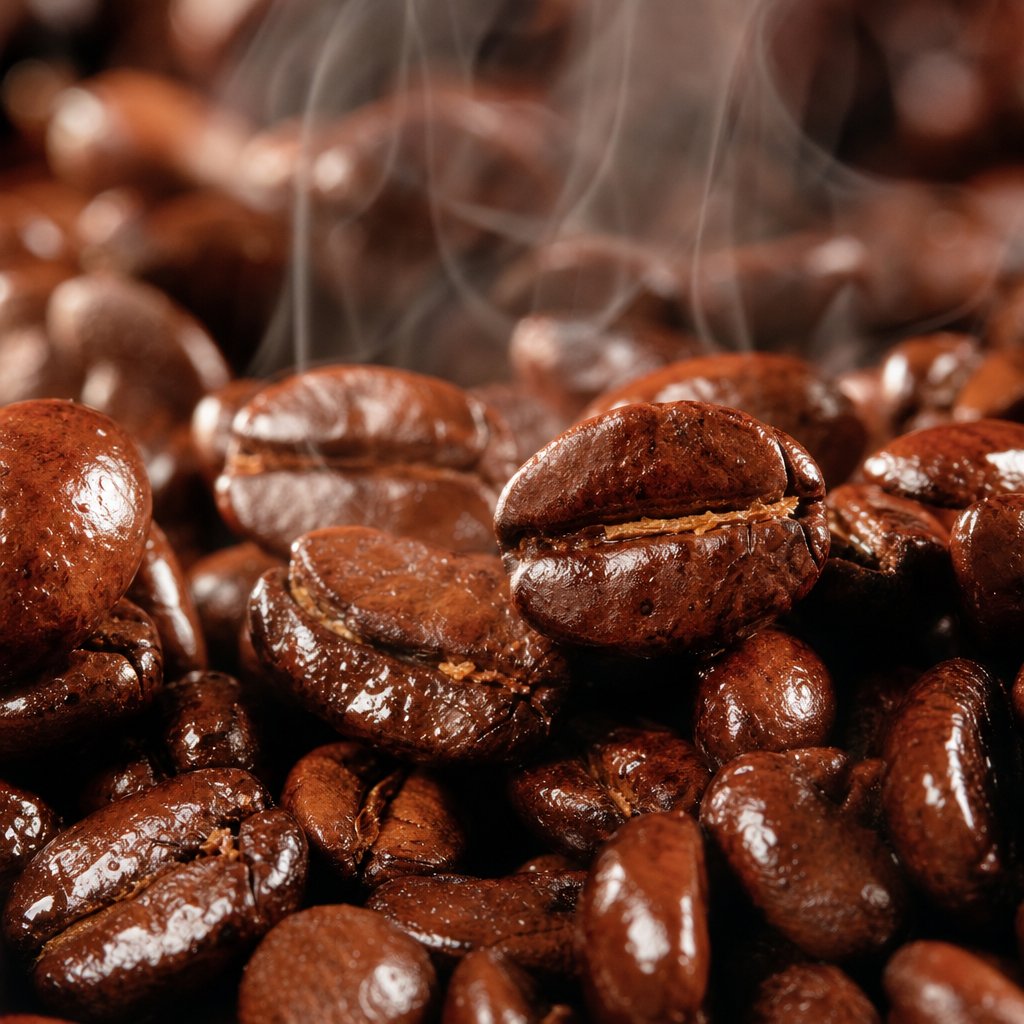
The problem is that this chemical richness is unstable. Carbon dioxide, produced during roasting, continues to escape from the bean structure for days afterward. During this degassing phase, the bean is actively expelling gases that would otherwise create sour, unpleasant extraction if you brewed too soon. But once degassing slows, the window for optimal flavour opens.
In practice, the sweet spot for most espresso roasts is between 5 and 14 days post-roast. For filter and pour-over roasts, 7 to 21 days tends to work well. Outside these windows, the same oxidation processes that turn butter rancid begin working on your coffee's aromatic esters, aldehydes, and ketones. The result is a measurably duller, flatter cup.
Why Carbon Dioxide Actually Helps You
Many drinkers see CO2 as a problem because it causes channelling in espresso shots if the coffee is too fresh. But CO2 is also a natural preservative. While it is actively outgassing, it is simultaneously displacing the oxygen inside the bag that would otherwise start oxidising your beans. This is why valve bags exist: they let CO2 out without letting oxygen in.
Once the CO2 is gone and the valve stops working, oxygen moves in. From that point, every day without airtight storage accelerates flavour loss. A common mistake is leaving a bag rolled open on a kitchen counter for two weeks and wondering why the last few cups taste dull. They taste dull because the coffee has been oxidising the entire time.
Pro tip: If you buy whole beans in a valve bag, do not open the bag until you are ready to start using the coffee. The valve is keeping conditions stable inside. Once you break that seal, you start the oxidation clock.
What Goes Wrong with Stale Coffee
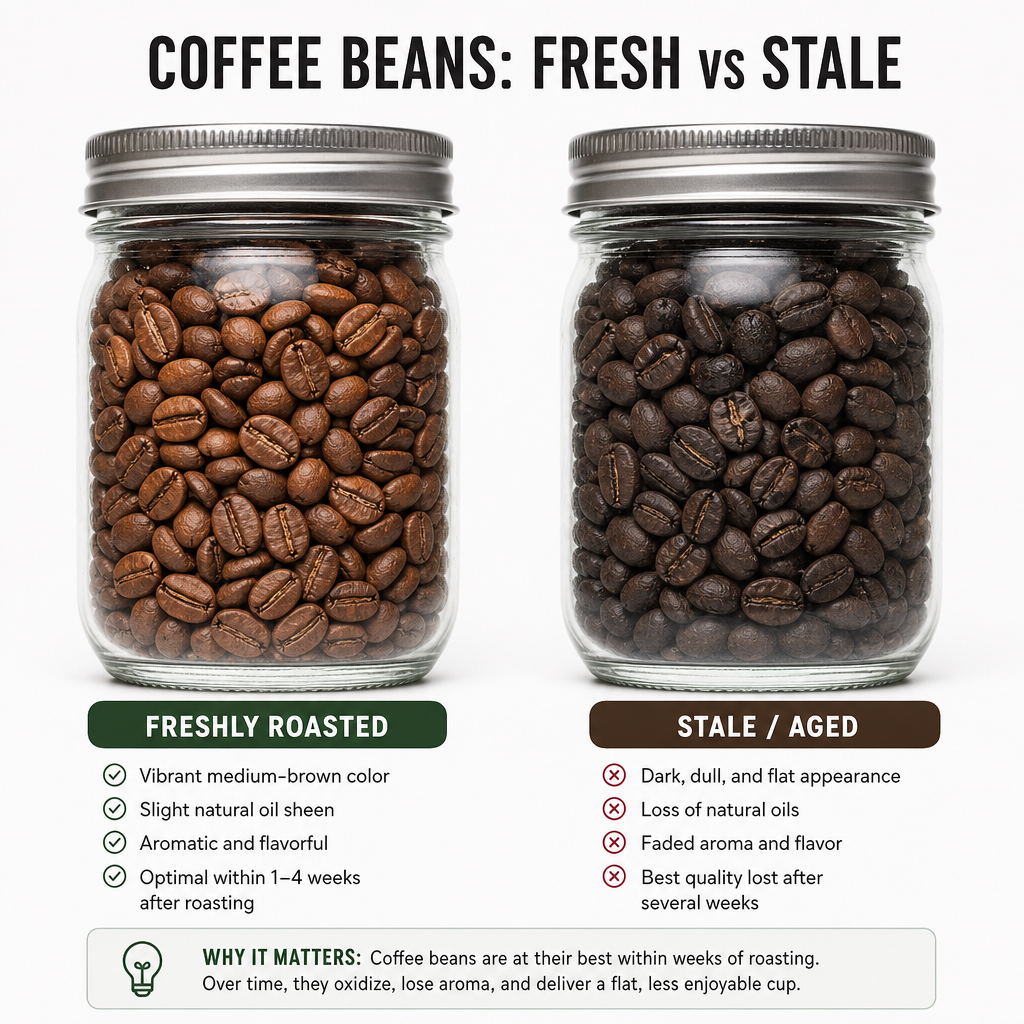
Stale coffee is not just a matter of weaker flavour. The chemical breakdown of old beans introduces specific off-notes that experienced tasters can identify accurately. Oxidised coffee typically tastes cardboard-like or papery. Coffee that has absorbed moisture from the air develops musty, grain-like characteristics. Coffee that has been exposed to light degrades differently, producing a rubbery or sour quality that some people incorrectly attribute to over-roasting.
The data consistently shows that consumers who describe themselves as not liking coffee, or as finding it too bitter, are often simply drinking old coffee brewed incorrectly. Bitterness in stale coffee comes from the breakdown of chlorogenic acids into quinic acid and caffeic acid, both of which are sharply bitter compounds. Fresh coffee brewed well is rarely described as bitter.
"The flavour of coffee is highly volatile. Freshness is not a preference, it is a prerequisite for quality." - Specialty Coffee Association, Green Coffee Standards documentation
The Supermarket Supply Chain Problem
Large commercial roasters operate on a fundamentally different timeline than artisan roasters. They roast in enormous batches, blend for consistency across those batches, and then send pallets through a distribution network that can take six to twelve weeks before the product reaches a shelf. Add the shelf life itself, sometimes stamped at 12 to 18 months post-roast, and you have a product that is structurally incapable of delivering fresh coffee flavour.
This is not a criticism of the people running those operations. It is simply an acknowledgement that scale and freshness are in direct tension. A roaster producing hundreds of tonnes per year cannot roast to order. A roaster like Farrer's, hand-packing small batches in Kendal and dispatching next day, operates in a completely different model.
Pro tip: When evaluating any coffee purchase online, look for a printed roast date rather than a best-before date. If a roaster does not print a roast date, that is usually because the information would not flatter the product.
The Roast-to-Cup Timeline
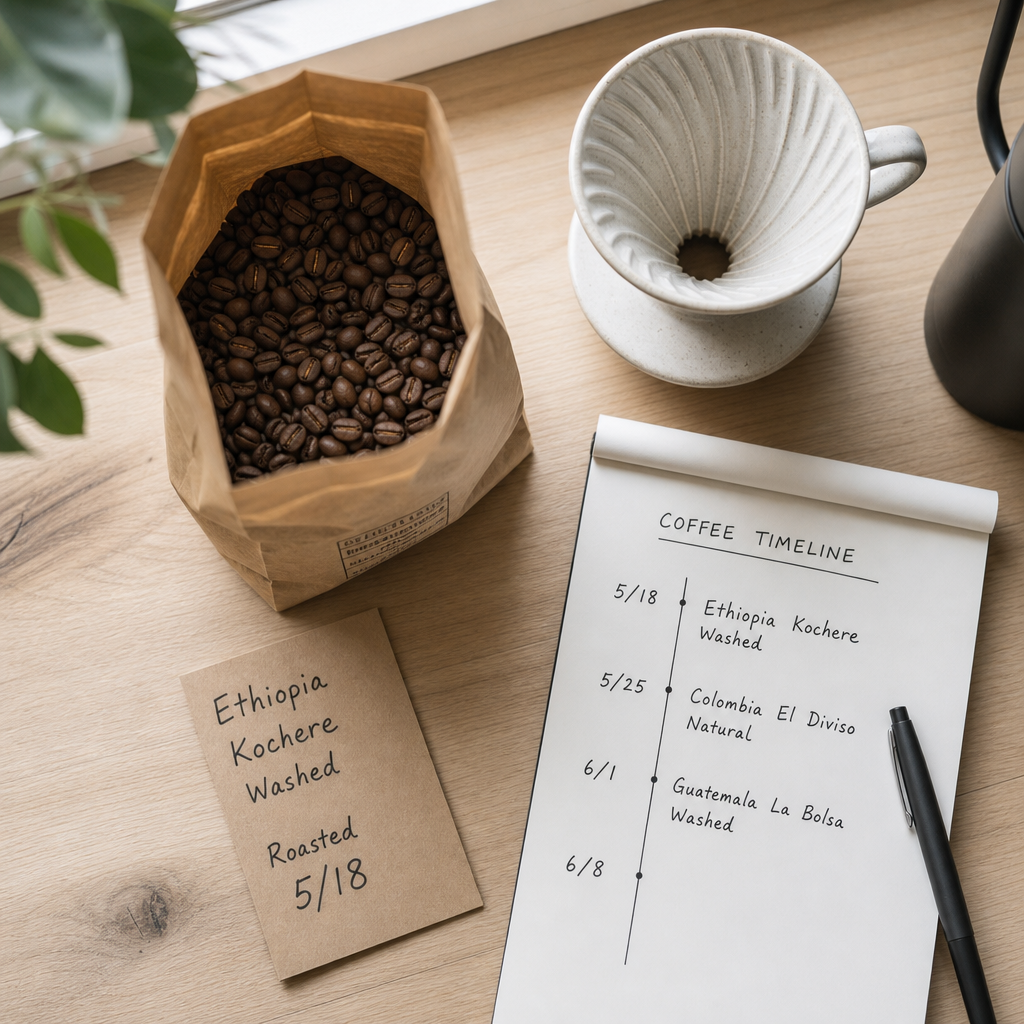
Understanding the journey from roast to your cup makes it easy to see where freshness is lost. The timeline below reflects what happens with three different sourcing routes commonly available to UK coffee drinkers.
With a major supermarket brand, roasting typically happens in a large facility, often overseas. Beans are then transported, warehoused, distributed to a regional depot, and finally sent to individual stores. By the time the bag is on a shelf, four to twelve weeks have commonly passed since roasting. The consumer then uses the bag over another two to four weeks at home. Total time from roast to final cup: often three to five months, sometimes longer.
With a specialty coffee subscription from an artisan UK roaster, the timeline is compressed significantly. Roasting happens in small batches, packaging follows within hours, and dispatch occurs the next working day. The consumer receives coffee that is three to seven days post-roast and can consume it through its optimal window.
With Farrer's specifically, orders over £35 qualify for next-day dispatch. The Kendal roastery operates a hand-packing process that keeps heat and handling stress minimal between the roaster drum and the sealed bag. For trade customers supplying cafes and restaurants, this matters enormously: a hospitality business serving stale coffee is damaging its reputation with every cup it sells.
Whole Bean versus Pre-Ground Freshness Loss
Ground coffee loses volatile aromatics dramatically faster than whole beans. The grinding process shatters the bean's cell structure and increases the surface area exposed to oxygen by a factor of roughly 60. Research published in food chemistry literature consistently confirms that ground coffee reaches detectable staleness within 15 to 30 minutes at room temperature without protective packaging.
This is why buying freshly roasted whole beans and grinding immediately before brewing is the single highest-impact change most home brewers can make. A modest hand grinder and a bag of freshly roasted whole beans will outperform an expensive espresso machine fed with pre-ground coffee that has been sitting open for a week.
How Farrer's Approaches Freshness
Farrer's has been roasting coffee in the Lake District since the early 1800s. That longevity is not accidental. Staying relevant for over two centuries requires getting the fundamentals consistently right, and freshness is the most fundamental variable in coffee quality. The approach has evolved in method but not in principle: roast in quantities that match demand, pack carefully, and get the coffee to the customer as quickly as possible.
The hand-packing process is worth explaining because it is uncommon at scale. Automated packaging lines move quickly and are efficient, but they also subject beans to vibration, heat from mechanical friction, and inconsistent handling that can crack or chip the bean surface. Cracked beans oxidise faster because their internal structure is exposed. Hand-packing is slower, but it treats the bean as what it is: a fragile, oil-rich, chemically active product that deserves careful handling.
What Roastery Experience Days Reveal About Freshness
Farrer's runs roastery experience days from the Kendal site, and the feedback from participants is consistently the same: they are surprised by how different freshly roasted coffee smells and tastes compared to what they buy routinely. That reaction is not about branding or atmosphere. It is a direct sensory encounter with freshness at the source.
Participants at these days can often taste the same blend at different stages: just roasted, three days post-roast, and two weeks post-roast. The progression is educational in the most direct way possible. No explanation is required once someone has tasted all three.
For trade customers, the barista training programmes at Farrer's reinforce this understanding practically. A barista who understands the roast-to-cup timeline can make better decisions about ordering frequency, stock rotation, and extraction parameters. That knowledge directly improves the quality of coffee a cafe or restaurant serves.
Comparing Coffee Freshness Sources
The table below compares three distinct purchasing routes available to UK coffee drinkers. The comparisons are based on observable industry practices, not assumptions.
| Source Type | Typical Days Post-Roast at Purchase | Freshness Control and Traceability |
|---|---|---|
| Major supermarket brand (e.g., mass-market UK retail) | 60 to 180 days post-roast | Best-before date only; no roast date printed; no batch traceability for the consumer |
| Specialty online roaster with standard dispatch (e.g., Origin Coffee, True Start Coffee) | 5 to 21 days post-roast depending on batch cycle and order timing | Roast date usually printed; specialty-grade sourcing; some offer subscription models to align roast and dispatch |
| Farrer's (UK's oldest roaster, Kendal, Lake District) | 1 to 7 days post-roast at dispatch with next-day delivery on orders over £35 | Hand-packed to order; roast date transparency; 200-year heritage roastery; trade and home supply with barista training support |
The comparison above is deliberately specific. Competitors like Origin Coffee and True Start Coffee produce quality products and operate with genuine specialty coffee values. But their logistics models and batch sizes differ from Farrer's small-batch, hand-packed approach. The question is not whether those roasters produce good coffee; they do. The question is whether the coffee arriving at your door is within its optimal freshness window, and that depends entirely on how the roaster manages the time between drum and dispatch.
Storage and Brewing Tips for Maximum Freshness
Buying freshly roasted coffee is only valuable if you store and brew it correctly. Poor storage can waste most of the advantage you gained by sourcing from a quality roaster. The following recommendations are drawn from consistent practice at the Farrer's roastery and from the barista training programmes the team delivers.
Storage: What Actually Works
Keep whole beans in a sealed, opaque container away from heat, light, and moisture. A ceramic canister with an airtight lid works well. Do not store coffee in the fridge: the moisture cycling that occurs every time you open and close the door causes condensation inside the container that accelerates degradation faster than simply leaving beans at room temperature.
Freezing is a legitimate option for long-term storage if done correctly. Divide a large bag into single-week portions, seal each portion airtight, freeze, and defrost one portion at a time at room temperature without opening the bag until it has fully returned to ambient temperature. This prevents condensation. In practice, most home drinkers do not need to freeze because buying smaller quantities more frequently from a roaster with next-day dispatch is simpler and equally effective.
Brewing: Extracting the Most from Fresh Beans
Very fresh espresso beans, under four days post-roast, can cause channelling due to high CO2 content. If you are pulling espresso shots and notice excessive channelling or sour, gassy flavour, give the beans another two to three days. For filter methods like V60 or Aeropress, fresh beans benefit from a bloom step: pour a small amount of hot water over the grounds and wait 30 to 45 seconds before continuing. This bloom releases excess CO2 and produces a more even, controlled extraction.
Water temperature matters too. Stale coffee needs hotter water to extract what little flavour remains. Freshly roasted coffee responds better at slightly lower temperatures, typically 90 to 94 degrees Celsius, because there is plenty of soluble flavour to extract without scorching it out. If your coffee is tasting harsh even though you bought it fresh, the first thing to check is water temperature.
Pro tip: Order coffee from Farrer's in quantities you will use within three weeks of the roast date. With next-day dispatch available on orders over £35, you can order smaller amounts more often and always be working within the peak flavour window rather than racing to finish a large bag before it goes stale.
Frequently Asked Questions
How long does freshly roasted coffee stay fresh once opened?
Whole beans in an airtight, opaque container remain at good quality for two to four weeks after the roast date. Once you open the original packaging, transfer beans immediately to a sealed canister. Ground coffee degrades significantly faster and should ideally be used within a few days of grinding.
Is freshly roasted coffee better for espresso or filter brewing?
Fresh coffee benefits both methods, but the timing differs. Espresso generally performs best between 5 and 14 days post-roast when CO2 has partially but not fully dissipated. Filter and pour-over methods can work well from 4 days post-roast onward and tend to have a wider optimal window stretching to around 21 days.
Why does Farrer's coffee taste different from supermarket brands?
The primary reason is freshness. Farrer's roasts in small batches, hand-packs carefully, and dispatches the following day, meaning the coffee you receive is often under a week from the roaster drum. Supermarket coffee typically travels through a supply chain that adds months between roasting and purchase. The difference in flavour is a direct consequence of that time gap.
What does artisan coffee from Kendal mean in practice?
It means small-batch roasting by experienced roasters who can adjust profiles batch by batch based on how the green bean is behaving. Mass-market roasting is optimised for consistency across enormous volumes. Artisan roasting is optimised for flavour, which requires attention and flexibility that large-scale automated systems cannot replicate. Farrer's position in Kendal, in the Lake District, is geographic but also cultural: a long heritage of craft production that shapes how the team approaches every roast.
Can I order freshly roasted coffee from Farrer's for my cafe or restaurant?
Yes. Farrer's supplies trade customers directly and supports those customers with barista training programmes. For a hospitality business, the advantage of working with an artisan UK coffee roaster is both the freshness of the product and the direct access to expertise. You are not buying from a distributor; you are buying from the roaster, which means faster dispatch, better freshness, and a direct line to technical support.
Does the roast level affect how quickly coffee goes stale?
Yes. Darker roasts have more porous bean structures because the extended roast time breaks down more of the cell walls. More porous beans oxidise faster, meaning a dark roast can go stale noticeably quicker than a light or medium roast. This makes it even more important to buy dark roasts from a source with fast dispatch and to store them carefully in a sealed, airtight container.
What is the difference between a roast date and a best-before date on coffee packaging?
A roast date tells you when the coffee was roasted, which is the information that matters for flavour. A best-before date is a safety or quality guarantee set by the manufacturer, often 12 to 18 months post-roast for commercial brands. A bag of coffee can be well within its best-before date and still taste completely flat because it was roasted eight months ago. Always prioritise the roast date.
Have you tasted the difference between freshly roasted coffee and a supermarket bag side by side? Share what you noticed in the comments or tag us in your next brew on social media.
References
- Specialty Coffee Association: research and standards on coffee quality, freshness, and green bean grading
- ScienceDirect food chemistry research on volatile aromatic compound degradation in roasted coffee
- Statista data on UK coffee market size, consumer preferences, and specialty coffee growth trends
- Forbes coverage of artisan food and beverage industry growth and consumer demand for provenance and freshness
- UK Food Standards Agency guidance on food labelling, best-before dates, and consumer information requirements


