

Most coffee buyers pick a bag based on packaging or price, then wonder why the cup never tastes quite right. The real decision point is simpler and more useful: are you after consistency and balance, or complexity and traceability? House blends coffee and single origin coffee are built on entirely different philosophies, and choosing between them without understanding those differences is how you end up with a coffee that works for someone else's palate.
Farrer's, roasting in the Lake District for over 200 years, has both categories covered with precision. This guide tells you exactly which to choose and why.
Table of Contents
- Quick Takeaways
- What House Blends Coffee Actually Means
- What Single Origin Coffee Actually Delivers
- How Farrer's Approaches Blending and Sourcing
- Comparison: House Blends vs Single Origins
- Matching Coffee to Your Brewing Method
- Choosing for a Cafe or Hospitality Business
- Frequently Asked Questions
- References
Quick Takeaways
| Key Insight | Explanation |
|---|---|
| House blends prioritise consistency | A well-crafted house blend is designed to taste the same cup after cup, season after season. Farrer's blends achieve this through careful proportion control across complementary origins. |
| Single origins reward attentive brewing | Single origin coffee expresses the character of one farm, region, or cooperative. The flavour shifts meaningfully with grind size, water temperature, and brew time. |
| Espresso almost always suits a blend | The pressure and heat of espresso extraction amplify any imbalance. Blends are engineered to hold together under those conditions; many single origins turn sharp or hollow. |
| Filter and pour-over showcase single origins | Gentler extraction methods let delicate fruit, floral, or terroir-driven notes come forward. This is where single origin coffee earns its premium. |
| Trade buyers should default to house blends | Cafes and restaurants need a product that performs reliably across different baristas and machines. A house blend removes the variable of seasonal crop shifts. |
| Farrer's heritage informs every blend ratio | Two centuries of roasting means Farrer's blend formulas are not guesswork. They reflect accumulated knowledge of how specific origins behave under heat over time. |
| Single origins make excellent gifts for enthusiasts | A traceable, limited-harvest single origin from Farrer's signals genuine quality to a recipient who knows coffee. It is a more considered choice than a generic premium tin. |
What House Blends Coffee Actually Means
A house blend is not a cheaper product made from leftover stock. That is the most persistent misconception in the category, and it leads people to dismiss blends as somehow less serious than single origins.
In practice, a great house blends coffee requires more skill to produce, not less, because the roaster must account for how different origins behave at different roast levels and then combine them to achieve a specific, repeatable flavour profile.
Farrer's approach to blending draws on over 200 years of practice. The roastery in Kendal has been refining blend ratios since before specialty coffee was a recognised category. That history is not a marketing angle; it directly affects the product.
A blender who has seen how a particular Brazilian origin ages across decades, or how Ethiopian naturals interact with Colombian washed lots under different humidity conditions, makes different decisions than one working from a theoretical framework.
What gives a house blend its character
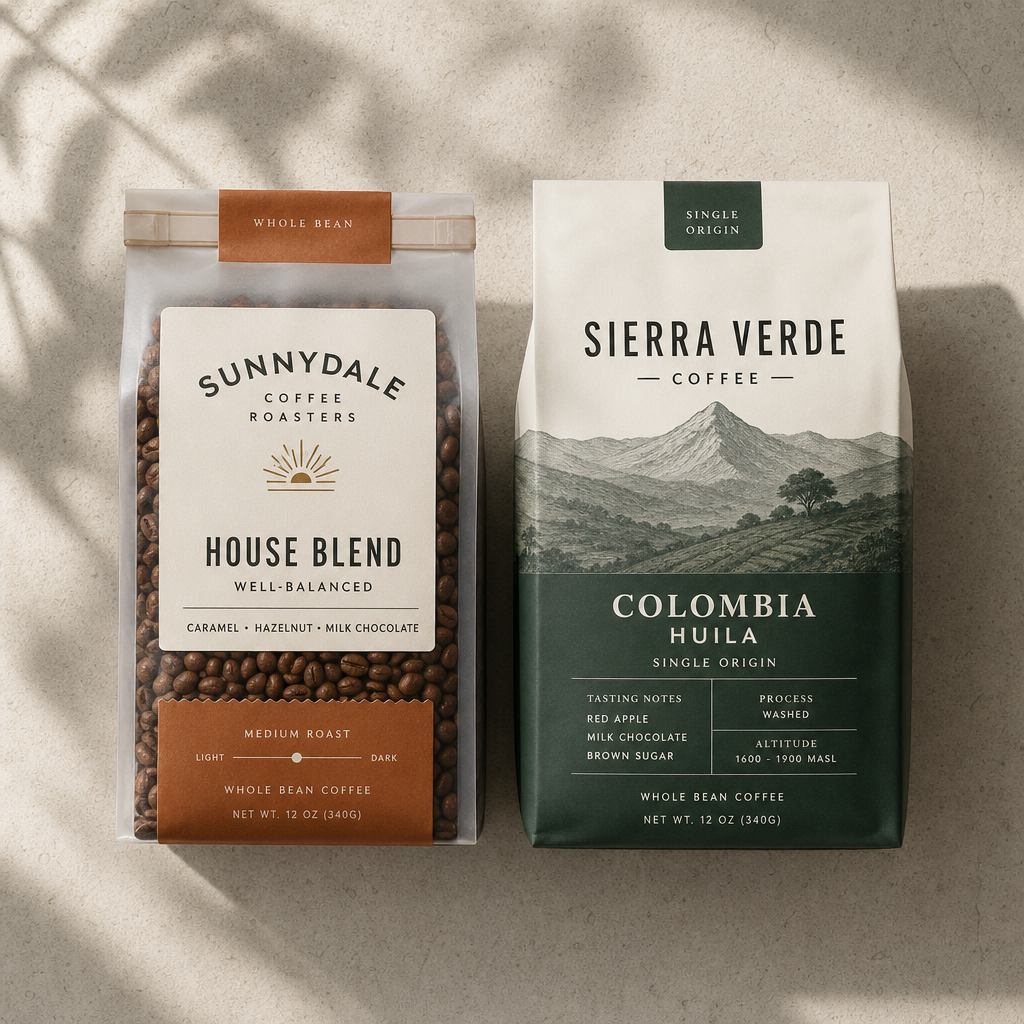
Most house blends combine two to four origins, each roasted to a degree that brings out specific attributes. A typical structure might pair a naturally processed Brazilian for body and sweetness, a washed Colombian for clean acidity, and a Robusta for crema and intensity if it is an espresso-forward blend. The art is in the proportion. Change the Brazilian from 40% to 55% and the whole cup shifts.
Farrer's blends are designed to hold their character across different brewing methods, which matters for home drinkers who switch between a cafetiere on weekdays and an espresso machine at weekends. That flexibility is a genuine advantage that a single origin rarely offers.
Pro tip: If you drink two or three cups a day and want a coffee that delivers without requiring attention or adjustment, a house blend from Farrer's is the correct choice. Reserve single origins for moments when you have the time and equipment to brew with intention.
What Single Origin Coffee Actually Delivers
Single origin coffee means the beans come from one identifiable source. That source can be a country, a region within a country, a specific cooperative, or a single named farm. The narrower the source definition, the more specific and distinctive the flavour tends to be, and the more it will change from harvest to harvest.
The flavour differences are real and significant, not subtle. An Ethiopian Yirgacheffe processed naturally will deliver intense blueberry and jasmine notes that no blend engineer tries to replicate. A Kenyan AA from the slopes of Mount Kenya brings a bright, wine-like acidity that cuts through milk cleanly. A Guatemalan Antigua from a high-altitude farm produces chocolate and dried fruit with a silky body. These are not impressionistic tasting notes invented by copywriters. They are the result of specific soil chemistry, altitude, processing method, and varietal genetics.
The seasonal reality of single origins
Single origin coffee has a harvest cycle. The coffee you buy in November from a specific Ethiopian cooperative is from a different crop year than what you bought the previous April. This means the flavour changes, sometimes dramatically. For an enthusiast, that is part of the appeal. For someone who found one coffee they love and wants to reorder it indefinitely, it creates friction.
Farrer's handles this honestly. When a single origin lot is gone, it is gone. That scarcity is legitimate, not manufactured. When a new harvest from the same origin arrives, it will share the general character of its predecessor but will not be identical.
"Specialty coffee traceability is no longer a niche concern. Consumers increasingly want to know not just where their coffee comes from, but the specific conditions under which it was grown and processed." - Specialty Coffee Association, Producer and Consumer Communications Report
How Farrer's Approaches Blending and Sourcing
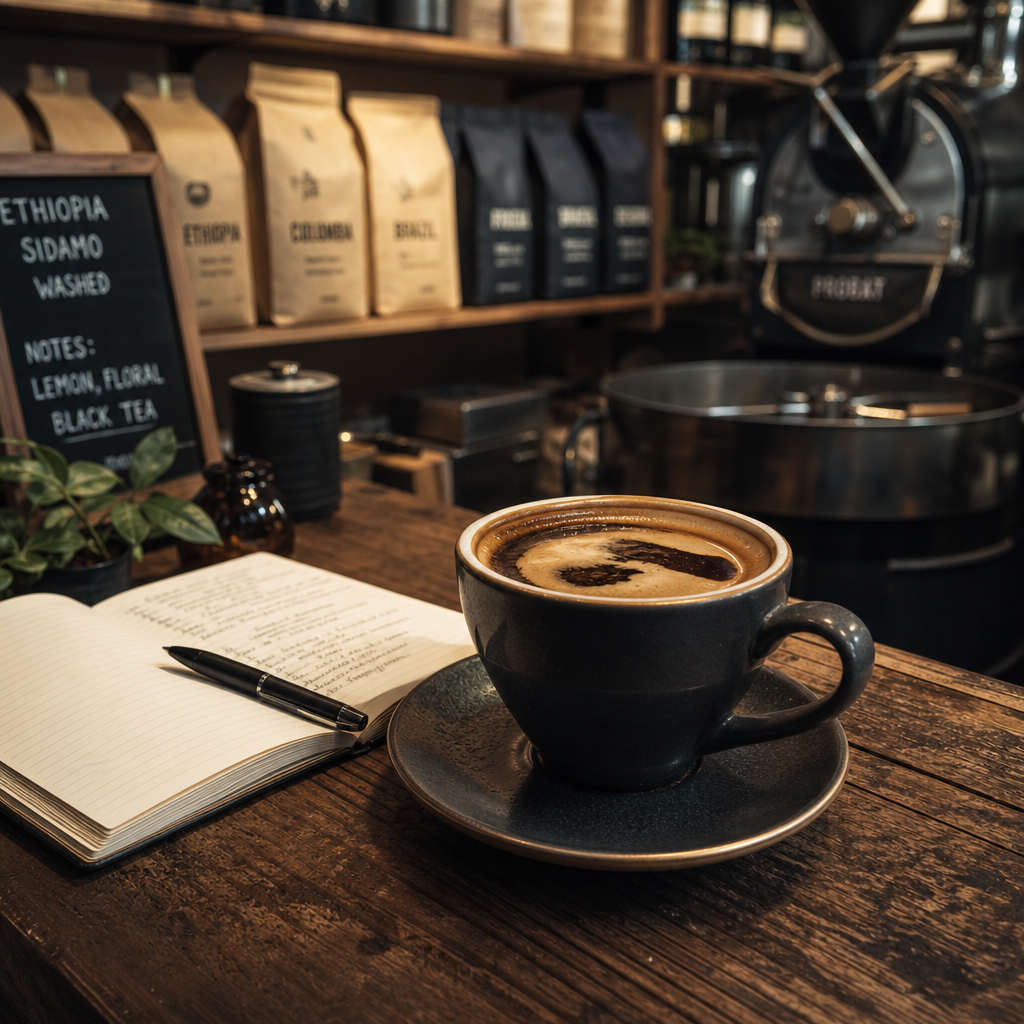
Farrer's does not roast at industrial scale and then repackage. The Kendal roastery produces hand-packed, freshly roasted coffee dispatched the next day on orders over £35. That freshness window matters because roasted coffee begins degassing carbon dioxide immediately and loses volatile aromatics within days if not stored well.
Getting coffee from roaster to customer within 24 to 48 hours of roasting is one of the most meaningful quality factors in the supply chain, and it is a practical advantage that larger national competitors struggle to match at volume.
Their blend portfolio is not interchangeable. Farrer's differentiates between blends designed for espresso, blends suited to milk-based drinks, and those calibrated for filter. That specificity reflects genuine roasting expertise.
A blend built for espresso has different roast development than one designed for a cafetiere. Treating them as the same product is a common mistake that leads to bitter espresso or flat filter coffee.
Why hand-packing changes the product
Industrial packing uses automated lines that handle coffee by weight and volume. Hand-packing allows the team to visually assess each batch, catch any defect beans, and confirm the roast level matches the standard. At Farrer's scale, that quality control step is feasible and it directly affects cup quality. The data consistently shows that defect bean presence, even at low percentages, degrades cup quality disproportionately due to the way defects over-extract or introduce off-flavours.
Pro tip: When ordering from Farrer's for the first time, request whole beans rather than pre-ground if you have a grinder at home. Whole beans retain freshness significantly longer and let you adjust grind size to your specific brewing equipment, which is the single most impactful variable you control as a home brewer.
Comparison: House Blends vs Single Origins
The choice between house blends and single origins is not about prestige. It is about matching the product to the use case. The table below compares the two approaches and includes a third category, the Farrer's Signature Blend, as a concrete example of how the best UK roasters apply blending principles at a high level.
| Factor | House Blends Coffee | Single Origin Coffee |
|---|---|---|
| Flavour consistency | High. Engineered to taste the same across harvests by adjusting origin proportions. | Variable. Changes seasonally with each harvest from the source farm or region. |
| Best brewing method | Espresso, Moka pot, cafetiere. Performs reliably under varied extraction conditions. | Pour-over, AeroPress, filter. Rewards precise, controlled brewing for best expression. |
| Flavour complexity | Balanced and rounded. Designed for broad palatability rather than specific character notes. | High and specific. Distinct terroir-driven notes like citrus, berry, or florals, depending on origin. |
| Trade suitability | Excellent. Cafes and restaurants need a product that performs consistently across multiple baristas and shifts. | Niche. Works as a rotating guest espresso or filter option for specialty-focused venues. |
| Best for milk drinks | Yes. Body and sweetness in a well-built blend hold up to milk without disappearing. | Sometimes. High-acid East African origins can clash with milk; Central American origins work better. |
| Price point | Generally more accessible. Blenders can use complementary origins at optimal cost without sacrificing quality. | Premium, particularly for traceable, limited-harvest or competition-grade lots. |
| Farrer's example | Farrer's flagship espresso blends, designed for the UK market with consistent body and crema. | Farrer's seasonal single origin offerings from specific farms in Ethiopia, Colombia, or Guatemala. |
Matching Coffee to Your Brewing Method
Brewing method is the most practical filter for this decision. A common mistake among home coffee buyers is choosing a coffee based on flavour descriptions alone, without considering whether their equipment will actually express those flavours. An Ethiopian single origin with pronounced berry acidity will taste thin and sharp in a standard espresso machine unless the extraction parameters are dialled in precisely. The same coffee through a Chemex or V60 becomes something exceptional.
The espresso machine is the most unforgiving brewing environment for single origins. Espresso extracts under 9 bars of pressure in under 30 seconds, which means any imbalance in the coffee is amplified rather than smoothed. House blends are specifically engineered to perform under these conditions. Farrer's espresso-focused blends are built to produce a stable, sweet shot with good crema across a range of grind settings, which matters enormously when you are not a trained barista adjusting your grinder daily.
Filter brewing opens the door to single origins
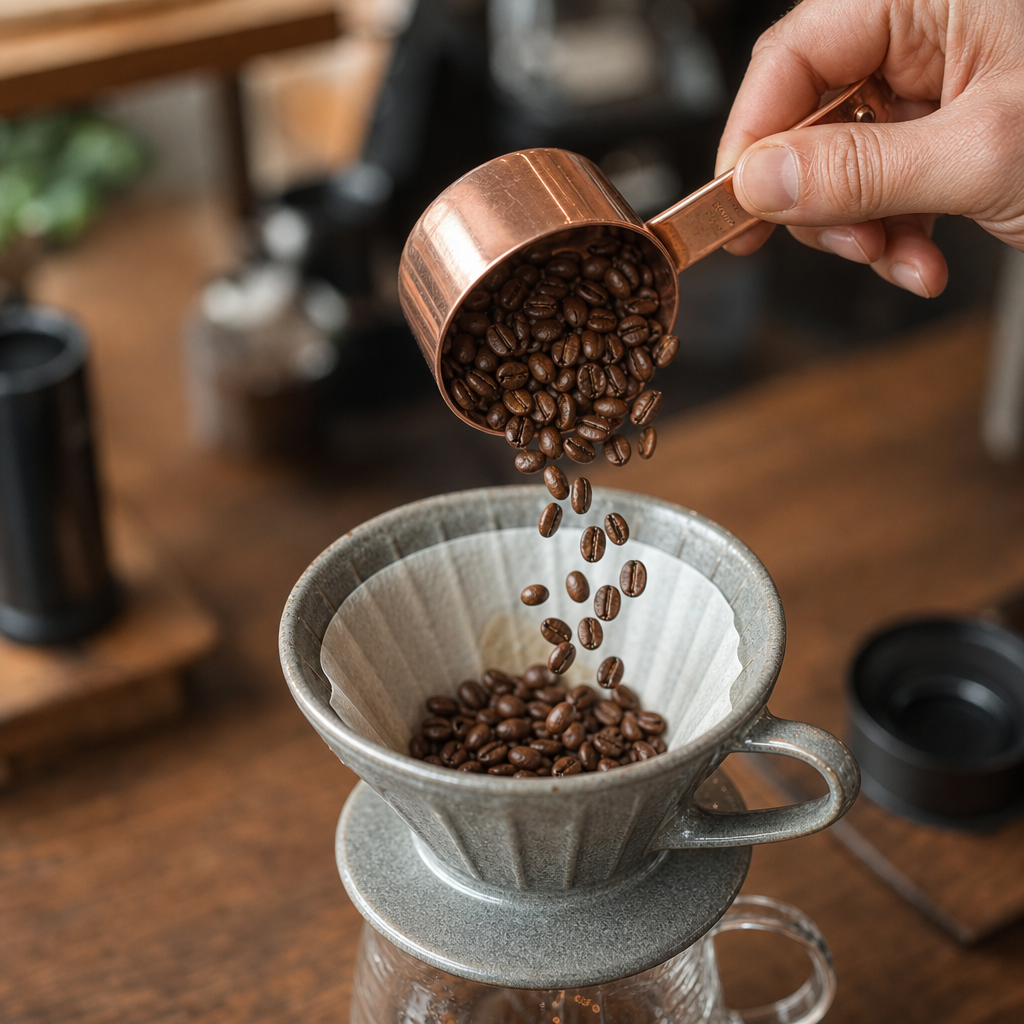
Pour-over methods like V60 or Chemex, and immersion methods like AeroPress and cafetiere, use lower temperatures and longer contact times. This gentler extraction brings out the delicate aromatic compounds in single origin coffee that espresso either destroys or distorts. If you own a decent hand grinder and a V60, a Farrer's single origin is worth the investment. If your home setup is an espresso machine with a basic grinder, start with one of Farrer's house blends and dial it in properly before exploring single origins.
Milk-based drinks follow the same logic. A flat white or latte requires a coffee with enough body and sweetness to come through oat or dairy milk. Most single origins lack that structural weight. A house blend built for espresso will hold its character in a milk drink; a light-roast Ethiopian single origin will largely disappear into it.
Choosing for a Cafe or Hospitality Business
For trade customers, the calculus is different from a home buyer's. A cafe running 200 to 400 covers a day needs a house espresso blend that any trained barista can dial in quickly, that performs consistently across machine temperature variation during a busy service, and that tastes the same in January as it does in August. Single origin coffee cannot reliably deliver on those three requirements at the same time.
Farrer's trade proposition is well-suited to this context. Their next-day dispatch on qualifying orders removes the friction of stock planning uncertainty, and their heritage formulations mean the blends have been tested across decades of commercial use. A common mistake among new cafe owners is choosing a visually appealing specialty single origin for their house espresso because it signals quality to customers. It does signal quality, but it also creates extraction instability, seasonal flavour shifts, and a coffee that confuses customers who ordered the same drink last week and got a noticeably different result.
When single origins work in a trade setting
Single origins have a clear role as a rotating guest coffee or as a filter bar offering for specialty-focused venues. Running a guest espresso single origin alongside a reliable house blend gives customers choice and signals that the cafe takes coffee seriously, without compromising the consistency of the core menu. Farrer's seasonal single origin offerings work well in this role because the quality baseline is controlled and the provenance story is genuine.
The best coffee blends UK roasters offer for trade are ones with enough transparency about origin composition that a head barista can anticipate how the blend will respond to seasonal variations in water hardness or machine calibration. Farrer's blend documentation supports that level of informed use.
Frequently Asked Questions
What is the difference between a house blend and a signature blend?
The terms are often used interchangeably, but there is a meaningful distinction. A house blend refers to any blend a roaster creates as part of their regular offering, designed for consistency and broad appeal. A signature blend typically implies a specific, named formulation that represents the roaster's core identity and philosophy. Farrer's signature blends sit in this second category, reflecting two centuries of accumulated roasting knowledge rather than a generic combination of available origins.
Can I use a single origin coffee in an espresso machine?
Yes, but it requires significantly more dialling-in time than a house blend. Single origin coffees, particularly light-roast African varieties, have narrower extraction windows under espresso pressure. If you enjoy the process of fine-tuning your espresso and have a quality burr grinder, a single origin espresso can be exceptional. If you want a reliable shot with minimal adjustment, a house blend is the better choice for espresso.
Why do Farrer's house blends taste consistent when my supermarket coffee changes seasonally?
Farrer's actively adjusts blend ratios and sourcing when a specific origin's harvest characteristics shift. That process of compensating for natural variability is the core skill of a professional blender. Supermarket coffees are often blended to a cost target rather than a flavour target, which means when an origin becomes expensive, it is replaced rather than compensated for. The result is a product that shifts in flavour without any communication to the buyer.
Is single origin coffee always more expensive than a house blend?
Generally yes, particularly for traceable, limited-harvest lots from specific farms or cooperatives. The traceability premium reflects genuine costs: smaller lot sizes, more complex logistics, and the inability to substitute cheaper origins when prices rise. That said, a well-crafted house blend from a premium roaster like Farrer's will cost more than a commercial single origin, because quality of sourcing and roasting matters more than the origin category label.
How do I know which Farrer's blend is right for my cafetiere?
For a cafetiere, look for blends described as medium roast with notes of chocolate, nuts, or caramel. These roast levels produce the body and sweetness that suit immersion brewing, and they are forgiving of the coarser grind size that a cafetiere requires. Farrer's range includes options specifically suited to this method. Avoid very light roast single origins in a cafetiere, as the lack of roast development combined with coarse grinding will produce a thin, sour cup.
Do Farrer's single origin coffees come with harvest and farm information?
Farrer's is transparent about provenance on their single origin offerings. For home enthusiasts and trade buyers who want to communicate the sourcing story to customers, this traceability is a genuine differentiator. It is also consistent with the broader shift in specialty coffee toward verifiable claims rather than vague quality signals, which matters increasingly to informed buyers across both home and hospitality sectors.
Which type of coffee do you currently buy most often, and has this breakdown changed how you think about your next order? Share your experience in the comments or reach out via Farrer's social channels.
References
- Statista: Coffee market data and consumer trends in the United Kingdom and globally
- Forbes: Analysis of the premium and specialty food and drink market for small business owners
- Specialty Coffee Association: Standards, research, and producer communications on coffee traceability and quality
- UK Food Standards Agency: Guidance on food labelling, provenance claims, and traceability requirements for UK businesses
- Ahrefs Blog: Research on consumer search behaviour and content strategy in the food and beverage sector


