

Most coffee blends get named after founders, animals, or abstract concepts that mean nothing to the person drinking them.
The Westmorland Blend is different. Named after the historic county that cradles the Lake District, it carries over two centuries of roasting knowledge in every bag. If you have ever wondered why this particular dark roast coffee keeps appearing in the social feeds of serious coffee drinkers across the UK, the answer is not marketing. It is the cup itself.
Table of Contents
- Quick Takeaways
- What Is the Westmorland Blend?
- Two Centuries of Roasting Heritage
- The Flavour Profile: What to Expect
- Why Dark Roast Coffee Divides Opinion
- How the Westmorland Blend Compares
- Brewing the Westmorland Blend at Home
- Trade and Hospitality Use Cases
- Frequently Asked Questions
- References
Quick Takeaways
| Key Insight | Explanation |
|---|---|
| Named after a real place | Westmorland is the historic county encompassing the Lake District, giving the blend a genuine geographic identity rather than a marketing label. |
| Dark roast, not burnt | The Westmorland Blend is roasted to a deep profile that develops richness without tipping into the acrid bitterness that defines lower-quality dark roasts. |
| Over 200 years of refinement | Farrer's has been roasting in the Lake District since the early 1800s, and the Westmorland Blend reflects accumulated generational knowledge in its recipe. |
| Works across multiple brew methods | The blend performs consistently in espresso machines, cafetières, and filter setups, making it practical for home enthusiasts and trade buyers alike. |
| Hand-packed after roasting | Farrer's hand-packs all coffee post-roast, ensuring freshness is locked in without the delay that comes from automated large-batch packing lines. |
| Popular with milk-based drinks | The bold flavour holds its character through milk steaming, making it a reliable choice for lattes and flat whites in busy cafe environments. |
| Reflects Lake District provenance | The Westmorland Blend positions Farrer's as a distinctly British roaster with a defined regional identity, differentiating it from London-centric specialty brands. |
What Is the Westmorland Blend?
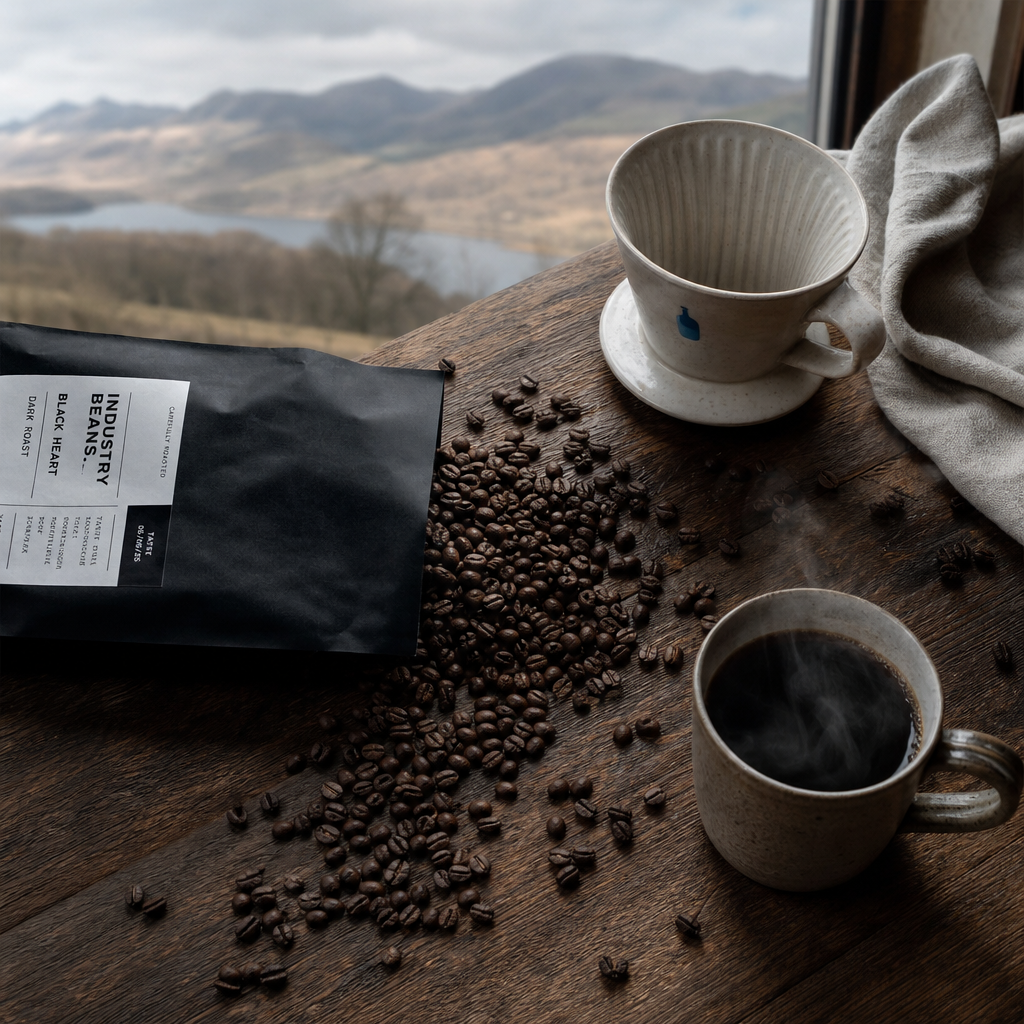
The Westmorland Blend is Farrer's flagship dark roast coffee, and it has held that position through generations of customers who return to it without hesitation. It is not a seasonal offering or a limited release. It is the coffee that people associate with Farrer's when they think of Lake District coffee done properly.
The blend is built around carefully selected beans that respond well to a deep roast. Where many roasters push beans dark to mask defects or to hit a price point, Farrer's uses the dark roast process to draw out natural richness rather than paper over weaknesses. The result is a cup with body, warmth, and a low-acid finish that feels deliberate, not accidental.
In practice, customers who discover the Westmorland Blend through social media often describe it as the first dark roast that has not tasted bitter to them. That is not coincidence. It is the direct result of roasting expertise built over two centuries.
Two Centuries of Roasting Heritage
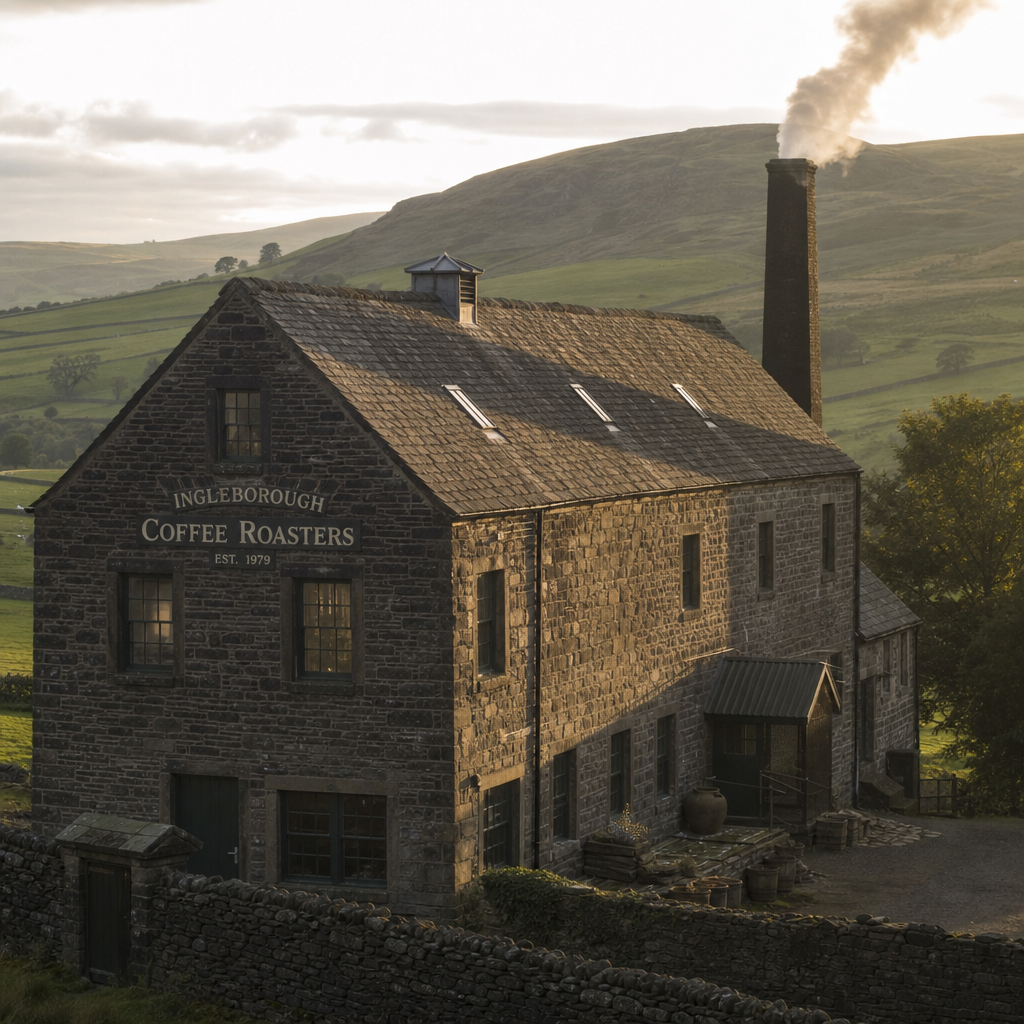
Farrer's began roasting coffee in the early 1800s in Kendal, a market town at the southern edge of the Lake District. That makes it the UK's oldest coffee roaster, a fact that shapes everything about how the Westmorland Blend exists today.
What 200 Years Actually Means for a Blend
It means that the recipe has survived multiple generations of roastmasters, each of whom could have changed it and chose not to in ways that mattered. The core character of the Westmorland Blend, its depth, its low acidity, its behaviour under heat, reflects hundreds of thousands of kilograms of roasted coffee and the feedback loops that came from real customers over real decades.
This is not a story Farrer's invented for a brand refresh. The Kendal roastery has been a physical presence in the Lake District for over 200 years. Local trade customers, hospitality businesses, and home enthusiasts in the region have been buying from Farrer's through multiple generations of their own families.
The Lake District as a Roasting Environment
Roasting in the Lake District is not a romantic detail. The region's clean air, relatively stable humidity, and distance from urban industrial pollution create conditions that many smaller roasters consider genuinely favourable for developing clean flavour profiles. Farrer's has roasted in this environment for its entire existence, and the Westmorland Blend reflects that consistency of place as much as consistency of recipe.
"Heritage in food and drink is only meaningful if the product itself still justifies the story. When it does, the provenance becomes part of the flavour." - Dr. Joanna Blythman, British food writer and critic
The Westmorland Blend justifies its story. Order a bag, brew it once, and the heritage narrative stops being context and becomes experience.
The Flavour Profile: What to Expect
A common mistake when describing dark roasts is to reach for words like "bold" and "intense" without being specific. Those words describe almost any dark coffee on the market. The Westmorland Blend has a more specific character worth understanding before you brew it for the first time.
Body and Texture
The Westmorland Blend produces a full-bodied cup with a slightly syrupy mouthfeel when brewed correctly. This is most noticeable in a cafetière or as a straight espresso. The body does not feel watery at any point in the cup, which is a quality marker that separates well-sourced dark roasts from cheap ones.
Flavour Notes and Finish
Expect dark chocolate, toasted nuts, and a subtle earthiness that anchors the flavour without making the cup heavy. The finish is clean and low in acidity, which is why the blend tends to suit people who find brighter single-origin roasts too sharp for everyday drinking.
The low acidity also makes it a strong choice for people who are sensitive to stomach irritation from coffee. Dark roasting reduces certain acidic compounds, and the Westmorland Blend's profile sits comfortably at the gentler end of the dark roast spectrum.
Performance with Milk
The blend holds its flavour well through steamed milk, which matters enormously for anyone making lattes, flat whites, or cappuccinos. Lighter roasts often disappear beneath full-fat milk; the Westmorland Blend does not. This is one reason it is a popular choice for cafes and hospitality businesses who need a consistent espresso base across their entire drinks menu.
Pro tip: For the best expression of the Westmorland Blend's chocolate notes, try it as a double espresso with no sugar before you add milk. The full flavour profile is clearest straight, and it will help you understand what you are tasting when milk enters the equation.
Why Dark Roast Coffee Divides Opinion
Dark roast coffee has taken a beating from the specialty coffee world over the past decade. The argument against it, put simply, is that roasting beans dark destroys the nuanced fruit and floral notes that single-origin green beans carry from their growing region. That argument is not wrong in isolation.
Where it becomes an oversimplification is when it treats all dark roasts as equivalent. A poorly executed dark roast is burnt and flat. A well-executed one, using beans selected for their behaviour under heat, is rich, complex, and deeply satisfying in a way that a lightly roasted Ethiopian natural often is not to a drinker who values body over brightness.
The Specialty Coffee Bias Against Dark Roasts
The specialty coffee industry, represented by organisations like the Specialty Coffee Association, has historically awarded higher scores to lighter roasts that preserve origin characteristics. According to the SCA's grading framework, a coffee scoring above 80 points qualifies as "specialty grade", and the scoring criteria favour delicate flavour complexity over roast-driven character.
This creates a bias where roasters competing for awards and critical attention push lighter and lighter. Farrer's has never chased that particular metric. The Westmorland Blend exists to be drunk and enjoyed every day, not to score well in a competitive cupping room.
Why Everyday Drinkers Prefer Dark Roasts
Research from the British Coffee Association consistently shows that the majority of UK coffee drinkers prefer a robust, full-bodied cup over lighter, more acidic profiles. The Westmorland Blend serves that preference without apologising for it. Farrer's understands its audience: people who want great coffee, not a certificate.
How the Westmorland Blend Compares
To understand where the Westmorland Blend sits in the market, it helps to place it alongside the alternatives a customer might consider when searching for dark roast coffee in the UK.
| Blend or Roaster | Roast Character | Key Differentiator |
|---|---|---|
| Westmorland Blend (Farrer's) | Deep dark roast with chocolate and earthy notes, low acidity, full body | Over 200 years of Lake District heritage, hand-packed for freshness, strong milk performance |
| Lavazza Qualità Rossa | Medium-dark blend, balanced bitterness, suited to espresso | Mass-produced Italian brand with broad supermarket distribution; lacks regional or artisanal identity |
| Origin Coffee House Blend | Medium roast with brighter acidity, more fruit-forward | Cornwall-based specialty roaster focused on single-origins and lighter profiles; appeals to a different palate |
The Westmorland Blend occupies a specific position: serious quality without the pretension that often accompanies specialty-positioned brands. It is not trying to be Lavazza's volume, and it is not trying to be Origin's light-roast specialist. It exists in its own category, defined by place, heritage, and a very clear flavour goal.
Pro tip: If you have tried Lavazza or other supermarket dark roasts and found them flat or overly bitter, the Westmorland Blend is worth trying as a direct comparison. Order the same grind size you would use for your existing coffee and brew them side by side in a cafetière. The difference in body and aftertaste is immediately apparent.
Brewing the Westmorland Blend at Home
The Westmorland Blend is forgiving across brewing methods, but some approaches bring out its best qualities more reliably than others. In practice, grind consistency and water temperature are the two variables that determine whether this coffee lands well or falls flat.
Cafetière (French Press)
This is the method that shows off the Westmorland Blend's body most clearly. Use a coarse grind, water at 93 to 95 degrees Celsius, and a four-minute steep. Do not press aggressively. Let the plunger fall slowly and pour immediately. The resulting cup will be thick, dark, and deeply aromatic.
Espresso Machine
The blend was designed with espresso performance in mind. Use a dose of 18 to 19 grams in a double basket, target a 25 to 30 second extraction at nine bars, and aim for a 36 to 38 gram yield. The shot should pour with a rich, dark-red crema. If you get pale or thin crema, your grind is likely too coarse.
Filter and Pour Over
The Westmorland Blend works in filter, though it expresses differently here than in espresso or cafetière. The body remains present, but the chocolate notes become more subtle. Use a medium-coarse grind and a four-minute total brew time. This method suits people who want the blend's character at a lower intensity, particularly as an afternoon coffee.
Trade and Hospitality Use Cases
For cafes and hospitality businesses, the Westmorland Blend solves a real problem: finding a consistent espresso base that works across an entire drinks menu without needing constant recipe adjustments as the bag depletes.
The blend's low acidity and strong milk performance make it suitable for everything from a straight americano to a flavoured latte. It does not require baristas to adjust their technique significantly between drink types, which matters enormously in a busy service environment where speed and consistency must coexist.
Farrer's trade programme also includes barista training and roastery experience days, which means hospitality buyers are not just purchasing bags of coffee. They are accessing knowledge about how to use the product correctly. This is a meaningful distinction when compared to purchasing a commodity dark roast from a national distributor who offers no training support.
Next-day dispatch on orders over £35 means that a small cafe running low on beans on a Monday can be restocked by Tuesday without the kind of supply gap that forces menu compromises. In practice, that reliability is worth more to trade buyers than marginal differences in cost per kilogram.
Frequently Asked Questions
What coffee beans are used in the Westmorland Blend?
Farrer's selects beans that respond well to a deep roast and develop rich, low-acid flavour under heat. The specific blend composition is a proprietary recipe refined over Farrer's 200-plus year roasting history, but the primary flavour markers are dark chocolate, toasted nut, and earthy warmth.
Is the Westmorland Blend suitable for people sensitive to coffee acidity?
Yes. Dark roasting reduces certain acidic compounds in coffee beans, and the Westmorland Blend sits at the lower end of the acidity scale for dark roasts. Many customers who find lighter roasts or medium-roast blends uncomfortable to drink regularly report that the Westmorland Blend causes significantly less stomach irritation.
Can the Westmorland Blend be used for cold brew?
It can, and the result is a particularly smooth cold brew because the low acidity translates well to the cold extraction process. Use a ratio of 1 gram of coarsely ground coffee per 8 to 10 ml of cold water, steep in the fridge for 12 to 18 hours, and strain before serving. The chocolate notes become very pronounced at cold temperatures.
How does the Westmorland Blend differ from Farrer's other blends?
The Westmorland Blend is Farrer's darkest and most full-bodied blend. Other blends in the range offer lighter roast profiles with higher acidity and more pronounced fruit notes. The Westmorland is the right choice for drinkers who prioritise body, warmth, and low bitterness over brightness or complexity driven by origin characteristics.
Why is Farrer's described as the UK's oldest coffee roaster?
Farrer's has been roasting coffee continuously from the Lake District since the early 1800s, making it older than any other surviving commercial coffee roaster in the United Kingdom. The business has operated from Kendal, Cumbria throughout that period, giving it an unbroken regional identity that no other UK roaster can match.
Is the Westmorland Blend available in different grind sizes?
Yes. Farrer's offers the Westmorland Blend ground for espresso, cafetière, and filter, as well as in whole bean format for customers who grind at home. Buying whole bean and grinding fresh immediately before brewing will produce the best flavour, as ground coffee degasses and loses aromatic compounds more quickly than whole beans.
Have you tried the Westmorland Blend as part of a home tasting session alongside another dark roast? Share what you found in the comments below.
References
- Specialty Coffee Association official site covering coffee grading standards and roast research
- BBC Food resource covering British food and drink heritage including artisanal producers
- Statista data on UK coffee consumption trends and consumer preference by roast type
- Forbes coverage of premium food and beverage market trends and heritage brand positioning
- UK Food Standards Agency resource covering food labelling, provenance claims, and product standards


