

Most people assume you need a £500 espresso machine to get a proper espresso at home. That assumption is wrong, and it costs coffee lovers both money and good cups every day. You can absolutely brew espresso at home using affordable tools, provided you understand what espresso actually is and which methods come closest to replicating it.
This guide covers the practical methods that work, the ones that disappoint, and the coffee choices that make or break the result, drawing on over two centuries of roasting knowledge from the Lake District.
Table of Contents
- Quick Takeaways
- What Espresso Actually Is
- Moka Pot Coffee: The Closest Machine-Free Method
- AeroPress for Espresso-Style Concentrate
- Choosing the Right Coffee for Home Espresso
- Comparison of Home Espresso Methods
- Grind Size and Water Temperature: The Variables That Matter
- Common Mistakes When Brewing Espresso at Home
- Frequently Asked Questions
- References
Quick Takeaways
| Key Insight | Explanation |
|---|---|
| Moka pots produce espresso-style coffee at 1-2 bar pressure | This is lower than the 9 bar of a professional machine, but delivers a concentrated, bold cup that works well for most home applications including milk drinks. |
| AeroPress can reach near-espresso concentration with the right technique | Using a fine grind, 15-18g of coffee, and inverted brewing method produces a thick, rich concentrate that behaves like espresso in milk-based drinks. |
| Grind freshness matters more than grind size alone | Pre-ground coffee loses 60% of its aroma within 15 minutes of grinding according to the Specialty Coffee Association. Always grind immediately before brewing. |
| Water temperature should sit between 90C and 96C | Boiling water at 100C over-extracts and creates bitterness. Let boiled water rest for 30-45 seconds before use. |
| Espresso roast profiles suit concentrated methods best | Medium-dark to dark roasts with low acidity perform well in moka pots and AeroPress, producing the chocolatey, caramel notes associated with Italian-style espresso. |
| Dose consistency is the single most controllable variable | Using a kitchen scale to measure 15-18g of coffee every time eliminates one of the biggest sources of inconsistency in home brewing. |
| Freshly roasted coffee produces measurably better results | Coffee roasted within 2-4 weeks and rested for 5-7 days post-roast gives the best extraction and crema-like texture in machine-free methods. |
What Espresso Actually Is
Espresso is not a type of coffee bean or a roast level. It is a brewing method defined by forcing hot water at 9 bars of pressure through finely ground, compacted coffee in 25-30 seconds. The result is a concentrated 25-35ml shot with a layer of emulsified oils on top called crema.
Understanding that definition matters because it explains why no machine-free method will produce a technically perfect espresso. What these methods do produce is a concentrated coffee that shares the intensity, body, and flavour profile of espresso closely enough to work in lattes, flat whites, and Americanos. For most home drinkers, that is more than sufficient.
The distinction also helps you choose the right tool. If you want a single straight shot with thick crema, a moka pot with high-quality beans gets you very close. If you want something to pour over ice or mix into a coffee-based drink, the AeroPress concentrate method is arguably superior. Knowing what you are aiming for before you buy anything saves money and frustration.
Moka Pot Coffee: The Closest Machine-Free Method
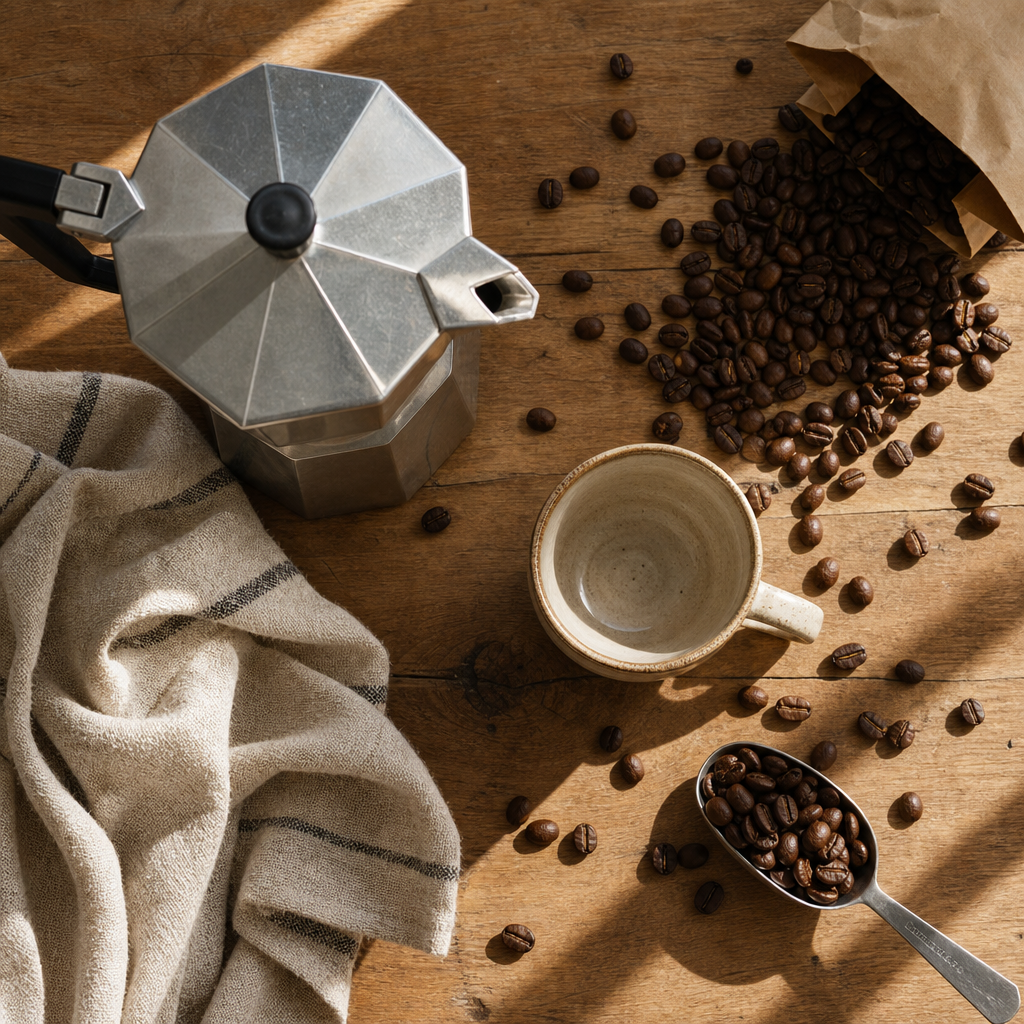
The moka pot is a stovetop brewer invented in Italy in 1933 by Alfonso Bialetti. It works by heating water in a sealed lower chamber until steam pressure pushes hot water upward through a basket of coffee grounds and into an upper collection chamber.
The pressure generated is roughly 1-2 bar, compared to 9 bar in an espresso machine, but the result is concentrated, intense, and full-bodied in ways that no pour-over or French press can replicate.
Moka pot coffee brewed correctly produces around 60-90ml of strong coffee from a standard 3-cup pot, which is close to a double espresso in volume and concentration. The key word is correctly, because moka pots are routinely misused in ways that produce bitter, harsh results.
Step-by-Step Moka Pot Technique
Fill the lower chamber with hot water (not cold) to just below the pressure valve. Using pre-heated water reduces total brew time and prevents the coffee from cooking on the heat rather than brewing. Fill the filter basket with finely ground coffee, level it off without tamping, and assemble the pot firmly.
Place it on medium-low heat. A common mistake is using high heat to speed things up. High heat causes the water to rush through too fast, under-extracting the coffee and creating bitterness from uneven temperature. You want a slow, steady flow that takes about 4-5 minutes from start to finish.
Remove the pot from the heat as soon as you hear a gurgling, hissing sound. That noise means the lower chamber is nearly empty and steam is passing through. Continuing to heat past that point burns the coffee in the upper chamber. Run the base under cold water immediately to stop the extraction.
Pro tip: Preheat your moka pot water in a kettle rather than filling it cold. This reduces the time the grounds spend on heat before water reaches them, producing a noticeably cleaner and sweeter cup.
AeroPress for Espresso-Style Concentrate
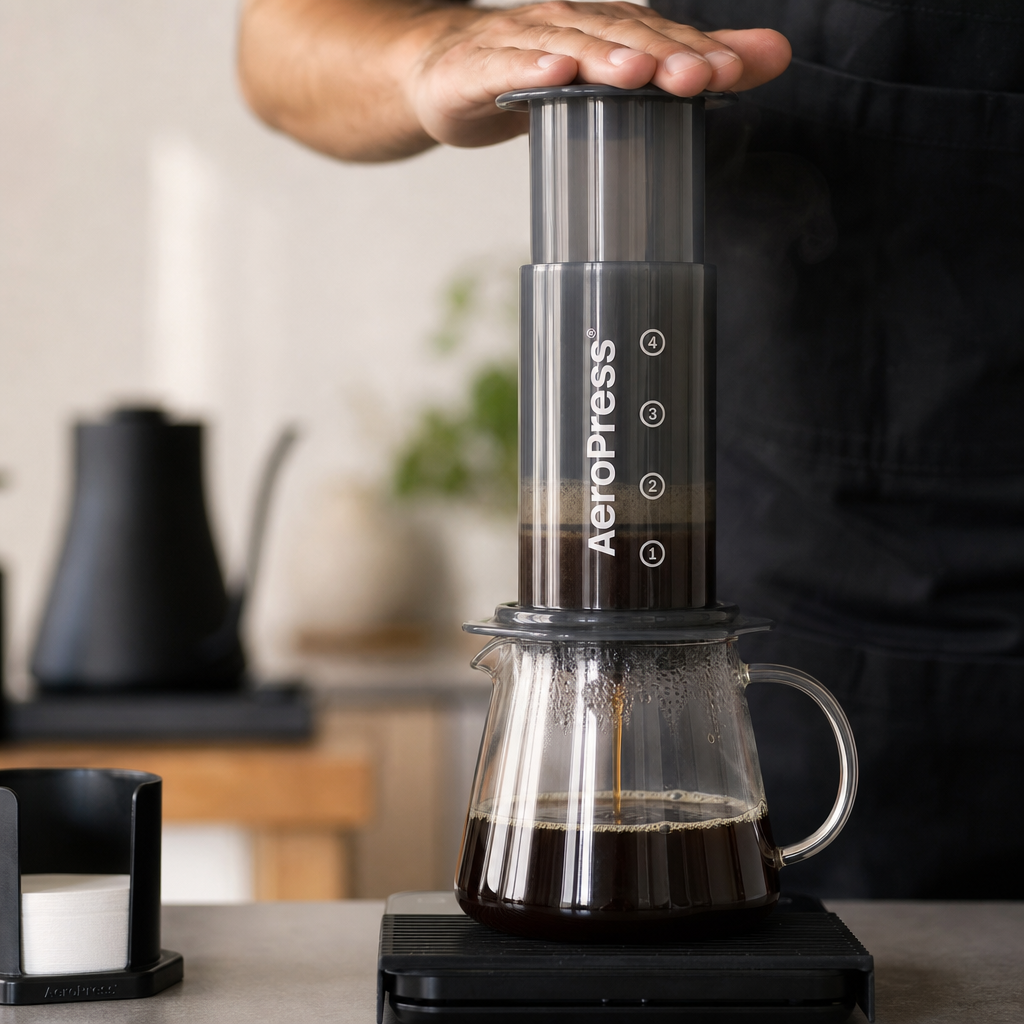
The AeroPress was designed in 2005 by Alan Adler, an engineer at Stanford University. It uses manual air pressure, similar in principle to a syringe, to push water through coffee grounds in 60-90 seconds. Standard AeroPress recipes produce a smooth, clean cup, but with specific adjustments, the AeroPress produces an espresso-style concentrate that genuinely works as a base for milk drinks.
For concentrate, use 18g of finely ground coffee (slightly coarser than moka pot grind) and 40ml of water at 94C. Press slowly over 45-60 seconds. The result is roughly 30-35ml of strong, thick coffee with very low bitterness thanks to the shorter extraction time and the paper filter removing the fine particles that cause harshness in other methods.
Inverted Method for Better Control
The inverted AeroPress method involves assembling the plunger end first, so the chamber sits upside down during brewing. This allows the coffee to steep in contact with the water for a controlled time before pressing, giving you more control over extraction strength. Steep for 45 seconds, then flip the assembled press onto your cup and press over 30 seconds.
In practice, the inverted method produces a more consistent result for espresso-style concentrate because you control exactly when extraction starts and stops. The standard method begins extraction immediately as water contacts the grounds, giving you less control over the final strength.
Pro tip: For a quick iced espresso drink, press your AeroPress concentrate directly over a glass filled with ice. The ice immediately chills and slightly dilutes the concentrate, producing a smooth iced coffee without the bitterness that cooling hot coffee usually creates.
Choosing the Right Coffee for Home Espresso
The method matters, but the coffee you put into it matters more. A well-executed moka pot brew with stale, poorly sourced coffee will always be worse than a slightly imperfect brew with excellent freshly roasted beans. This is where many home brewers spend money on equipment and save money on coffee, which is exactly the wrong priority order.
For moka pot and AeroPress concentrate methods, look for a medium-dark or dark roast with tasting notes that reference chocolate, caramel, nuts, or brown sugar. These flavour compounds extract well under the lower pressure and shorter contact times of machine-free methods. High-acidity light roasts tend to taste sharp and sour when brewed in a moka pot because the extraction profile does not suit their character.
Farrer's has been roasting coffee in the Lake District since 1819, which means their blends are developed with a practical understanding of how different roast levels behave across different brewing methods.
Their espresso blends are specifically crafted for concentrated brewing, making them a natural fit for moka pot and AeroPress use. For espresso coffee UK buyers who want consistency, sourcing from a roaster that still hand-packs and dispatches fresh is a significant advantage over supermarket bags that may have sat in distribution for weeks.
Coffee for espresso-style brewing should be ground fresh. If you do not own a burr grinder, order pre-ground specifically for espresso or moka pot (ask your roaster to grind it for you at the correct setting). Blade grinders produce inconsistent particle sizes that cause uneven extraction and bitter cups, regardless of how good the beans are.
Comparison of Home Espresso Methods
| Method | Pressure Produced | Best For |
|---|---|---|
| Moka Pot | 1-2 bar | Classic Italian-style strong coffee, milk drinks, Americanos. Produces good body and crema-like texture with the right grind. Affordable entry point at £15-£40. |
| AeroPress (Concentrate Method) | 0.35-0.75 bar (manual) | Smooth espresso-style concentrate with low bitterness. Highly versatile for iced drinks and milk-based recipes. Best for experimenters. Cost: £30-£40. |
| Manual Espresso Lever (e.g. Flair, Cafelat Robot) | 6-9 bar | Closest to true espresso without a pump machine. Produces genuine crema. Higher cost at £100-£300 but produces café-quality results with practice. |
The manual lever espresso category deserves a mention because it sits between a traditional machine and a simple stovetop brewer. Devices like the Flair Espresso or Cafelat Robot use manual arm pressure to generate 6-9 bar of pressure, which is close enough to professional machine output to produce genuine crema. They require more technique and cost more than a moka pot, but for coffee enthusiasts who genuinely want machine-free espresso rather than just an espresso-style brew, they represent the most honest option.
Grind Size and Water Temperature: The Variables That Matter
Two variables cause the majority of failed home espresso attempts: grind size that is wrong for the method, and water that is too hot. Both are fixable without spending money on new equipment.
Getting Grind Size Right for Each Method
For a moka pot, you want a grind finer than filter coffee but slightly coarser than professional espresso. If you grind too fine, the water cannot push through the basket and you get either no extraction or a bitter, over-extracted result from slow water contact. A medium-fine grind, similar to fine table salt in texture, is the practical starting point.
For AeroPress concentrate, a medium-fine grind works well, though you can go slightly coarser than moka pot grind because the inverted steep method compensates for coarser grounds by extending contact time. Experiment in half-step increments on your grinder rather than making large jumps.
Water Temperature and Why Boiling Ruins Coffee
Water at 100C extracts bitter compounds from coffee faster than it extracts the desirable oils and sugars. The Specialty Coffee Association recommends 90-96C as the optimal range for espresso-style brewing. For home use, boil your kettle and wait 30-40 seconds before pouring or filling your moka pot lower chamber. That simple pause drops water temperature into the correct range without any thermometer needed.
"Water quality is just as important as temperature. Hard water with high mineral content suppresses sweetness and can cause scale build-up in your equipment. Filtered water produces noticeably cleaner cups in blind tastings." - Specialty Coffee Association, Water Quality Standards for Coffee Brewing
If you are in a hard water area (most of England sits in a moderately to very hard water zone), using a basic filtered jug for your brew water will produce a measurable improvement in flavour clarity. This is a free or near-free upgrade that most home brewers overlook in favour of buying more equipment.
Common Mistakes When Brewing Espresso at Home
A common mistake is tamping the coffee in a moka pot basket. Unlike a professional espresso machine where tamping is essential to create resistance against 9 bar of pressure, tamping in a moka pot restricts the low-pressure water flow and causes over-extraction or no extraction at all. Fill the basket and level it off with a finger, nothing more.
Another consistent error is using the wrong coffee-to-water ratio. Many people use far too little coffee in an attempt to make bags last longer. For a moka pot, the basket should be comfortably full without being packed down. For AeroPress concentrate, 1g of coffee per 2-2.5ml of water is the starting ratio. Going weaker than this produces thin results that no amount of technique will rescue.
Buying coffee labelled simply as "espresso roast" from a supermarket without checking the roast date is also a costly error. Coffee has a functional shelf life of around 4-6 weeks post-roast for whole beans and about 2 weeks for ground coffee. Much of the coffee on supermarket shelves in the UK was roasted months before you purchase it. Sourcing directly from an active UK roaster like Farrer's, which dispatches next-day on orders over £35, means you are working with coffee that is genuinely fresh rather than aged product dressed in attractive packaging.
Finally, cleaning your equipment inconsistently produces rancid oil residue that adds bitterness to every subsequent brew. Rinse your moka pot after every use and disassemble it fully once a week. For the AeroPress, the plunger and chamber should be rinsed immediately after each use. Coffee oils oxidise quickly and the residue is detectable even in small quantities.
Frequently Asked Questions
Can a moka pot actually replace an espresso machine for daily use?
For most home drinkers, yes. The moka pot produces a concentrated, intense coffee that works well straight, over ice, or as a base for milk-based drinks. It will not produce the same crema or exact flavour complexity as a 9-bar machine, but the difference matters far less than the difference between fresh and stale coffee. If you are making one or two cups per day for personal use, a quality moka pot and freshly roasted beans will serve you well without the cost or maintenance of a machine.
What grind size should I use for a moka pot?
Medium-fine is the practical target. Think finer than filter coffee (which feels like coarse sand) but slightly coarser than professional espresso grind (which feels like fine powder). If your brew tastes bitter and takes a very long time to come through, grind coarser. If it tastes weak and watery, grind finer. Make one adjustment at a time and keep all other variables constant so you can isolate the effect.
Is AeroPress coffee actually espresso?
No. AeroPress, even using the concentrate method, does not produce true espresso because the pressure is too low and the extraction time is too short to produce genuine crema from emulsified oils. What it does produce is a thick, strong, low-bitterness concentrate that is genuinely useful as an espresso substitute in drinks and recipes. For most purposes, the practical difference is small. For purists, manual lever devices like the Flair Espresso come closer to authentic espresso without a pump machine.
Which coffee blends work best for machine-free espresso brewing?
Medium-dark to dark roasts with low acidity and tasting notes of chocolate, caramel, or nuts extract best in moka pots and AeroPress. Single-origin light roasts developed for filter brewing tend to taste sharp and underdeveloped in concentrated methods because their flavour profile requires longer, lower-intensity extraction. Purpose-built espresso blends from specialist roasters, roasted fresh and rested 5-7 days post-roast, will outperform any supermarket option regardless of roast level.
How important is water quality when brewing espresso at home?
Very important and consistently underrated. Hard water suppresses sweetness, emphasises bitterness, and causes scale build-up in moka pots that eventually affects performance. The Specialty Coffee Association's water quality standards recommend total dissolved solids between 75-250 parts per million for coffee brewing. Most tap water in England exceeds 250 ppm in hard water areas. A basic filtered jug reduces hardness enough to produce a noticeable difference in cup clarity and sweetness.
How much coffee should I use in an AeroPress for espresso-style concentrate?
Use 15-18g of coffee with 40-50ml of water at 93-95C. This produces a 25-35ml concentrate after pressing through the paper filter. The ratio of roughly 1g of coffee per 2.5-3ml of water is tighter than standard AeroPress recipes and is what creates the espresso-like concentration. Starting at 15g and adjusting upward is easier than starting strong and trying to compensate for over-extraction.
Have you tried brewing espresso-style coffee at home using a moka pot or AeroPress? Share what worked and what surprised you in the comments.
References
- Peer-reviewed research on coffee extraction chemistry and brewing variables
- UK coffee consumption statistics and home brewing market data
- Forbes coverage of the specialty coffee market and home brewing trends
- UK Food Standards Agency guidance on food and beverage preparation quality
- The Guardian's food and drink journalism on home coffee culture in the UK


