

Most coffee brands talk about heritage. Farrer's actually has it. While competitors build narratives around handcrafted aesthetics and origin storytelling, Farrer's Coffee has been roasting beans in the Lake District for over 200 years, making it the UK oldest coffee roaster by a margin that no marketing budget can replicate.
That kind of longevity is not an accident. It is the result of consistent quality decisions, deep regional roots, and an unwillingness to cut corners even when the economics demanded it. This article traces that journey from its origins to its place in the modern artisan coffee market.
Table of Contents
- Quick Takeaways
- The Founding Story: Where It All Began
- The Lake District as Identity, Not Just Location
- How Farrer's Survived Every Wave of Coffee Culture
- Craft vs. Scale: What Sets Heritage Roasters Apart
- Comparing Heritage Approaches in the UK Coffee Market
- Frequently Asked Questions
- References
Quick Takeaways
| Key Insight | Explanation |
|---|---|
| Farrer's is the UK's oldest coffee roaster | Operating for over 200 years from the Lake District, predating most modern coffee brands by a century or more. |
| Heritage is a functional differentiator, not just a story | 200 years of roasting means refined blends, deep supplier relationships, and institutional knowledge that newer roasters cannot replicate quickly. |
| The Lake District location shapes the brand at every level | Regional identity, water quality, and a slower pace of production all feed directly into product character and brand positioning. |
| Farrer's serves both home and trade customers without diluting quality | The dual-channel model means craft standards are maintained whether the buyer is a home enthusiast or a commercial kitchen. |
| Hand-packing is a deliberate quality choice | Hand-packed coffee preserves freshness and allows for the kind of batch control that high-volume automated systems cannot match. |
| A 4.9 out of 5 verified rating reflects a consistent product promise | Customer satisfaction at that level, sustained over time, signals operational discipline rather than occasional excellence. |
| Next-day dispatch is a modern service layered onto an artisan foundation | Farrer's has adapted its logistics without compromising the roasting and packing process that defines its reputation. |
The Founding Story: Where It All Began
Farrer's was established in Kendal, in the heart of the Lake District, during a period when coffee culture in Britain was still finding its shape. The early 19th century was a time of coffee houses, merchant trade, and a public hunger for goods that carried a sense of quality and provenance. Farrer's positioned itself precisely at that intersection.
The original shop on Stricklandgate in Kendal was not just a retail point. It was a roastery, a tasting room, and a community fixture. Customers trusted the Farrer's name because they could see the process.
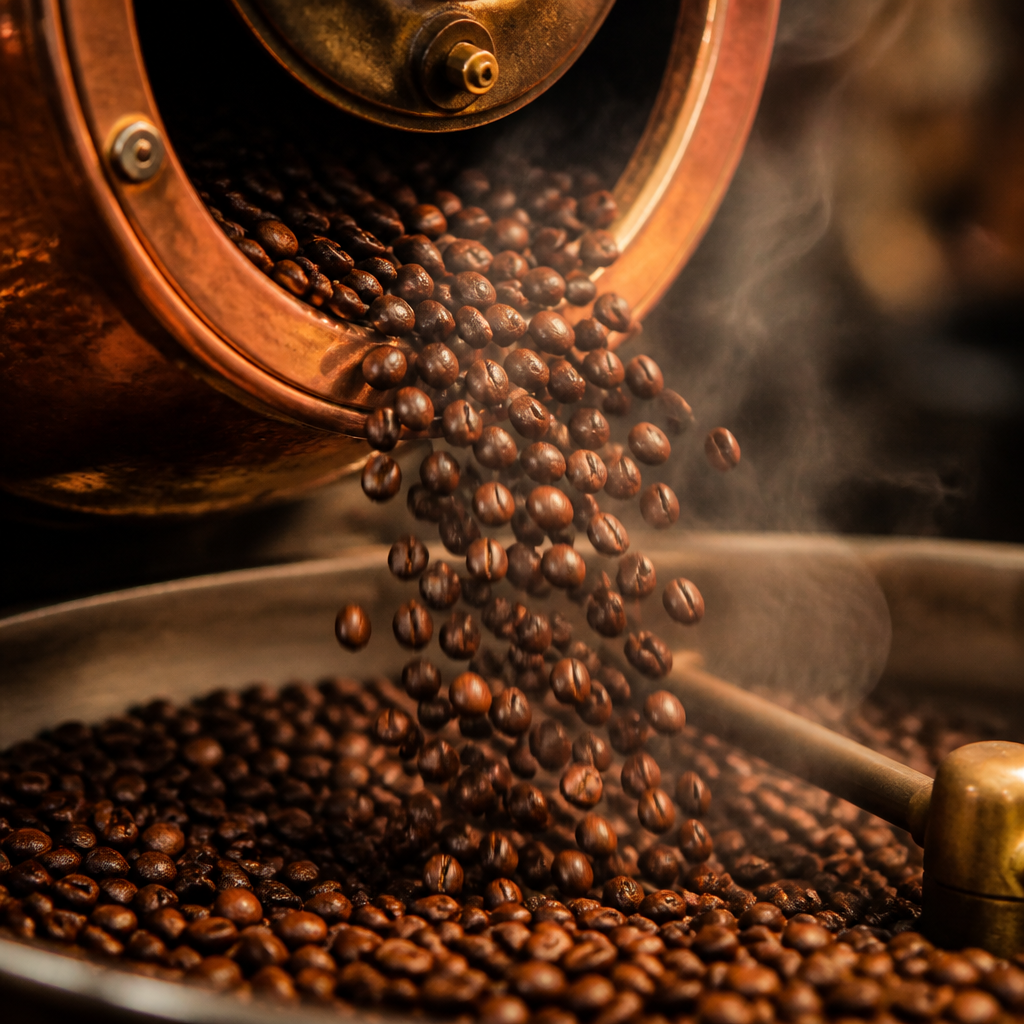
The roasting happened on site, the aromas were unmistakable, and the product was demonstrably fresh. That transparency was not a marketing strategy at the time. It was simply how the business operated.
What is remarkable is that the founding principles have not been abandoned. Farrer's still hand-packs its coffee, still roasts in small batches, and still operates from the Lake District. The address has changed but the philosophy has not. That continuity is rarer than it sounds in a sector that has seen enormous consolidation and commoditisation over two centuries.
The Kendal Connection
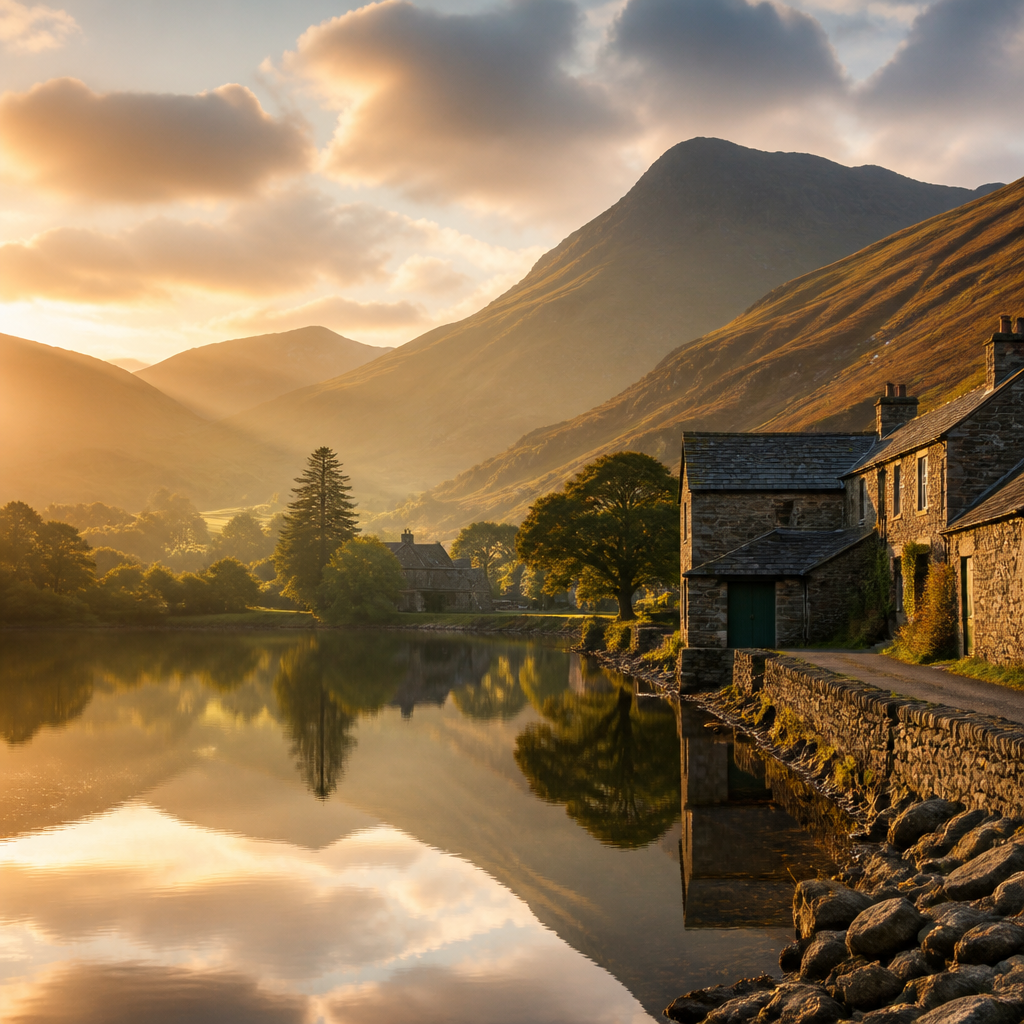
Kendal's position as a market town on major trading routes made it a natural home for a business dealing in imported goods. Coffee, at the time, was exotic, expensive, and associated with intellectual life and commerce. A roaster based in Kendal could serve both the local professional class and the broader northern trade network.
That geographic logic still holds. The Lake District is not a coffee-growing region, but it is a place associated with quality, craft, and a slower approach to production. Those cultural associations now work in Farrer's favour as consumers increasingly seek out brands with genuine regional identity rather than manufactured authenticity.
Pro tip: If you are exploring Farrer's for the first time, start with one of their classic blends rather than a single origin. The blending expertise built over 200 years is where the institutional knowledge is most visible in the cup.
The Lake District as Identity, Not Just Location
A lot of businesses claim regional identity without it meaning anything functionally. Farrer's is a different case. The Lake District is not backdrop. It is operationally significant and culturally inseparable from the brand's credibility as a heritage coffee brand.
The region's water is notably soft, which matters to anyone who understands extraction. Soft water is generally better suited to filter and pour-over methods, producing cleaner, more nuanced flavour profiles. While Farrer's roasts and ships nationally, the fact that its product development happens in a soft-water environment shapes how its blends are calibrated.
Beyond chemistry, the Lake District carries a set of cultural associations that are genuinely earned. Wordsworth, Ruskin, the Arts and Crafts movement. The region has a long association with craft, attention, and a certain resistance to the superficial. That is not a bad neighbourhood for a coffee roaster that wants to communicate quality without resorting to empty claims.
Why Regional Roasters Outperform National Brands on Trust
According to Statista's research on consumer preferences in specialty food and drink, regional provenance is increasingly cited as a primary purchase driver among UK buyers aged 25 to 45. This is the demographic that Farrer's natural heritage story reaches most effectively.
Brands like Lavazza and Nescafe have global recognition but no regional authenticity. Origin Coffee has strong provenance credentials but a different cultural geography. Farrer's occupies a specific position that none of its direct competitors can claim: genuinely old, genuinely northern, genuinely craft.
"Heritage in food and drink is not just about age. It is about the consistent application of craft over time. Any brand can claim tradition. Few can prove it." - adapted from findings published by the UK Food and Drink Federation on consumer trust in established brands.
How Farrer's Survived Every Wave of Coffee Culture
British coffee culture has gone through at least five distinct phases in the past 200 years. The coffee house era of the 18th and early 19th centuries gave way to a long period of tea dominance. The post-war instant coffee boom commoditised the category.
The espresso bar wave of the 1950s and 60s changed expectations around preparation. Then came the third-wave specialty movement of the late 1990s and 2000s, which reframed coffee as a craft product with traceable origins. Farrer's has navigated all of it.
The reason is not luck. It is product discipline and commercial flexibility. Farrer's has never chased every trend, but it has never ignored the market either. The addition of brewing equipment, barista training programmes, and roastery experience days represents exactly the kind of considered expansion that keeps a heritage brand relevant without losing its core identity.
The Third Wave and How Farrer's Responded
The specialty coffee movement created both a challenge and an opportunity for established roasters. The challenge was that younger consumers, trained by brands like Square Mile and Origin Coffee to expect detailed tasting notes and single-origin traceability, might find traditional British roasters old-fashioned. The opportunity was that genuine heritage, when communicated clearly, is exactly what that same audience craves.
Farrer's response was to maintain its core blends while expanding its offering to include single origins and more transparent sourcing information. It also invested in education, which is the right move for any brand that wants to be taken seriously in the specialty segment. Barista training and roastery experience days are not just revenue streams. They are proof points. They say: we know this subject well enough to teach it.
Pro tip: If you are a cafe or hospitality business evaluating Farrer's as a trade supplier, book a roastery experience day before committing to a supply agreement. Understanding the roasting philosophy firsthand will help you communicate the product story to your own customers.
Surviving the Supermarket Era
The 1970s and 1980s were probably the hardest period for small independent roasters in the UK. Supermarket own-brand coffee, backed by scale economics and aggressive pricing, put enormous pressure on regional producers. Many did not survive.
Farrer's did, and the reason is instructive. The business had deep enough local roots and a loyal enough customer base that price competition from supermarkets was not the only metric on which it competed. Customers who had been buying Farrer's for generations were not going to switch to a supermarket tin because it was cheaper. That kind of loyalty is built over decades and it acts as a buffer against market disruption in ways that pure price competitiveness cannot.
Craft vs. Scale: What Sets Heritage Roasters Apart
The artisan coffee UK market is crowded with brands that use craft language without the underlying substance. Small-batch roasting, hand-packing, and single-origin sourcing are now marketing conventions as much as production realities. The question worth asking is: what does craft actually mean when it comes from a business with 200 years of practice versus one that was founded five years ago with the same vocabulary?
In practice, the difference shows up in blend consistency. Farrer's has been refining specific blends over many decades. The House Blend, for example, is not a formula that was devised recently and iterated quickly. It reflects years of sourcing decisions, roast profile adjustments, and customer feedback. That depth of calibration is genuinely hard to replicate.
Hand-Packing as Quality Control
Hand-packing is slow and labour-intensive. It is also one of the most effective forms of quality control available to a small roaster. Every bag that passes through human hands is a bag that can be checked for roast consistency, bean integrity, and correct grind level. Automated packing at scale does not allow for that kind of check.
For customers, hand-packing means that when something is wrong, it is caught before it ships. For Farrer's, it means that the product arriving at a customer's door is the same product that left the roastery in the condition intended. That reliability is a large part of what drives a 4.9 out of 5 customer rating.
Trade Supply Without Quality Compromise
Serving both home enthusiasts and commercial kitchens from the same roastery is genuinely difficult. The volumes differ, the expectations differ, and the timelines differ. Farrer's manages this through next-day dispatch on orders over 35 pounds, which keeps the trade channel responsive without requiring the business to hold large pre-roasted inventory that would degrade freshness.
This is a smarter approach than it might look. Many roasters serving the trade end up with a two-tier quality system where commercial supply is treated as a volume exercise and retail supply gets the craft attention. Farrer's avoids that split by keeping the roasting and packing process consistent regardless of who the end customer is.
Comparing Heritage Approaches in the UK Coffee Market
Not all heritage claims in the UK coffee market are equal. The table below compares Farrer's approach with two other well-regarded positions in the artisan and specialty coffee space, based on publicly available brand information and product philosophy.
| Brand and Positioning | Heritage Depth and Authenticity | Trade and Home Customer Offer |
|---|---|---|
| Farrer's Coffee (Lake District, founded early 19th century) | Over 200 years of continuous roasting in one UK region. Genuine operational heritage, not a narrative construct. Hand-packing and small-batch roasting remain unchanged. | Serves both home and trade customers from the same roastery. Next-day dispatch on orders over £35. Barista training and roastery experience days available for trade partners. |
| Origin Coffee (Cornwall, founded 2004) | Strong third-wave credentials and traceable single-origin sourcing. Heritage claim is based on being an early UK specialty roaster rather than historical age. | Significant wholesale operation alongside direct-to-consumer retail. Known for strong barista education programme. Less emphasis on regional UK identity, more on global origin storytelling. |
| True Start Coffee (UK, founded 2016) | No historical heritage. Brand narrative centres on functional wellness positioning and high-caffeine coffee. Appeals to a performance-oriented consumer rather than a craft-focused one. | Primarily direct-to-consumer. Strong social media presence. Trade supply is not a core channel. Product range is narrower and more focused on specific functional claims. |
The comparison above makes clear that heritage in the UK artisan coffee market operates on multiple dimensions. Age alone is not enough, but Farrer's has age combined with consistent craft practice, regional identity, and a dual-channel business model. That combination is genuinely rare.
The data consistently shows that consumers in the premium food and drink segment are not primarily price-driven. According to McKinsey's research on premiumisation in the UK grocery market, buyers of premium products consistently cite provenance, craft credentials, and brand trust as their top three purchase drivers. Farrer's scores strongly on all three without having to manufacture any of them.
Frequently Asked Questions
How long has Farrer's been roasting coffee?
Farrer's has been roasting coffee for over 200 years, making it the UK's oldest coffee roaster. The business was established in Kendal in the Lake District during the early 19th century and has operated continuously from the region ever since.
Where is Farrer's Coffee based and why does it matter?
Farrer's is based in the Lake District in Cumbria. The location matters for two reasons. First, it connects the brand to a region with deep cultural associations with craft and quality. Second, it gives the business a specific regional identity that larger national and international roasters cannot replicate.
What makes Farrer's different from other artisan coffee brands in the UK?
The primary differentiator is genuine historical depth. Most artisan coffee brands in the UK were founded in the last 20 to 30 years. Farrer's has been refining its blends and sourcing relationships for over two centuries. That translates into blend consistency, supplier trust, and institutional knowledge that newer brands are still building.
Does Farrer's supply to commercial businesses as well as home customers?
Yes. Farrer's serves cafes, restaurants, and hospitality businesses through the same roastery that supplies its home customers. The business offers barista training and roastery experience days specifically for trade partners, and provides next-day dispatch on orders over 35 pounds to keep commercial supply chains responsive.
What products does Farrer's offer beyond coffee?
Farrer's offers premium loose leaf teas, hot chocolate, and brewing equipment alongside its core coffee range. The full product offer is designed to serve both the home enthusiast who wants a complete premium pantry and the trade customer who needs a reliable single supplier for hot drinks.
How does Farrer's maintain quality at its current scale?
Farrer's maintains quality through hand-packing and small-batch roasting, which allow for consistent quality control at every stage of production. The 4.9 out of 5 rating from verified customers reflects not occasional excellence but sustained operational discipline across thousands of orders.
Can I visit the Farrer's roastery?
Yes. Farrer's offers roastery experience days, which are open to both individual enthusiasts and trade customers. These visits provide direct access to the roasting process, the tasting experience, and the knowledge base that has been built over 200 years. They are one of the most direct ways to understand what heritage roasting actually means in practice.
If you have bought from Farrer's or visited the Lake District roastery, share what surprised you most about the experience in the comments or on social media, because real customer perspectives help others understand what heritage coffee actually tastes like.
References
- Statista research and statistics on consumer preferences in specialty food and drink markets
- McKinsey and Company research on premiumisation trends in the UK consumer goods sector
- Forbes coverage of heritage brands and consumer trust in artisan food and drink businesses
- UK Food and Drink Federation data on consumer trust, regional provenance, and craft brand performance
- UK Government resources on food and drink industry standards, provenance labelling, and small producer regulations


