

Most people pick a coffee blend the same way they pick a paint colour: grab something that looks about right and hope for the best. The result is a cupboard full of mediocre coffee and a vague sense that something is missing.
With over 200 years of roasting experience behind every bag, Farrer's has developed a range of freshly roasted coffee blends precise enough to match almost any palate. This guide walks you through how to read your own taste preferences, understand roast profiles, and match them to the right Farrer's blend. No guesswork, no generic advice.
Table of Contents
- Quick Takeaways
- Why Your Blend Choice Matters More Than Your Brewing Method
- Understanding Roast Levels: What the Labels Actually Mean
- Reading Your Own Taste Profile Before You Buy
- Farrer's Blend Breakdown: Matching Flavour to Lifestyle
- How Your Brewing Method Changes Which Blend Works Best
- Single Origin vs. Blend vs. Espresso Roast: A Direct Comparison
- Why Freshness and Hand-Packing Change the Equation
- Choosing Blends for Trade and Hospitality Use
- Frequently Asked Questions
- References
Quick Takeaways
| Key Insight | Explanation |
|---|---|
| Roast level drives flavour more than origin | A dark-roasted Ethiopian bean will taste less fruity than a light-roasted Brazilian. Match roast to your preference first, then consider origin. |
| Freshly roasted coffee needs 48-72 hours of rest | Right off the roaster, CO2 release disrupts extraction. Farrer's hand-packed bags arrive at optimal rest time with next-day dispatch from the Lake District. |
| Espresso blends are not just for espresso machines | A well-structured espresso blend like a dark roast from Farrer's works beautifully in a stovetop moka pot, producing a rich, full-bodied cup. |
| Acidity is not a flaw | Bright acidity signals high-quality arabica beans. If you find it unpleasant, move one roast level darker rather than avoiding quality beans entirely. |
| Blends offer consistency; single origins offer discovery | For daily drinking, a carefully crafted blend like those from Farrer's provides consistent flavour across harvests. Single origins reward careful, attentive brewing. |
| Grind size is the last mile of blend performance | Even the best specialty coffee flavour guide cannot save a perfect blend ground too coarse for espresso or too fine for a cafetiere. Match grind to method first. |
| Trade buyers need different criteria than home enthusiasts | Cafes and restaurants should prioritise blends with wide extraction tolerance and consistent flavour under commercial machine pressure, not just taste in isolation. |
Why Your Blend Choice Matters More Than Your Brewing Method
The specialty coffee world has spent years obsessing over brewing equipment. Precision kettles, pressure profiling machines, refractometers. In practice, though, the single biggest variable in your cup is the coffee itself. A mediocre blend brewed perfectly still produces a mediocre cup. A well-chosen, freshly roasted coffee blend brewed in a basic cafetiere will outperform an expensive espresso machine running stale supermarket beans every single time.
According to Statista, the UK coffee market was valued at over 1.4 billion GBP in retail sales in 2023, with premium and specialty segments growing fastest. That growth is driven by home enthusiasts who have graduated from capsule machines and are now asking the right question: which coffee should I actually be buying?
A common mistake is treating blend selection as a one-time decision. Your taste preferences evolve. Your brewing setup changes. The season affects what you want in your cup. Farrer's range is broad enough that you can move through it as your palate develops, which is something a single-SKU brand simply cannot offer.
Understanding Roast Levels: What the Labels Actually Mean
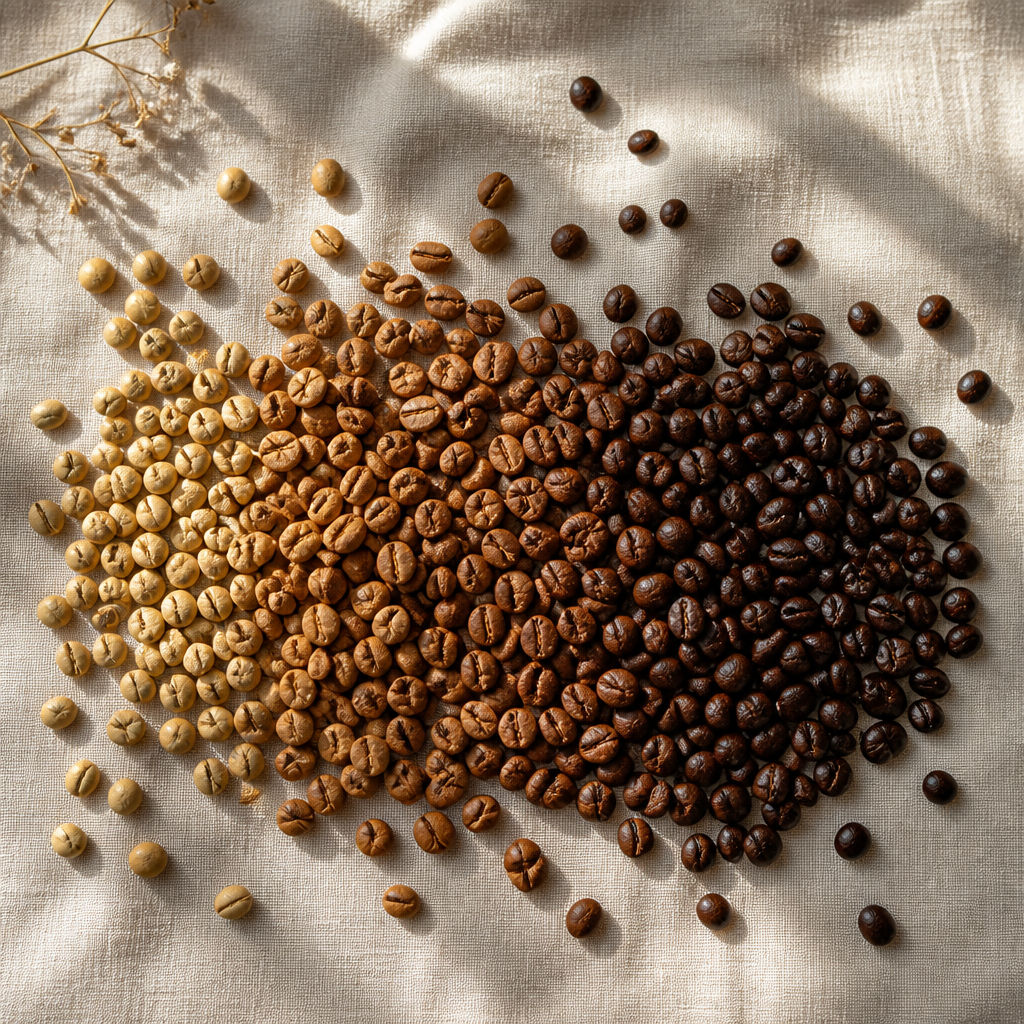
Roast level is the most misunderstood variable in choosing the best coffee blends UK buyers can find. Dark does not mean stronger in caffeine. Light does not mean weak. These terms describe what heat does to flavour compounds inside the bean during roasting.
Light Roasts: Clarity and Origin Character
Light roasts preserve the bean's original characteristics. You get pronounced fruit notes, floral aromas, and bright acidity. These work best with slower brew methods: pour-over, Aeropress, or a quality filter machine. If you have been drinking dark roasts for years and find light roast coffee thin or sour, the issue is almost always grind size or water temperature, not the coffee itself.
Medium Roasts: The Reliable Middle Ground
Medium roasts balance origin character with roast-developed sweetness. Caramel, chocolate, and mild fruit notes coexist cleanly. This is where most well-crafted blends sit, and with good reason. They are forgiving across a range of brew methods and accessible to both new and experienced drinkers. For anyone starting to explore how to choose a coffee blend, a medium roast is the correct starting point.
Dark Roasts: Body and Bittersweet Depth
Dark roasts develop roasty, bittersweet flavours with low acidity and heavy body. For espresso-based drinks with milk, dark roasts cut through effectively. The caution here is buying dark roasts from roasters who use darkness to hide low-quality beans. Farrer's dark roasts start with quality green coffee, which means the darkness adds character rather than masking defects.
Pro tip: If you drink your coffee black, prioritise medium or light roasts where flavour complexity is most apparent. If you drink lattes or flat whites daily, a medium-dark or dark roast will hold its character better against the milk.
Reading Your Own Taste Profile Before You Buy
Most people describe their coffee preference as either strong or not strong. That is not a useful framework. Strength in coffee refers to concentration, which is controlled by your coffee-to-water ratio, not by the blend. What you actually want to identify is your flavour preference.
Four Questions That Reveal Your Taste Profile
First: do you prefer your coffee black or with milk? Black drinkers benefit from blends with clean, complex flavour. Milk drinkers need body and roast character that survives dilution. Second: do you enjoy dark chocolate or milk chocolate? This maps almost directly to roast preference. Third: does orange juice give you pleasure or irritation? If the latter, you want lower-acidity blends. Fourth: do you want coffee to taste like coffee, or do you enjoy discovering unexpected notes like blueberry or caramel?
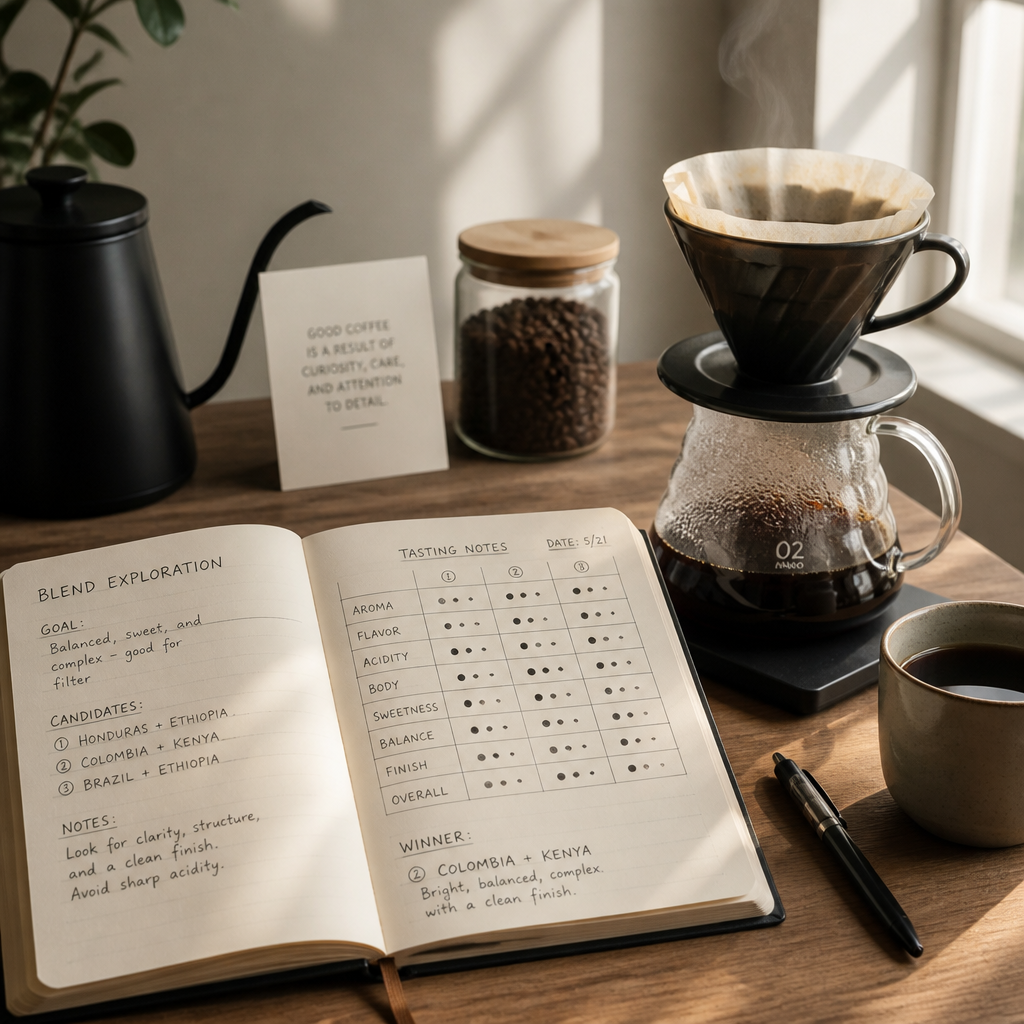
These four answers will narrow a range of dozens of blends down to two or three genuine contenders. The specialty coffee flavour guide framework only works when you start with honest self-assessment.
"The difference between a great cup and a disappointing one usually comes down to choosing a coffee that matches how you actually drink, not how you think you should drink." - Specialty Coffee Association, Consumer Education Series
Farrer's Blend Breakdown: Matching Flavour to Lifestyle
Farrer's range covers the full spectrum from light, single-origin filter coffees to rich, dark espresso blends. The hand-packed approach means each bag is filled and sealed with attention to grind consistency and freshness, something that industrial packing lines genuinely cannot replicate at scale.
For the Filter Coffee Drinker
If you use a cafetiere, pour-over, or filter machine every morning, you want a blend or single origin that rewards a slower extraction. Look for Farrer's lighter-roast offerings with fruit-forward or nutty tasting notes. These are the coffees that make filter brewing worth the effort. A common mistake filter drinkers make is buying an espresso blend and wondering why their cafetiere tastes flat and harsh.
For the Espresso and Milk-Based Drinker
If your mornings involve a home espresso machine or moka pot, you need a blend built for pressure extraction. Farrer's espresso blends are developed specifically to produce a rich crema and hold their character when milk is added. The Lake District roastery's approach to blending means these are not simply dark-roasted commodity beans. They are constructed for a specific flavour outcome under extraction pressure.
For the Adventurous Specialty Drinker
If you have already worked through the standard range and want something more specific, Farrer's curated single origins are where the discovery happens. These are seasonal, so availability varies, but the traceability and flavour clarity of a well-sourced single origin is genuinely different from any blend. This is also where the 200-year roasting heritage becomes meaningful: knowing which origins work and which do not is accumulated knowledge, not guesswork.
Pro tip: Order two different Farrer's blends at once and brew them side by side using the same method on the same day. The direct comparison accelerates your understanding of what you actually prefer far faster than buying and finishing one bag at a time.
How Your Brewing Method Changes Which Blend Works Best
The same coffee bean behaves differently under different extraction conditions. This is not a minor variation. A blend optimised for espresso extraction at 9 bars of pressure will taste thin and underextracted in a cafetiere. A delicate light-roast single origin designed for pour-over will taste muddy and bitter if you force it through an espresso machine.
Cafetiere and French Press
Immersion brewing is forgiving of medium to dark roasts with coarse grinds. It emphasises body and mouthfeel. Medium roast blends with chocolate or nutty notes shine here. Avoid very light roasts in a cafetiere; the lack of pressure means delicate fruit notes often fail to develop fully.
Espresso Machine
Pressure extraction concentrates every flavour, including defects. Use blends specifically developed for espresso. Farrer's espresso-designated blends are constructed to balance sweetness, body, and a controlled bitterness under machine pressure. Medium-dark to dark roasts are standard here for good reason: they produce reliable crema and flavour stability shot after shot.
Aeropress and Pour-Over
These methods reward complexity and origin character. Light to medium roasts with clear tasting note descriptions work best. The hand-packed coffee UK advantage is particularly relevant here: freshness is critical for these methods, and Farrer's next-day dispatch on orders over 35 GBP means the coffee arriving at your door has not been sitting in a warehouse for weeks.
Single Origin vs. Blend vs. Espresso Roast: A Direct Comparison
Understanding the structural differences between these three categories helps you make a confident purchase rather than a hopeful one. The table below cuts through the marketing language.
| Category | Best For | Key Consideration |
|---|---|---|
| Single Origin (e.g., Ethiopian Yirgacheffe) | Filter brewing, black coffee drinkers, flavour exploration | Seasonal availability; flavour varies harvest to harvest. Requires attentive brewing to get the best from it. |
| House or Signature Blend (multi-origin) | Daily drinking, consistent flavour across the year, any brew method | Blended to compensate for seasonal variation. The roaster's expertise determines quality. Farrer's 200-year blending knowledge is a direct advantage here. |
| Espresso Roast Blend | Espresso machines, moka pots, milk-based drinks | Optimised for pressure extraction. Not a good fit for filter methods. Look for medium-dark or dark designations with notes of chocolate, caramel, or nut. |
Why Freshness and Hand-Packing Change the Equation
The specialty coffee industry talks about freshness constantly, but few buyers understand the specific mechanism. When coffee is roasted, it releases CO2 over the following days and weeks. In the first 48 to 72 hours, this off-gassing is intense enough to interfere with extraction.
After two to three weeks in an unsealed environment, oxidation begins to flatten the volatile compounds that carry flavour. The optimal window is roughly 5 to 30 days post-roast, depending on the roast level and storage conditions.
Most supermarket coffee is 6 to 18 months post-roast by the time it reaches your cup. That is not a small difference. The data consistently shows that freshness is the single most impactful variable that home brewers can control without changing any equipment.
Farrer's hand-packed approach addresses this directly. Each bag is filled by hand in the Lake District roastery, which means the time between roasting and packing is measured in hours, not days. Combined with next-day dispatch on orders over 35 GBP, the freshness advantage over supermarket alternatives is significant and measurable in the cup.
Pro tip: Store your Farrer's coffee in its original bag with the one-way valve intact, in a cool, dark cupboard. Do not freeze whole beans unless you are buying in bulk and sealing portions airtight. Refrigeration introduces moisture and odour absorption, both of which damage flavour.
Choosing Blends for Trade and Hospitality Use
Cafes, restaurants, and hospitality businesses have different requirements from home enthusiasts. The primary concerns are consistency across high-volume service, extraction tolerance across variable staff skill levels, and flavour that works across a full menu of milk-based and black coffee drinks.
What Trade Buyers Should Prioritise
A blend with wide extraction tolerance is more valuable in a commercial setting than one with a narrow, precise sweet spot. Farrer's trade offering is built around this reality. A blend that requires laboratory-level precision to taste good is a liability in a busy morning service. A blend that is forgiving across a range of dose, grind, and extraction time variations is an asset.
Volume and Consistency
The supply chain matters as much as the flavour profile for trade buyers. Farrer's serves trade customers across the UK and can supply at the volumes a working cafe requires. The consistency of a house blend, built to compensate for seasonal variation in individual origins, is why most trade buyers choose blends over single origins for espresso service. Single origins work brilliantly as a featured filter option on a menu, creating a premium tier without disrupting your main espresso offering.
Farrer's barista training programmes add a layer of value that competitors focused purely on product supply do not offer. A supplier who helps your staff extract the best from their product is a partner, not just a vendor.
Frequently Asked Questions
What is the best coffee blend in the UK for someone switching from capsule machines?
Start with a medium roast blend from Farrer's designed for espresso or moka pot use. The flavour profile will be familiar to capsule drinkers, with chocolate and caramel notes, but the freshness and complexity will be immediately noticeable. Avoid jumping straight to light roasts if capsule coffee is your reference point; the difference in acidity and body can feel jarring before your palate adjusts.
How do I know if a coffee blend is genuinely freshly roasted?
Look for a roast date on the packaging, not just a best-before date. A roast date tells you when the coffee was made. Farrer's hand-packed bags carry this transparency. A best-before date alone tells you very little about how fresh the coffee actually is. If no roast date is present, treat the coffee as potentially stale.
Is specialty coffee actually worth the price difference over supermarket coffee?
Yes, and the gap is larger than most people expect. Specialty coffee is graded above 80 points on the Specialty Coffee Association scale, which excludes the defective beans, processing inconsistencies, and stale stock that characterise most commercial-grade supermarket coffee. The price per cup difference is often smaller than people assume once you account for the dose required: fresher, denser beans require less coffee to achieve the same extraction strength.
Can I use a dark espresso blend in a cafetiere?
You can, but the result will lack the clarity and complexity the blend was designed to produce. Dark espresso blends are optimised for short, concentrated extraction under pressure. In a cafetiere, the longer immersion time will emphasise bitterness and mask the sweetness that makes a dark espresso blend worthwhile. If cafetiere is your primary method, choose a medium roast blend instead.
How often should I be trying new Farrer's blends versus sticking with one?
If you drink coffee daily, try a new blend every four to six weeks. This is enough time to understand a blend properly across different batches and brewing conditions, but frequent enough to actively develop your palate. A common mistake is dismissing a blend after one or two brews before the technique for that specific coffee has been dialled in. Give each new coffee at least a week of regular brewing before making a judgement.
What makes Farrer's different from other UK specialty coffee roasters?
The combination of 200 years of continuous roasting heritage and a genuinely hands-on production approach is not something that can be manufactured quickly. Competitors like Origin Coffee and True Start Coffee offer quality products, but Farrer's institutional knowledge of blending, built across two centuries of Lake District roasting, produces a consistency and depth of range that newer roasters are still working towards. The 4.9 out of 5 customer rating from verified buyers reflects that.
Have you tried more than one Farrer's blend, and did switching roast levels or origins change how much you enjoy your daily cup? Share your experience in the comments.
References
- Statista: UK coffee market size, retail value data, and specialty segment growth trends
- Forbes: Consumer behaviour shifts in the premium food and drink market, including artisanal coffee purchasing patterns
- Specialty Coffee Association: Green coffee grading standards, the 80-point quality threshold definition, and consumer education resources
- UK Food Standards Agency: Food labelling requirements including date marking guidance relevant to roast date and best-before distinctions
- Ahrefs Blog: Search demand data and consumer research methodology useful for understanding how UK buyers search for premium coffee products


