

If you brew a pod every morning without thinking about it, the question probably hasn't crossed your mind: what would your coffee taste like if you made it properly?
The UK is one of the world's largest pod markets, estimated to account for around 11% of global pod sales by value, and yet the rise of speciality coffee has made it harder to ignore what pod machines consistently get wrong: the coffee inside those capsules is rarely fresh, almost never traceable, and costs significantly more per cup than any competent alternative. Single serve coffee UK drinkers now have more practical, high-quality options than ever before, and most of them are cheaper, less wasteful, and considerably better tasting. This guide lays out the honest case for ditching the pod machine, and what to replace it with.
Table of Contents
- Quick Takeaways
- The Real Cost of Pod Coffee
- The Environmental Problem You Cannot Ignore
- Why Freshly Roasted Coffee Changes Everything
- Pod Machine Alternatives That Actually Work
- Comparison: Brewing Methods for Single-Serve Coffee at Home
- Making the Switch: What You Actually Need
- Frequently Asked Questions
- References
Quick Takeaways
| Key Insight | Explanation |
|---|---|
| Pod coffee costs more per cup | UK pod prices typically run between 35p and £1 per cup. Good quality freshly roasted ground coffee brews for considerably less, often under 30p per cup. |
| Pods generate enormous waste | The UK is estimated to use around 9.2 billion coffee pods annually. Most end up in landfill because specialist recycling infrastructure is limited and inconvenient. |
| Freshness is the biggest quality factor | Coffee degrades rapidly after roasting. Pod coffee is pre-ground and sealed weeks or months before you brew it. Freshly roasted whole beans are in a different category entirely. |
| The AeroPress solves the convenience objection | The most common defence of pod machines is speed. An AeroPress brews a full-bodied single cup in under two minutes, which is genuinely competitive with most pod machines. |
| A hand grinder is the single best upgrade | Grinding fresh before each brew preserves volatile aromatics that pre-ground coffee loses within days. An entry-level hand grinder costs less than a month of pods. |
| Artisan coffee at home is not complicated | Pour-over and AeroPress brewing require no special skill after the second or third attempt. The learning curve is real but short. |
| Pod machine alternatives suit trade buyers too | Hospitality businesses relying on pod machines for back-of-house use are paying a premium for convenience they don't need. Filter systems and proper espresso setups cost less per serve at volume. |
The Real Cost of Pod Coffee
The price of pod convenience is easy to underestimate when you are buying boxes of twelve at a time. But the arithmetic is not flattering. Pod coffee in the UK typically costs between 35p and £1 per cup, depending on brand and capsule type. Quality freshly roasted ground coffee, brewed through a V60, AeroPress, or moka pot, generally falls well below that, even when you account for a better-quality bean.
The equipment cost argument also favours manual brewing over the long run. Even a basic branded pod machine runs at around £100 or more upfront, whereas a capable manual brewing kit can be assembled for a fraction of that. Spread your savings across a year's worth of daily cups and the difference becomes hard to justify, especially when the cup quality from freshly roasted ground coffee is higher.
There is also the question of what you are actually paying for inside the pod. Pre-ground coffee begins losing aromatic compounds within days of grinding. By the time a pod reaches your kitchen, the coffee inside may have been ground and sealed weeks or months earlier. The convenience premium you are paying buys you a cup that is, by any objective measure, stale. That is not a minor quibble. Freshness is the single most important variable in coffee quality, and pod machines structurally prevent you from achieving it.
Pro tip: If you currently spend £1 per pod per day, switching to a quality freshly roasted blend at 25p per cup saves you over £270 per year. That is enough to buy a very good grinder and still come out ahead in twelve months.
The Environmental Problem You Cannot Ignore
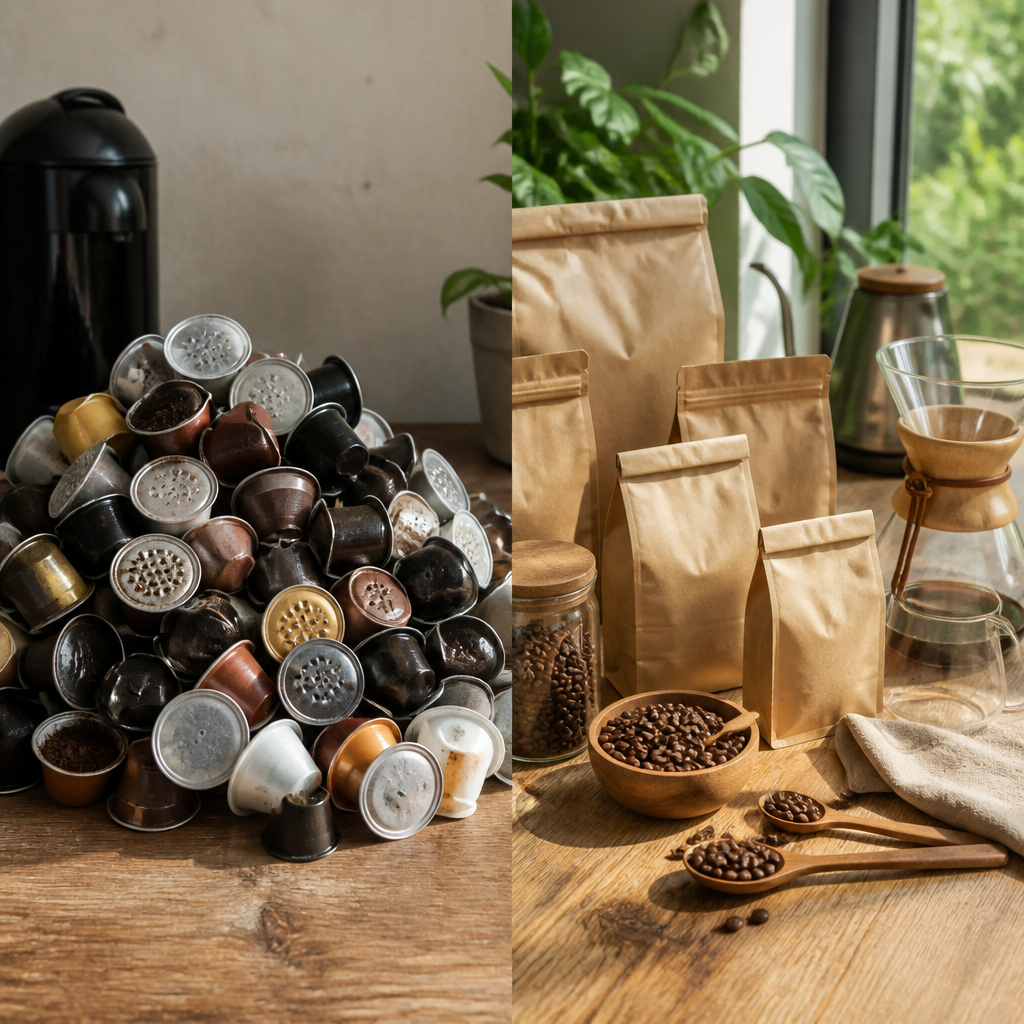
The scale of pod waste in the UK is striking. One analysis estimates that approximately 9.2 billion coffee pods are used in the UK every year, based on the country's share of the global pod market. With each pod weighing around 12 grams, that translates to an estimated 110,400 tonnes of coffee capsule waste generated annually.
The recycling situation is not reassuring. Most pods are made from plastic, aluminium, or a combination of the two. Specialist collection schemes exist, but they are inconvenient enough that a large proportion of used pods end up in general waste, which means landfill or incineration. The coffee grounds left inside also generate methane as they decompose in landfill, compounding the environmental cost. There is currently no publicly available UK-wide recycling rate for coffee pods, which tells its own story.
The real environmental cost of pod coffee is not just the material of the capsule. It is the energy required to produce it, the logistics of specialist recycling, and the methane generated when grounds decompose in landfill, all for a single cup of coffee that could have been made with a paper filter and a handful of fresh grounds.
Brewing with freshly roasted whole beans or ground coffee produces almost no packaging waste beyond the original bag. Many speciality roasters, including those who ship direct to home customers, use compostable or recyclable packaging. The coffee grounds themselves can go straight on the compost heap or into a council food waste collection. The comparison, on environmental grounds, is not close.
Why Freshly Roasted Coffee Changes Everything
Most people who switch from pod machines to freshly roasted artisan coffee at home describe the change as significant rather than incremental. That is not marketing language. It reflects something real about how coffee works chemically.
What Roast Date Actually Means
Coffee begins degassing carbon dioxide immediately after roasting and reaches its flavour peak within a few days to a few weeks, depending on the roast level and brewing method. After that, oxidation progressively dulls the aromatics and flattens the flavour. Pre-ground coffee accelerates this process dramatically because the increased surface area exposed to air speeds up oxidation. A pod machine, which pre-grinds the coffee at the factory and seals it, cannot sidestep this chemistry, regardless of how good the original beans were.
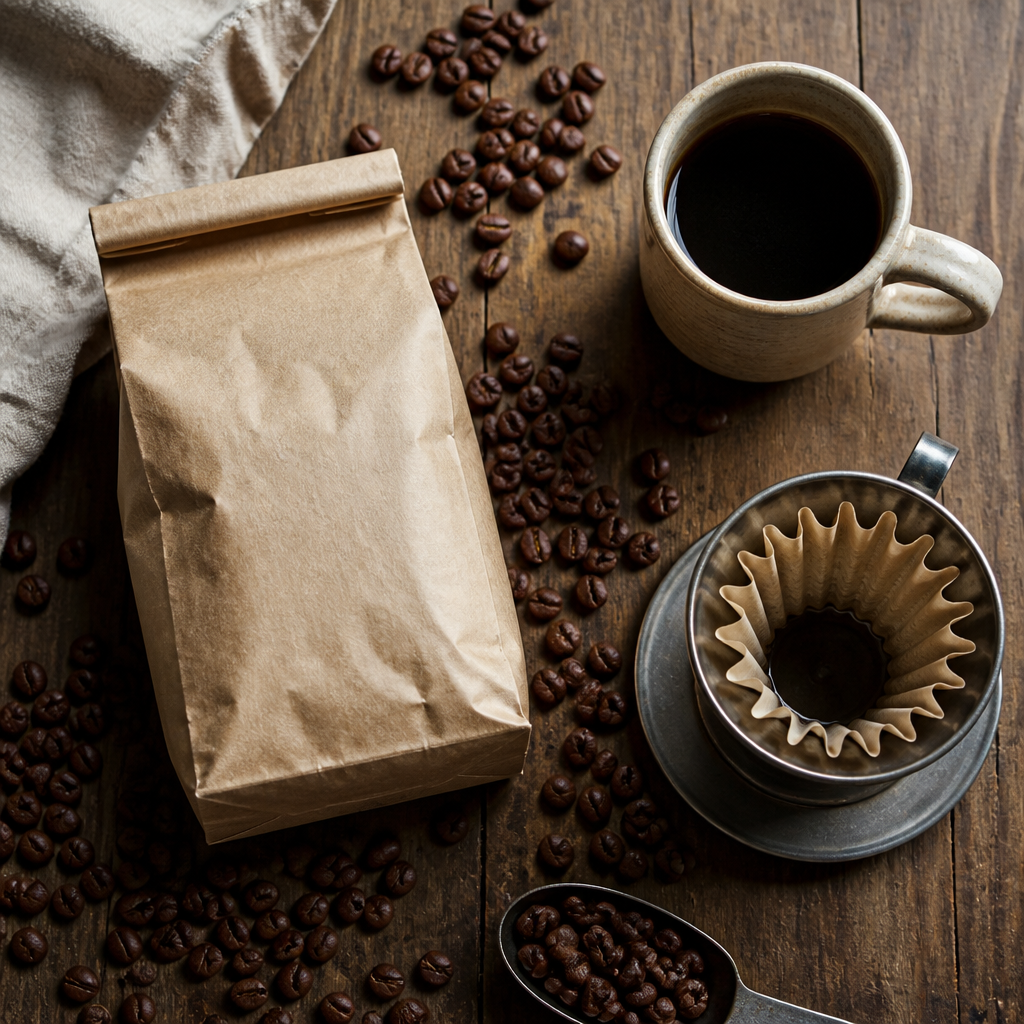
Freshly roasted whole beans, ordered directly from a roastery and ground at home immediately before brewing, give you coffee at its actual best. The difference in cup clarity, aroma, and sweetness is substantial. This is why roasteries that have been operating for generations take roast dates seriously. For home brewers, the practical implication is simple: buy whole beans roasted recently, grind them fresh, and brew them within a few weeks of the roast date.
Single-Origin vs Blend for Home Brewing
The choice between a single-origin coffee and a blend depends on the brewing method and the kind of cup you prefer. Blends, which combine beans from multiple origins, are typically formulated to work consistently across a range of extraction parameters, making them more forgiving for home brewers who are still dialling in their technique. A well-crafted house blend will produce an excellent cup even if your grind is slightly off or your water temperature varies a little.
Single-origin coffees reward precision and produce more distinctive cups, often with pronounced fruit or floral characteristics. They are worth exploring once your technique is consistent. Starting with a reliable blend and working outward from there is the sensible approach for most home brewers making the switch from pods.
Pod Machine Alternatives That Actually Work
The objection that keeps people loyal to pod machines is almost always convenience. That objection is legitimate but overstated. Several pod machine alternatives are genuinely fast, produce a far better cup, and require minimal equipment.
The AeroPress
The AeroPress is probably the best single-serve brewing method for anyone coming from a pod machine. It brews a full-bodied, smooth cup in under two minutes, requires no specialist pouring technique, and is nearly impossible to get catastrophically wrong. The pressure extraction produces a concentrated, rich result that works well both black and with milk. Cleanup takes thirty seconds. For a single-person household or anyone who wants one precise cup with minimal fuss, it is the most direct pod machine replacement available.
The Hario V60
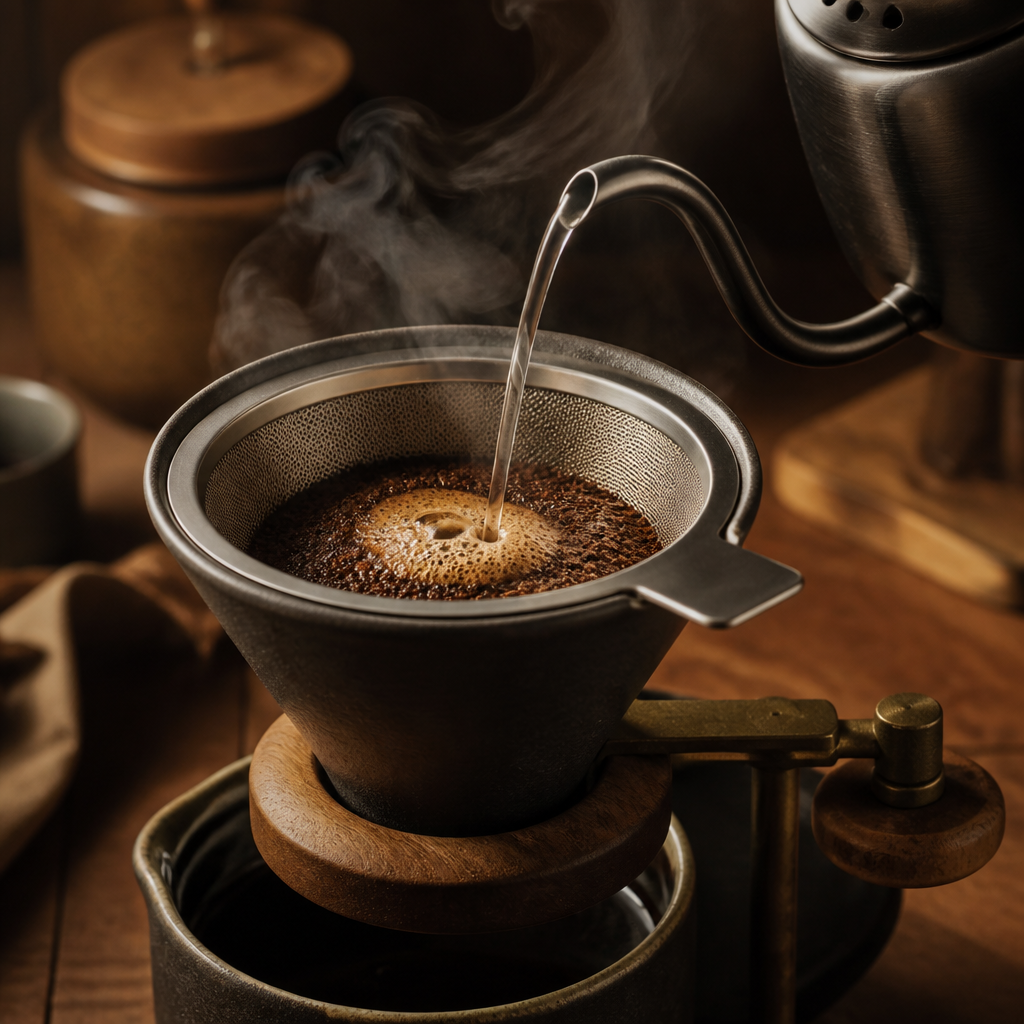
The V60 pour-over produces a cleaner, more aromatic cup than the AeroPress, with more clarity in the flavour. It does require a slightly steadier pour and benefits from a gooseneck kettle, but neither is a high barrier. The V60 brews a single cup in three to four minutes and the results, particularly with a light or medium roast, are noticeably more nuanced than anything a pod machine can produce. Entry-level V60 kits are inexpensive and widely available.
The Moka Pot
For those who want something closer to espresso strength from a stovetop device, the moka pot delivers a strong, bold, concentrated brew with a thick body and natural sweetness. It is not technically espresso, but the high coffee-to-water ratio produces something that works well as the base for a milk drink. Moka pots are durable, require no filters, and last for years. A good-quality moka pot costs less than two months of daily pods.
Pro tip: If you are used to a pod machine and find pour-over intimidating, start with the AeroPress using the inverted method and a timer. Consistent results from the first week, with no specialist skill required.
Comparison: Brewing Methods for Single-Serve Coffee at Home
| Method | Brew Time | Cup Character |
|---|---|---|
| Pod Machine | Under 1 minute | Consistent but flat. Pre-ground coffee means limited freshness. Espresso-style output with no grind control. |
| AeroPress | Under 2 minutes | Full-bodied, smooth, rich. Highly forgiving of grind variation. Excellent single-serve option for home and travel. |
| Hario V60 Pour-Over | 3 to 4 minutes | Clean, aromatic, nuanced. Best showcases single-origin coffees. Rewards a little practice with exceptional clarity. |
Making the Switch: What You Actually Need
Switching from a pod machine to freshly roasted ground coffee at home does not require an expensive or complicated setup. The core items are a brewing device, a grinder, and a quality coffee source. The rest is optional.
Start With a Hand Grinder
Grinding fresh is the highest-impact change you can make to your home coffee. A quality hand grinder, such as the Hario Smart G available through Farrer's home brewing range, gives you consistent particle size and preserves the volatile aromatics that disappear within days of pre-grinding. Hand grinders are quiet, require no power, and last for years with minimal maintenance. They are also a natural travel companion, which is something a pod machine definitely is not.
Choose the Right Coffee
The bean matters more than the brewing method. Freshly roasted coffee from a roastery that publishes roast dates, uses quality green coffee, and dispatches quickly gives you the raw material to brew something genuinely excellent. Farrer's, roasting in the Lake District since 1819, dispatches with next-day delivery on orders over £35, so the coffee arriving at your door is days from the roast rather than months. Start with a reliable house blend that suits your preferred brewing method, and explore single origins once your technique is settled.
Water Quality and Temperature
A common mistake when first switching from pod machines is underestimating the role of water. Heavily chlorinated tap water suppresses sweetness and dulls aroma. Filtered water makes a measurable difference. Water temperature also matters. Water that is too hot extracts harsh, bitter compounds. For most filter brewing, water off the boil by thirty seconds to a minute, around 90 to 94 degrees Celsius, produces a balanced extraction. Thermometer-equipped kettles solve this entirely, though they are a refinement rather than a necessity for beginners.
For Trade and Hospitality Buyers
Cafes and hospitality businesses currently using pod machines for volume service are paying a significant per-cup premium that does not reflect in the cup quality their customers receive. Farrer's trade offering includes machine supply, support, barista training, and ongoing coffee supply, giving businesses the infrastructure to serve genuine espresso-based drinks at a cost per serve that pod machines cannot match at volume. Barista training is also available for teams who want to develop skill and confidence with manual espresso equipment.
For smaller hospitality settings or breakout rooms, a well-set-up batch filter system using freshly roasted coffee produces a far better cup than a pod machine and serves multiple people from one brew cycle, reducing both per-cup cost and time per serve.
Frequently Asked Questions
Is single-serve coffee without pods genuinely as convenient as a pod machine?
For most methods, very nearly. An AeroPress brews a full cup in under two minutes once you have done it a few times. The V60 takes three to four minutes. Neither requires the machine to heat up, descale, or be maintained with proprietary cleaning tablets. The total time difference compared to a pod machine, in practice, is rarely more than a couple of minutes.
How much can I save by switching from pods to freshly roasted ground coffee?
Pod coffee in the UK costs roughly 35p to £1 per cup depending on the brand. Quality freshly roasted ground coffee brewed at home typically costs considerably less per cup, often under 30p. At one cup per day, the annual saving across twelve months can comfortably cover the cost of a grinder and a brewing device in the first year alone.
Do I need an expensive grinder to get good results at home?
No. An entry-level hand grinder produces consistent enough results for filter brewing and AeroPress. The step up from pre-ground pod coffee to freshly ground coffee from even a modest hand grinder is substantial. A premium electric grinder is a worthwhile long-term investment, but it is not where you need to start.
What is the best pod machine alternative for someone who only makes one cup at a time?
The AeroPress is the most direct replacement for a pod machine for single-cup brewing. It is fast, forgiving, produces a rich and satisfying cup, and the equipment costs less than a good pod machine. If you prefer a lighter, more aromatic cup, the Hario V60 is a better fit, though it benefits from a bit more practice.
Can I use freshly roasted coffee in a pod machine with a reusable capsule?
Reusable capsules exist for many pod machine formats and allow you to fill with your own ground coffee. This is a meaningful improvement over proprietary pods in terms of freshness and waste. That said, the extraction pressure and chamber size in most pod machines is not optimised for whole-bean specialty coffee, and the results still fall short of what a dedicated manual brewing device produces. Reusable capsules are a reasonable intermediate step, but they are not the end destination if cup quality is the goal.
Is artisan coffee at home suitable for someone with no barista experience?
Yes, without qualification. Filter methods like the AeroPress and V60 were designed for home use and require no barista background. The variables, grind size, water temperature, and brew time, are simple to manage and easy to adjust. Most people are producing good results by their third or fourth brew. Farrer's also offers roastery experience days and barista training for those who want to go further.
Does freshly roasted coffee taste noticeably different from pod coffee?
Consistently and significantly, yes. The difference is most obvious in aroma, sweetness, and the absence of bitterness. Pod coffee, by structural necessity, is pre-ground and sealed ahead of time, which means the most volatile aromatic compounds have already dispersed before the water touches the grounds. Freshly roasted whole beans, ground immediately before brewing, produce a cup with far more complexity and clarity. Most people who make the switch do not seriously consider going back.
Have you already made the switch from pods to freshly roasted coffee at home? Share what method worked for you and what you wish you had known earlier.
References
- UK coffee pod market scale and recycling challenges, Retail Times
- How plastic coffee pods affect the environment
- Cost and quality comparison: coffee pods versus ground coffee
- Comparing home brewing methods: Chemex, V60, moka pot, and AeroPress

