

Most people who switch from teabags to loose leaf tea make the same mistake: they treat it like a faster, fancier version of the same thing. It is not. Loose leaf tea UK is a different category altogether, one where water temperature, steep time, and leaf quality each shift the flavour profile in ways that teabags simply cannot replicate.
The UK tea market is worth over £700 million annually according to Statista, yet the majority of that spend goes on commodity bags. If you have ever wondered what a well-sourced, properly brewed loose leaf cup actually tastes like, this guide will show you exactly how to get there.
Table of Contents
- Quick Takeaways
- What Is Loose Leaf Tea and Why Does It Matter
- Types of Loose Leaf Tea Worth Knowing
- How to Brew Loose Leaf Tea Correctly
- Water Quality and Temperature: The Variables Most People Ignore
- Tasting Like an Expert: What to Look For in the Cup
- Storing Loose Leaf Tea to Preserve Freshness
- Comparison: Brewing Methods for Loose Leaf Tea
- Common Mistakes and How to Fix Them
- Frequently Asked Questions
- References
Quick Takeaways
| Key Insight | Explanation |
|---|---|
| Water temperature is non-negotiable | Green teas brew best at 70-80°C. Boiling water scalds the leaves and produces bitterness that no steeping time can fix. |
| Leaf-to-water ratio beats steep time | Use approximately 2-3g of loose leaf per 200ml of water. Getting this ratio right has more impact on flavour than adjusting steep time by 30 seconds. |
| Premium loose leaf tea costs less per cup than you think | High-quality loose leaf typically costs 20-40p per cup when measured correctly, comparable to a standard branded teabag but far superior in taste. |
| Storage destroys quality faster than age | Loose leaf stored in a clear glass jar on a sunlit shelf loses its aromatics within weeks. Airtight, opaque, and away from heat is the only acceptable method. |
| Not all infusers are equal | Fine mesh or basket infusers allow leaves to expand fully. Tight ball infusers restrict expansion and flatten the flavour of larger-leaf teas like Darjeeling. |
| Origin and harvest season change everything | A first-flush Darjeeling from April is a completely different drink to a second-flush from June, even from the same garden. Knowing the harvest helps you set expectations. |
| Loose leaf pairs with milk differently | Robust Assam blends hold up to whole milk. Delicate single-origin greens and whites are best taken without milk, which suppresses their most distinctive volatile compounds. |
What Is Loose Leaf Tea and Why Does It Matter
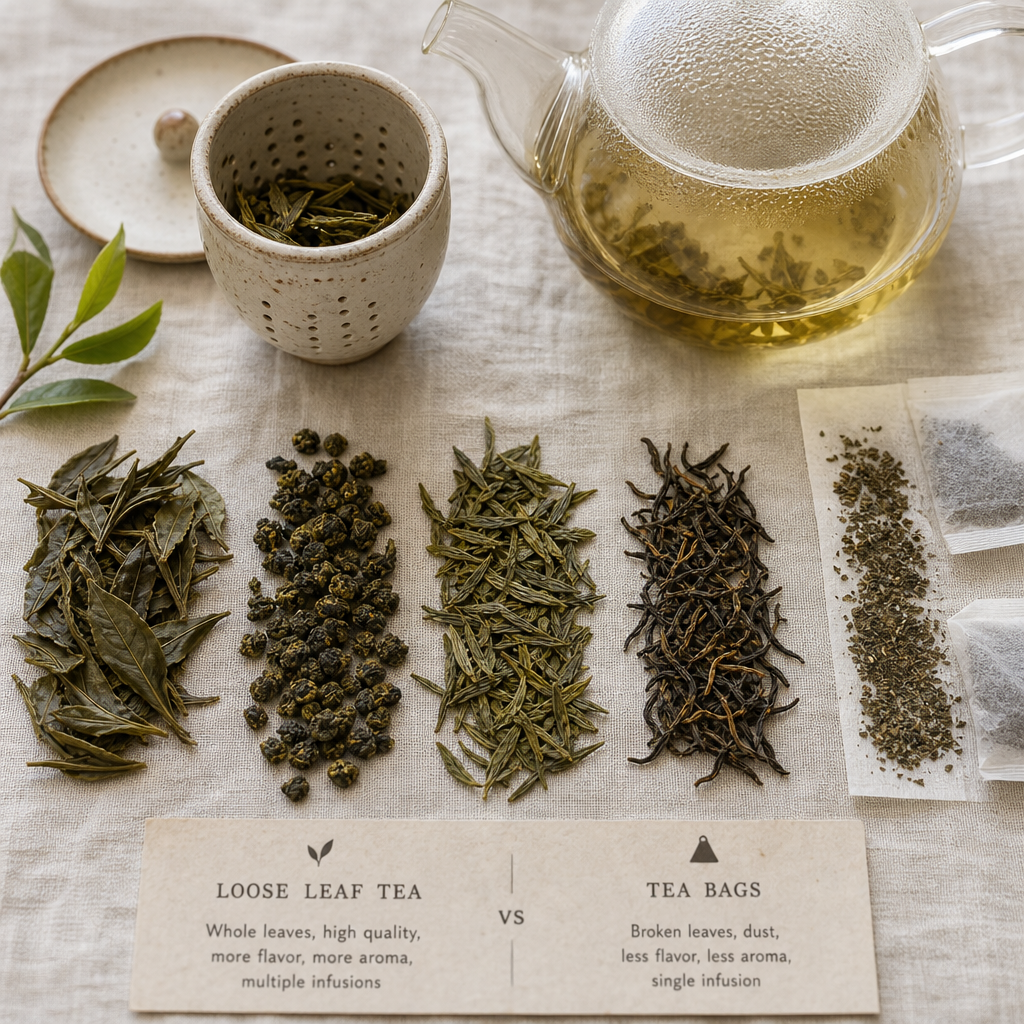
Loose leaf tea is whole or large-cut tea leaf that has not been broken down into the dust and fannings used to fill commercial teabags. That distinction is not snobbery. It is physics. Larger leaf pieces retain more of their essential oils, polyphenols, and aromatic compounds. When they unfurl in hot water, they release a more complex and layered infusion than compressed dust ever can.
In practice, the difference is immediately apparent in the cup. A well-made Assam loose leaf will have a recognisable malt character, a clear amber colour, and a finish that lingers. The teabag version of the same garden's production, made from the offcuts and broken material, gives you colour and caffeine but little else.
At Farrer's, which has been sourcing and roasting from the Lake District for over 200 years, the premium loose leaf tea range is built on this principle: that the quality of the raw leaf, handled with care from sourcing through to hand-packing, determines the quality of the cup. No clever branding changes what ends up in your water.
Types of Loose Leaf Tea Worth Knowing
The six main categories of loose leaf tea all come from the same plant, Camellia sinensis. The differences between them come from how the leaf is processed after harvest, specifically how much oxidation is allowed to occur before the leaf is dried.
Black Tea
Fully oxidised, which gives it the dark liquor and bold flavour most UK drinkers recognise. Assam, Darjeeling, and Ceylon are the most widely available single-origin black teas. Assam is suited to milk, Darjeeling is better without it, and Ceylon sits comfortably in the middle. Farrer's loose leaf range includes well-sourced options across this category for both home brewing and trade use.
Green Tea
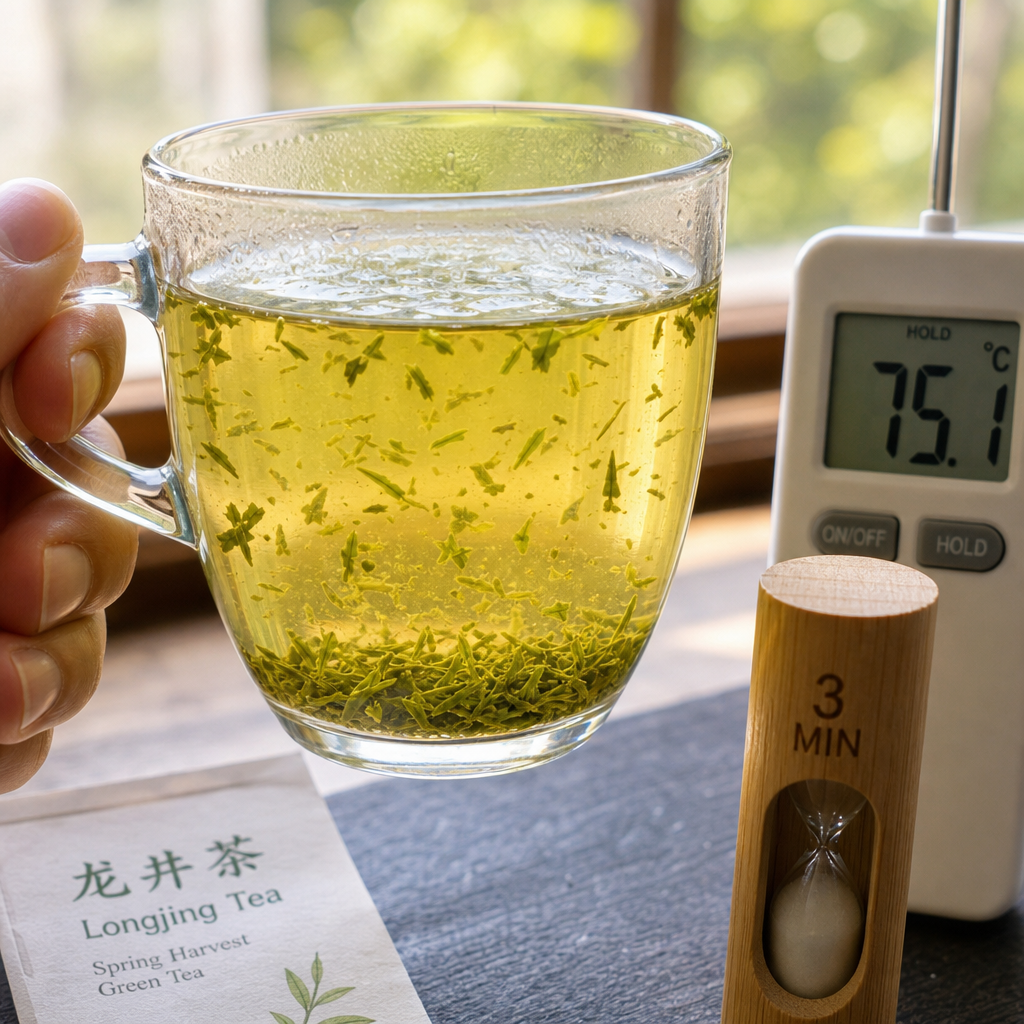
Minimal oxidation, which preserves the grassy, vegetal, and sometimes sweet character of the fresh leaf. Japanese greens like Sencha and Gyokuro are steamed to halt oxidation. Chinese greens like Longjing are pan-fired. Both are extremely sensitive to water temperature and will become unpleasantly bitter if brewed above 80°C.
White Tea
White tea is the least processed of all categories. The leaves are simply withered and dried. Silver Needle and White Peony are the two most common styles. They produce a pale, delicate infusion with subtle floral and honeyed notes. They are also among the most easily ruined by incorrect brewing, so patience with temperature matters more here than anywhere else.
Oolong Tea
Partially oxidised, sitting anywhere between 15% and 85% on the oxidation spectrum. This makes oolong the most varied category. A lightly oxidised Tie Guan Yin will taste closer to a green tea. A heavily oxidised Wuyi rock oolong will taste almost like a malty black tea. The range within this single category is reason enough to explore it.
Herbal and Fruit Infusions
Technically tisanes rather than tea because they do not come from Camellia sinensis, herbal infusions like chamomile, peppermint, and rooibos still benefit enormously from the loose leaf format. Without the papery taste of a sealed bag, the aromatics of the herbs come through cleanly.
How to Brew Loose Leaf Tea Correctly
The method for how to brew loose leaf tea is straightforward once you have the fundamentals in place. The goal is to give the leaf enough room to expand, the right temperature water to extract the right compounds, and the correct time to develop flavour without crossing into over-extraction and bitterness.
Equipment You Actually Need
A kitchen scale, a thermometer or temperature-controlled kettle, and a good infuser or teapot with a built-in strainer. You do not need expensive equipment to brew excellent tea. You do need equipment that does not restrict the leaf. A fine mesh basket infuser that sits in the cup or pot is the most practical starting point for home use.
Step-by-Step Brewing Process
Start by warming your cup or pot with a small amount of hot water. Pour it out before adding the leaf. This prevents the brewing vessel from dropping the water temperature by 5-10°C on contact, which is more significant than most people realise.
Measure your leaf. For most black teas, 2-3g per 200ml is the standard starting point. For green and white teas, 2g is sufficient. Add your leaf to the infuser, pour water at the correct temperature over the leaves, and set a timer. Do not guess. A one-minute difference in steep time for a delicate green tea is the difference between a pleasant cup and an astringent one.
Remove the infuser promptly when the time is up. Leaving it in continues extraction. Many high-quality loose leaf teas, particularly oolongs and greens, can be infused two or three times, with each subsequent infusion revealing different flavour notes.
Pro tip: Buy a simple temperature-controlled kettle rather than relying on the "let it cool for a few minutes" method. Cooling times vary significantly depending on the kettle, the ambient temperature, and the volume of water. A fixed temperature setting removes one variable from the process entirely and consistently produces better results.
Water Quality and Temperature: The Variables Most People Ignore
Water quality is the single most overlooked variable in home tea brewing. The UK has some of the hardest tap water in Europe in areas like London and the South East, with calcium carbonate levels that affect extraction and leave a film on the surface of the cup. That film is not just visual. It dulls the flavour of premium loose leaf tea in a measurable way.
"Water is the most important ingredient in tea. It carries all the flavour. If the water is wrong, nothing else can save the cup." - Tea sourcing principle widely held among specialty importers and observed consistently in professional cupping sessions.
Filtered water, whether through a jug filter or an under-sink unit, produces noticeably cleaner cups. This is particularly true for delicate teas like white and green. For robust Assam blends, moderately hard water can actually complement the malt character. In practice, if your tap water tastes good cold, it will generally brew acceptable tea. If it has a noticeable mineral or chlorine taste, filter it first.
Temperature Guide by Tea Type
Black tea: 95-100°C. Full boil is acceptable and desirable for most Assams and Ceylons. Green tea: 70-80°C. White tea: 75-85°C, lower for the most delicate Silver Needle. Oolong: 85-95°C depending on oxidation level. Herbal infusions: 95-100°C, as most herbs require near-boiling water to release their aromatic compounds properly.
Pro tip: If you do not have a temperature-controlled kettle, bring water to a full boil and then leave the lid off the kettle for a measured number of minutes. In most UK kitchens at room temperature, one minute of cooling drops water temperature by approximately 3-5°C. This is not precise, but it is better than guessing.
Tasting Like an Expert: What to Look For in the Cup
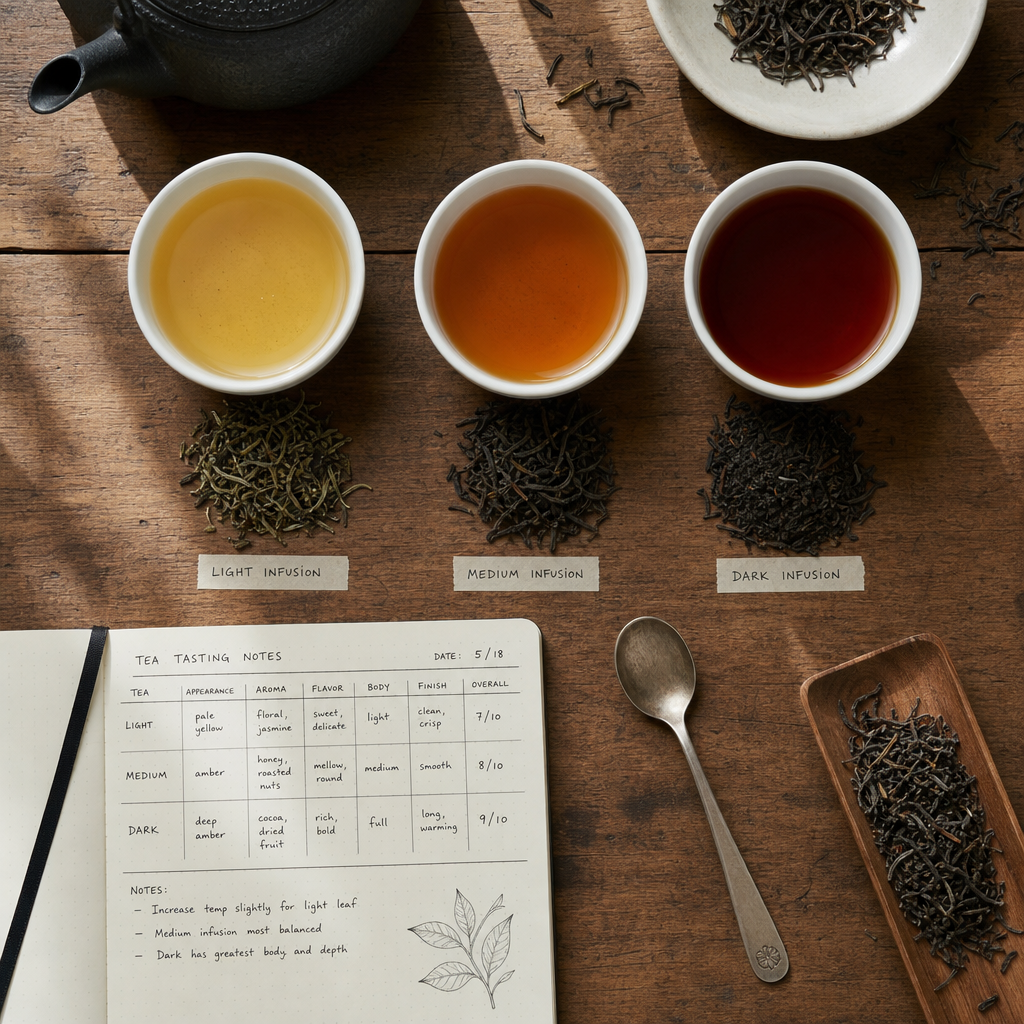
Professional tea tasters, like professional coffee cuppers, evaluate tea across four dimensions: aroma, flavour, body, and finish. You do not need any formal training to apply this framework. You need to slow down and pay attention.
Aroma
Before you drink, smell the dry leaf. Then smell the cup after pouring. A well-sourced premium loose leaf tea will have a recognisable, clean aroma at both stages. Off notes, like mustiness, sourness, or an oddly chemical smell, indicate poor storage either by the producer or during shipping. These off notes will carry through to the flavour.
Flavour and Body
Take a small sip and let it sit on your palate for a moment before swallowing. Notice where the flavour lands. High-grown Darjeelings often produce what tasters call a muscatel character, a grape-like, slightly floral note that comes from natural chemical compounds produced when the tea plant is bitten by green leafhoppers. Assams tend to sit at the back of the palate with a full, round body. Ceylons are often described as bright and brisk, meaning there is a lively, almost citrus-adjacent sharpness.
Finish
The finish is what remains after you swallow. A short finish is not necessarily a flaw, but a long, pleasant finish is a mark of quality. A bitter or drying finish, especially one that builds over time in the cup, usually indicates over-extraction or water that was too hot.
Storing Loose Leaf Tea to Preserve Freshness
Loose leaf tea has four enemies: light, moisture, heat, and strong odours. Exposure to any of these degrades the volatile aromatic compounds that make high-quality tea worth drinking in the first place. A beautiful Silver Needle stored in a clear glass jar by a window will taste like little more than warm water within a month.
The correct storage container is airtight, opaque, and made of a material that does not transfer its own smell. Tin is ideal. Ceramic with a tight-fitting lid works well. Resealable foil bags like those used by many specialty suppliers are excellent for short to medium-term storage. Plastic containers, particularly lighter plastics, tend to transfer odour and should be avoided for anything delicate.
Temperature matters more than most home brewers realise. Do not store tea near the hob, the kettle, or above the fridge, all locations where heat fluctuates. A consistent, cool, and dark cupboard is correct. A fridge is not, despite popular advice: the condensation cycle introduces moisture, and tea is extremely good at absorbing surrounding aromas, including last night's leftover curry.
Shelf life varies by type. Most black teas hold their quality for 18-24 months when stored correctly. Green and white teas are best consumed within 12 months. Herbal infusions are generally stable for 24 months but lose aromatic intensity after the first year. When in doubt, smell the dry leaf. A flat, faded aroma means the tea has passed its best.
Comparison: Brewing Methods for Loose Leaf Tea
There are three practical methods for brewing loose leaf tea at home. Each has real trade-offs depending on the type of tea, the volume you are making, and how much attention you want to give the process.
| Brewing Method | Best For | Key Limitations |
|---|---|---|
| Basket Infuser or Strainer Teapot | Everyday brewing of black, oolong, and herbal teas. Allows full leaf expansion. Easy to control steep time by removing the basket. | Requires a dedicated teapot or infuser. Less portable than other methods. Needs rinsing immediately after use to avoid staining. |
| French Press or Coffee Plunger | Large volumes, particularly useful for brewing for multiple people. Works well with black teas and herbal infusions. | Fine-leaf teas like broken Assam can slip through the mesh. Residual coffee oils in a shared plunger will taint delicate teas significantly. |
| Gaiwan (Traditional Chinese Covered Bowl) | Oolong and green teas where multiple short infusions are desired. Allows close observation of the leaf and precise control over each pour. | Requires more skill and attention than a basket infuser. Not practical for high-volume brewing. Steeper learning curve for beginners. |
For most UK home brewers starting with loose leaf tea UK for the first time, a basket infuser in a standard teapot is the correct starting point. It is forgiving, practical, and produces excellent results with minimal effort. The gaiwan is worth exploring once you have developed a genuine interest in oolongs and greens specifically.
Common Mistakes and How to Fix Them
A common mistake is using boiling water for every type of tea. Most people in the UK are accustomed to boiling the kettle and pouring immediately. This works for black tea and is actively correct for a strong Assam. It ruins green tea, which responds to boiling water with an aggressive bitterness that has nothing to do with the quality of the leaf. The fix is a thermometer or a temperature-controlled kettle.
The second most common mistake is steeping for too long. More time does not mean more flavour. It means more tannin extraction and a progressively bitter, astringent cup. A Darjeeling steeped for four minutes instead of two does not taste twice as good. It tastes unpleasant and will put off anyone new to loose leaf brewing. Set a timer.
The third mistake is buying loose leaf tea without considering freshness. High-quality tea is a perishable agricultural product. A tin of green tea that has been sitting in a warm warehouse for eighteen months will not produce a great cup regardless of how carefully you brew it. Sourcing from a supplier who turns over stock regularly, as Farrer's does with next-day dispatch on freshly prepared orders, makes a direct difference to what ends up in the cup.
Finally, a common mistake among beginners is under-measuring the leaf. Two grams per 200ml feels like almost nothing when you first see it in the infuser. The instinct is to add more. Resist it, at least initially. Brew to the recommended ratio, taste, then adjust. Over-measuring produces a cup that is often too strong and bitter, which leads people to the wrong conclusion that loose leaf tea is simply not to their taste.
Frequently Asked Questions
What is the difference between loose leaf tea and teabags?
Teabags contain broken tea dust and fannings, the small particles left after higher-grade loose leaf is sorted out. These smaller particles infuse quickly but release more tannins, producing a stronger and often harsher cup. Loose leaf contains whole or large-cut leaves that unfurl during brewing, releasing a more complex and nuanced flavour. The difference is not subtle. Side-by-side, even moderate-quality loose leaf outperforms most commercial teabags significantly.
How much loose leaf tea should I use per cup?
The standard starting point is 2-3 grams of loose leaf per 200ml of water. For stronger teas like Assam, 3g is appropriate. For delicate whites and greens, 2g is sufficient. If your cup tastes weak, increase the amount of leaf rather than steeping for longer, which adds bitterness rather than flavour intensity.
Can I reuse loose leaf tea for a second infusion?
Yes, and for many teas you should. High-quality oolongs and green teas are specifically designed for multiple short infusions. The second and third infusions often reveal different flavour notes compared to the first. Black teas and herbal infusions are generally less suited to re-infusion, though a robust Assam will sometimes give a usable second cup. Reduce the steep time slightly for subsequent infusions.
How long does loose leaf tea stay fresh once opened?
Most black teas remain at their best for 18-24 months when stored in an airtight, opaque container away from heat and light. Green and white teas are more volatile and are best consumed within 12 months of opening. If the dry leaf smells flat or faded rather than fresh and aromatic, the tea is past its best regardless of the stated shelf life.
Is loose leaf tea more expensive than teabags?
Per cup, the difference is smaller than most people expect. A good quality loose leaf tea typically costs between 20-45p per cup when measured correctly. Premium commercial teabags from recognised brands often sit at 10-20p per bag. The step up in quality relative to the small price difference makes loose leaf extremely good value, particularly when you factor in the ability to infuse quality leaves more than once.
What type of loose leaf tea is best for someone new to brewing?
A well-sourced Assam or Ceylon black tea is the most practical starting point for UK drinkers. Both are brewed at full boil, tolerate a slightly imprecise steep time better than green or white teas, and pair naturally with milk if that is your preference. Farrer's loose leaf range includes straightforward options in this category that reward careful brewing without requiring specialist equipment.
Does the water I use really affect the taste of loose leaf tea?
Yes, noticeably. Very hard water with high calcium carbonate content interferes with extraction and produces a flat, filmy cup. Chlorinated tap water adds an off-taste that is especially apparent with delicate greens and whites. Filtered or low-mineral water produces cleaner, brighter infusions. If you are serious about getting the best from premium loose leaf tea, water quality deserves the same attention as brewing temperature and leaf ratio.
Have you recently made the switch to brewing loose leaf tea at home? Share what method or tea type you started with and what surprised you most about the difference.
References
- UK tea market size, consumer trends, and category data from Statista's food and beverage research hub
- Forbes coverage of the specialty tea and artisan beverage industry, including market growth analysis and consumer spending shifts
- ScienceDirect peer-reviewed research on the chemistry of tea polyphenols, oxidation processes, and how brewing variables affect flavour compound extraction
- UK Food Standards Agency guidance on food storage, shelf life labelling, and best practice for dry goods including tea
- Royal Horticultural Society botanical information on Camellia sinensis, cultivation, and the relationship between growing conditions and leaf quality


