

Most coffee drinkers in the UK have tried Colombian coffee without ever really understanding why it tastes the way it does. They know it is smooth, they know it is popular, and they know it shows up on nearly every coffee menu from Edinburgh to Exeter. But the moment you ask why Colombian beans produce such a reliably balanced cup, the answers get vague.
This article fixes that. Whether you are shopping for Colombian coffee UK for the first time or you have been brewing it for years, understanding the geography, processing, and trade history behind these beans changes everything about how you choose and enjoy them.
Table of Contents
- Quick Takeaways
- What Makes Colombia Special for Coffee Growing
- The Flavor Profile: What Colombian Coffee Actually Tastes Like
- The Guatemala Coban Connection: A Single Origin Comparison
- How Processing Methods Shape the Cup
- Colombian vs. Guatemalan vs. Ethiopian: A Direct Comparison
- Buying Colombian Coffee in the UK: What to Look For
- How to Brew Colombian Coffee at Home
- Frequently Asked Questions
- References
Quick Takeaways
| Key Insight | Explanation |
|---|---|
| Colombia's altitude drives complexity | Most Colombian coffee is grown between 1,200 and 2,000 metres above sea level, which slows cherry development and concentrates sugars, producing a naturally sweeter, more complex bean. |
| Washed processing is the Colombian default | The majority of Colombian coffee is wet-processed (washed), which strips the fruit mucilage before drying and results in a cleaner, brighter cup with pronounced acidity. |
| Guatemala Coban is a useful comparison point | Coban in Guatemala shares similarly high altitudes and a cooler, wetter microclimate with Colombian growing regions, making it a direct benchmark for understanding how origin shapes flavour. |
| Single origin matters more than country branding | "Colombian coffee" covers dozens of distinct regions, from Huila to Nariño to Antioquia. A single origin label tells you far more than a national label alone. |
| Freshness is the biggest variable in the UK market | Colombian beans roasted and dispatched within days will taste dramatically different from supermarket stock that has sat in a warehouse for months. Roast date matters more than origin label. |
| Medium roast is the sweet spot for Colombian beans | A light-to-medium roast preserves the caramel, red fruit, and citrus notes that define Colombian coffee. Dark roasting obscures origin character and reduces it to generic bitterness. |
| Farrer's heritage connects directly to sourcing quality | Over 200 years of roasting experience means that when Farrer's selects a Colombian bean, the sourcing decision reflects accumulated knowledge of what altitude, variety, and process combination actually delivers in the cup. |
What Makes Colombia Special for Coffee Growing
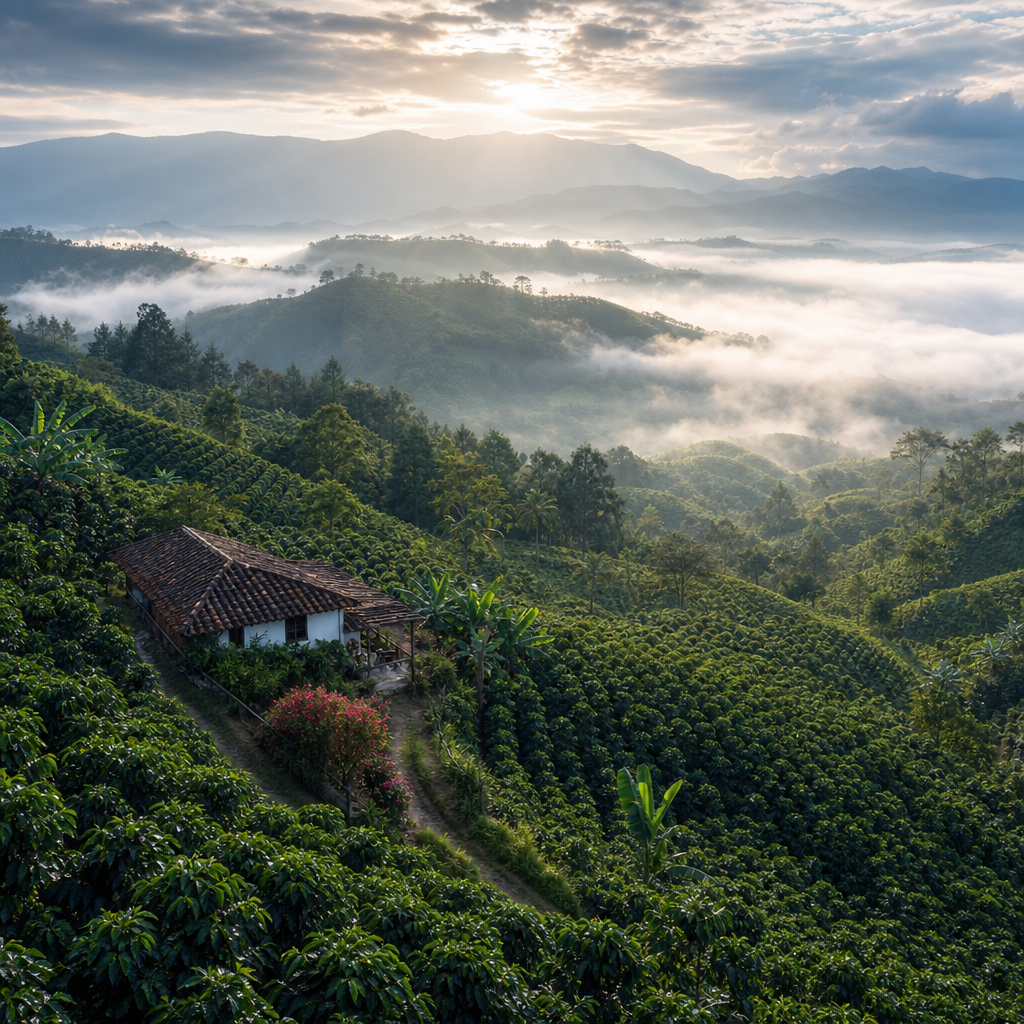
Colombia sits almost perfectly on the equatorial belt, with the Andes mountain range running through the country and creating an extraordinary variety of microclimates at different elevations. This is not a marketing accident.
The combination of altitude, temperature variation between day and night, and the fact that Colombia harvests coffee twice a year in different regions means a consistent, year-round supply of high-quality green beans.
The three main cordilleras of the Andes, the western, central, and eastern mountain ranges, each produce coffee with noticeably different character. Huila, in the southern highlands, is famous for its stone fruit and dark chocolate notes. Nariño, sitting even higher near the Ecuadorian border, produces some of Colombia's most vibrant and acidic cups. Antioquia, the most productive region by volume, delivers the reliable, balanced profile that most UK buyers associate with Colombian coffee.
Colombia also benefits from a cultural and institutional infrastructure that few coffee-producing nations match. The Federación Nacional de Cafeteros de Colombia (FNC), established in 1927, has spent nearly a century standardising quality controls, supporting smallholder farmers, and promoting Colombian coffee internationally. According to the International Coffee Organization, Colombia consistently ranks among the top three global producers of washed Arabica beans.
"Colombian coffee is not one thing. It is a collection of microclimates, altitudes, and farmer practices that happen to share a national passport. The country label is a starting point, not a destination." - James Hoffmann, author of The World Atlas of Coffee
For UK buyers specifically, the reliability of Colombian origin is a genuine advantage. Unlike some single origin markets where a difficult harvest year creates supply gaps or quality fluctuations, Colombia's two-harvest cycle and diverse regional production provides stability. That matters whether you are a home brewer at Farrer's ordering a 250g bag or a cafe manager placing a monthly trade order.
The Flavor Profile: What Colombian Coffee Actually Tastes Like
The phrase "smooth and balanced" gets attached to Colombian coffee so often it has become almost meaningless. In practice, what balance actually means is that the acidity, sweetness, and body of Colombian beans are proportionate. No single quality dominates. This makes Colombian coffee extremely versatile and forgiving across different brewing methods.
Acidity, Body, and Sweetness
Colombian coffee typically sits at medium acidity, often described as bright rather than sharp. The acidity reads as citrus (particularly orange or lemon zest) rather than the wilder berry acidity you get from Ethiopian naturals. The body is medium to full, heavier than a washed Kenyan but lighter than a Sumatran wet-hulled bean. Sweetness shows up as caramel and brown sugar rather than fruit-forward sweetness.
The specific flavour notes you encounter depend heavily on which region the coffee comes from and how it was roasted. A Nariño lot at light roast can taste almost like a sparkling lemonade with a creamy finish. A Huila lot at medium roast tastes more like dark chocolate and red grape. Neither is better. They are simply different expressions of Colombian growing conditions.
Why Colombian Coffee Works Well in Blends
Roasters have used Colombian beans as a blend backbone for decades because the balanced profile does not clash with other origins. It complements Brazilian naturals (which add body and nuttiness) and brightens up lower-grown Central American lots. A common mistake is assuming that blended coffee is automatically inferior to single origin. For espresso specifically, a well-constructed blend using Colombian beans as the base can deliver more consistency than a single origin that shifts with each harvest.
Farrer's hand-packed approach to coffee means that each batch is assessed individually rather than passed through automated filling lines. In practice, this kind of tactile quality control catches batch-level inconsistencies that volume-automated roasters miss entirely.
Pro tip: When tasting a Colombian coffee for the first time, brew it as a filter or cafetiere rather than espresso. The cleaner extraction of filter brewing lets you identify the origin character before you encounter the concentrated intensity of espresso.
The Guatemala Coban Connection: A Single Origin Comparison
Guatemala Coban coffee is one of the most misunderstood origins in the specialty market. Coban is a municipality in the Alta Verapaz region of Guatemala, sitting at roughly 1,300 to 1,600 metres above sea level in a rainforest cloud forest zone. The climate is unusually wet and cool for Central America, with persistent cloud cover that slows cherry development in a way that closely mirrors what happens at elevation in Colombia.
How Coban Compares to Colombian Growing Conditions
The shared characteristic between Coban and Colombian growing regions is the combination of altitude, consistent moisture, and temperature stability. Both environments slow the maturation of coffee cherries, which allows more complex sugars to develop before harvest. This is why Coban coffee tends to taste more like a Colombian lot than a typical Guatemalan bean from Antigua or Huehuetenango.
Where they diverge is in body and aroma. Coban coffees typically have a heavier, earthier body and a more herbaceous or spicy quality. Colombian beans at the same processing level tend to be cleaner and brighter. Think of Coban as the more atmospheric, brooding expression and Colombian as the clearer, more classical one.
Why the Coban Comparison Matters for UK Buyers
If you enjoy Colombian coffee but want to explore something adjacent, Guatemala Coban is the most logical next step rather than jumping to an Ethiopian or Indonesian origin. The structural similarities mean the transition is gradual rather than disorienting. This is exactly the kind of progression that roasters with genuine expertise, like Farrer's with their curated single origin selection, build into their range deliberately.
The data from specialty coffee importers consistently shows that UK customers who start with Colombian beans are more likely to explore single origin coffee from other origins within 12 months. Understanding why Colombian works for you is the foundation for every origin discovery after it.
Pro tip: When comparing Colombian and Coban coffees side by side, use the same brewing method and the same water temperature. Changing variables obscures origin differences and makes comparison meaningless.
How Processing Methods Shape the Cup
The three main coffee processing methods, washed, natural, and honey, produce dramatically different cups from the same green bean. Understanding which method was used explains far more about what you taste than the origin label alone.
Washed Colombian Coffee
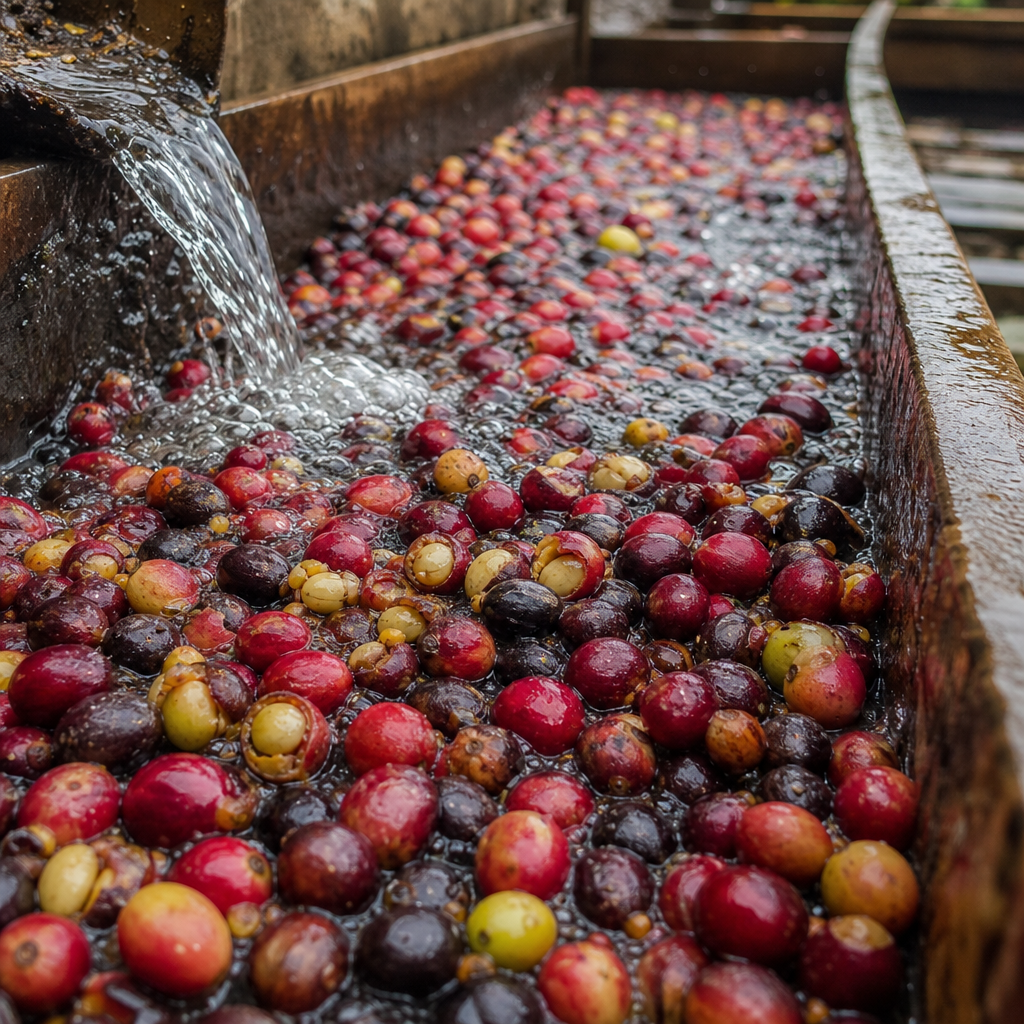
The washed (or wet) process involves removing the cherry fruit before fermentation and drying. This is the dominant method in Colombia and produces the clean, bright, transparent cup that most people associate with Colombian coffee. Washed processing allows the terroir of the growing region to express itself clearly because there is no fruit pulp contributing additional sugars or fermentation flavours to the final profile.
Natural and Honey Process Colombian Coffee
Natural process Colombian coffee, where the whole cherry dries with the fruit intact, is still relatively rare but growing in availability. The result is a much more fruit-forward, wine-like cup with heavier body and sometimes a slightly funky fermentation quality. Honey process Colombian coffee, where some but not all of the mucilage is left on the bean, sits between the two extremes in terms of sweetness and clarity.
Specialty roasters in the UK are increasingly sourcing natural and honey process Colombian lots precisely because they offer something visually unexpected from an origin that has a reputation for predictability. This is not a compromise. It is an expansion of what Colombian coffee can express.
Colombian vs. Guatemalan vs. Ethiopian: A Direct Comparison
Placing Colombian coffee in direct comparison with other major single origin coffee origins helps clarify exactly where it sits in the global spectrum. This is not about ranking. Each origin has a context where it excels.
| Characteristic | Colombian (Huila, Nariño) | Guatemala Coban (Alta Verapaz) | Ethiopian (Yirgacheffe) |
|---|---|---|---|
| Altitude Range | 1,200 to 2,000m | 1,300 to 1,600m | 1,700 to 2,200m |
| Typical Processing | Washed (majority), some natural and honey | Washed | Washed and natural |
| Acidity Level | Medium to bright | Medium, softer | High, very bright |
| Body | Medium to full | Full, earthy | Light to medium |
| Dominant Flavour Notes | Caramel, citrus, red fruit, dark chocolate | Cocoa, spice, brown sugar, herbs | Jasmine, bergamot, blueberry, lemon |
| Best Brew Method | Filter, cafetiere, espresso | Filter, French press | Pour-over, Aeropress |
| UK Market Familiarity | Very high | Moderate | High among specialty buyers |
Buying Colombian Coffee in the UK: What to Look For
The UK specialty coffee market has grown significantly over the past decade. According to the British Coffee Association, the UK consumes approximately 98 million cups of coffee per day, with specialty and premium categories growing faster than any other segment. This growth means more Colombian coffee is available than ever, but quality varies enormously.
Roast Date vs. Best Before Date
The single most important label on any bag of Colombian coffee is the roast date, not the best before date. Coffee is best consumed between 7 and 30 days after roasting for filter brewing, and between 10 and 35 days for espresso. A bag with a roast date printed clearly indicates that the roaster is confident in their freshness. A bag showing only a best before date 12 to 18 months out tells you the roaster is prioritising shelf life over quality.
Farrer's next-day dispatch on orders over £35 exists precisely to close the gap between roasting and brewing. That is not a convenience feature. It is a quality decision that reflects 200 years of understanding that coffee peaks early.
What Single Origin Actually Means on a Label
A label that says "Colombian coffee" tells you the country of origin. A label that says "Colombia, Huila, washed Caturra, 1,750m" tells you the region, the processing method, the variety, and the altitude. The second label is always more informative and almost always indicates a roaster who sources with more precision. When buying from a specialist like Farrer's, the additional information on the label is not noise. It is a direct indicator of traceability and sourcing care.
A common mistake is treating all Colombian coffee as interchangeable. A washed Caturra from Nariño and a natural Castillo from Antioquia can taste so different that placing them side by side, without knowing the origin, you might not guess they came from the same country.
How to Brew Colombian Coffee at Home
Colombian coffee's balanced profile makes it one of the most forgiving origins to brew. It does not demand precision the way a delicate Yirgacheffe might, and it does not require a heavy extraction like a Sumatran bean to taste good. That said, a few deliberate adjustments will move your cup from good to genuinely excellent.
Water Temperature and Grind Size
For washed Colombian coffee brewed as filter, aim for water between 92 and 96 degrees Celsius. Cooler water under-extracts and makes the coffee taste sour and flat. Hotter water over-extracts and pushes the bitterness forward. Grind size should be medium for drip or cafetiere, slightly finer for Aeropress, and coarser for cold brew. The medium grind works well for Colombian beans because the bean density at altitude responds predictably to standard extraction parameters.
Dose and Ratio
A starting ratio of 1:15 (one gram of coffee to 15 grams of water) works well for Colombian filter coffee. For a stronger, more syrupy cup, pull the ratio closer to 1:13. For a lighter, more tea-like expression, push toward 1:17. The flexibility here is a genuine feature of Colombian beans. They do not fall apart at slightly off ratios the way more delicate origins can.
For espresso, Colombian beans perform well at 1:2 to 1:2.5 ratio, with a 25 to 30 second shot time. The natural sweetness of Colombian beans means you do not need to pull a very tight, ristretto-style shot to get sweetness in the cup. A longer pull still tastes good because the acidity and sweetness remain balanced.
Pro tip: Rest freshly roasted Colombian beans for at least 7 days before brewing espresso. The degassing period is essential for espresso; under-rested beans produce inconsistent channelling in the puck and a sour, gassy shot. For filter, 4 to 5 days of rest is sufficient.
Frequently Asked Questions
What makes Colombian coffee different from other origins?
Colombian coffee is grown at high altitude across three Andean mountain ranges, which slows cherry development and produces a naturally sweeter, more complex bean. The country also has a well-established quality infrastructure through the Federación Nacional de Cafeteros, which maintains consistent standards across smallholder producers. The result is a reliably balanced cup with medium acidity, caramel sweetness, and clean finish that makes Colombian coffee accessible to a wide range of palates.
Is Colombian coffee good for espresso?
Colombian coffee is excellent for espresso. The medium-to-full body and balanced acidity make it work well as both a single origin espresso and as a blend component. Washed Colombian beans at a medium roast level produce espresso with caramel sweetness and a clean, bright finish. Natural process Colombian beans produce a fruitier, more wine-like espresso. Either approach works, but the roast date must be recent, ideally roasted within the past three weeks, for the extraction to be stable.
What is Guatemala Coban coffee and how does it compare to Colombian?
Guatemala Coban coffee comes from the Alta Verapaz cloud forest region of Guatemala, grown at 1,300 to 1,600 metres in an unusually cool and wet microclimate for Central America. It shares structural similarities with Colombian coffee in terms of altitude and cherry development, but produces a heavier, more earthy cup with cocoa, spice, and brown sugar notes compared to the cleaner citrus and caramel character of Colombian. Coban is an excellent choice for Colombian coffee drinkers who want to explore something with more body and atmospheric complexity.
How should I store Colombian coffee after buying it?
Store Colombian coffee in an airtight container away from heat, light, and moisture. A ceramic or opaque container kept at room temperature is ideal. Avoid the fridge, which introduces moisture and odour contamination. Avoid the freezer unless you are storing large quantities unopened and planning to defrost once without re-freezing. Ground coffee degrades much faster than whole beans, so grind immediately before brewing if possible. Whole bean Colombian coffee stored properly retains peak flavour for up to four weeks after the roast date.
What is the best roast level for Colombian coffee?
Light-to-medium roast is the best level for Colombian coffee. This roast range preserves the origin character, the citrus brightness, caramel sweetness, and red fruit notes that make Colombian beans distinctive. A dark roast masks these characteristics and replaces them with generic bitterness and roasty flavour that could come from any origin. If you prefer a darker roast because you take milk in your coffee, a medium-dark roast is a reasonable compromise, but avoid anything roasted to the point of visible oil on the bean surface.
Where can I buy high-quality Colombian coffee in the UK?
High-quality Colombian coffee in the UK is best sourced from specialty roasters who display a roast date on their packaging, provide region and processing information, and roast to order rather than holding large warehouse stock. Farrer's, the UK's oldest coffee roaster operating from the Lake District, offers freshly roasted Colombian coffee with next-day dispatch on orders over £35. The combination of over 200 years of sourcing expertise and small-batch hand-packing ensures that what arrives at your door has been treated as a quality product at every stage, not a commodity.
What is single origin coffee and why does it matter?
Single origin coffee refers to beans sourced from one specific location, which can mean a country, a region, a single farm, or even a specific lot or processing batch within a farm. It matters because it makes the flavour of a coffee traceable and repeatable. When you buy a single origin Colombian from Huila, you can understand why it tastes the way it does, track the farming practices involved, and make an informed comparison with other origins. Blended coffee can be excellent, but it obscures traceability. Single origin coffee rewards curiosity and builds genuine understanding of the relationship between place and flavour.
Have you tried Colombian coffee from different regions side by side, or compared it with a Guatemala Coban lot? Share what you noticed in the flavour difference, we read every comment and the comparisons our readers make are often more specific and useful than any tasting note a roaster writes on a bag.
References
- International Coffee Organization: global coffee production data and origin quality reports
- Statista: UK coffee market size, consumption trends, and specialty coffee growth statistics
- Forbes: coverage of the global specialty coffee industry and premium beverage market trends
- Specialty Coffee Association: technical standards for coffee processing, grading, and brewing methodology
- British Coffee Association: UK coffee consumption statistics and industry overview


