

Most home coffee setups fail not because of budget, but because of poor decisions made in the wrong order. People buy an expensive grinder before they have decent beans, or they invest in a sleek machine while ignoring water quality entirely.
The result is a home coffee station that looks good on the counter and tastes mediocre in the cup. Whether you have £50 or £500 to spend, the principles for building a setup that actually delivers great coffee are the same. This guide cuts through the noise and tells you exactly what to prioritise, in the right sequence, at every price point.
Table of Contents
- Quick Takeaways
- Why Most Home Setups Fall Short
- The Four Pillars of a Great Home Station
- Budget Tier Breakdown: £50, £150, and £400+
- Choosing the Right Coffee Brewing Equipment
- Sourcing Specialty Coffee UK
- Comparing Brewing Methods for Home Use
- Organising Your Physical Station
- Frequently Asked Questions
- References
Quick Takeaways
| Key Insight | Explanation |
|---|---|
| Grinder beats brewer, every time | A burr grinder paired with a budget brewer outperforms a premium machine fed pre-ground coffee. Grind consistency is the single biggest variable in extraction quality. |
| Freshly roasted beans are non-negotiable | Coffee peaks between 4 and 21 days after roast. Supermarket beans sitting on a shelf for months cannot be rescued by expensive equipment. |
| Water quality is ignored until it ruins everything | UK tap water in hard water areas deposits limescale and mutes flavour. Filtered or softened water improves taste immediately and protects your equipment. |
| Start with one brewing method and master it | Owning five brewers and rotating randomly produces inconsistency. Pick one method, dial it in completely, then expand if you genuinely want variety. |
| Storage kills freshness faster than age | Coffee stored in a clear glass jar on a sunny counter goes stale within days. An airtight, opaque canister away from heat extends freshness significantly. |
| Dose and ratio matter more than technique | Using a kitchen scale to hit a consistent coffee-to-water ratio (typically 1:15 for filter, 1:2 for espresso) eliminates guesswork and produces repeatable results. |
| Matching the roast to the brew method changes everything | Light roasts shine in pour-over and filter. Darker blends perform better in espresso and cafetiere. Using the wrong roast for the wrong method is a very common and easily fixed mistake. |
Why Most Home Setups Fall Short
The fundamental problem is that most people build their home coffee station backwards. They start with the machine because it is the most visible, Instagram-friendly purchase. Then they pick up whatever coffee is on offer at the supermarket. The grinder, if it exists at all, is a blade grinder bought years ago that creates uneven, scorched particles rather than a consistent grind.
A common mistake is treating coffee brewing as a product problem when it is actually a process problem. The equipment matters, but the sequence of decisions matters more. In practice, the three most impactful improvements any home brewer can make are: switching to freshly roasted beans, grinding immediately before brewing, and measuring by weight rather than volume. None of these require spending more than £30 combined.
The specialty coffee industry has documented this gap extensively. According to the Specialty Coffee Association, grind quality and water composition account for over 70% of the variation in extraction yield, the primary driver of cup quality. Yet most home setups treat both as afterthoughts.
The Four Pillars of a Great Home Station
Regardless of budget, every high-functioning home coffee station is built on the same four pillars. Skip one and the others cannot compensate.
Pillar 1: Fresh, High-Quality Beans
This is the foundation everything else rests on. Freshly roasted beans from a reputable roaster are not a luxury, they are the baseline. Farrer's, roasting in the Lake District for over 200 years, dispatches orders the next day on qualifying purchases, which means the coffee arriving at your door is genuinely fresh, not warehouse-aged. That matters more than almost any equipment upgrade you could make.
The roast date should appear on the bag. If it does not, that is a red flag. Beans roasted more than 30 days ago are past their best for espresso, and filter coffee benefits from beans used within 21 days of roast.
Pillar 2: A Consistent Grinder
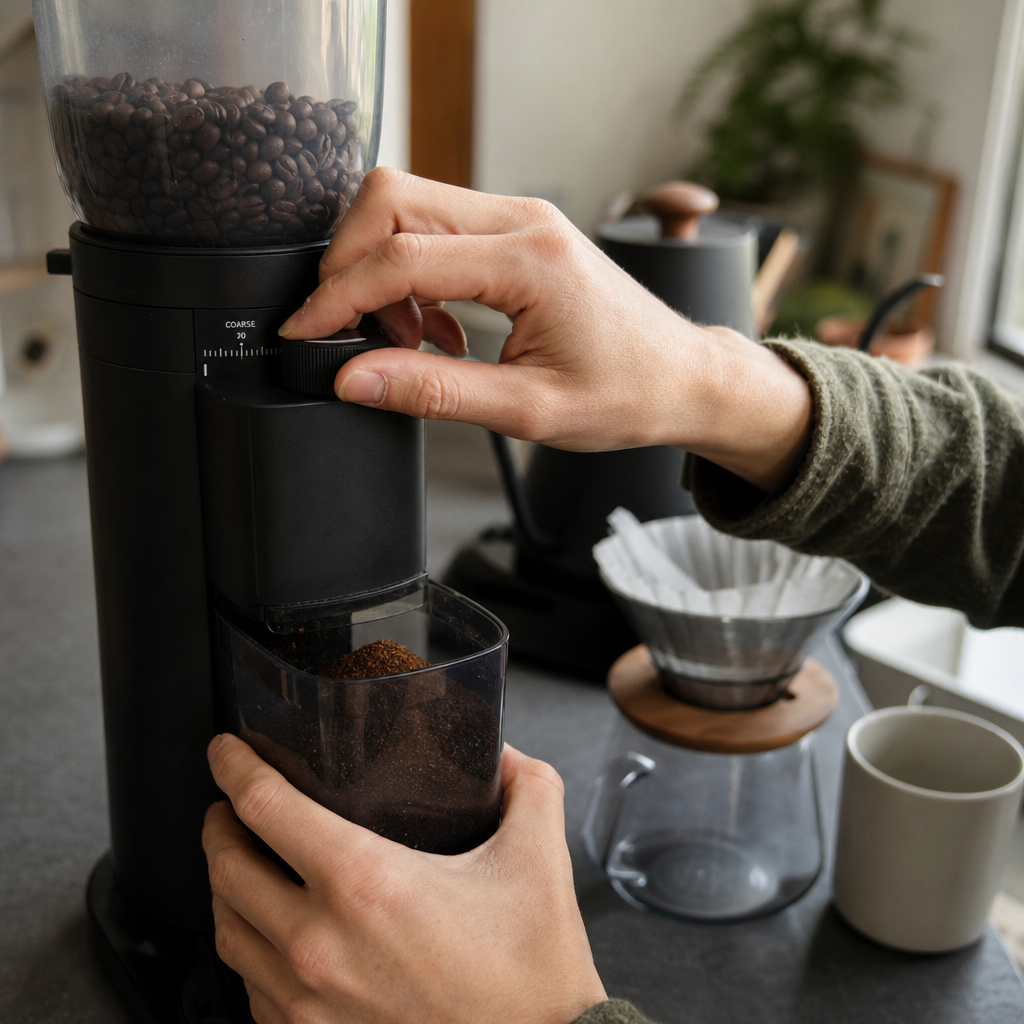
A burr grinder, even an entry-level hand grinder at around £35 to £50, produces dramatically more consistent particle sizes than any blade grinder at any price point. Consistent grind means consistent extraction, which means consistent flavour. This is not opinion, it is physics. Blade grinders create a distribution of fine powder and large chunks simultaneously, which extract at different rates and produce bitter, muddled cups.
Pillar 3: Controlled Water
Filtered water at around 150mg per litre of total dissolved solids (TDS) is the widely cited ideal for coffee brewing. A simple Brita filter jug addresses the majority of UK tap water issues and costs under £20. In practice, switching to filtered water is often the cheapest and most immediately noticeable improvement a home brewer can make.
Pillar 4: Temperature and Ratio Accuracy
Brewing at the right temperature (between 91°C and 96°C for most methods) and at a consistent ratio is the difference between a repeatable great cup and a lottery. A basic kitchen scale with 0.1g accuracy costs around £10 to £15 and transforms every brew method from guesswork into craft.
Budget Tier Breakdown: £50, £150, and £400+
The right setup depends on what you can spend today, not what you wish you could spend. Each tier below is a complete, functional home coffee station that does not require upgrades to work well. It is honest about the trade-offs at each level.
The £50 Starter Station
At this budget, choose a cafetiere (French press) as your brewer. A good quality 8-cup cafetiere costs around £15 to £20 and produces full-bodied, rich coffee that rewards quality beans. Pair it with a hand burr grinder in the £30 to £40 range, a basic kitchen scale, and a bag of freshly roasted coffee from a specialist roaster. Use filtered water from a jug you likely already own. This setup, done properly, produces better results than a £200 automatic machine fed stale pre-ground coffee.
The £150 Mid-Range Station
At £150, you have room for a proper electric burr grinder, a pour-over or AeroPress setup, a gooseneck kettle with temperature control, and a consistent supply of specialty beans. The Hario V60 or Chemex for pour-over, combined with an electric burr grinder at the £60 to £80 mark, produces filter coffee that genuinely competes with what good cafes serve. The temperature-controlled kettle, typically £25 to £40, removes the guesswork from water temperature entirely.
The £400+ Enthusiast Station
Above £400, you are entering espresso territory or investing in a high-end grinder that will last a decade. A prosumer espresso machine such as the Sage Bambino Plus, paired with a dedicated espresso grinder and freshly roasted espresso blends, creates a home station capable of producing cafe-quality shots. This tier also justifies investing in a full range of brewing methods, a dedicated coffee storage system, and a subscription to a specialty roaster to ensure a constant supply of fresh beans.
"The quality of the cup is determined long before the brew begins. Green coffee selection, roast quality, and grind consistency are the variables that matter most. Equipment is the final 20%." - Specialty Coffee Association, 2023 World Barista Championship Judges' Briefing Notes
Choosing the Right Coffee Brewing Equipment
The coffee brewing equipment market is saturated with options, and most of the marketing is noise. What follows is a direct, experience-based assessment of each major home brewing method and who it actually suits.
Cafetiere (French Press)
Best for: people who want a full-bodied, forgiving brew with minimal equipment. The cafetiere is genuinely difficult to ruin if you use coarse-ground, fresh coffee and steep for four minutes. It requires no filters, produces a rich cup, and works beautifully with medium to dark roasts. Farrer's traditional blends are an excellent match here.
AeroPress
Best for: people who want versatility and travel-friendly brewing. The AeroPress produces a clean, concentrated cup in under two minutes and tolerates a wide range of grind sizes and water temperatures. It is also the most forgiving of the manual methods for beginners who have not yet dialled in their technique.
Pour-Over (V60, Chemex, Kalita Wave)
Best for: people who want clarity and complexity in the cup and are willing to invest attention in the process. Pour-over rewards light to medium roasts and precise pouring technique. In practice, this method has the steepest learning curve of the mainstream home brew methods, but produces the clearest expression of a coffee's origin characteristics. A light roast single origin from a specialist roaster like Farrer's shows at its best here.
Moka Pot
Best for: people who want espresso-adjacent intensity without the cost of an espresso machine. The moka pot does not produce true espresso (the pressure is too low), but it makes a concentrated, bold brew that works well in milk drinks. Use a medium-fine grind and remove it from heat the moment you hear the gurgling sound to avoid bitterness.
Pro tip: Never buy a brewing device and a new bag of coffee at the same time. Always dial in a new brewer with a coffee you already know, so you can isolate the variable you are changing.
Sourcing Specialty Coffee UK
The specialty coffee UK scene has matured significantly over the last decade, and home brewers now have access to roasters and products that would have required a trip to London just fifteen years ago. The critical question is not which roaster is objectively best, but which roaster consistently ships fresh coffee that suits your preferred brewing method and flavour preference.
Farrer's offers a curated range of blends developed specifically to perform across different brewing methods, from the smooth, approachable character of their everyday blends to single-origin offerings for those exploring more complex flavour profiles. The combination of 200-plus years of roasting knowledge and next-day UK dispatch on orders over £35 means freshness is built into the supply chain rather than being a marketing claim.
When comparing roasters, look for three things: a visible roast date on the packaging, clear tasting notes that indicate the roaster has cupped and understood their product, and evidence of sourcing transparency. Vague claims about quality without specifics are a warning sign.
A common mistake made by home brewers who are new to specialty coffee is ordering too much at once. Freshness degrades after 21 days. Ordering 500g at a time and grinding through it within two to three weeks is better than buying a kilo that sits for six weeks. Most specialist roasters, including Farrer's, offer smaller bag sizes precisely for this reason.
Pro tip: If you are new to specialty coffee and unsure where to start, order a medium roast blend rather than a light roast single origin. Blends are designed for consistency and accessibility, while single origins reward more experienced palates and precise brewing technique.
Comparing Brewing Methods for Home Use
The table below compares the three most popular home brew methods across the variables that actually matter for a home coffee station decision.
| Brewing Method | Skill Level Required | Equipment Cost (Approx.) |
|---|---|---|
| Cafetiere (French Press) | Beginner. Coarse grind, steep four minutes, press. Minimal technique required. | £15 to £30 for a quality cafetiere. Works with any burr grinder. |
| AeroPress | Beginner to Intermediate. Very forgiving, many recipe variations available once basics are learned. | £30 to £40 for the AeroPress itself. Requires burr grinder for best results. |
| Pour-Over (V60 or Chemex) | Intermediate to Advanced. Requires precise ratio, consistent pour rate, and temperature control for best results. | £20 to £60 for the brewer. Requires a burr grinder and ideally a gooseneck kettle. |
Organising Your Physical Station
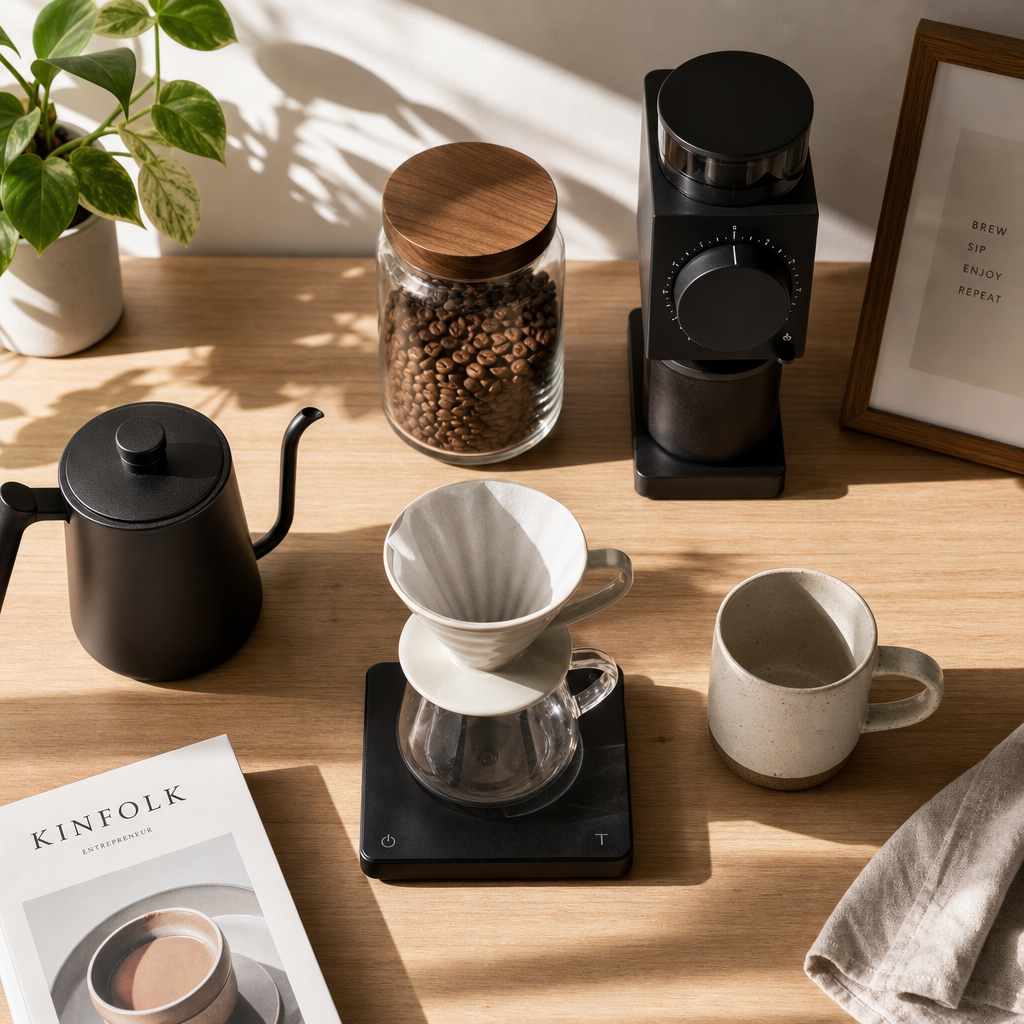
A home coffee station works best when every item has a fixed, logical position and the workflow moves in one direction: beans to grinder to brewer to cup. If you are reaching across the counter, opening three cupboards, or hunting for your scale every morning, the setup is fighting you rather than supporting you.
Dedicated Counter Space
Reserve a section of counter, even if it is just 60cm wide, as the permanent coffee zone. Everything needed for brewing lives here permanently. This sounds trivial but makes a measurable difference to consistency, because you stop improvising and start following the same sequence every time.
Storage That Protects Your Beans
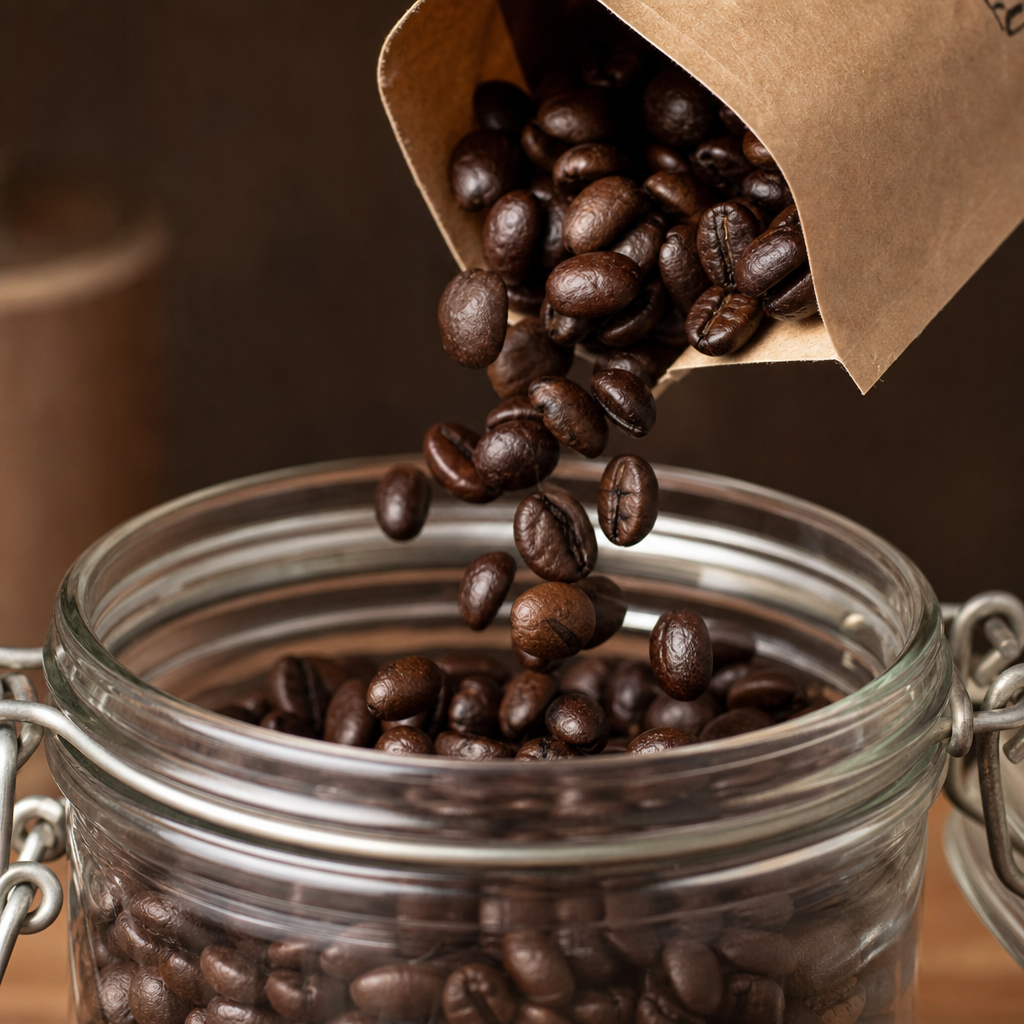
Coffee beans need four things kept away from them: light, heat, moisture, and air. An airtight canister with a one-way valve, stored in a cupboard rather than on the counter, extends freshness noticeably. Avoid glass jars on sunny windowsills. Avoid the freezer for beans you are actively using, as the repeated freeze-thaw cycle when you open the container draws in moisture.
The Tools That Earn Their Counter Space
Every item on your coffee station counter should earn its position through daily use. The grinder earns it. The brewer earns it. A small digital scale earns it. A canister earns it. A timer, if you do not use your phone, can earn it. A decorative item that just looks coffee-adjacent does not earn it and should be moved. Clutter is the enemy of a consistent routine.
In practice, the most satisfying home coffee stations are also the simplest. One brewer you know deeply, one excellent grinder, fresh beans from a trusted roaster, and clean filtered water. That combination, executed consistently, is what produces a cup that makes you genuinely not want to pay £4.50 for a flat white at a chain cafe.
Frequently Asked Questions
What is the single most impactful upgrade for a home coffee station?
Switching to a burr grinder is the highest-impact single change most home brewers can make, assuming they are already using reasonably fresh beans. If the beans are stale, sourcing freshly roasted coffee from a specialist roaster like Farrer's should come first. These two changes together cost under £80 and transform the quality of every cup you brew.
Do I need an espresso machine to make good coffee at home?
No. Espresso is one brewing method among many, and it is the most technically demanding and most expensive to do well at home. A cafetiere, AeroPress, or pour-over setup with freshly roasted beans and a good grinder produces excellent coffee without the complexity or cost of espresso. Many experienced home brewers prefer these methods precisely because of their simplicity and clarity of flavour.
How fresh does coffee need to be, and how do I know?
For espresso, beans are best used between 7 and 21 days after the roast date. For filter and cafetiere methods, the window is slightly wider, up to 30 days from roast. The roast date should be printed on the bag. If it shows only a best-before date without a roast date, the roaster is not being transparent about freshness, which is itself useful information.
What is the best coffee for a home station beginner?
Start with a medium roast blend designed for your preferred brewing method. Blends are formulated to be consistent and approachable, whereas single-origin light roasts can taste underwhelming if brewed incorrectly. Farrer's range includes blends crafted specifically for cafetiere, filter, and espresso use, which takes the guesswork out of the first purchase.
Does water really matter that much for home coffee brewing?
Yes, significantly. Water makes up approximately 98% of a cup of coffee. Hard water with high mineral content mutes acidity and sweetness while accelerating limescale build-up in your equipment. Filtered water at around 150mg per litre TDS is the standard recommendation from the Specialty Coffee Association. A Brita filter jug is sufficient for most UK households and costs around £15 to £20.
Can I use the same coffee for both espresso and filter at home?
Technically yes, but the results will be a compromise. Espresso blends are typically roasted darker and designed for the high-pressure, short-extraction environment of an espresso machine. They can taste flat and heavy in a pour-over. Filter roasts are lighter and more acidic, which can produce a sour, underdeveloped espresso. If you brew both methods regularly, keep two separate coffees. It is worth the cost.
What brewing method are you currently using at home, and what is the one thing you are still not happy with? Share your setup in the comments, because the most practical advice often comes from comparing notes with people who have already solved the exact problem you are facing.
References
- Forbes coverage of consumer trends in specialty beverages and home brewing habits
- Statista data on UK coffee consumption, home brewing equipment market size, and specialty coffee growth
- Food Standards Scotland guidance on water quality standards relevant to food and beverage preparation
- ScienceDirect peer-reviewed research on coffee extraction variables, grind particle distribution, and flavour chemistry
- Ahrefs Blog analysis of consumer search trends in food, drink, and specialty product categories


