

Most blended teas are anonymous: factory-assembled, margin-optimised, and utterly forgettable by the second cup. Lakeland Special tea is the opposite. It is Farrer's most popular blend, built on a secret recipe, carrying a Great Taste Award and a Gold Farm Shop & Deli Product Award, and designed specifically for the soft water of the Lake District. If you have been drinking generic supermarket tea and wondering why a truly well-made cup feels so different, the story behind this blend answers that question directly.
Table of Contents
- Quick Takeaways
- What Is Lakeland Special Tea?
- The Awards Record
- The Origin: Sri Lanka (Ceylon)
- Why Soft Water Matters for This Blend
- How to Brew Lakeland Special Properly
- Loose Leaf vs. Teabags: Which Format to Choose
- Farrer's Heritage and Why It Matters
- Frequently Asked Questions
- References
Quick Takeaways
| Key Insight | Explanation |
|---|---|
| Secret recipe, not a commodity blend | Lakeland Special is built from a proprietary formula that has not been replicated by competitors, giving it a distinctly punchy flavour profile. |
| Great Taste Award 2020 | Independent judges praised the tea's colour, astringency, briskness, and its ability to take milk well while producing a bright liquor. |
| Gold Farm Shop & Deli Product Award 2023 | Lakeland Special Teabags won Gold at the 2023 Farm Shop & Deli Product Awards, confirming the blend's quality holds across formats. |
| Sri Lanka (Ceylon) origin | The blend draws exclusively from fine Ceylon teas, which are known for their brisk character, bright liquor, and deep amber colour. |
| Designed for Lakeland soft water | The blend is specifically calibrated to complement the soft water of the Lake District, which extracts differently from hard water and produces a cleaner cup. |
| Fine-cut leaves for speed | The fine cut of the leaf is deliberate: it shortens steeping time without sacrificing flavour intensity, making this a practical all-day brew. |
| Medium-strong strength, flexible serve | Rated medium to strong, Lakeland Special works equally well black or with milk, making it unusually versatile for a single-origin Ceylon blend. |
What Is Lakeland Special Tea?
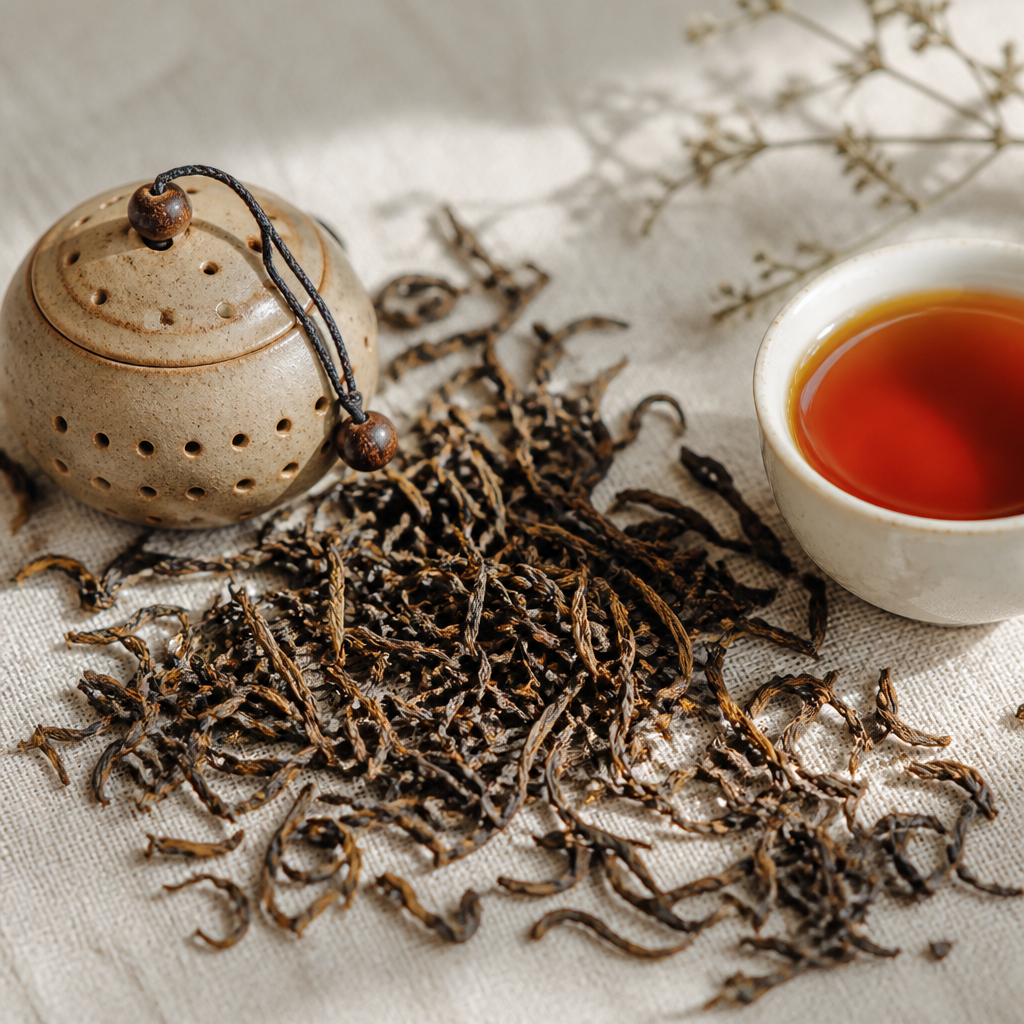
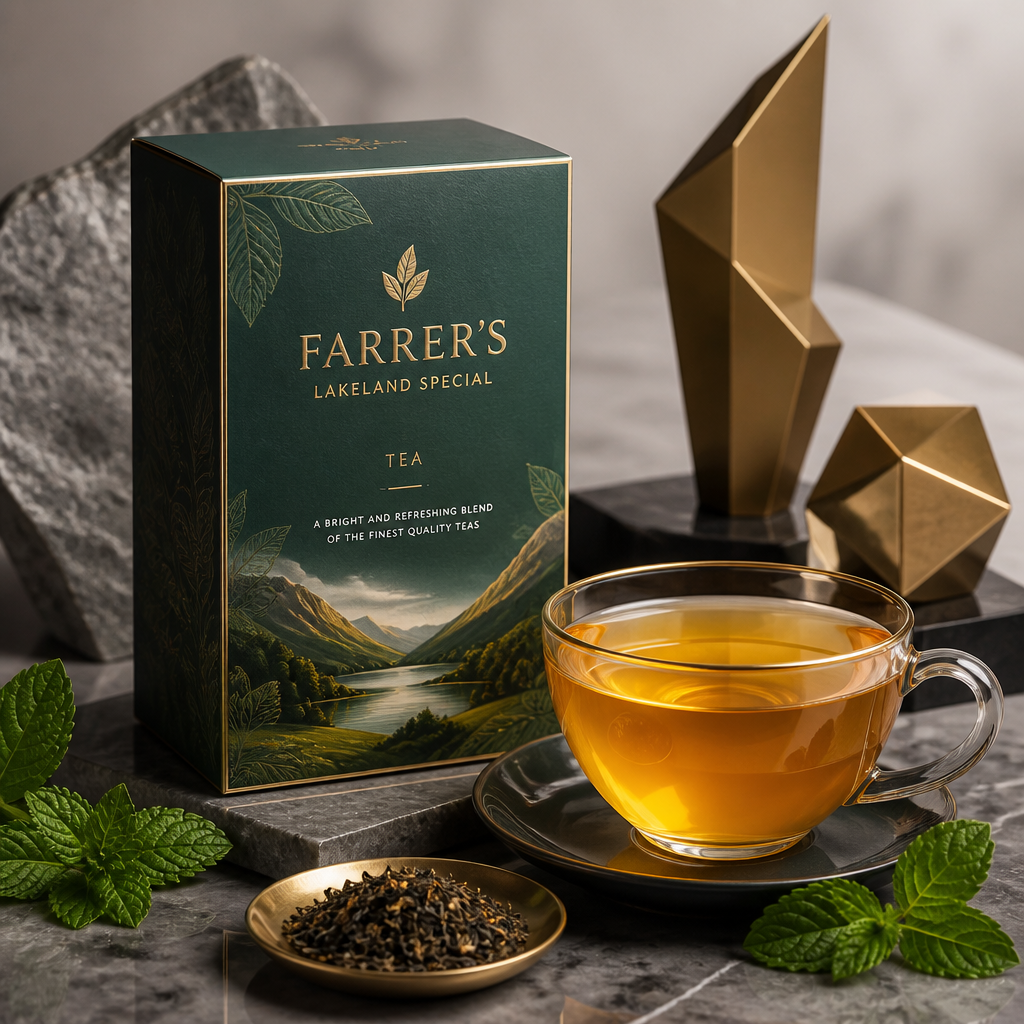
Lakeland Special® is Farrer's signature tea blend and, by any measure, their most important product in the tea range. It is a black tea, blended exclusively from fine Ceylon teas sourced from Sri Lanka (formerly Ceylon), and it has been specifically developed to produce a strong, deep amber brew with a punchy, direct character.
The recipe is secret. That is not marketing language. The specific combination of Ceylon teas that produces Lakeland Special's particular balance of astringency, briskness, and rich colour is proprietary to Farrer's, and it is not replicated anywhere else in the UK market. This is one of the practical differences between a heritage blender with over 200 years of accumulated knowledge and a newer brand assembling teas to a price point.
The blend is rated medium to strong, which places it firmly in the territory of a traditional British breakfast-style tea without being a one-dimensional powerhouse. It can be drunk with or without milk, and it performs well across both formats, which is unusual for a strong black tea. Most high-astringency teas become harsh without milk. Lakeland Special does not, because the blend is calibrated to produce a bright, drinkable liquor rather than a tannic one.
The Awards Record
The best evidence for a tea's quality is not the brand's own description. It is independent judges, tasting blind, deciding that the product is genuinely superior. Lakeland Special has that evidence, twice over.
Great Taste Award 2020
In 2020, Lakeland Special loose leaf tea was awarded a Great Taste 1-star Award by the Guild of Fine Food. The judges' notes are specific and worth reading closely: they found the tea had great colour, astringency and briskness, that it takes milk well, and that it produces a bright liquor. These are exactly the characteristics that matter in a well-made everyday blend, and the judges identified all three without being prompted by marketing material.
Great Taste judging is blind and panel-based. A tea does not earn recognition there because of its packaging or its brand story. It earns it because the liquid in the cup is better than comparable entries. Lakeland Special passed that test.
Gold Farm Shop & Deli Product Award 2023
Three years after the Great Taste recognition, Lakeland Special Teabags won a Gold Farm Shop & Deli Product Award in 2023. This is a separate competition with separate judges, and winning Gold confirms that the quality of the blend is consistent across formats: the loose leaf won in 2020, and the teabag version won at Gold level in 2023. Farrer's English Breakfast Tea Bags also earned a Silver at the same awards, reflecting the broader consistency of the Farrer's tea range.
For cafes, delis, and hospitality buyers considering the Lakeland Special for their menus, these awards represent a third-party quality assurance that requires no further interpretation. The blend has been tested by people with no commercial interest in the outcome, and it has come out well on two separate occasions.
"Every award the team receives recognises the hard work and dedication of every single one of us, and not only that, the passion we all have for what we do day to day, crafting teas and coffees that people enjoy." - Rob Baines, General Manager, Farrer's
The Origin: Sri Lanka (Ceylon)
Lakeland Special is made entirely from Sri Lankan teas, historically known as Ceylon teas. Sri Lanka produces black teas across a range of elevations, each with a distinct character. High-grown teas from regions like Nuwara Eliya tend toward floral and delicate profiles. Mid-elevation teas from areas like Kandy and Dimbula offer fuller body with copper-coloured liquor. Lower-grown teas produce darker, more robust brews.
The Lakeland Special blend draws on this range to build a cup that is simultaneously bold and bright. The deep amber colour is characteristic of well-made Ceylon black tea. The briskness, noted specifically by the Great Taste judges, is a hallmark of Ceylon teas generally, but it requires careful blending to achieve at the strength level Lakeland Special targets without the result becoming harsh or flat.
Ceylon teas are also among the most consistent major tea origins in terms of quality and supply, which matters for a product that has to perform identically cup after cup, batch after batch. A secret recipe is only worth keeping secret if the blend can be reproduced with precision, and Ceylon's well-established tea industry supports that kind of consistency.
Why Soft Water Matters for This Blend
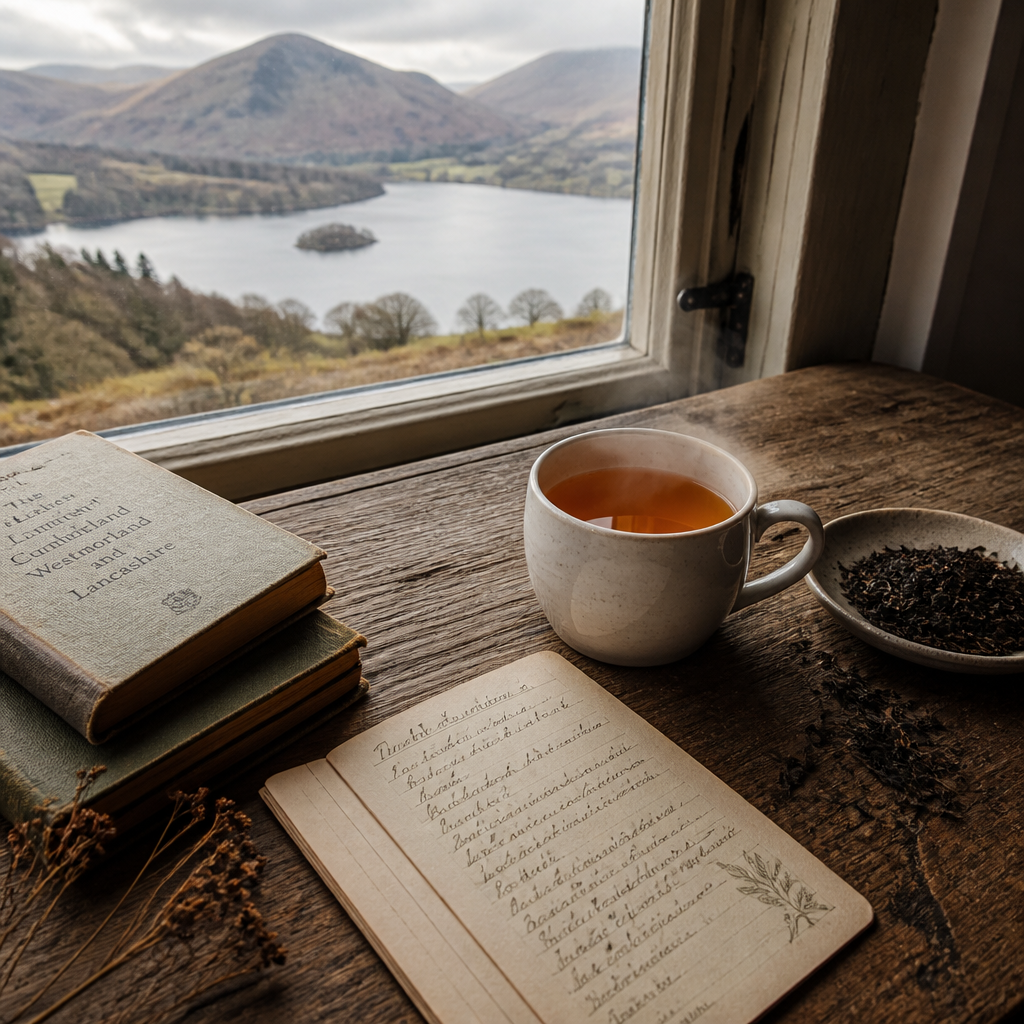
This is the detail that most tea drinkers miss entirely, and it is arguably the most important piece of information about Lakeland Special. The blend is specifically calibrated to complement the soft water of the Lake District. That is not a regional marketing angle. It has a direct effect on how the tea tastes in the cup.
Soft water contains fewer dissolved minerals than hard water. When used to brew tea, soft water extracts more efficiently, pulling more flavour compounds from the leaf in a shorter time. It also allows the natural brightness of the tea to come through without the flat or chalky note that hard water can introduce. The Lakeland region's exceptionally soft water profile is one of the reasons Farrer's has been able to refine blends with such specificity over generations.
The practical implication for customers outside the Lake District is that Lakeland Special may brew slightly differently depending on your local water. If you are in a hard water area, you may find that a slightly shorter steep time or a small reduction in leaf quantity produces a cleaner result. Filtered water will bring the brew closer to how it performs in Kendal.
Pro tip: If you are in a hard water area, use filtered water when brewing Lakeland Special. The bright liquor and briskness that the Great Taste judges praised are most apparent when the water is soft or filtered, which is exactly the condition the blend was designed for.
How to Brew Lakeland Special Properly
The official brew guidance for Lakeland Special is straightforward: use two teaspoons of loose leaf per cup, freshly boiled water, and steep for three to five minutes according to taste. The fine cut of the leaf means steeping time has a significant effect on the final cup: three minutes produces a brighter, less astringent result, while five minutes pushes toward the full depth of the blend.
Loose Leaf Brewing
With loose leaf, use a teapot or infuser that gives the leaf room to expand. Two level teaspoons per 200-250ml is the right starting point. Pour freshly boiled water directly over the leaves. For everyday drinking, three to four minutes is the sweet spot. For a stronger morning cup, go to five minutes. Remove the leaves promptly after steeping, as Lakeland Special's fine cut means it will continue to extract and become bitter if left to sit.
Pro tip: Always use freshly boiled water, not water that has been sitting in the kettle and re-boiled. Re-boiled water has lower dissolved oxygen content, which noticeably dulls the brightness of a well-made Ceylon tea. This matters more with a fine blend like Lakeland Special than it does with a generic teabag.
Milk or No Milk
The Great Taste judges specifically noted that Lakeland Special takes milk well. In practice, a small amount of whole milk added after brewing brings out the deeper notes in the blend without flattening the briskness. Black is equally valid: the liquor is bright and complex enough to drink without milk, especially at the three-minute end of the steeping range. Adding milk to an under-steeped Ceylon tea is a common mistake that produces a thin, watery result. Let the brew develop fully first.
Loose Leaf vs. Teabags: Which Format to Choose
Farrer's offers Lakeland Special in both loose leaf and teabag formats, including a 1,000-teabag catering pack for hospitality and trade use. The choice between formats depends on the context rather than on any fundamental quality difference: both formats won independent awards, and both deliver the same underlying blend.
| Format | Best For | Key Consideration |
|---|---|---|
| Loose Leaf | Home enthusiasts who brew by the cup or pot and want full control over steeping time and leaf quantity | Requires an infuser or teapot; fine cut means it can over-steep quickly if left unattended |
| Teabags (standard) | Everyday home use where convenience matters and consistency across multiple cups is the priority | Won Gold at 2023 Farm Shop & Deli Product Awards; delivers the same flavour profile in a faster format |
| Teabags (1,000 catering pack) | Cafes, hotels, restaurants, and hospitality businesses serving high volume | Catering pack format; individual bags are loose in a plastic sack rather than individually wrapped |
For home drinkers who are new to Lakeland Special, the teabags are the lower-risk starting point. For those who already brew loose leaf regularly, the loose leaf format gives more control and is the format that won the original Great Taste Award in 2020.
Farrer's Heritage and Why It Matters
John Farrer began trading in Kendal in 1819. That places Farrer's among the oldest independent coffee and tea merchants in the United Kingdom. The business is still based in Kendal, now operating from a modern roastery on the edge of the town, with a team that includes four master roasters and deep roots in the local community.
Heritage in food and drink is easy to claim and hard to prove. Farrer's proves it through product consistency and independent recognition. A blend that wins a Great Taste Award in 2020 and a Gold Farm Shop & Deli Product Award in 2023 is not trading on nostalgia. It is a product that current judges, applying current standards, find genuinely superior.
The Lakeland Special tea sits at the centre of what Farrer's actually does: take a raw ingredient (in this case, fine Ceylon teas from Sri Lanka), apply knowledge accumulated over generations, and produce something that tastes materially better than what commodity blending produces. The secret recipe is real, the awards are real, and the water calibration is real. None of it is marketing fiction.
For anyone following Farrer's through social media, the Lakeland Special is the right place to start if you have not already tried it. It is the blend that defines the brand's approach to tea: direct, opinionated, and built for the specific conditions of the place where it was created.
Frequently Asked Questions
What makes Lakeland Special tea different from a standard English Breakfast tea?
Lakeland Special is a single-origin Ceylon blend built from a secret recipe, specifically calibrated to complement the soft water of the Lake District. A standard English Breakfast tea is typically a broader blend of Assam, Ceylon, and Kenyan teas, usually designed for broad palatability rather than for a specific water profile. Lakeland Special has a more focused character: strong, brisk, and bright, rather than generically robust.
Has Lakeland Special won any food and drink awards?
Yes. The loose leaf version won a Great Taste 1-star Award in 2020, with judges praising its colour, astringency, briskness, and its ability to produce a bright liquor. The teabag version won a Gold Farm Shop & Deli Product Award in 2023. These are two separate competitions with independent judging panels, confirming quality across both formats.
How should I brew Lakeland Special loose leaf tea?
Use two teaspoons of loose leaf per cup, freshly boiled water, and steep for three to five minutes depending on your preferred strength. The fine cut of the leaf means it extracts quickly, so taste at three minutes before extending the steep. Remove the leaves promptly to avoid over-extraction. Filtered or soft water will produce the brightest result, closest to how the blend performs in the Lake District.
Can Farrer's Lakeland Special be used in a cafe or hospitality setting?
Yes. Farrer's offers Lakeland Special Teabags in a 1,000-bag catering pack, which is designed for high-volume hospitality use. The blend's two awards and consistent flavour profile make it a credible premium tea option for cafes and hotels that want to offer something beyond the usual branded teabag. Farrer's also serves trade customers directly and offers next-day dispatch on qualifying orders.
Where does the tea in Lakeland Special come from?
Lakeland Special is blended entirely from Sri Lankan teas, historically known as Ceylon teas. Sri Lanka produces black teas across a range of growing elevations, and the blend draws on fine Ceylon teas selected to deliver the specific combination of depth, briskness, and amber colour that defines the finished product.
Is Lakeland Special available only at the Farrer's roastery in Kendal?
No. Lakeland Special is available to order online through Farrer's website, with next-day dispatch on orders over £35. Both the loose leaf and teabag formats are available, including the catering pack. You do not need to visit Kendal to get the blend, though Farrer's does offer roastery experience days for those who want to see the operation in person.
Have you tried Farrer's Lakeland Special? Share how you brew it and what you think of it in the comments below.
References
- Farrer's official product page for Lakeland Special loose leaf tea, including origin, brew guide, and Great Taste Award details
- Farrer's product page for Lakeland Special Teabags, including catering pack details and award information
- Official 2023 Farm Shop and Deli Product Awards winners list confirming Gold for Lakeland Special Teabags
- Visit Lake District profile of John Farrer and Co, covering the company's history and Kendal base
- Showcase Cumbria article on Farrer's national award wins, including quotes from General Manager Rob Baines


