

If you are standing on the Farrer's website with two dark roast coffees in front of you and genuinely cannot decide, you are not overthinking it.
The Italian blend coffee and the French Continental are both dark roasts, but they are built for different drinkers, different equipment, and different moments in the day. Choosing the wrong one does not just mean a slightly disappointing cup.
It means a bag of coffee that fights your brewing method every single morning. This guide cuts through the surface-level descriptions and tells you exactly which Farrer's dark roast belongs in your kitchen, and why.
Table of Contents
- Quick Takeaways
- What Actually Makes a Dark Roast Dark
- Farrer's Italian Blend: The Espresso Workhorse
- Farrer's French Continental: The Cafetiere Champion
- Flavour Comparison: What You Actually Taste
- Brewing Method Breakdown
- Which One Should You Choose
- For Trade and Hospitality Buyers
- Side-by-Side Comparison
- Frequently Asked Questions
- References
Quick Takeaways
| Key Insight | Explanation |
|---|---|
| Italian Blend is built for espresso | Its dry-to-slightly-oily bean surface and Robusta content produce a dense, persistent crema that French Continental cannot reliably match under pressure. |
| French Continental belongs in a cafetiere | Immersion brewing draws out its smoky, syrupy depth without the sharpness that forcing very dark coffee through an espresso machine produces. |
| Milk drinkers: Italian Blend wins outright | The bittersweet dark chocolate and roasted nut profile cuts through milk beautifully. French Continental's heavier smoke character does not integrate as well with dairy. |
| French Continental has slightly less caffeine | Longer roasting degrades caffeine molecules. Despite tasting more intense, French Continental is the lower-caffeine option of the two. |
| Origin character differs significantly | Italian Blend retains more bean character (dark chocolate, caramel). French Continental roasts past second crack, replacing origin notes with smoke, dark caramel, and slight char. |
| Both are roasted in small batches in Kendal | Farrer's refines these darker profiles over generations, which means neither roast tips into the carbonised, acrid territory that mass-market dark roasts often do. |
| Price difference is modest but real | Italian Blend starts from £8.78. French Continental starts from £9.82. The Continental costs more partly because of the bean origin (high-altitude, sun-dried) and the more intensive roasting process. |
What Actually Makes a Dark Roast Dark
Both blends sit at the darker end of the roast spectrum, but they stop at very different points in the roasting process, and that gap is what determines everything about their flavour and best-use cases. Understanding the roast level difference is not academic. It is the single most useful piece of information for making the right purchase.
During roasting, beans pass through what roasters call first crack and second crack. These are audible events caused by expanding gases and structural changes inside the bean. Light and medium roasts are typically pulled at or shortly after first crack. Italian-style roasts go deeper, pushing well into the development phase after first crack and producing a dry-to-slightly-oily bean surface. French-style roasts go further still, into and past second crack, producing beans that are near-black with a visibly oily, almost wet-looking surface.
At Farrer's roastery in Kendal, both profiles are managed with the kind of precision that comes from over 200 years of production. The difference between a great dark roast and an overcooked one is measured in seconds at these temperatures, not minutes. That level of attention is what separates a Farrer's dark roast from industrial alternatives.
A well-designed blend is not a compromise. It is a deliberate architecture, with every element of the roast profile reflecting a decision about what ends up in the cup.
Farrer's Italian Blend: The Espresso Workhorse
The Italian blend coffee from Farrer's is a dark roast built specifically around espresso culture. It draws on a tradition of Southern European coffee that prioritises intensity, reliable crema production, and the ability to anchor milk-based drinks without disappearing under steamed dairy.
Bean Surface and Roast Depth
The Italian Blend produces a bean with a dry to slightly oily surface, which sits at the darker end of development without crossing into the heavy oil production of a continental roast. This surface profile matters practically: heavily oily beans clog grinder burrs faster, which is a real maintenance issue if you use a quality home grinder daily. The Italian Blend avoids this while still delivering the roast depth espresso requires.
Robusta Content and What It Does
The Italian Blend includes Robusta beans in its composition, which serves two specific purposes. First, Robusta produces significantly more CO2 during extraction than Arabica, which is what generates a thick, persistent crema on the espresso shot. Second, Robusta adds a caffeine boost above what pure Arabica blends deliver, which matters if your morning espresso is doing genuine work.
This is not Robusta used as cheap filler, which is the supermarket approach. It is Robusta used as a functional ingredient in a deliberate blend architecture. If you have been buying mainstream dark roasts from brands like Lavazza and want to step up, the Italian Blend keeps the same flavour DNA but with fresher roasting and no industrial processing.
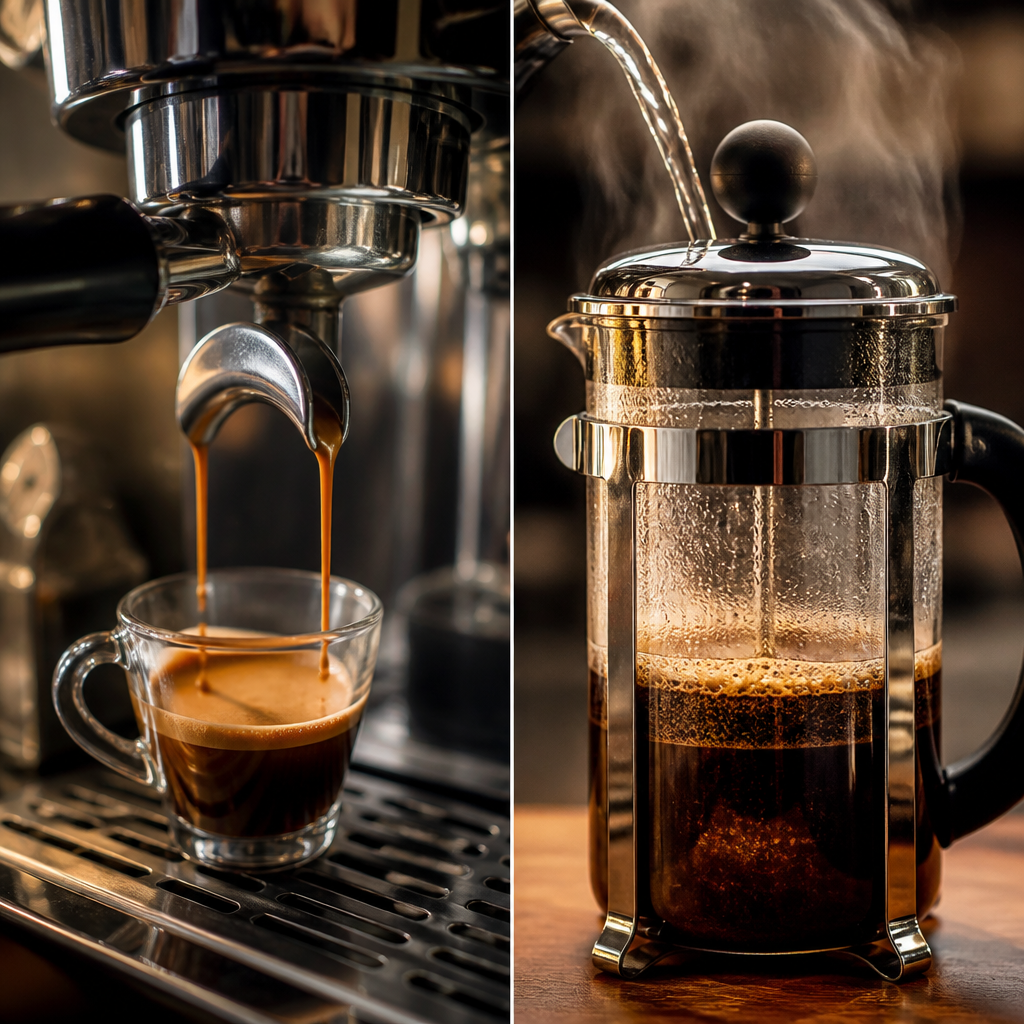
Pro tip: When pulling espresso with Farrer's Italian Blend, target a 28 to 32 second extraction for a double shot. The darker roast extracts quickly, and a shot that runs too fast turns harsh rather than bittersweet. Adjust grind finer in small increments if you are struggling to slow the flow.
Farrer's French Continental: The Cafetiere Champion
The French Continental Blend pushes the roast well into and past second crack, which is a fundamentally different approach to developing flavour. At this stage, most of the bean's origin character is replaced by the flavours generated by the roasting process itself: smoke, dark caramel, a slight char, and a thick, syrupy body when brewed correctly.
What the "Continental" Label Actually Means in the UK
The term "Continental" has a specific meaning in the UK coffee market. It developed as shorthand for the darker roast styles associated with mainland European coffee culture. Ironically, most contemporary Italian specialty cafes have moved toward much lighter profiles, so the label does not reflect current Italian coffee culture at all. What it does describe, accurately, is a very dark, robust cup with no pretensions toward acidity or fruit-forward notes. Farrer's has used this descriptor consistently because it communicates the right expectations to the British customer who grew up associating it with serious, European-style coffee.
Tasting Notes and Body
The French Continental Blend is grown at high altitudes for clean citrus notes at origin, then sun-dried to increase natural sweetness before roasting. The heavy roast transforms those starting materials into something quite different: dark fruits, almonds, and a rich, creamy body. The acidity is low. The finish is long and smoky. It is a coffee that demands attention on the palate rather than fading quickly after the sip.
For black coffee drinkers who want depth without brightness, this is the correct choice. The body of the cup is thick enough to feel substantial even without milk, which is not something every dark roast can claim.
Pro tip: For the best cup from Farrer's French Continental, use a cafetiere with water that has rested off the boil for 30 seconds. Very dark roasts brewed at a full rolling boil can tip from smoky-complex into flat and bitter. The slightly lower temperature lets the syrupy body develop without amplifying the char notes.
Flavour Comparison: What You Actually Taste
On paper, both are dark roasts. In the cup, they taste like different categories of coffee. Understanding this distinction is what stops you from buying the wrong bag and spending two weeks trying to make it work.
Italian Blend Flavour Profile
A well-made Italian blend produces dark chocolate, roasted almonds, and a caramel finish. The bitterness is present but rounded rather than sharp. The aftertaste lingers pleasantly without coating the palate with astringency. What it should not deliver, and what Farrer's small-batch roasting is specifically designed to prevent, is the carbonised, acrid bitterness that low-quality imitations produce. The key difference is roast control: the sugars need to caramelise without fully carbonising, which requires precise temperature management and repeatable equipment.
French Continental Flavour Profile
French Continental moves the flavour dial firmly toward smoke and dark fruit, with almonds in the background and a thick, creamy body that is the dominant textural experience. There is less sweetness than the Italian Blend and noticeably less brightness. Acidity is minimal. If you actively dislike the lively, slightly acidic quality that even dark filter roasts can carry, French Continental removes it almost entirely. The result is assertive, smooth, and satisfying, but it is not a subtle coffee.
Brewing Method Breakdown
Brewing method is the single clearest decision criterion between these two blends. Get this right and the rest of the decision becomes straightforward.
Espresso and Milk-Based Drinks
For espresso, the Italian Blend is the clear choice. It was developed for this purpose. It performs reliably under pressure. Its flavour profile integrates with milk in a way that French Continental simply does not. In flat whites, cappuccinos, cortados, and lattes, the dark chocolate and caramel notes of the Italian Blend stay present through the milk, giving the drink structure and depth. French Continental's smoke and char profile does not translate as well into milk-based drinks, where those qualities tend to read as harshness rather than complexity.
Cafetiere and Filter
Cafetiere is the natural home of French Continental. The longer contact time of immersion brewing allows the flavour compounds to develop fully, drawing out the syrupy body and dark fruit notes without the sharpness that comes from forcing very dark roasted coffee through an espresso machine. Italian Blend can work in a cafetiere using the recommended 18 to 23g of coffee per 350ml of water, and it produces a satisfying, full-bodied cup. But it is competing on French Continental's home turf at that point, and for pure cafetiere performance, the Continental has the edge.
Moka Pot
The moka pot sits between espresso and filter in terms of pressure and extraction style. Italian Blend performs well here, producing the kind of concentrated, intense shot the moka pot is designed to make. French Continental in a moka pot can produce an overly bitter result because the char notes amplify under heat and pressure without the full crema buffer that an espresso machine provides.
Which One Should You Choose
The answer depends on three things: your brewing equipment, whether you drink your coffee with or without milk, and where you want bitterness to sit in your daily cup.
Choose the Italian Blend if you own an espresso machine, a moka pot, or if you regularly drink flat whites, cappuccinos, or lattes. It is also the right choice if you want a dark roast that works across multiple brewing methods without significant compromise. The Robusta content gives it body and crema performance that purely Arabica dark roasts cannot match, and the roast level maintains enough sweetness to be genuinely enjoyable rather than merely tolerable.
Choose the French Continental if you brew predominantly in a cafetiere, drink your coffee black, and enjoy a bold cup with minimal brightness or acidity. It is the right pick when you want your morning coffee to taste like a deliberate, assertive choice rather than a default. The high-altitude bean origins and sun-drying process give the French Continental a sweetness that survives even the heavy roast, which is why the body feels rich rather than flat despite the smoke-forward profile.
For Trade and Hospitality Buyers
If you are sourcing coffee for a cafe, restaurant, or hospitality setting, the decision follows similar logic but with additional practical considerations. The Italian Blend is the safer default for an espresso-based menu. It performs consistently under commercial machine pressure, produces reliable crema, and integrates well across your full milk-drink menu from a flat white to a double-shot latte.
French Continental is a genuinely useful option if you are running a breakfast or brunch service with cafetiere on the table, or if your customer base explicitly requests a very dark, low-acidity filter option. Its character is distinctive enough to warrant menu copy, and the Farrer's heritage adds a story worth telling to customers who ask about provenance.
Farrer's supplies trade customers directly, with next-day dispatch on orders over £35, which makes restocking straightforward without large minimum commitments.
Side-by-Side Comparison
| Feature | Italian Blend Coffee | French Continental Blend |
|---|---|---|
| Roast depth | Dark, dry to slightly oily surface | Very dark, visibly oily, past second crack |
| Primary flavour notes | Dark chocolate, roasted almond, caramel | Dark fruits, almonds, smoke, dark caramel |
| Body | Rich, full, bittersweet | Thick, syrupy, creamy |
| Acidity/Brightness | Low but present | Minimal, very smooth |
| Best brewing method | Espresso, moka pot, cafetiere | Cafetiere, filter pot |
| Works well with milk? | Yes, excellent | Not recommended |
| Caffeine content | Higher (Robusta content) | Slightly lower (longer roast) |
| Crema production | Dense and persistent | Less reliable under espresso pressure |
| Starting price | From £8.78 | From £9.82 |
| Ideal drinker | Espresso lover, milk drink drinker | Black coffee drinker, cafetiere devotee |
Frequently Asked Questions
Is Italian blend coffee stronger than French Continental?
In terms of caffeine, yes. Italian Blend contains Robusta beans, which have a higher caffeine content than Arabica, and the shorter roast also preserves more caffeine molecules. French Continental roasts longer, which actually degrades caffeine slightly over time. So despite French Continental tasting heavier and more intense, Italian Blend typically delivers more caffeine per cup.
Can I use French Continental coffee in an espresso machine?
You can, but it is not the intended purpose and the results are often disappointing. The very dark roast and oily bean surface can cause inconsistent extraction under pressure, and the smoke and char notes amplify rather than integrate when forced through an espresso machine with milk. For espresso, Farrer's Italian Blend is the correct choice. It was engineered specifically for pressure-based extraction and produces reliable crema and a flavour profile that works with dairy.
Which Farrer's dark roast is better for a cafetiere?
French Continental is the better cafetiere coffee. Immersion brewing suits the heavier roast profile well, drawing out the syrupy body and dark fruit notes without the sharpness that comes from forcing very dark coffee through an espresso machine. Italian Blend works in a cafetiere too, but if your primary brewing method is the cafetiere and you drink your coffee black, French Continental is the deliberate choice.
Are both blends roasted in the UK?
Yes. Both the Italian Blend and the French Continental are roasted in small batches at Farrer's roastery in Kendal, in the Lake District. Farrer's has been roasting at this location for over 200 years, and the dark roast profiles in particular have been refined over generations. This is why neither roast tips into the burnt, acrid territory that mass-market dark roasts frequently produce.
Which dark roast should I choose if I am switching from a supermarket brand?
If you have been buying mainstream supermarket espresso blends like Lavazza and want to upgrade, the Italian Blend is the natural transition. It keeps the same flavour DNA, the intensity and the dark roast character, but with fresher, small-batch roasting and without industrial processing. You will notice the difference in the quality of the crema and the cleanliness of the finish. If you have been buying very dark filter coffee from a supermarket, French Continental is the direct upgrade for that use case.
Does French Continental have more oil than Italian Blend?
Yes. French Continental is roasted past second crack, which produces a visibly oily, almost wet-looking bean surface. Italian Blend stops earlier in the roast, producing a dry to slightly oily surface. This matters practically: heavily oily beans can clog grinder burrs more quickly. If you are using a high-quality burr grinder daily, Italian Blend is kinder to your equipment. French Continental's oily surface is fine in a cafetiere but worth noting if you are grinding mechanically every morning.
Have you tried both Farrer's dark roasts, or are you currently loyal to one? Share which brewing method you use and which blend won you over.
References
- Farrer's blog: Italian Blend vs French Continental Coffee key differences explained
- Farrer's Italian Blend Coffee product page with tasting notes and roast details
- Farrer's French Continental Blend Coffee product page with flavour and brewing information
- Farrer's blog: No.1 Blend vs Italian Blend comparison guide


