

You spent good money on freshly roasted coffee beans, and within a fortnight they taste flat, papery, and nothing like the bag promised. That is almost never the roaster's fault. The problem is almost always storage.
Knowing how to store coffee beans correctly is the single most impactful thing you can do between buying great coffee and actually tasting great coffee. At Farrer's, we roast in small batches in Kendal so our beans arrive at peak freshness, but even the finest Lake District-roasted blend will go stale fast if it sits in the wrong container on the wrong shelf. Here is exactly what to do, and what to stop doing.
Table of Contents
- Quick Takeaways
- The Four Enemies of Fresh Coffee
- The Best Containers for Coffee Bean Storage
- Where to Store Your Beans at Home
- The Freezer Debate: When It Works and When It Doesn't
- Freshness Timelines, Roast Dates, and Degassing
- Whole Bean vs. Pre-Ground Storage
- Coffee Storage Methods Compared
- Frequently Asked Questions
- References
Quick Takeaways
| Key Insight | Explanation |
|---|---|
| Air is the primary enemy | Oxygen oxidises the aromatic compounds in coffee rapidly, leading to flat, stale flavour. An airtight seal is non-negotiable. |
| Opaque containers beat clear glass | Light degrades flavour compounds. A clear glass jar on a sunny kitchen counter actively ruins good coffee. |
| Buy less, buy more often | Purchasing only enough beans for one to two weeks at a time gives you fresher coffee than buying a large bag and rationing it over two months. |
| The fridge is a bad idea | Coffee is hygroscopic and absorbs surrounding odours. A refrigerator is humid and full of competing smells that coffee will soak up. |
| Grind just before brewing | Grinding massively increases the surface area exposed to oxygen. Pre-ground coffee can go noticeably stale within days, not weeks. |
| Freshly roasted does not mean brew immediately | Beans need 4 to 14 days after roasting to degas CO2 before they reach peak flavour. Brewing too soon causes uneven extraction. |
| Freezing works only with strict portioning | Freeze in small, single-week portions in airtight bags. Never refreeze thawed beans. Condensation from repeated freeze-thaw cycles is what causes damage. |
The Four Enemies of Fresh Coffee
Every piece of practical coffee storage advice traces back to four things: air, moisture, heat, and light. Understanding why each one damages your beans makes the rules easy to remember and easy to follow.
Oxygen is the main culprit. Exposure to air triggers oxidation, which breaks down the aromatic oils and volatile compounds that give coffee its complexity. This is not a slow process. From the moment a sealed bag is opened, the clock is ticking. The more air sitting in your storage vessel, the faster the deterioration.
Moisture comes second. Coffee beans are hygroscopic, meaning they actively draw in moisture from the surrounding environment. This is the same property that makes coffee useful as a natural deodoriser, and it is exactly why storing beans near a steaming kettle, a dishwasher, or in a refrigerator is a mistake. Absorbed moisture accelerates staleness and can introduce off-flavours.
Heat speeds up every chemical reaction involved in staling. Storing beans on a shelf above the hob, or near an oven, is one of the most common mistakes home coffee drinkers make. The kitchen is full of warmth, and your coffee storage spot needs to be well away from it.
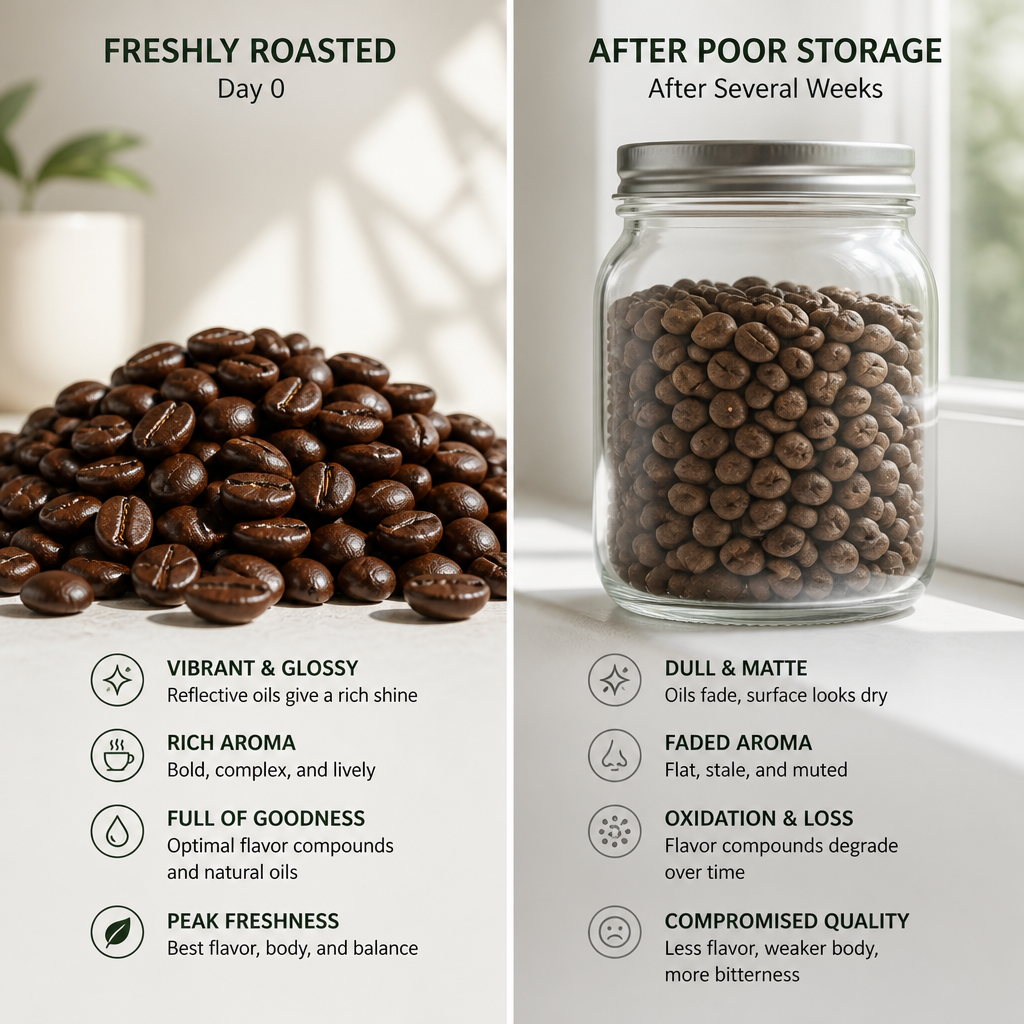
Light, especially direct sunlight, degrades the flavour compounds in roasted coffee. This is why clear glass jars look attractive on a kitchen counter and perform badly as coffee containers. The aesthetics work against the contents.
Good storage is not complicated. It is simply a matter of keeping four things away from your beans: air, moisture, heat, and light. Get those four right, and almost everything else takes care of itself.
The Best Containers for Coffee Bean Storage
Not all containers are equal, and the difference between a poor one and a good one is not subtle. The right container can extend the usable freshness of your beans by days. The wrong one can shorten it just as dramatically.
Ceramic and Stainless Steel Canisters
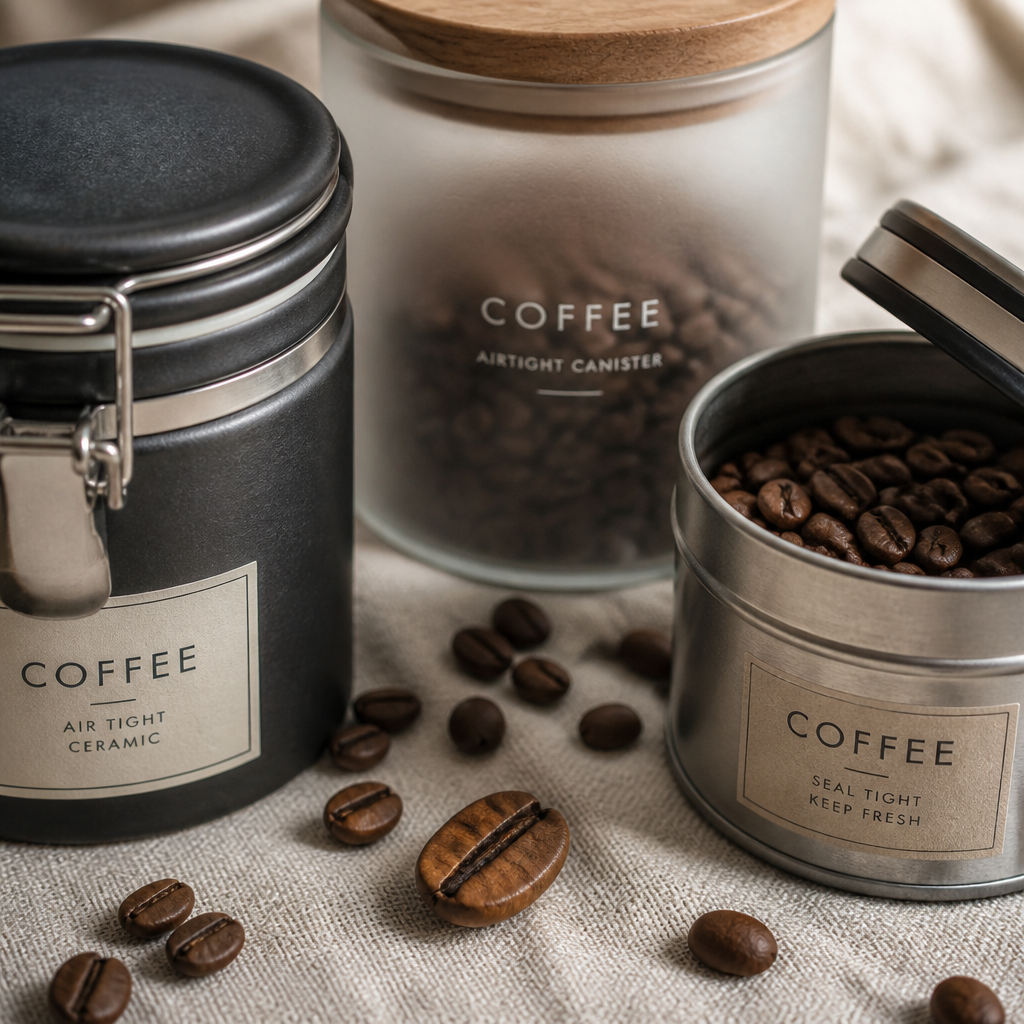
An airtight canister made from ceramic or stainless steel is the best option for everyday coffee storage. These materials are opaque, which blocks light, and they do not absorb odours or impart flavours. A good rubber-sealed lid creates a reliable airtight barrier. If you are storing beans you will use within two weeks, this is all you need.
Pro tip: After filling your canister, add a food-safe oxygen absorber packet before sealing. These packets remove residual oxygen from inside the container, slowing oxidation considerably. Replace them every two to four weeks.
Valve-Sealed Bags
The foil bags with one-way valves that many speciality roasters, including Farrer's, use for dispatch serve a genuine purpose. The valve allows CO2 from the beans to escape without letting oxygen in. These bags work well as short-term storage as long as you squeeze out excess air and reseal them tightly after each use. They are not designed for long-term storage once opened, but for the first week they are often the best vessel you have available.
What to Avoid
Clear glass jars are visually pleasing but functionally poor on a lit counter. Paper bags, even folded and clipped, allow too much air exchange. Plastic bags from the supermarket offer almost no protection. The original retail packaging for most supermarket coffee is not designed for long-term storage once opened, so decanting into a proper airtight container is always worthwhile.
Pro tip: If you use a bag for storage, press out all excess air every single time you reseal it, not just when you first open it. Each time you reach into the bag and reseal it loosely, you are trapping a fresh pocket of oxygen against your beans.
Where to Store Your Beans at Home
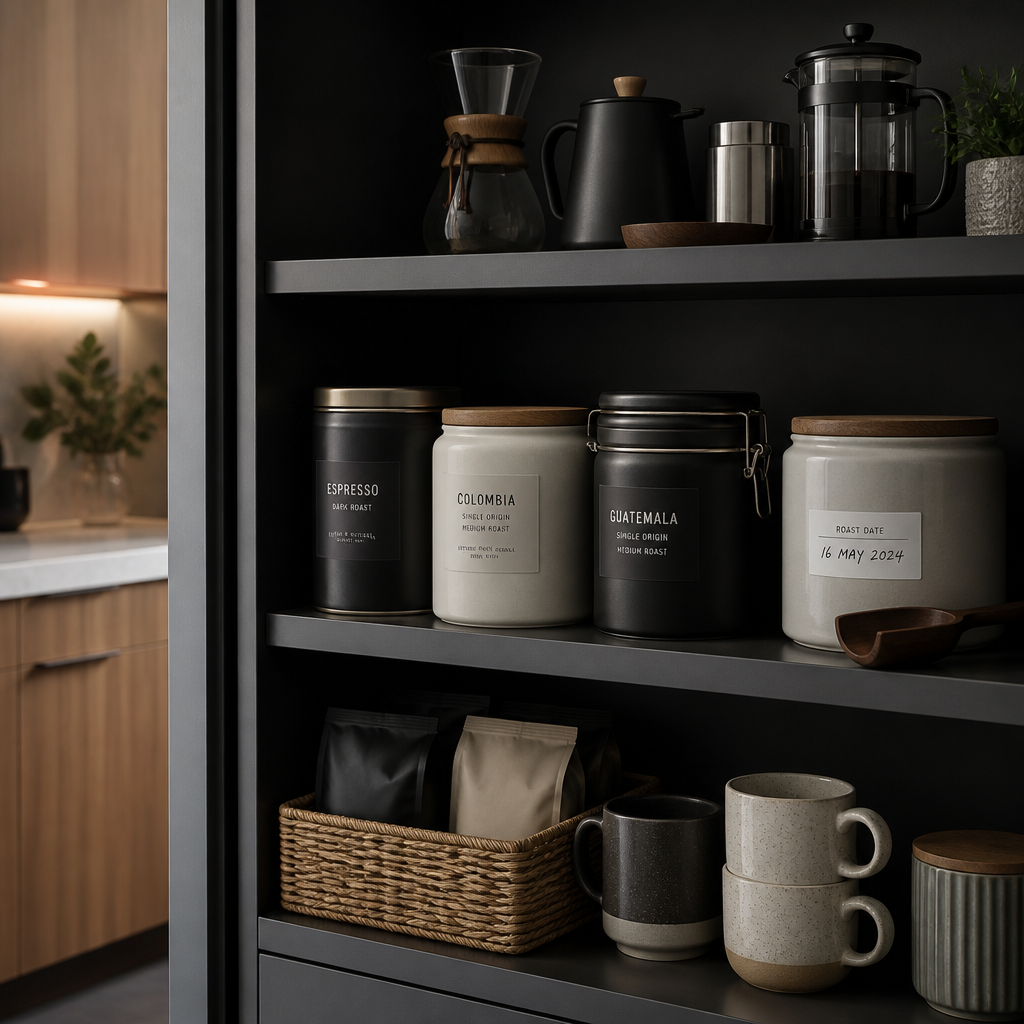
The ideal storage location is a cool, dark, and consistently dry place. A kitchen cupboard or pantry shelf, away from the hob, oven, toaster, and kettle, is the right answer for most homes. Consistency matters almost as much as temperature. A spot that swings between warm and cold causes condensation inside containers, introducing the moisture you are trying to avoid.
The counter next to the coffee machine is convenient but often the worst possible spot. It catches heat from the machine, steam from the kettle, light from the window, and vibrations that do nothing useful. Move the container into the cupboard and only bring it out when you are grinding.
If you have a cool utility room, larder, or dedicated pantry, use it. Somewhere in the range of 16 to 21 degrees Celsius is a practical target for ambient storage temperature, though the exact number matters less than avoiding the spikes and heat sources common in a working kitchen.
The Freezer Debate: When It Works and When It Doesn't
Freezing coffee beans is a topic that divides even serious coffee people, and the nuance is genuinely important. The short answer: freezing can work well for long-term storage if done correctly, and it almost always goes wrong when done carelessly.
When Freezing Makes Sense
If you have bought more coffee than you can use in three to four weeks, or if you find an exceptional seasonal release you want to hold, freezing in properly airtight, portioned batches is a legitimate option. The key is to divide your beans into week-sized portions before freezing, each sealed in an airtight freezer-safe bag or vacuum-sealed pouch. When you need a portion, remove it from the freezer and allow it to return to room temperature before opening the container. Opening a cold container immediately causes condensation, which is exactly what you are trying to prevent.
When Freezing Causes Problems
The most common freezing mistake is treating the freezer like a canister. People open the freezer, scoop out a few spoons of beans, and reseal the bag. Every time this happens, the temperature fluctuation causes condensation inside the bag. Repeated freeze-thaw cycles introduce moisture progressively, and moisture is one of the four enemies of freshness. The fridge carries the same risk without even the preservation benefit of freezing temperatures.
A practical rule: once a portion has been removed from the freezer and brought to room temperature, use all of it within one to two weeks. Never return thawed beans to the freezer.
Freshness Timelines, Roast Dates, and Degassing
Understanding the roast date on your bag of Farrer's coffee is not just for curiosity. It tells you exactly where your beans are in their freshness window, and it changes how you should brew them.
The Degassing Window
Roasting produces CO2 inside the bean, and this CO2 continues to escape, or degas, after roasting is complete. If you brew beans that are too freshly roasted, that trapped CO2 interferes with extraction, producing uneven, gassy results and, in the case of espresso, unstable crema. Most whole bean coffees reach their flavour peak somewhere between 4 and 14 days after roasting, with espresso generally benefiting from a slightly longer rest than filter or pour-over methods. The one-way valve on a freshly roasted bag exists precisely to allow this CO2 to escape safely without letting oxygen in.
The Peak Flavour Window and Beyond
The peak flavour window for most roasted coffee is roughly the first two to four weeks after roasting. Beans remain drinkable beyond that point, particularly if stored well, but the brightness and complexity fade progressively with each passing week. A roast date is not an expiry date, but it is a freshness guide. Buying coffee with a roast date clearly printed on the bag, as Farrer's provides, gives you the information you need to drink it at its best rather than guessing. Darker roasts, because their oils are exposed at the surface of the bean, tend to oxidise and fade faster than lighter roasts.
If you receive a freshly roasted bag with a very recent roast date, patience is rewarded. Rest it for a few days before opening, and the flavour will be noticeably more developed than if you brew it on day one.
Whole Bean vs. Pre-Ground Storage
Whole beans retain freshness far longer than ground coffee because the intact structure of the bean limits the surface area exposed to oxygen. Grinding shatters that structure and creates a dramatically larger surface area, dramatically accelerating oxidation. Where a properly stored whole bean coffee might hold its peak flavour for two to four weeks, ground coffee can go noticeably stale in as little as a few days.
The practical implication is straightforward: buy whole beans and grind just before brewing. This is not coffee snobbery. It is the single most effective freshness decision available to a home brewer short of roasting yourself. Farrer's offers coffee pre-ground for convenience, but if you can invest in a hand grinder or an entry-level electric burr grinder, the improvement in cup quality from switching to whole beans is immediate and obvious.
If you do buy pre-ground coffee, treat it as perishable. Keep it in the most airtight container you have, use it within a week or two of opening, and buy smaller quantities more frequently rather than stocking up.
Coffee Storage Methods Compared
| Storage Method | Best For | Key Limitation |
|---|---|---|
| Airtight opaque canister (ceramic or steel) in a cool cupboard | Everyday storage of beans you will use within 2 to 4 weeks | Does not extend life significantly beyond 4 weeks once opened |
| Original valve-sealed roastery bag, resealed tightly | First 7 to 10 days after opening a freshly roasted bag | Becomes less effective as the bag empties and more air is trapped inside |
| Airtight freezer bags in single-use portions, stored in the freezer | Long-term storage beyond 4 weeks, especially for surplus stock | Requires strict discipline around portioning and never refreezing thawed beans |
Frequently Asked Questions
Can I store coffee beans in the fridge?
No. The fridge is one of the worst places for coffee beans. It is humid, and coffee is hygroscopic, which means it absorbs moisture readily. Refrigerators are also full of competing odours from other foods, and coffee will absorb those too. The result is beans that taste of stale fridge smells rather than the origin they came from. Keep your beans in a cool, dark cupboard instead.
How long do whole coffee beans stay fresh once the bag is opened?
Stored properly in an airtight, opaque container kept away from heat and light, whole beans will hold their best flavour for roughly two to four weeks after the bag is opened. They remain drinkable beyond that, but the complexity and brightness fade noticeably after a month. For this reason, buying smaller quantities more frequently will always produce a better cup than buying in bulk and storing for months.
Is it better to buy pre-ground or whole bean coffee for freshness?
Whole bean coffee is significantly better for freshness. Grinding shatters the bean and exposes a much larger surface area to oxygen, which accelerates staling. Ground coffee can go noticeably flat within days of opening. Whole beans, properly stored, give you weeks. If you want the best from your Farrer's coffee, a burr grinder and whole beans are the most effective combination available.
What type of container is best for storing coffee beans?
An airtight canister made of ceramic or stainless steel is the best everyday option. It blocks light, seals out oxygen, and does not absorb or transfer odours. Avoid clear glass jars on lit counters. If you are using the original bag, squeeze out as much air as possible before resealing each time. Vacuum-sealed canisters with active air removal are even better for anyone who wants to go further.
Why does my freshly roasted coffee taste odd when I brew it immediately?
Freshly roasted beans contain a significant amount of CO2 that was produced during roasting. This gas continues to escape for several days after roasting, a process called degassing. If you brew too soon, that excess CO2 interferes with extraction, producing uneven results and off flavours. Most whole bean coffees benefit from a rest of at least 4 to 7 days after roasting. Espresso typically needs a little longer, often 7 to 10 days, before it pulls cleanly.
Can I freeze coffee beans at home?
Yes, but only if you do it correctly. Portion your beans into single-week servings before freezing, each in its own airtight, freezer-safe bag. When you need a portion, remove it from the freezer and allow it to come fully to room temperature before opening the bag. This prevents condensation. Never put thawed beans back into the freezer. Treat freezing as a tool for managing surplus stock, not as a routine storage method.
Does the roast date on the bag matter?
Yes, significantly. The roast date tells you where in the freshness window your beans currently sit. Coffee peaks in flavour roughly 4 to 14 days after roasting and gradually loses complexity beyond that. A clearly printed roast date, rather than a vague best-before stamp months in the future, is a sign of quality and transparency from a roaster. It gives you the information you need to brew your coffee at its genuine best.
Have a storage method that works particularly well for you, or a mistake you made with a bag of good coffee that you have since fixed? Share it in the comments below.
References
- Five practical methods for preserving roasted coffee bean freshness and flavour
- Why air, moisture, heat, and light are coffee's main enemies and how to block them
- A clear guide to choosing containers and deciding whether to freeze your coffee beans
- How CO2 degassing after roasting affects flavour and the ideal brewing window
- Consumer guidance on airtight containers, cool dark locations, and long-term freezer storage


