

Most coffee drinkers who land on Farrer's website for the first time face the same problem: too many blends, not enough context.
The No. 1 Blend coffee sits at the top of the range, carries the roastery's own name, and is described as a signature, but what does that actually mean in the cup? This guide answers that question properly, covering the bean origins, tasting notes, ideal brewing methods, and how the No. 1 Blend compares to the rest of Farrer's lineup.
If you have been seeing it on social media and wondering whether it lives up to the reputation, read on.
Table of Contents
- Quick Takeaways
- What Is Farrer's No. 1 Blend?
- Tasting Notes and Flavour Profile
- Brewing the No. 1 Blend
- How It Compares to Other Farrer's Blends
- Who Should Buy the No. 1 Blend?
- Frequently Asked Questions
- References
Quick Takeaways
| Key Insight | Explanation |
|---|---|
| It is a pure Arabica blend | The No. 1 Blend uses high-grown Arabica beans sourced from South and Central America and Asia, with no Robusta filler. |
| The roast is light, not weak | Light roasting preserves the beans' origin character, delivering genuine body and depth alongside bright acidity. |
| Filter and cafetière are the recommended brew methods | These methods suit the blend's balanced extraction profile and let the chocolate, nut, and citrus notes develop fully. |
| Tasting notes: chocolate, nuts, citrus | Specifically, milk chocolate and Brazil nut character with citrus fruit top notes and a vibrant, clean acidity. |
| It has carried Farrer's name for over 200 years | The No. 1 Blend is John Farrer's signature creation, roasted at the Kendal roastery since 1819, making it a rare piece of British coffee history. |
| Espresso is possible but not the primary use case | Ground fine, it produces velvety shots with a lingering finish, but its lighter roast means it performs best without pressure brewing. |
| It works without milk | The clean acidity, noticeable sweetness, and smooth finish mean this coffee does not require milk to be enjoyable, unlike darker roasts built for lattes. |
What Is Farrer's No. 1 Blend?
The No. 1 Blend is John Farrer's signature coffee: a blend of high-grown Arabica beans drawn from South and Central America and Asia, roasted to a light profile at the company's roastery in Kendal, the Lake District. Farrer's has been roasting this blend since 1819, which makes it one of the longest-running named coffee blends produced by any single roaster in the UK.
The beans are roasted in small batches, then hand-packed. That approach matters more than it sounds. Small-batch roasting gives the roaster precise control over development time and final temperature, which is what keeps a light roast from tipping into under-development or sourness.
Industrial roasters cannot replicate that level of attention per batch, and it is a core reason why the No. 1 Blend has maintained a consistent character across generations of customers.
The South and Central American component delivers the rich, smooth, and nutty backbone. The Asian beans add a clean, complex layer with a sweet finish and chocolate notes. Together they produce a blend that is more than the sum of its parts: structured enough to satisfy, but bright enough to stay interesting from the first sip to the last.
A blend a roaster puts their own name to is a statement of intent, not just a product description. Every batch has to justify the name on the label.
Tasting Notes and Flavour Profile
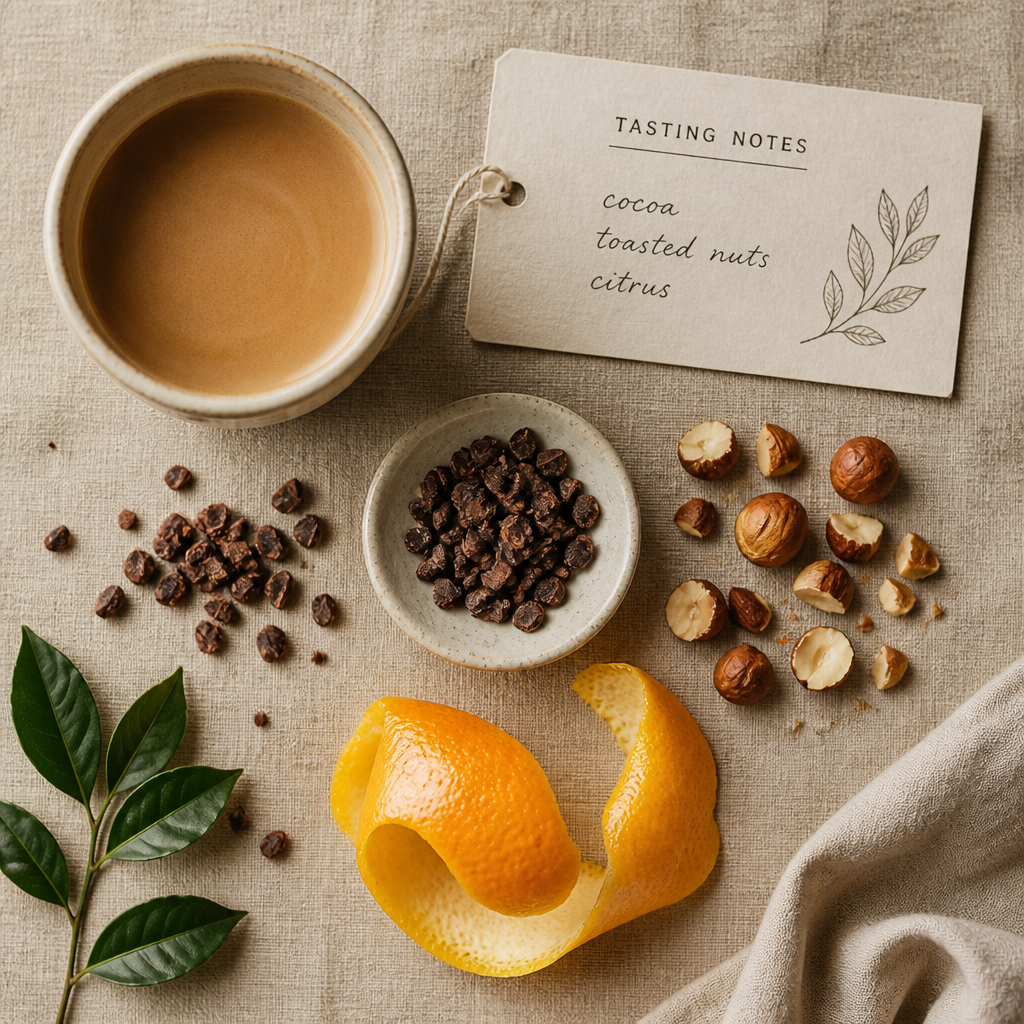
Farrer's describes the No. 1 Blend as offering a well-rounded body, a vibrant acidity, and flavours of chocolate and nuts with citrus fruit top notes. More specifically, the tasting notes are milk chocolate and Brazil nut, with citrus top notes providing the brightness that distinguishes it from darker, more one-dimensional blends.
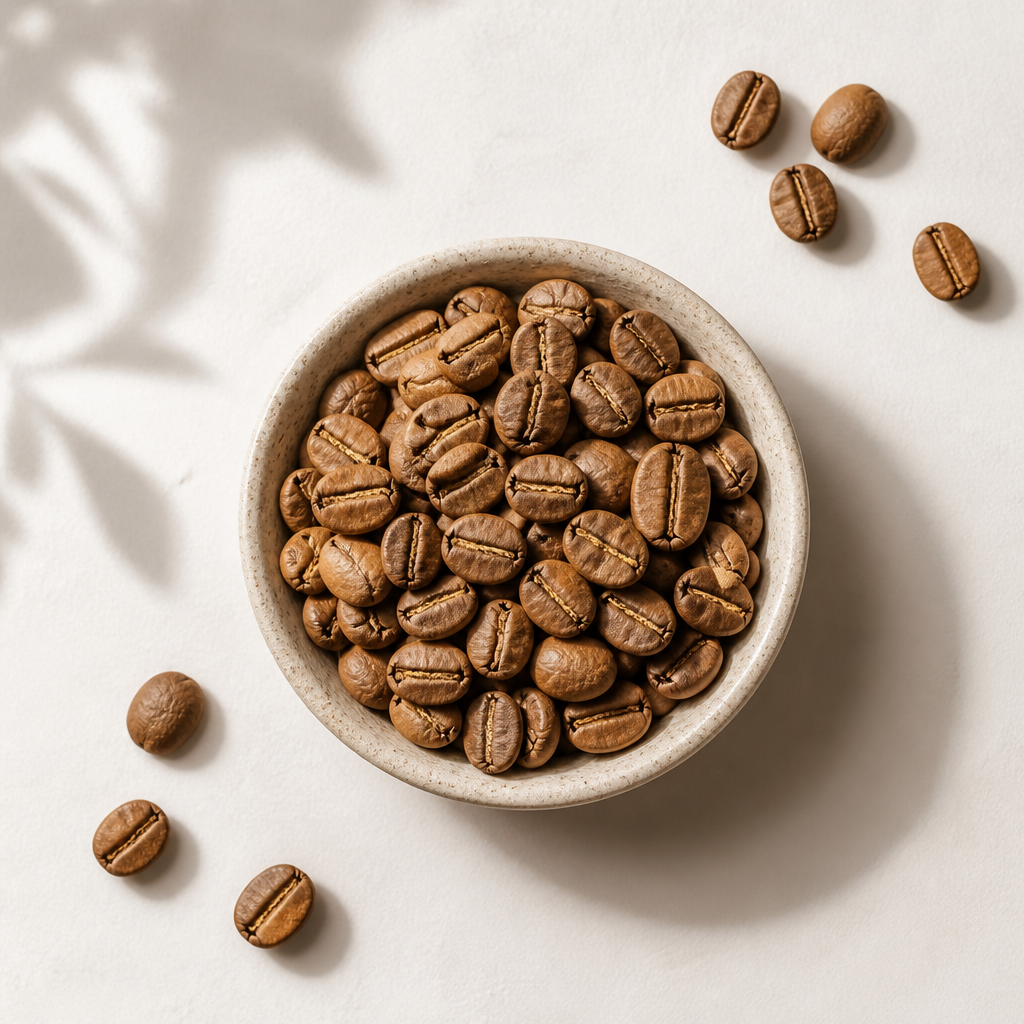

What "light roast" actually means here
A common mistake people make with light roast coffees is assuming the cup will be weak or thin. It will not. Light roasting stops the bean's development at a point where origin flavours are preserved rather than cooked out. The No. 1 Blend has genuine body and depth. What it does not have is the burnt, smoky, or heavily caramelised notes that come from pushing beans past their second crack. That is a deliberate choice, not a limitation.
The acidity in the No. 1 Blend is described as vibrant but not sharp. This is the difference between a bright, lively acidity that makes the coffee feel clean and refreshing, and the astringent sharpness that puts people off lighter roasts when they encounter a badly extracted pour-over. Farrer's two-century roasting history shows in the precision of that balance.
How the flavour behaves across different brew methods
The milk chocolate and Brazil nut notes come through most clearly on a filter or pour-over, where the water has time to extract evenly without pressure. On a cafetière, the body becomes slightly heavier and the nut character is more prominent. On espresso or AeroPress with a finer grind, the cup shifts toward concentrated, velvety shots with a lingering finish. The citrus top notes are most noticeable in the aroma and the initial sip, and they fade pleasantly into the nut and chocolate finish.
Pro tip: Brew the No. 1 Blend at a water temperature between 93 and 96 degrees Celsius. Light roasts are denser than darker roasts and need slightly higher water temperatures to extract fully. Dropping below 90 degrees risks under-extraction, which is where the sourness that puts people off light roasts actually comes from.
Brewing the No. 1 Blend
The recommended primary brewing methods for the No. 1 Blend are filter and cafetière. Both suit the blend's balanced extraction profile, and Farrer's grinds the coffee differently depending on your chosen method when you order it pre-ground. Here is what each grind and method produces in practice.
Cafetière
A coarse grind prepared specifically for cafetière produces a rich, full-bodied cup with comforting depth. This is the most forgiving method for the No. 1 Blend. If you are brewing it at home without a precision kettle or set of scales, the cafetière will give you a consistently good result. Use a four-minute steep at around 94 degrees and plunge slowly. The Brazil nut character is at its most pronounced here.
Filter and pour-over
A medium grind prepared for filter gives a clean, smooth cup with bright, well-defined flavour. This is the method that best showcases the citrus top notes and the vibrant acidity. If you have a V60, Chemex, or electric filter machine, the No. 1 Blend is an excellent match. The cleaner extraction separates the flavour layers more distinctly than cafetière does.
AeroPress
A medium-fine grind prepared for AeroPress gives a smooth, balanced cup with low bitterness. AeroPress is an underrated method for light roasts because the slight pressure and short brew time extract the sweetness efficiently. The No. 1 Blend brewed on AeroPress produces something closer to a concentrated filter than a true espresso, but it is a clean and satisfying result.
Espresso machine
The No. 1 Blend can be ground fine for concentrated, velvety shots with a lingering finish. It works in an espresso machine, though it is not the primary use case for this blend. The lighter roast means crema production will be lighter than with a dedicated espresso blend like Farrer's Italian Blend or Classic Espresso Blend. If espresso with milk is your main use, one of those darker blends is a better fit. If you want to taste what a lighter roast espresso actually delivers in terms of sweetness and clarity, the No. 1 Blend is worth trying once.
Pro tip: If you order the No. 1 Blend as whole beans, grind immediately before brewing. Light roasts retain their aromatics for longer than dark roasts, but they still degas rapidly once ground. A burr grinder set to medium-fine for filter will give you significantly better results than a blade grinder at any setting.
How It Compares to Other Farrer's Blends
Farrer's range spans a wide roast spectrum, from the light No. 1 Blend through to the dark Italian Blend. Understanding where the No. 1 Blend sits relative to the other key blends removes the guesswork when you are choosing for the first time, or deciding whether to add a second option to your order.
| Blend | Roast Level | Best For |
|---|---|---|
| No. 1 Blend | Light. Vibrant acidity, milk chocolate, Brazil nut, citrus top notes. Pure Arabica. | Filter, cafetière, pour-over, AeroPress. Drinkers who want to taste origin character without bitterness. |
| Westmorland Blend | Dark. Full-strength, full-bodied, nutty flavours and dark chocolate notes, increased acidity. | Filter, cafetière, espresso. Drinkers who want stronger, more traditional British-style coffee. |
| Italian Blend | Dark roast built for espresso culture. Bittersweet, full-bodied, strong dark chocolate and roasted nut notes. | Espresso machine, moka pot, cafetière. Drinkers who prefer intense, milk-anchored drinks. |
The practical difference between the No. 1 Blend and the Westmorland Blend is significant. Both use Arabica beans and both work well in a cafetière or filter, but the Westmorland Blend's darker roast produces a heavier body and more pronounced bitterness. If you find the No. 1 Blend and want more strength without moving to espresso blends, the Westmorland Blend is the logical next step. If you find the Westmorland Blend and want more brightness and fruit character, moving to the No. 1 Blend is the right direction.
The comparison with the Italian Blend is more fundamental. The Italian Blend contains Robusta beans alongside Arabica, which adds caffeine and crema production. It is designed specifically around espresso machines and milk-based drinks. The No. 1 Blend is the right choice if you find dark espresso blends one-dimensional or heavy, and if you want a coffee that works well black as well as with milk.
Who Should Buy the No. 1 Blend?
The No. 1 Blend is not trying to be the most challenging or exotic coffee in Farrer's range. It is trying to be the best version of a dependable, well-made light roast, and it succeeds at that objective clearly. The people who get the most from it fall into a few distinct groups.
Home brewers moving away from supermarket coffee
If you have been buying branded dark roast bags from a supermarket and want to understand what freshly roasted, hand-packed Arabica actually tastes like, the No. 1 Blend is the correct starting point. The flavour difference from industrial-processed coffee is immediately obvious, and the light roast makes it easier to identify what you are tasting rather than having heavy caramelisation dominate everything.
Filter and pour-over enthusiasts
Anyone who already owns a V60, Chemex, or Kalita Wave and has been experimenting with single origins will find the No. 1 Blend genuinely interesting as a reference blend. It demonstrates what a skilled roaster can achieve with a considered blend rather than a single origin, and the clean, bright character translates beautifully through paper filters.
Trade and hospitality buyers
For cafes and hospitality businesses, the No. 1 Blend has been the bestseller at Farrer's own cafe for years. It works across a range of service formats, satisfies customers who want both black coffee and milk drinks, and carries a two-century heritage that makes it an easy conversation piece on a menu. Farrer's next-day dispatch on orders over £35 and their barista training offer make the supply relationship straightforward to manage.
People who drink coffee black
This is where the No. 1 Blend genuinely stands apart from the darker blends in Farrer's range. The clean acidity, noticeable sweetness, and smooth finish mean it does not need milk to balance it. A well-brewed cup on filter or pour-over is a complete drink on its own. Most dark roast and espresso blends were designed with milk in mind. The No. 1 Blend was not, and that matters if you drink your coffee black.
Frequently Asked Questions
What does the Farrer's No. 1 Blend taste like?
The No. 1 Blend has tasting notes of milk chocolate and Brazil nut, with citrus fruit top notes providing brightness. The body is well-rounded, the acidity is vibrant rather than sharp, and the finish is clean and smooth. It is a light roast, so the flavour profile is defined by origin character rather than roasting intensity.
Is the No. 1 Blend suitable for espresso machines?
It can be used in an espresso machine when ground fine, producing velvety shots with a lingering finish. However, it is not primarily designed as an espresso blend. Crema production will be lighter than with Farrer's dedicated espresso blends, and the flavour profile works best with filter and cafetière brewing methods. If espresso is your main method, the Classic Espresso Blend or Italian Blend will serve you better.
Where do the beans in the No. 1 Blend come from?
The No. 1 Blend uses high-grown Arabica beans sourced from South and Central America, which provide the rich, smooth, and nutty backbone, and from Asia, which adds a clean, complex layer with sweet finish and chocolate notes. The exact sourcing reflects Farrer's relationships with trusted growers across multiple growing regions.
How does the No. 1 Blend differ from the Westmorland Blend?
The core difference is roast level. The No. 1 Blend is a light roast with bright acidity, citrus top notes, and a milk chocolate and nut character. The Westmorland Blend is a dark roast with full strength, increased acidity, and heavier chocolate and nutty notes. Both work in filter and cafetière, but if you want more body and strength, the Westmorland Blend is the step up. If you want more brightness and origin character, the No. 1 Blend is the right choice.
Is the No. 1 Blend good for drinking black?
Yes. This is one of its strongest qualities. The clean acidity, sweetness, and smooth finish mean it does not require milk to be enjoyable. It is one of the few blends in the Farrer's range that was genuinely designed to work as a standalone black coffee rather than as the base for milk-based drinks.
Can I subscribe to regular deliveries of the No. 1 Blend?
Farrer's offers a subscription service that lets you save ten percent and choose your coffee, grind, and delivery schedule, with the option to pause, skip, or cancel at any time. This is the most practical option if the No. 1 Blend becomes your everyday coffee, as it ensures you always have freshly roasted beans dispatched on your schedule rather than ordering reactively when you run out.
Does Farrer's offer the No. 1 Blend as whole beans or pre-ground?
Both options are available. The No. 1 Blend is offered as whole beans or pre-ground to specific settings matched to cafetière, filter, AeroPress, and espresso. If you have a burr grinder, whole beans will give you the best results because you can dial in the exact grind size for your specific brewer and adjust as the beans age after roasting.
Have you already tried Farrer's No. 1 Blend, or are you deciding between it and another blend in the range? Share your experience or your question below.
References
- Farrer's No. 1 Blend Coffee product page with tasting notes, origins, and grind options
- Farrer's blog comparison of the No. 1 Blend and Italian Blend, covering roast level, brew method, and flavour differences
- Farrer's coffee grind guide covering extraction principles and light roast brewing adjustments
- Farrer's No. 1 Blend product listing with roast description, recommended brew method, and taste notes
- Farrer's profile on the Beverage Standards Association, covering the roastery's history and approach to quality


