

Most coffee lovers obsess over the grind size, the brew ratio, the water temperature. Then they leave their beans sitting in a clear glass jar next to the kettle and wonder why their cup tastes flat. Knowing how to store coffee beans properly is the single most overlooked skill in home brewing, and it matters far more than most people realise.
Fresh, well-roasted beans like those hand-packed at Farrer's roastery in the Lake District can deliver an extraordinary cup, but only if you protect them from the four things that destroy flavour before the kettle even boils.
Table of Contents
- Why Coffee Goes Stale: The Four Enemies
- Quick Takeaways
- The Best Containers for Storing Coffee Beans
- Where to Store Your Beans in a UK Kitchen
- Whole Beans vs Pre-Ground: Why It Matters for Freshness
- Can You Freeze Coffee Beans?
- How Long Do Coffee Beans Actually Last?
- Common Coffee Storage Mistakes to Avoid
- Frequently Asked Questions
- References
Why Coffee Goes Stale: The Four Enemies
Before you choose a container or a cupboard, you need to understand what is actually working against you. Roasted coffee is a fragile, chemically active product. The moment it leaves the roaster, it starts losing the volatile aromatic compounds that give it character. Four factors accelerate that process: oxygen, light, heat, and moisture.
Oxygen is the primary culprit. It triggers oxidation, a chemical process that degrades the essential oils in the bean and produces stale, cardboard-like flavours. Light, particularly UV light, causes photodegradation, breaking down those same aromatic compounds and accelerating rancidity. Heat speeds up every chemical reaction involved in staling. Moisture is especially dangerous in the UK, where ambient humidity is rarely low, because it can cause beans to absorb odours and begin to deteriorate rapidly.
There is a fifth factor worth understanding: CO2. Freshly roasted beans expel carbon dioxide as a natural byproduct of the roasting process. This off-gassing actually provides a temporary protective buffer against oxygen. It is why reputable roasters, including Farrer's, often dispatch beans within days of roasting. The beans are lively, aromatic, and actively releasing CO2. The goal of good storage is to let that CO2 escape while blocking oxygen, light, heat, and moisture from getting in.
Quick Takeaways
| Key Insight | Explanation |
|---|---|
| Use an airtight, opaque container | Ceramic, stainless steel, or dark glass with a tight-sealing lid blocks both air and light, the two fastest routes to stale coffee. |
| Store in a cool, dark cupboard, not on the worktop | Heat from the oven, kettle, and sunlight accelerates staling. A closed pantry cupboard is the best everyday location in a UK kitchen. |
| Buy whole beans and grind as you go | Ground coffee has vastly more surface area exposed to oxygen, so it goes stale many times faster than whole beans stored in the same conditions. |
| Roast date beats best-before date | A supermarket best-before date can legally be set up to two years after roasting. A roast date tells you exactly how fresh the coffee is. |
| Freeze in single-use portions, not the whole bag | If you freeze coffee, divide it first. Taking beans in and out of the freezer causes condensation and ruins the batch you are not using. |
| Never store coffee in the fridge for daily use | Refrigerators are humid and full of competing odours. Daily temperature cycling introduces moisture every time you open the door. |
| Consume within 2 to 4 weeks of the roast date | For peak flavour, whole beans are best used within this window. After that, oxidation gradually flattens even the finest roast. |
The principles above are not opinions. They follow directly from the chemistry of roasted coffee. Get these right and you will notice the difference in your cup within days of switching your storage habits.
The Best Containers for Storing Coffee Beans
The container you choose determines how well you control oxygen and light exposure. Not all airtight containers are equal, and some popular choices are actively counterproductive.
Ceramic Canisters with Rubber Gasket Lids
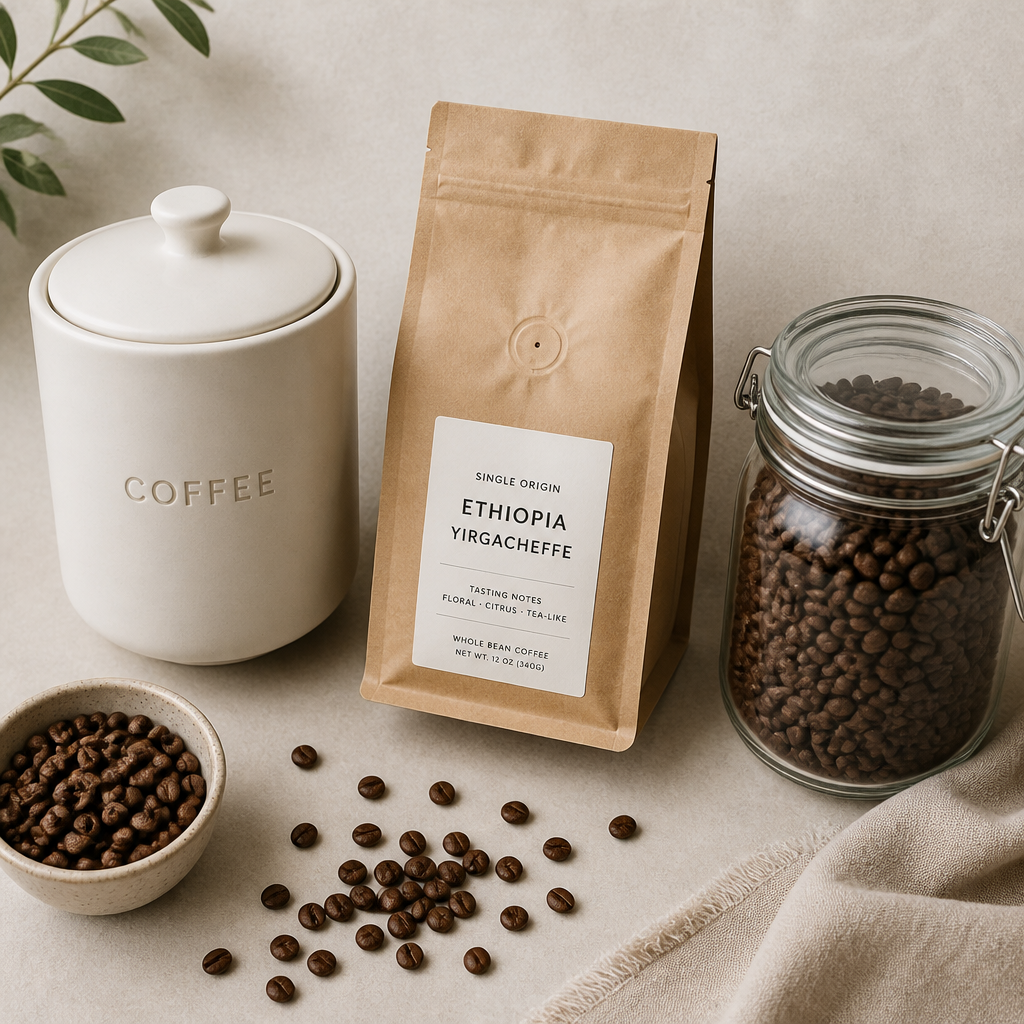
These are the gold standard for everyday home storage. The ceramic body blocks all light, and a rubber or silicone gasket creates a reliable airtight seal. They sit happily on a cupboard shelf, are easy to clean, and do not react with the oils in your beans the way some plastics can. Look for canisters with a one-way valve if you are storing very freshly roasted coffee, as this allows CO2 to escape without letting oxygen back in.
Stainless Steel Containers
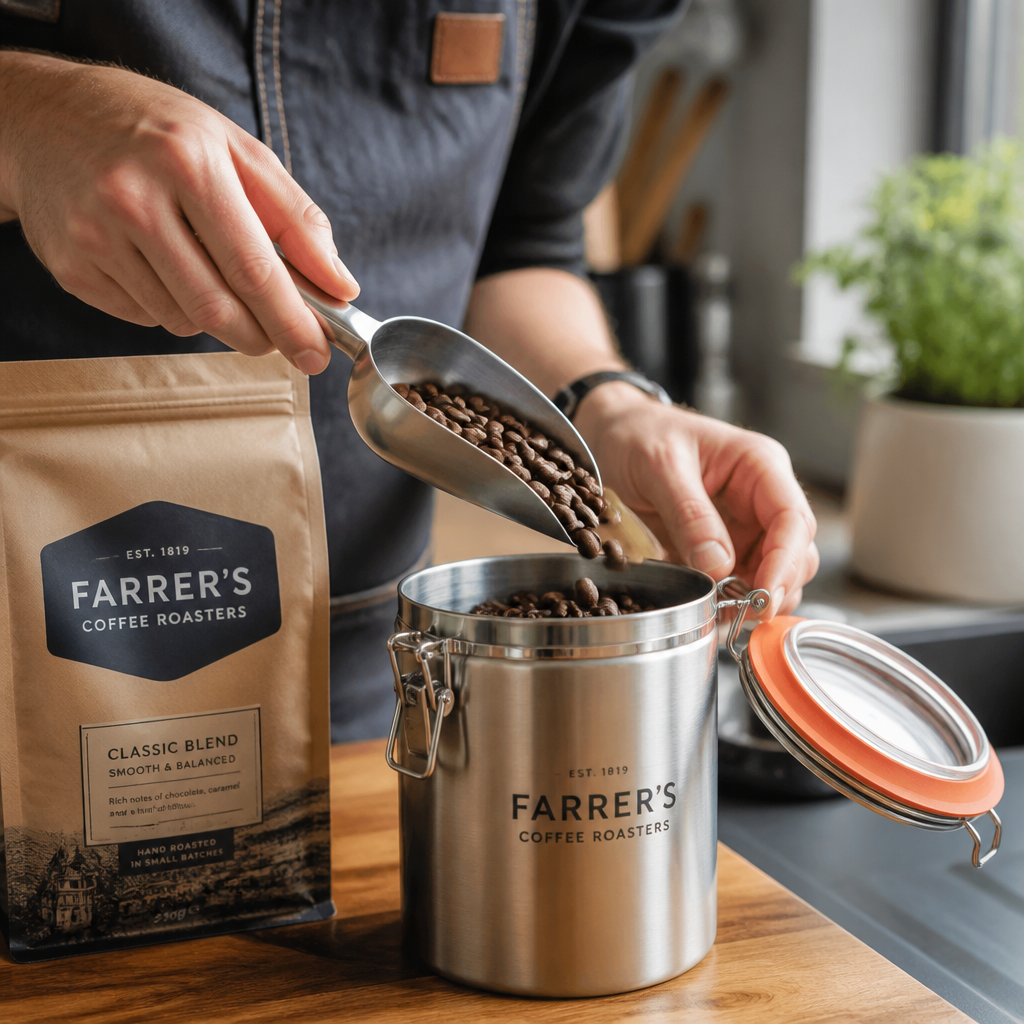
A practical and durable alternative. Stainless steel is non-reactive, opaque, and available in a range of sizes. Containers with clamp-shut lids or silicone-sealed lids offer a strong barrier against air. Avoid anything with a loose-fitting lid that simply rests on top. The seal is everything.
Vacuum-Sealed Coffee Canisters
Vacuum containers actively expel air with a push or twist mechanism, reducing the oxygen inside the canister significantly below ambient levels. These are worth the investment if you are serious about freshness, particularly for speciality beans where you want to preserve every nuance of a complex roast profile. They are especially useful between the 2 and 4 week mark after roasting, when off-gassing has slowed and oxygen is the dominant threat.
What to Avoid
Clear glass jars are fine if they live permanently inside a dark cupboard, but they offer no light protection at all if left on a worktop. The original paper or cloth bag your coffee came in is not a long-term storage solution on its own. If you keep beans in their original bag, roll the top down tight after each use, clip it firmly, and place the whole bag inside an airtight container. That way you get two layers of protection.
Pro tip: If you buy a larger quantity of beans, split them into smaller airtight containers when they arrive. One container to use daily, the rest sealed and stored away. Every time you open a container, you let oxygen in. Smaller portions mean less total exposure over the life of the batch.
Where to Store Your Beans in a UK Kitchen
Location is just as important as the container. A perfectly sealed canister sitting next to the hob is still being steadily degraded by heat every time you cook.
The Right Spot: A Cool, Dark Cupboard
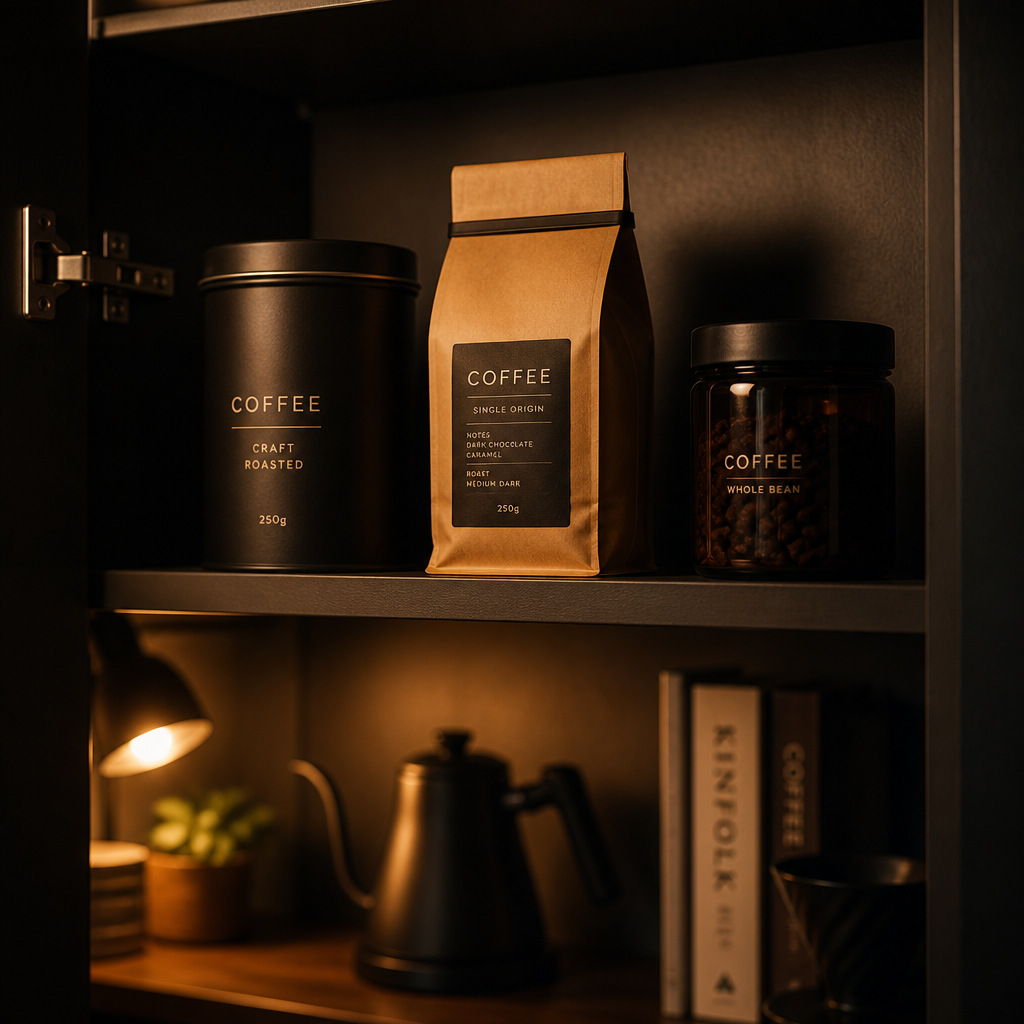
A pantry or closed kitchen cupboard, away from the oven, hob, boiler, and any window, is the ideal everyday storage location. The temperature stays relatively consistent, there is no light exposure, and humidity is lower than on an open worktop. Aim for somewhere that stays below 25 degrees Celsius without significant daily fluctuation.
UK-Specific Considerations
British kitchens present a particular challenge. The UK climate means humidity is rarely low, and older homes especially can have significant variation between a warm summer kitchen and a cold winter one. In summer, watch for cupboards near external walls that can warm up considerably during a hot spell. In winter, avoid storing beans near radiators or heated towel rails. A consistent, moderate temperature is always preferable to dramatic swings in either direction.
Pro tip: The worktop next to the kettle is one of the worst places to store coffee in a UK kitchen. Steam and heat from repeated boiling creates exactly the combination of warmth and moisture that stales beans fastest. Move your canister to a cupboard shelf instead.
Keeping coffee fresh is not complicated, but it does require deliberate choices. Oxygen, light, heat, and moisture are always working against you. Remove them from the equation and freshly roasted beans will reward you with flavour that supermarket coffee simply cannot replicate.
Whole Beans vs Pre-Ground: Why It Matters for Freshness
This is not a nuanced debate. Whole beans stay fresh significantly longer than pre-ground coffee, and the reason is straightforward: surface area. A whole bean has a relatively small surface area exposed to the air. The moment you grind it, you shatter it into hundreds of particles, vastly increasing the surface exposed to oxygen. Staling happens many times faster in ground coffee than in whole beans stored in identical conditions.
If you buy pre-ground coffee, you should still store it in an airtight, opaque container in a cool cupboard, but you should also accept that you are working with a much shorter freshness window. Grind only what you need, immediately before brewing, and your cup will reflect the quality of the beans rather than the length of time they have been sitting ground in a bag.
Farrer's offers both whole beans and freshly ground options to suit different home setups. If you own a grinder, even a modest hand grinder, choosing whole beans and grinding to order is the single most effective change you can make to your daily brew quality. It combines immediately with good storage habits to produce a noticeable improvement.
Can You Freeze Coffee Beans?
You can freeze coffee beans, and when done correctly, freezing genuinely slows the staling process for longer-term storage. The key phrase is "when done correctly." Most people who freeze coffee do it wrong and end up with beans that taste of freezer rather than coffee.
When Freezing Makes Sense
Freezing is worth considering in two specific situations. First, if you have more coffee than you can reasonably consume within two to three weeks, freezing the excess preserves it far better than leaving it in a cupboard. Second, if you have invested in an exceptional or expensive single-origin bean and want to make it last for a special occasion, freezing lets you protect your investment.
How to Freeze Coffee Beans Properly
Divide the beans into small, single-session or single-week portions before freezing. Seal each portion in an airtight, freezer-safe container or a vacuum-sealed bag. When you are ready to use a portion, remove it from the freezer and allow it to come fully to room temperature before opening the container. This step is non-negotiable. Opening a frozen or still-cold container causes condensation to form on the beans, introducing the moisture that you have been working to exclude.
Never return unused beans to the freezer once they have been thawed. Repeated freeze-thaw cycles are more damaging than not freezing at all. The portion you removed is the portion you brew, in full, over the following days.
Why the Fridge is Not the Answer
The refrigerator is consistently misunderstood as a storage location for coffee. It is a poor choice for daily use. Fridges are humid, and they are full of competing food odours that coffee beans readily absorb. Every time you open the fridge door, you introduce a temperature cycle that promotes condensation. If you do freeze coffee, a freezer is the correct choice, used correctly as described above. The fridge is neither one thing nor the other, and it delivers the disadvantages of both without the benefits of either.
How Long Do Coffee Beans Actually Last?
The honest answer depends almost entirely on the roast date, not the best-before date. A best-before date stamped on a supermarket bag can legally be set up to two years after roasting, which means a bag with a best-before two years away might have been roasted six to twelve months ago. The volatile aromatic compounds that define great coffee have already faded significantly by then.
Whole bean coffee from a quality roaster is at peak flavour within two to four weeks after the roast date when stored correctly in an airtight container away from light and heat. After that window, the coffee does not become undrinkable, but oxidation gradually flattens the complexity of the cup. The delicate floral, fruity, or chocolatey notes that distinguish a good roast become less pronounced, and you are left with something generic.
This is why Farrer's dispatches orders with next-day delivery on qualifying orders. The point of sourcing freshly roasted coffee is to actually drink it fresh, not to let it sit on a shelf for months. Buy in quantities you will use within two to three weeks, store it properly, and grind it to order. That is the full picture.
For espresso beans specifically, there is an additional consideration: very fresh beans, within the first few days of roasting, produce heavy CO2 off-gassing that can interfere with espresso extraction, causing uneven pressure and sour notes. Most roasters suggest resting espresso beans for at least four to six days after the roast date before pulling shots. This is a nuance worth knowing if you use a home espresso machine.
Common Coffee Storage Mistakes to Avoid
Even coffee drinkers who understand the theory make practical errors that undo their efforts. Here are the most common ones, stated plainly.
Storing Beans in a Clear Jar on the Worktop
This is arguably the most common mistake in UK kitchens. It looks attractive and convenient, but it simultaneously exposes beans to light and heat, two of the four primary enemies. The beans will stale measurably faster than they would in a closed opaque container in a cupboard. Move them out of the light.
Opening the Container Frequently Without Minimising Air Exposure
Every time you open your storage container, you flush out the protective CO2 atmosphere and let fresh oxygen in. Open the container once, scoop what you need, and seal it immediately. Do not leave it open while you measure, grind, and set up your brewer.
Buying Too Much at Once
Buying in bulk feels economical, but if you are buying a month's supply or more of a single bag, you are accepting that most of those beans will be past their prime by the time you reach them. Better to order more frequently in smaller quantities, taking advantage of next-day dispatch services, and always brew from a bag that is within its peak window.
Ignoring the Roast Date in Favour of the Best-Before Date
The roast date is the only number that matters for flavour. Always buy from roasters who display the roast date clearly on the bag. It is the most reliable indicator of what is inside.
| Storage Method | Best For | Key Limitation |
|---|---|---|
| Airtight opaque canister in a cupboard | Everyday use, beans consumed within 2 to 4 weeks of roasting | Does not extend freshness beyond the natural peak window |
| Vacuum-sealed canister in a cupboard | Extending freshness beyond 3 weeks, preserving complex single-origin profiles | Higher cost, requires active pumping to maintain vacuum |
| Single-portion freezer bags in airtight freezer containers | Storing large quantities or expensive beans for longer than 3 to 4 weeks | Must be thawed fully before opening; cannot refreeze unused portions |
Frequently Asked Questions
What is the best container for storing coffee beans in the UK?
A ceramic or stainless steel canister with a tight rubber gasket lid is the best choice for most home setups. It blocks both light and air, the two fastest routes to stale coffee, without reacting with the natural oils in the beans. If you are serious about extending freshness further, a vacuum-sealed canister that actively removes oxygen is the next step up. Avoid clear glass jars on the worktop, as these expose beans to both light and ambient heat.
How long do coffee beans stay fresh once opened?
Whole beans are at peak flavour for two to four weeks after the roast date when stored correctly in an airtight, opaque container away from heat and light. Once a bag is opened, that window does not change significantly, provided you reseal the container firmly after every use. The roast date printed on the bag is your reference point, not the date you opened it.
Can you store coffee beans in the fridge?
No. The fridge is a poor storage location for everyday coffee use. It is too humid, full of competing food odours that coffee absorbs readily, and the repeated temperature changes every time you open the door promote condensation on the beans. A cool, dark cupboard is a far better choice. The freezer is the only cold storage option worth considering, and only when beans are vacuum-sealed in single-use portions that you will not refreeze once thawed.
Does grinding coffee beans in advance ruin freshness?
It does not ruin it instantly, but it accelerates staling considerably. Ground coffee has dramatically more surface area exposed to oxygen than whole beans, so it goes stale many times faster under identical storage conditions. If you grind in advance, store the ground coffee in the same airtight, opaque container you would use for whole beans, and consume it within a few days. For the best possible cup, grind immediately before brewing, only as much as you need.
What does a roast date actually tell you, and why does it matter?
The roast date tells you exactly when the beans were roasted, which is the single most important indicator of freshness and flavour potential. A best-before date, by contrast, can legally be set up to two years after roasting under UK labelling rules, which tells you almost nothing about actual freshness. Always buy from roasters who display the roast date clearly, and prioritise beans roasted within the last two to four weeks. This is why purchasing directly from an established roaster like Farrer's, which dispatches freshly roasted beans promptly, is a meaningfully different experience from buying pre-packed supermarket coffee.
Is it worth buying a vacuum coffee canister?
Yes, particularly if you tend to make your coffee last more than two weeks or if you invest in premium single-origin or speciality beans where the nuance of the roast profile is the point. A standard airtight canister does the job for everyday use. A vacuum canister actively removes oxygen rather than simply sealing it out, which gives you a measurably better environment for longer-term storage. The cost is modest relative to the price of quality coffee beans over time.
If you have changed your coffee storage habits recently, or discovered a method that works particularly well in your kitchen, share your experience in the comments below. We would like to hear what makes the biggest difference in your daily brew.
We would love your feedback and any insights you would share with others. What perspective would you add?
References
- How to store coffee beans properly, including advice on airtight containers and freezing
- The four enemies of coffee freshness and how to protect beans from each one
- How to read roast dates versus best-before dates on coffee packaging in the UK
- How light causes photodegradation and accelerates staleness in roasted coffee
- Practical guidance on coffee storage containers and best practices for freezing beans


