

Britain's relationship with coffee is older, stranger, and more dramatic than most people realise. The history of coffee in the UK does not begin with a high-street chain or a flat white craze. It begins in 1650, in Oxford, with a penny admission fee and a room full of arguing scholars.
It runs through centuries of trade, taxation, and cultural shifts before arriving at the sophisticated, roaster-driven market Britain has become. Understanding that arc does not just satisfy curiosity. It explains why craft-roasted, freshly packed coffee matters more now than it has at almost any point in the past 370 years.
Table of Contents
- Quick Takeaways
- The First British Coffeehouses: Oxford and London in the 1650s
- Penny Universities: Coffee as Intellectual Infrastructure
- The Great Switch: From Coffee to Tea
- The Victorian Era and the Temperance Coffee Houses
- The 20th Century: Instant Coffee, Espresso Bars, and High-Street Chains
- The Specialty Coffee Revival and What It Means for British Coffee Culture
- British Coffee Roasting Heritage and Why Provenance Matters
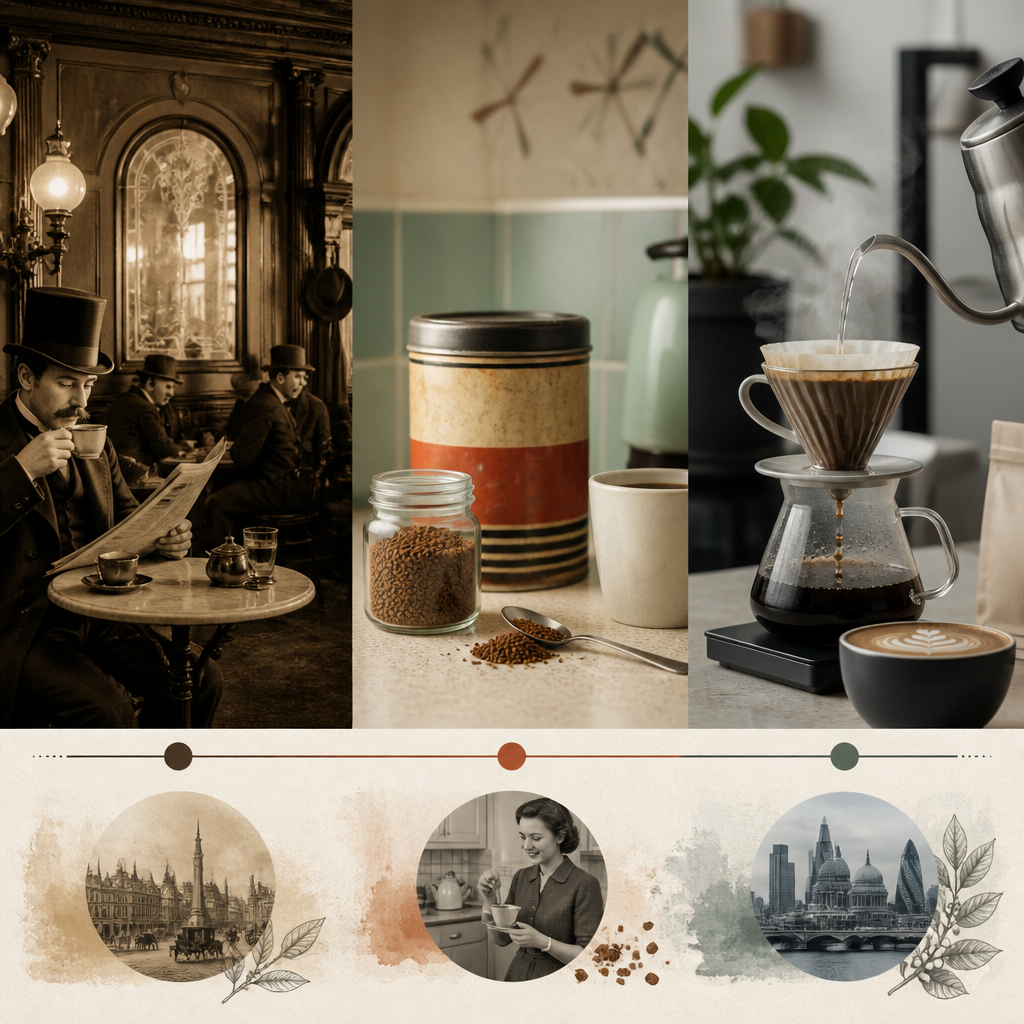
- Comparison: Three Eras of British Coffee Culture
- Frequently Asked Questions
- References
Quick Takeaways
| Key Insight | Explanation |
|---|---|
| Britain's first coffeehouse opened in Oxford in 1650 | It predates London's coffee boom by two years and was established at the Angel Coaching Inn by an entrepreneur named Jacob. |
| Coffeehouses were called "Penny Universities" | For one penny, any man could enter, receive a cup of coffee, access newspapers, and join the conversation, regardless of formal education. |
| London once had as many as 3,000 coffeehouses | By the late 1600s and early 1700s, coffeehouses dominated London's social and commercial life in a way that had no precedent. |
| Lloyd's of London has coffeehouse origins | Edward Lloyd's coffeehouse, opened in 1686, became the meeting place for merchants and underwriters that eventually became Lloyd's of London. |
| The shift to tea was not spontaneous but policy-driven | Imperial trade policy, East India Company influence, and taxation shaped Britain's turn away from coffee toward tea in the 18th century. |
| Craft coffee roasting in the UK predates most modern trends by centuries | Farrer's has been roasting in the Lake District since 1819, bridging the original British coffee heritage and the current specialty movement. |
| UK specialty coffee is one of the fastest-growing segments in British food and drink | Over 54% of UK coffee buyers now prefer roasted coffee over instant, a figure that rises to over 70% for out-of-home purchases. |
The First British Coffeehouses: Oxford and London in the 1650s
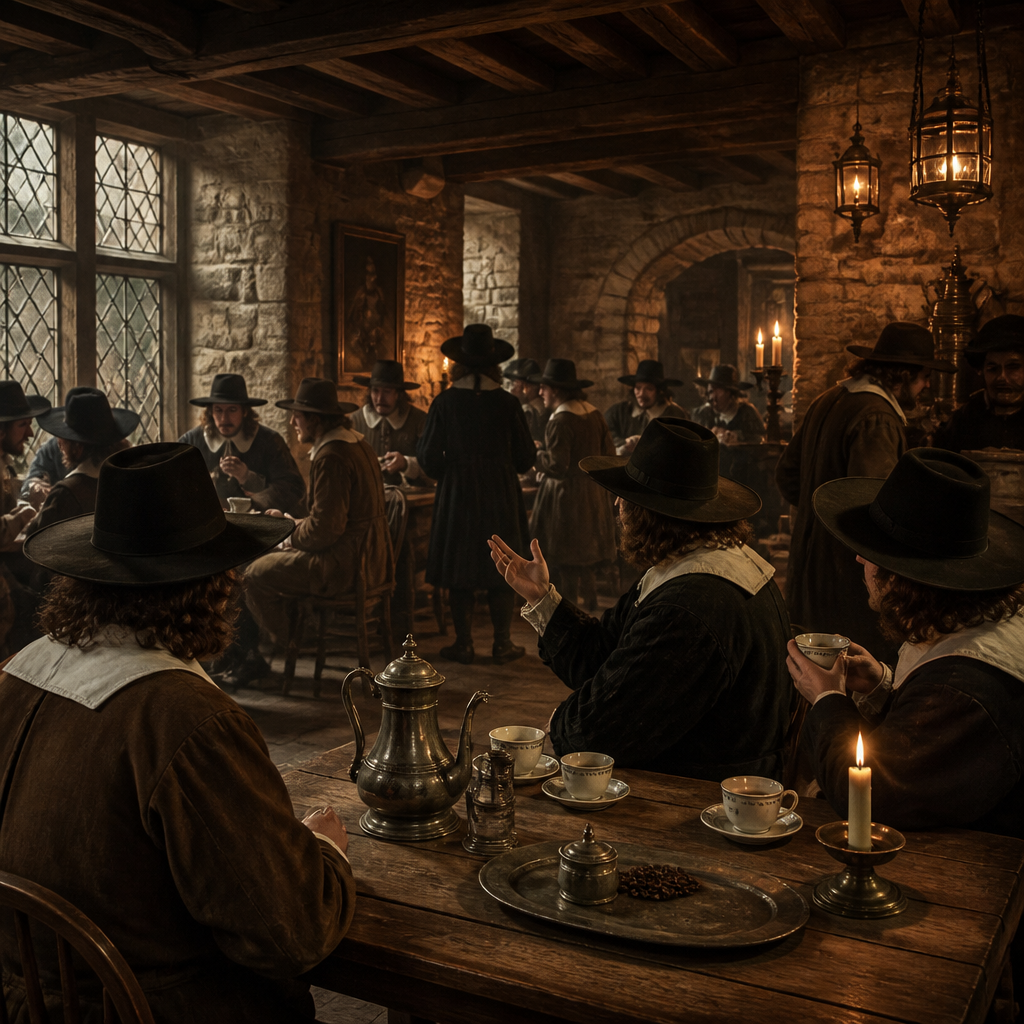
The first coffeehouse on British soil opened in 1650 at the Angel Coaching Inn in Oxford, established by a Jewish entrepreneur named Jacob. It did not arrive quietly. Oxford at the time had a highly particular combination of academic curiosity and appetite for the exotic, and coffee, a stimulant arriving from the Ottoman Empire via trade routes, fitted both.
Two years later, in 1652, a Greek servant named Pasqua Rosee brought the drink to London, opening a coffeehouse in St Michael's Alley in Cornhill. It was an immediate success and others moved quickly to replicate it. Within decades, the drink had spread from a single shop in a university town to hundreds, then thousands, of establishments across the capital.
What made these early coffeehouses distinctive was the absence of alcohol. Britain in the 17th century ran largely on ale, and the arrival of a sober, stimulating alternative was socially significant. The atmosphere in a coffeehouse was more argumentative, more commercially useful, and more intellectually charged than the ale house it sat next to.
Penny Universities: Coffee as Intellectual Infrastructure
The nickname "Penny Universities" is not flattery. It is an accurate description of what these spaces provided. For the price of one penny, which covered both admission and a cup of coffee, any man could walk in and gain access to newspapers, conversation, and the assembled knowledge of whoever happened to be sitting in the room that day. In an era when formal higher education was expensive and restricted, this was genuinely radical.
The topics discussed ranged from politics and political scandal to philosophy, fashion, and the natural sciences. Historians of the 17th and 18th centuries consistently associate English coffeehouses with the intellectual and cultural history of the Age of Enlightenment. Political groups used them as meeting places. Merchants used them to exchange information about shipping and prices. Scientists used them to share and test ideas. The Royal Society itself has roots connected to coffeehouse culture.
"The sanctuary of health, the nursery of temperance, the delight of frugality, an academy of civility, and a free-school of ingenuity." - from an anonymous 17th-century pamphlet, Coffee-Houses Vindicated
One of the most famous examples of coffeehouse-born institutions is Lloyd's of London. Edward Lloyd opened his coffeehouse in 1686 on Tower Street, and it became the preferred meeting place for merchants, ship captains, and underwriters. The information that circulated there, about ships, cargoes, and risk, became the foundation of the modern insurance market. Lloyd's of London, Lloyd's Register, and Lloyd's List all trace their origins directly to that single coffeehouse.
Pro tip: If you want to understand why specialty coffee culture feels intellectually serious and community-oriented in Britain today, the Penny University tradition is the direct ancestor. The coffeehouse was never just about the drink. It was about what people did with the time the drink gave them.
The Great Switch: From Coffee to Tea
By the late 18th century, Britain's dominant hot drink had shifted from coffee to tea. This was not a spontaneous cultural preference. It unfolded through a specific sequence of policy decisions, imperial trade structures, and economic pressures.
The East India Company had established a monopoly on tea imports from China and later from India and Ceylon. It had strong commercial incentives to promote tea consumption. At the same time, coffee production in British-controlled territories was disrupted by a combination of supply problems and, later, plant diseases that devastated coffee-growing regions. Tea won not because it tasted better, but because the infrastructure of empire was built around it.
Meanwhile, coffee remained an urban, male-dominated social drink associated specifically with the coffeehouse environment. Tea was marketed into the home, into the workplace, and into daily domestic ritual. It was positioned as the drink for all occasions and all people. Coffee, by contrast, had no equivalent pathway into the everyday British household during the 18th and 19th centuries.
The Victorian Era and the Temperance Coffee Houses
Coffee did not disappear during the Victorian period, but its role changed significantly. The temperance movement, which campaigned against alcohol consumption, saw coffeehouses as a useful tool. Temperance coffee houses were established throughout the 19th century as wholesome, alcohol-free alternatives to public houses, offering working-class men somewhere to socialise without the social harm associated with drinking.
These establishments lacked the intellectual edge of their 17th-century predecessors. They were civic projects more than social hubs. Nevertheless, they kept coffee present in British working-class life during a period when it might otherwise have faded entirely. They also kept open the idea of a public space defined by the absence of alcohol, which would later find an echo in the modern specialty coffee shop.
It was also during the Victorian and Edwardian eras that commercial coffee roasting became an established trade in Britain. Roasters began to build identities around consistency, quality, and regional character. This is the period in which Farrer's, already roasting in Kendal since 1819, solidified its position as a supplier of roasted coffee and fine tea to both households and trade customers in the north of England.
The 20th Century: Instant Coffee, Espresso Bars, and High-Street Chains
The 20th century is where the history of coffee in the UK becomes complicated. The first half of the century was dominated by tea, wartime shortages, and the eventual rise of instant coffee as a convenient domestic staple. By the 1980s, instant coffee was the dominant form of coffee consumption in British households. The country had, in practical terms, separated itself from any tradition of freshly roasted, carefully prepared coffee.
The Soho Espresso Bar Era
The exception was a brief, vivid period in the 1950s when espresso bars appeared in London's Soho, fuelled by Italian immigration and a post-war appetite for continental culture. These bars introduced a generation of young Britons to espresso, to steamed milk, and to coffee as an experience rather than a convenience. But the movement was geographically concentrated and culturally specific. It did not reach far enough or last long enough to reshape the national habit.
The High-Street Chain Arrival
The transformation of British high streets by large coffee chains in the 1990s and 2000s was commercially significant and deserves recognition, but it was not the same thing as the development of genuine coffee culture. It introduced millions of people to espresso-based drinks, to sitting in a coffee shop rather than a kitchen or pub, and to coffee as a daily social ritual. But it prioritised consistency and speed over quality, and it treated the drink as a platform for milk, sugar, and flavouring rather than as something worth understanding on its own terms.
Pro tip: The high-street chain era created demand. The specialty roaster era answered it. If you find yourself genuinely curious about what coffee tastes like without the vanilla syrup and the oversized cup, you are exactly the customer that British craft roasters have been waiting for.
The Specialty Coffee Revival and What It Means for British Coffee Culture
From roughly the mid-2000s onwards, a different kind of coffee shop began appearing in British cities. Influenced heavily by the coffee cultures of Australia and New Zealand, where quality and service had been central for longer, these new establishments brought a focus on sourcing, roasting, and preparation that the UK had not seen at scale before.
A notable early example was Flat White on Berwick Street in London, opened by an Australian and a New Zealander who wanted to recreate the quality of coffee they had at home. Initially the customer base was largely made up of Antipodean expats, but office workers and weekend visitors quickly joined. The flat white, a drink that already had a long history in Australia and New Zealand, became Britain's defining modern cafe drink.
The British specialty coffee market has grown substantially since that period. Over 54% of UK coffee buyers now prefer roasted coffee over instant, and that figure rises to over 70% for out-of-home purchases. The UK specialty coffee market is projected to continue growing at a compound annual growth rate of around 11.5% through to 2030. This is not a niche trend. It is a wholesale restructuring of how Britain drinks coffee.
The shift has given independent roasters in particular a renewed relevance. Consumers are increasingly seeking transparency about origin, roast profile, and preparation method. They want to know who roasted the coffee and where, not just what brand label is on the bag. This is the commercial environment in which British coffee roasting heritage stops being historical nostalgia and starts being a genuine competitive advantage.
British Coffee Roasting Heritage and Why Provenance Matters
Most of the specialty coffee narrative in the UK focuses on London, Manchester, Edinburgh, and Bristol. These are important cities for the current market, but they are not the whole story of British coffee roasting. The craft of roasting coffee in Britain stretches back well before any of the third-wave movements, to small-town commercial roasters who built their trade on consistency, knowledge, and the trust of local merchants and households.
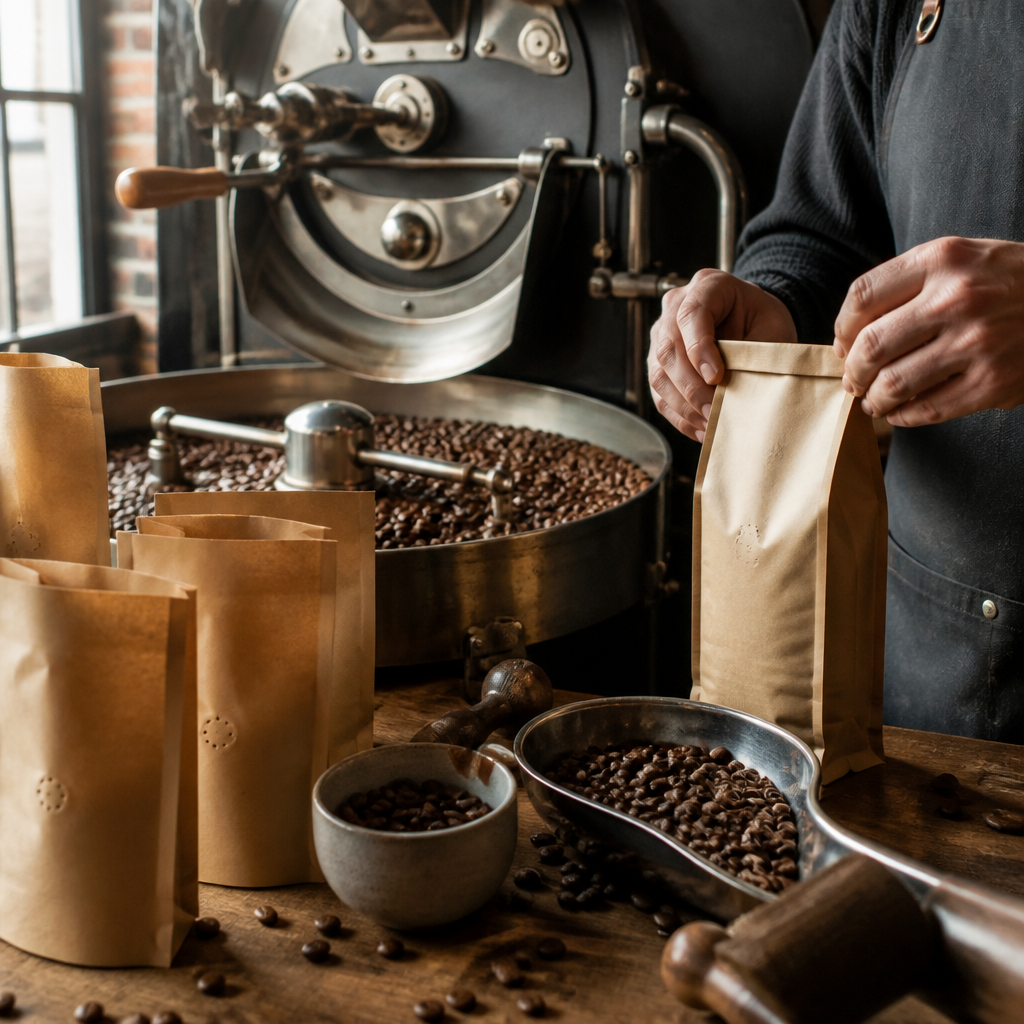
Farrer's, founded by John Farrer in Kendal in 1819, is the oldest continuously operating coffee roaster in the UK. That is a provable, documented lineage. Kendal sits in the heart of the Lake District, not in a major commercial centre, and Farrer's built its reputation without the advantages of a capital-city market. The roastery has operated through the entire arc of British coffee culture described in this article. It was roasting coffee when the temperance movement was building its coffee houses. It was roasting through the era of instant dominance. It continued roasting while the high-street chains reshaped public expectations. And it is roasting now, with the full context of its 200-year history available to any customer who wants to understand what they are buying.
The range at Farrer's covers freshly roasted coffee blends, single origins, loose leaf teas, hot chocolate, and brewing equipment. The operation serves both home enthusiasts who want quality without compromise and trade customers, such as cafes and restaurants, who require professional-grade supply with the reliability of a long-established roaster. For those who want to go further, barista training programmes and roastery experience days offer direct access to the craft behind the product. You can explore the full range at Farrer's coffee collection, or for trade enquiries, find out about Farrer's trade supply programme.
Comparison: Three Eras of British Coffee Culture
| Era | Defining Characteristics | Relationship to Coffee Quality |
|---|---|---|
| 17th and 18th Century Coffeehouse | Public social spaces, penny admission, intellectual debate, commercial networking, no alcohol | Coffee was central but quality was unregulated. The drink mattered primarily as a social catalyst, not as a sensory experience to be refined. |
| 20th Century High-Street Chain | Mass-market espresso drinks, standardised menus, speed and convenience, coffee as flavoured milk delivery system | Consistency was prioritised over quality. Roast provenance, freshness, and preparation method were largely invisible to the consumer. |
| Current Specialty and Craft Roaster Era | Origin transparency, fresh roasting, independent roasters, direct trade, barista skill as a profession, brew method knowledge | Quality is the primary product. Consumers are engaged with origin, roast date, grind, and preparation. Heritage roasters with documented provenance carry genuine authority. |
Frequently Asked Questions
Where did Britain's first coffeehouse open?
Britain's first coffeehouse opened in Oxford in 1650, at the Angel Coaching Inn, established by an entrepreneur named Jacob. London's first coffeehouse followed two years later, in 1652, when Pasqua Rosee opened a shop in St Michael's Alley, Cornhill. Oxford's role is often overlooked in favour of London's more famous coffeehouse boom, but the culture genuinely started outside the capital.
Why did Britain switch from coffee to tea in the 18th century?
The shift was shaped by imperial trade policy more than personal preference. The East India Company had commercial interests in promoting tea imports from China, India, and Ceylon, and the infrastructure of British imperial trade was built around those supply chains. Coffee supply, by contrast, was disrupted by a combination of geopolitical pressures and, eventually, agricultural disease in coffee-growing regions. Tea was also successfully marketed into the domestic home in a way that coffee, as a coffeehouse drink, was not.
What were Penny Universities?
Penny Universities was the nickname given to the original English coffeehouses of the 17th century, reflecting the fact that for one penny a man could enter, receive a cup of coffee, access the day's newspapers, and join conversations about politics, science, trade, and philosophy. The name captured both the low cost of entry and the genuine intellectual value of the environment. They were, in practice, one of the first democratised public spaces for the exchange of ideas in Britain.
Who is the UK's oldest coffee roaster?
Farrer's of Kendal, founded by John Farrer in 1819, is the UK's oldest coffee roaster with a continuous, documented trading history. The business has operated from the Lake District for over 200 years, roasting and hand-packing coffee and tea throughout every major shift in British coffee culture, from the Victorian era through the instant coffee decades to the current specialty market.
What is the current state of British coffee culture?
Britain has become one of the most sophisticated specialty coffee markets in the world. Over 54% of UK coffee buyers now prefer roasted over instant coffee, with the figure rising above 70% for out-of-home consumption. Independent roasters, origin-focused cafes, and a growing interest in home brewing have reshaped what British consumers expect from a cup of coffee. The UK specialty coffee market is projected to grow at a compound annual growth rate of around 11.5% through to 2030, reflecting genuine, sustained demand rather than a passing trend.
How does British coffee roasting heritage connect to the current specialty movement?
The current specialty movement is often described as if it began with the arrival of Australian and New Zealand baristas in London in the mid-2000s. That framing underestimates the craft roasting tradition that existed in Britain throughout the 19th and 20th centuries, mostly outside London. Heritage roasters like Farrer's maintained rigorous roasting standards, hand-packed product quality, and long-term trade relationships throughout periods when instant coffee dominated the market. The specialty revolution did not create British coffee craft. It reconnected consumers to a tradition that had never actually stopped.
What coffee brewing method is most associated with British home culture?
The cafetiere has historically been the most distinctively British home brewing method, associated with weekend mornings and a slower, more deliberate approach to coffee than the espresso machine demands. The flat white has become the defining cafe drink, imported from Australia and New Zealand. More recently, pour-over methods and home espresso have grown significantly, particularly among enthusiasts who discovered specialty coffee through independent cafes and online roasters. The brewing equipment range at Farrer's covers the full spectrum, from cafetiere essentials to more advanced preparation tools.
If you have a favourite moment in British coffee history, or a brewing method that connects you to the tradition described here, share it in the comments below. We read every one.
References
- Wikipedia overview of English coffeehouses in the 17th and 18th centuries: social roles, penny admission, and their influence on commerce and intellectual life
- History channel article on London's coffeehouse boom, Pasqua Rosee, and the scale of the 17th-century coffee culture in the capital
- Brewminate article on English coffeehouses as Penny Universities, their Oxford origins, and their role in the Age of Enlightenment
- Perfect Daily Grind on the evolution of the UK coffee shop, from Soho espresso bars to the modern specialty scene
- BrewCrew overview of UK specialty coffee market growth, consumer demographics, and the shift from instant to roasted coffee preferences


