

Most coffee drinkers reaching for a Central American single origin think first of Antigua or Huehuetenango. Coban sits quietly in the background, undersold and underrated, despite producing some of the most structurally distinctive cups Guatemala has to offer. If you have been searching for Guatemala coffee UK and want something beyond the usual chocolatey crowd-pleasers, the Alta Verapaz region deserves your full attention. This guide covers exactly what makes Coban coffee different, what you should expect in the cup, and how to brew it in a way that honours its character rather than flattening it.
Table of Contents
- Quick Takeaways
- What Makes Coban Different From Other Guatemala Coffees
- Tasting Notes: What You Will Actually Find in the Cup
- Roast Level and Processing: Why These Decisions Matter
- Brew Methods Compared: Getting the Best From Coban
- Common Brewing Mistakes and How to Avoid Them
- Pairing and Serving Suggestions
- Frequently Asked Questions
- References
Quick Takeaways
| Key Insight | Explanation |
|---|---|
| Coban is a cloud forest region | Unlike drier Guatemalan growing zones, Alta Verapaz receives near year-round rainfall, producing coffees with a distinctive profile that sets them apart from Antigua or Atitlan lots. |
| Dark chocolate is the anchor note | Farrer's Guatemala Coban leads with a dark chocolate core, supported by hazelnut and dark fruit. It is bold but composed, never sharp or astringent. |
| Altitude drives complexity | Coban farms sit at roughly 1,300 to 1,500 metres above sea level, producing dense beans with the structured body that defines this cup. |
| Washed processing favours clarity | Traditional wet processing in the region highlights the bean's intrinsic flavour rather than adding fermented fruit notes, making Coban clean and precise. |
| French press amplifies the body | Because Coban has a naturally weighty mouthfeel, French press is the most rewarding everyday brew method for this origin. |
| Pour over reveals the complexity | If you want to pick apart the hazelnut and dark fruit nuances, a pour over slows the extraction and lets subtler notes emerge. |
| Coban is not widely exported | Finding a well-sourced Coban from a trusted UK roaster is genuinely rare, which is exactly why Farrer's Guatemala Coban stands out among domestic offerings. |
What Makes Coban Different From Other Guatemala Coffees
Guatemala produces coffee across eight recognised growing regions, each shaped by distinct geography, soil type, and climate. Most of them share a broadly similar character: full body, dark chocolate, and a clean finish. Coban breaks from this pattern in a way that genuinely surprises people who think they know Guatemalan coffee.
Coban, known locally as the Imperial City, sits in the department of Alta Verapaz in northern Guatemala. The region is classified as a cloud forest, receiving a tropical humid climate with annual rainfall that can reach between 3,000 and 3,500 millimetres. That is a striking contrast to the drier conditions of Antigua or Huehuetenango, and it shapes everything about how the coffee develops on the plant.
The altitude range across Coban's coffee farms runs from around 1,300 to 1,500 metres above sea level. This is high enough to produce slow-ripening cherries with concentrated sugars and firm cell structure, but it is the interaction of altitude with near-constant cloud cover that creates the microclimates responsible for Coban's character. The cool, misty conditions create a long growing season that allows flavour compounds to develop gradually rather than in a rush.
Why Coban Is Harder to Find
Coban is not as widely exported as Antigua or Huehuetenango. That relative scarcity is partly logistical: the wet conditions make cherry drying more challenging, and careful processing takes longer. Smallholder farmers in the region take pride in the traditional wet processing method, hand-picking only the ripest cherries and running a precisely controlled fermentation and washing process. The extra care required means volumes are smaller and inconsistent lots rarely reach specialty buyers.
When you find a roaster offering a Coban single origin, it is a sign they are actively seeking out something beyond the obvious. Farrer's, roasting from Kendal since 1819, sources and roasts this coffee in small batches, which is the only way to handle a bean this particular and maintain its integrity from green to cup.
Tasting Notes: What You Will Actually Find in the Cup
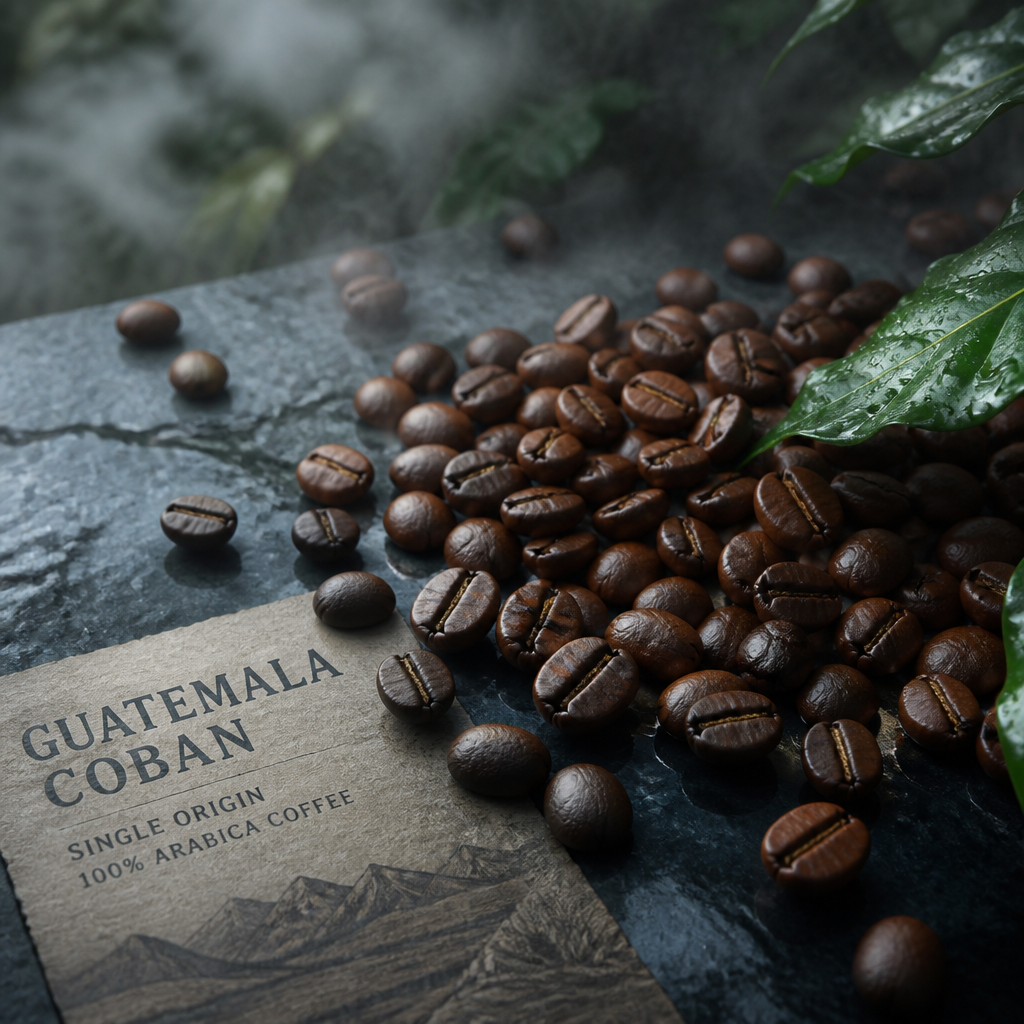
The Farrer's Guatemala Coban delivers a deep, structured single-origin experience with a weighty mouthfeel and a dark chocolate core. This is not a delicate, floral cup. It is composed and bold, with the kind of density that makes it satisfying without milk but genuinely luxurious with a small splash of whole milk.
Hazelnut sits just beneath the chocolate, adding a toasted warmth rather than anything sweet or artificial. Dark fruit notes, think dried cherry or blackcurrant rather than fresh berry brightness, add quiet complexity in the background. This is a coffee that rewards attention. Drink it quickly and you will get the chocolate. Slow down and let it cool slightly and the dark fruit becomes more present.
How Coban Compares to Other Guatemalan Regions on Flavour
The classic Guatemalan cup from Antigua or Atitlan centres on full body, dark chocolate, and a pleasant brightness. Coban shares the body but delivers its complexity differently. Because it grows under near-permanent cloud cover, the acidity profile is softer and more tea-like than you might find in volcanic soil lots. It is less about bright citrus hits and more about structural depth.
The best single origin coffees do not shout their flavours at you. They build slowly and linger. A Coban cup is precisely this: composed, structured, and worth sitting with.
This makes Coban particularly well-suited to drinkers who prefer their coffee with substance but without aggression. If you have found yourself put off by high-acidity Ethiopian naturals or overly bright Kenyan lots, Coban is the single origin that might genuinely convert you to the category.
Roast Level and Processing: Why These Decisions Matter
Washed processing is the dominant method in Coban and across most of Guatemala. After harvesting, cherries are de-pulped and the beans are fermented for a period to break down the remaining mucilage, then washed clean. This produces a coffee that is clear and precise in flavour, with no fermented or funky notes that you might associate with natural-processed or honey-processed coffees.
Washed coffees reward medium roast profiles, because the roast highlights natural sweetness and structural clarity rather than adding roasty bitterness on top. Farrer's approach, roasting in small batches at their Kendal roastery, fits this philosophy exactly. The result is a dark chocolate core that comes from the bean's intrinsic character rather than from taking the roast too far.
The Role of Bourbon and Typica Varieties
Guatemalan coffee is grown across a range of varieties, with Bourbon and Typica being among the most established at higher altitudes. Bourbon is known for its sweetness and complexity, Typica for its delicate structure and clean cup. Both suit the careful washed processing tradition of the Alta Verapaz region. When you combine these varieties with Coban's unique climate and altitude, you get a cup that has both substance and refinement.
Pro tip: Buy your Guatemala Coban as whole beans and grind just before brewing. The oils that carry those hazelnut and dark fruit notes are the first to dissipate once the bean is ground, and even a few hours makes a noticeable difference. Farrer's offers the option to take it whole bean for exactly this reason.
Brew Methods Compared: Getting the Best From Coban
The question of which brew method suits a single origin is not abstract. It is the most practical decision you make after choosing the coffee itself. For a bean with Coban's profile, weighty body combined with structured complexity, certain methods will serve it far better than others.
| Brew Method | What It Does for Coban | Best For |
|---|---|---|
| French Press | Immersion brewing amplifies full body and brings out chocolate intensity. The heavier mouthfeel of Coban is at its best here. | Daily drinking, those who prefer bold cups, those who enjoy coffee without milk |
| Pour Over (V60 or Chemex) | Slower controlled extraction highlights the hazelnut and dark fruit notes. Produces a cleaner, lighter cup that lets complexity emerge. | Coffee enthusiasts who want to explore the full flavour profile |
| Espresso | Concentrates the dark chocolate core powerfully. Works well as a base for milk drinks like flat whites or cortados, where the chocolate holds its own through the milk. | Home espresso setups, cafe use, milk-based drinks |
French Press: The Most Rewarding Everyday Method
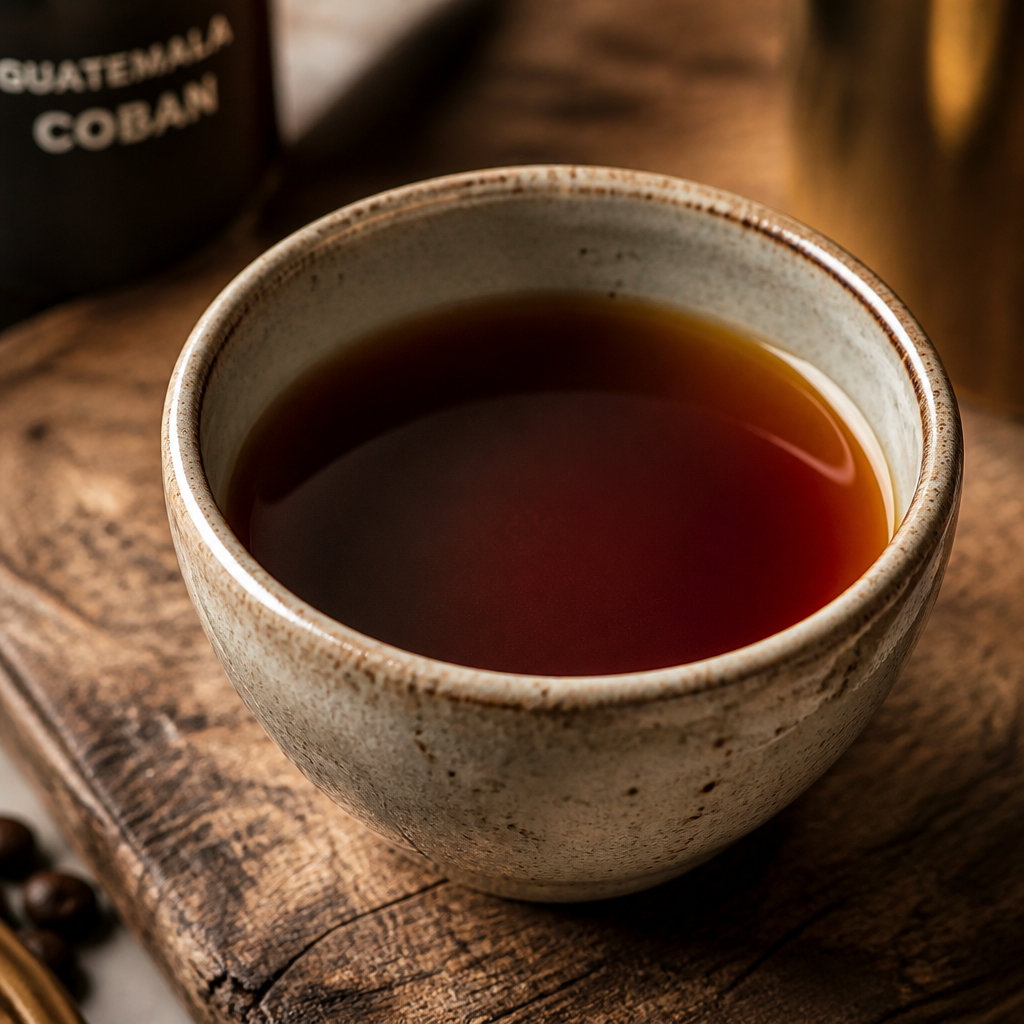
For Coban, French press is the most consistently rewarding method for home drinkers. Use a coarse grind, water off the boil at around 94 to 96 degrees Celsius, and a four-minute steep. Do not stir aggressively. Let the grounds settle naturally before pressing slowly. The result will be dense, chocolatey, and satisfying without any harshness.
Farrer's supplies Guatemala Coban pre-ground coarse specifically for French press if you do not have a grinder at home. This is a practical option, though whole bean remains preferable for freshness.
Pour Over: For When You Want to Go Deeper
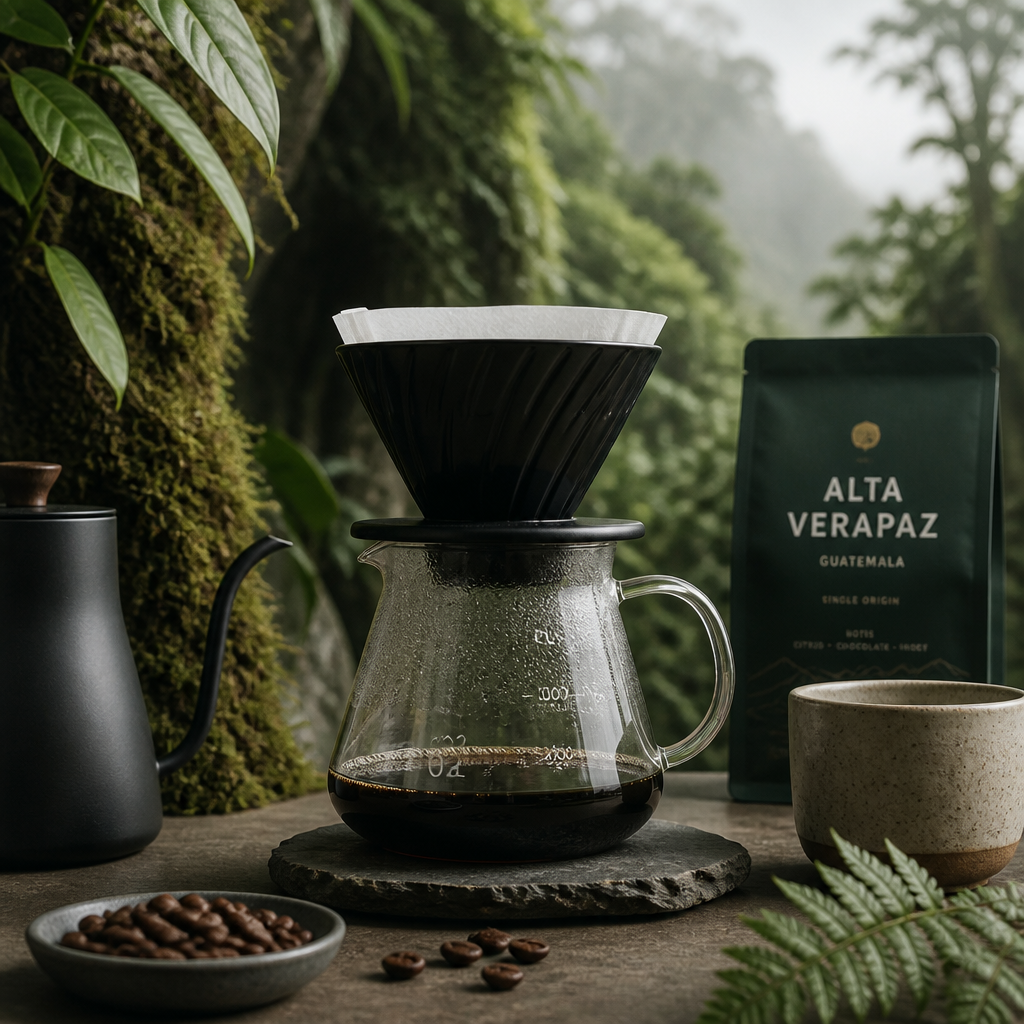
If you want to pull the dark fruit and hazelnut notes into sharper focus, a pour over is the method to choose. Use a medium-coarse grind, water at around 93 to 94 degrees Celsius, and a slow, steady pour. A bloom of 30 seconds with twice the weight of water to coffee is a good starting point. Total brew time should sit between three and four minutes for a standard 250ml cup.
Pro tip: For pour over with a structured bean like Coban, resist the urge to grind finer if the cup tastes thin. Instead, slow your pour rate and increase your brew time slightly. Finer grinding often introduces astringency in darker, denser beans rather than improving extraction.
Common Brewing Mistakes and How to Avoid Them
Coban is a forgiving bean compared to, say, a light-roasted Ethiopian natural that turns sour the moment your technique slips. But there are specific mistakes that consistently undermine what this coffee can do.
Using water that is too cool is the most common error with structured, full-bodied beans. Below 90 degrees Celsius, the extraction becomes uneven and the chocolate notes stay flat while bitterness from under-extracted compounds lingers. Keep your water temperature between 92 and 96 degrees Celsius.
Grinding too fine for immersion methods is the second pitfall. Because Coban has a naturally dense structure, a fine grind in a French press leads to over-extraction and a dry, astringent finish that masks the hazelnut and dark fruit entirely. Match your grind to the method, not to the bean's boldness.
The third mistake is storing the coffee in the freezer without proper sealing. Condensation inside the bag introduces moisture that prematurely degrades flavour. Keep your Coban in a sealed, airtight container away from direct light and heat, and aim to use it within three weeks of the roast date for the best results.
Pairing and Serving Suggestions
A dark chocolate core and hazelnut warmth make Coban one of the most food-friendly single origins you can buy. The pairing logic is straightforward: match the cup's dominant notes or contrast them cleanly.
Dark chocolate biscuits or a square of 70 percent cacao chocolate alongside a black Coban is almost unfairly good. The chocolate in the coffee and the chocolate in the food amplify each other without competing. Toasted nuts, particularly hazelnuts and almonds, pair naturally for the same reason.
For a contrast pairing, try it alongside something with genuine sweetness: a piece of shortbread, a fruit tart with dark berry compote, or a good almond croissant. The coffee's structure and weight cut through sweetness without being harsh, which is exactly what you want from a bold single origin at the table.
If you are serving Coban with milk, use whole milk and keep the ratio relatively low. A flat white ratio, roughly one part espresso to two parts milk, keeps the chocolate and hazelnut notes from disappearing entirely. A very milky latte will overwhelm what makes this coffee interesting in the first place.
Frequently Asked Questions
What does Guatemala Coban coffee taste like?
Guatemala Coban coffee leads with a dark chocolate core supported by hazelnut and dark fruit notes. It has a weighty, structured mouthfeel and a bold but composed character. It is not sharp or overtly acidic, making it approachable for a wide range of drinkers.
How is Coban coffee different from Antigua or Huehuetenango?
Coban grows in a cloud forest climate with near-constant rainfall and humidity, which sets it apart from the drier conditions in Antigua or Huehuetenango. The result is a softer acidity, a denser body, and a distinct structured complexity rather than the brighter, more citrus-driven profiles those regions often produce.
Is Guatemala Coban coffee good for espresso?
Yes. The dark chocolate core of Coban holds up well under espresso extraction and performs particularly well in milk-based drinks like flat whites and cortados, where many lighter single origins simply disappear. Its structure and body make it a natural fit for a well-dialled home espresso machine.
What grind size should I use for Guatemala Coban in a French press?
Use a coarse grind for French press, similar in texture to coarse sea salt. Coban's density means a finer grind in immersion methods leads to over-extraction and astringency, which flattens the hazelnut and dark fruit notes that make this coffee worth drinking.
Where can I buy Guatemala Coban coffee in the UK?
Farrer's of Kendal, the UK's oldest coffee roaster, offers a Guatemala Coban single origin roasted in small batches and available with next-day dispatch on orders over £35. Because Coban is not widely exported, finding a reliably sourced version from a specialist UK roaster matters more than with more common origins.
Is Guatemala coffee a good choice for people who find single origins too sharp?
Guatemala Coban specifically is one of the most accessible single origins for drinkers who find high-acidity coffees challenging. The cloud forest growing conditions produce a softer acidity than volcanic-soil regions, and the washed processing keeps the cup clean without adding fermented sharpness. It is a strong entry point into specialty single origins.
Have you brewed Guatemala Coban at home? Share which method worked best for you and whether the dark fruit notes came through the way you expected.
References
- Farrer's Guatemala Coban Coffee product page with tasting notes and roast details
- In-depth guide to Guatemalan coffee regions including Coban's cloud forest climate and flavour profile
- Overview of Guatemala's specialty coffee growing regions, altitude ranges, and flavour characteristics by region
- Detailed profile of Coban in Alta Verapaz, covering altitude, microclimates, and traditional processing practices
- Guide to Guatemalan coffee processing methods and the best brew approaches for Central American beans


