

If you have ever opened a bag of Colombian coffee and been hit with that unmistakable wave of caramel, citrus, and dark chocolate, you already know something is different about it. Colombian coffee UK searches are consistently high, and for good reason: Colombia produces beans that are genuinely difficult to replicate anywhere else on earth. But what actually makes them so good? Geography, altitude, farming culture, and a stubborn commitment to quality that goes back more than a century. This article breaks down exactly why Colombia keeps delivering some of the world's most sought-after single origin coffee, and what to look for when you are buying Colombian beans in the UK.
Table of Contents
- Quick Takeaways
- A Brief History of Colombian Coffee
- Why Colombia's Geography Makes Exceptional Coffee
- What Colombian Coffee Actually Tastes Like
- Colombia's Main Coffee-Growing Regions
- Colombian Coffee vs. Other Origins
- How to Choose the Best Colombian Coffee in the UK
- Brewing Colombian Coffee at Home
- Frequently Asked Questions
- References
Quick Takeaways
| Key Insight | Explanation |
|---|---|
| Altitude drives flavour complexity | High-altitude farms slow bean development, concentrating sugars and acids that produce Colombia's characteristic brightness and sweetness. |
| Colombia harvests twice a year | Unlike most origins with a single annual harvest, Colombia's geography allows two crop cycles, meaning fresher beans reach the UK more often. |
| Small-scale farms dominate production | The majority of Colombian coffee comes from smallholder farmers, which supports hand-picking and careful selection of only ripe cherries. |
| Region shapes the cup profile significantly | Huila, Nariño, and the Coffee Triangle each produce distinct flavour notes. Buying single-region beans tells you far more than "Colombian" alone. |
| Washed processing is the Colombian standard | Most Colombian coffee is wet-processed (washed), which removes fruit layers before drying and produces a cleaner, clearer cup with bright acidity. |
| Colombia now ranks among the world's top three producers | Historically second only to Brazil, Colombia is a major global supplier, yet its focus on Arabica quality sets it apart from volume-first producers. |
| Freshness is non-negotiable for Colombian beans | The nuanced fruit and floral notes fade quickly after roasting. Buying from a roaster with fast dispatch, like Farrer's next-day service, makes a genuine difference. |
A Brief History of Colombian Coffee
Colombia's relationship with coffee stretches back to the 1700s, when the first plants arrived on the continent. For a long time, cultivation remained modest and largely local. The early 1900s brought serious disruption: conflict slowed production and a collapse in global coffee prices forced Colombian farmers to rethink how they operated.
What emerged from that pressure was a farming movement built on small, independent producers rather than large plantations. In 1927, the National Federation of Coffee Growers of Colombia was established to represent and support those farmers, and it became one of the most effective agricultural organisations in the world. Decades of coordinated quality control, farmer education, and international marketing, including campaigns that made Colombian coffee a household name globally, set the country apart from its competitors.
That institutional backbone still matters today. It means Colombian coffee is not just a commodity export. It is a product with traceability, standards, and genuine pride behind it. When you buy Colombia coffee beans from a serious roaster, you are buying into that history as much as you are buying the beans themselves.
Why Colombia's Geography Makes Exceptional Coffee
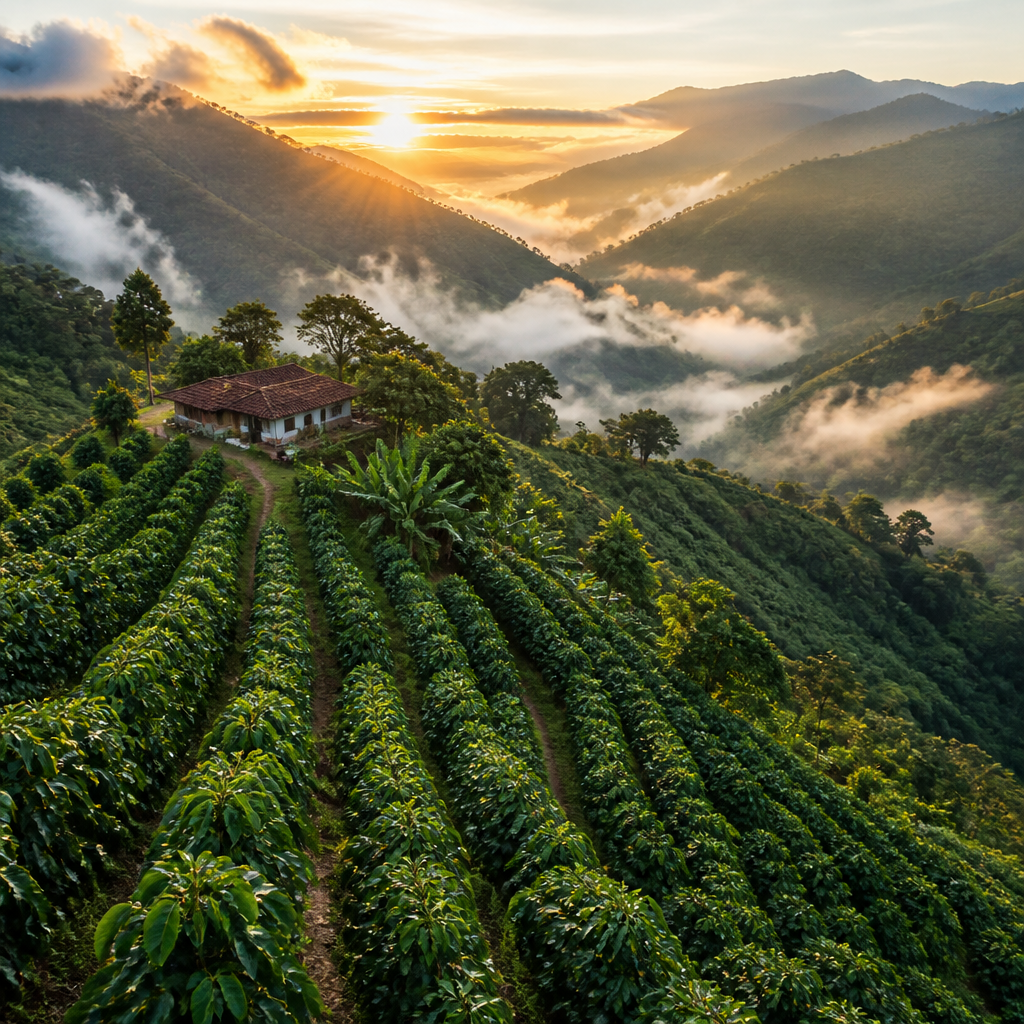
Geography is not a romantic detail here. It is the actual mechanism behind the quality. Colombia sits directly on the equator, which means consistent warmth year-round. But the country's dramatic Andean mountain ranges push farms to high elevations, and that elevation counteracts the heat. The result is a climate that is warm enough to grow coffee but cool enough to slow the ripening process.
Slower ripening means the coffee cherry spends more time on the tree, allowing sugars to develop more fully. Those sugars translate directly into the sweetness and complexity you taste in the cup. Add volcanic soil rich in minerals, reliable rainfall, and a natural canopy of shade trees on many farms, and you have a combination that most other coffee-producing countries simply cannot replicate.
Two Harvests Per Year
Most coffee origins operate on a single annual harvest. Colombia, because of its geography straddling the equator, benefits from two distinct flowering and harvest periods each year. The main harvest runs roughly from October to February, and a secondary, smaller harvest, called the mitaca, follows later in the year. This means Colombian beans reach roasters more frequently, keeping the supply of fresh crop coffee more consistent than origins that only harvest once.
For UK buyers, this is practically significant. A roaster with strong Colombian sourcing relationships can offer genuinely new-crop beans more than once a year, which matters if you care about freshness and peak flavour.
Pro tip: When buying Colombian single origin coffee in the UK, look for bags that display a harvest date or crop year, not just a roast date. A recent roast date on an old-crop bean still means you are drinking stale coffee.
What Colombian Coffee Actually Tastes Like
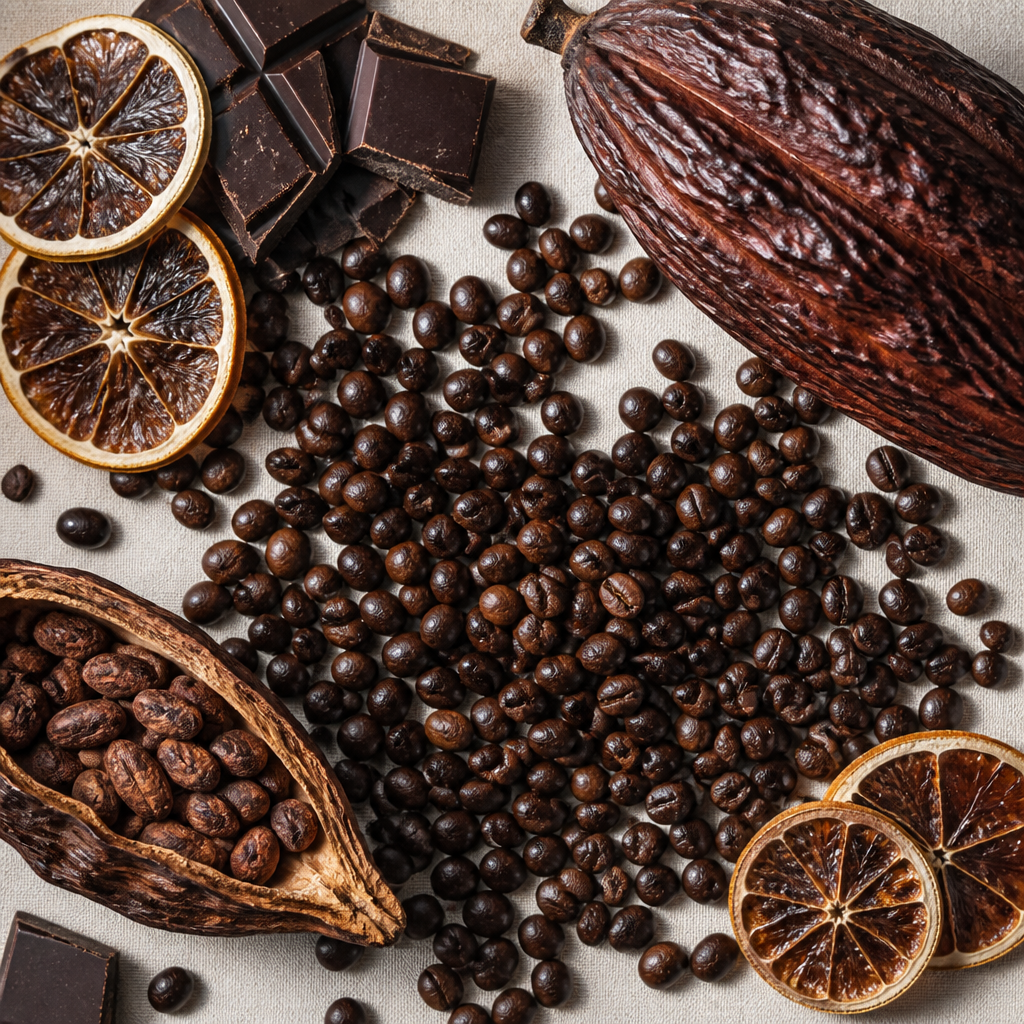
The generalisation is that Colombian coffee is smooth, medium-bodied, and slightly sweet, which is accurate but undersells the range. The broader flavour palette includes notes of caramel, dark chocolate, red fruit, citrus, and sometimes floral hints depending on the region and roast level. The acidity is present but not aggressive, which is a big part of why Colombian coffee has such broad appeal.
Washed processing, which is the standard method across most of Colombia, strips the fruit layer from the bean before drying. This produces a cup that is clean and transparent, meaning the origin's intrinsic character comes through clearly without fermentation flavours muddying the profile. When you want to taste what a region actually produces, washed Colombian coffee gives you the clearest answer.
The best Colombian coffee does not shout. It builds. What seems like a straightforward cup on the first sip reveals more with every one that follows. That is the hallmark of high-altitude, slow-ripened Arabica done properly.
Roast level plays a significant role in what ends up in your cup. A light roast will emphasise the citrus and floral brightness. A medium roast tends to bring forward the chocolate and caramel sweetness that most people associate with Colombian coffee. A dark roast can work with certain Colombian beans, particularly those from lower altitudes, but it risks burying the nuanced fruit notes that make the origin special in the first place.
Pro tip: If you are ordering best Colombian coffee for filter brewing at home, lean toward medium-light roasts. You will get the sweetness and body without losing the brightness that makes Colombian beans worth the premium over commodity blends.
Colombia's Main Coffee-Growing Regions
Saying you drink "Colombian coffee" is a bit like saying you drink "European wine." The country is large, the terrain is varied, and the regional differences in cup profile are real and meaningful. Broadly, Colombia's coffee production divides into northern, central, southern, and eastern zones, each with distinct characteristics.
The Coffee Triangle (Eje Cafetero)
The central coffee zone, including the areas around Salento and the broader Coffee Triangle, is the most iconic. Towns like Salento sit in the heart of this region, at high elevation, with nutrient-rich volcanic soil and a biodiversity that contributes to complex flavour development. Beans from this zone tend to be balanced, with good body, mild acidity, and that classic caramel-chocolate sweetness.
Huila
Huila, in southern Colombia, produces some of the country's most prized specialty beans. The region's high altitude and varied microclimates result in coffees with pronounced fruit notes, bright acidity, and a sweetness that punches well above average. Huila is a favourite among specialty roasters and is worth seeking out specifically when you see it labelled.
Nariño
Nariño sits at the southern tip of Colombia near the Ecuadorian border. Its extreme altitude, some of the highest coffee-growing elevations in the country, produces beans with exceptional acidity and a distinctive floral and fruity complexity. Nariño coffees are not for everyone, but for drinkers who love a vibrant, nuanced single origin, they are genuinely impressive.
Colombian Coffee vs. Other Origins
Understanding where Colombian coffee sits relative to other origins helps you make better buying decisions. It is not automatically superior to everything else, but it occupies a specific and valuable niche.
| Origin | Typical Flavour Profile | Best For |
|---|---|---|
| Colombia | Caramel, dark chocolate, red fruit, mild citrus acidity, clean and balanced | Filter coffee, espresso blends, everyday premium drinking |
| Ethiopia | Bright floral, blueberry, jasmine, pronounced fruit-forward acidity | Light roast filter, pour-over enthusiasts who want expressive acidity |
| Brazil | Low acidity, nutty, chocolatey, heavy body, earthy | Espresso bases, darker roasts, milk-based drinks where body matters most |
Colombian coffee occupies the middle ground in the best possible way. It has more complexity and brightness than Brazil, but more accessibility and sweetness than the high-acid, fruit-forward Ethiopian coffees that can be polarising for everyday drinkers. For a café looking to run a single origin on its filter bar that will satisfy the broadest range of customers, Colombian coffee is consistently the most defensible choice.
How to Choose the Best Colombian Coffee in the UK
The UK specialty coffee market has matured considerably, and the range of Colombian options available to UK buyers is wider than ever. That range also makes it easier to buy poorly. Here is what actually separates a worthwhile purchase from a wasted one.
Look Beyond "Colombian" as a Label
A bag labelled simply "Colombian coffee" tells you almost nothing useful. The interesting information is the region, the farm or cooperative, the altitude, the processing method, and the roast date. The more of those details a roaster provides, the more seriously they are taking the coffee they sourced. Vague labels often mean commodity-grade beans that happen to come from Colombia.
Choose a Roaster Who Dispatches Fresh
Colombian coffee's brightness and fruit notes are time-sensitive. Once roasted, those volatile compounds begin to diminish, and within a few weeks you lose much of what made the bean special. Buying from a roaster with fast dispatch, like Farrer's, which offers next-day dispatch on orders over £35, means the gap between roasting and brewing stays tight. Over 200 years of roasting heritage combined with a genuine understanding of freshness is exactly the combination worth looking for when you are investing in single origin coffee UK.
Match the Roast to Your Brew Method
A common mistake is buying a dark-roasted Colombian bean for filter brewing. Dark roasting masks the very characteristics that make Colombian coffee worth buying in the first place. For espresso, a medium to medium-dark roast can work well and bring out that chocolate body. For filter and pour-over, stay in the light-to-medium range.
Brewing Colombian Coffee at Home
Colombian coffee is unusually versatile. It works across brew methods in a way that not all single origins do, and that versatility is one of the reasons it is such a reliable choice for home brewers experimenting with equipment.
Filter and Pour-Over
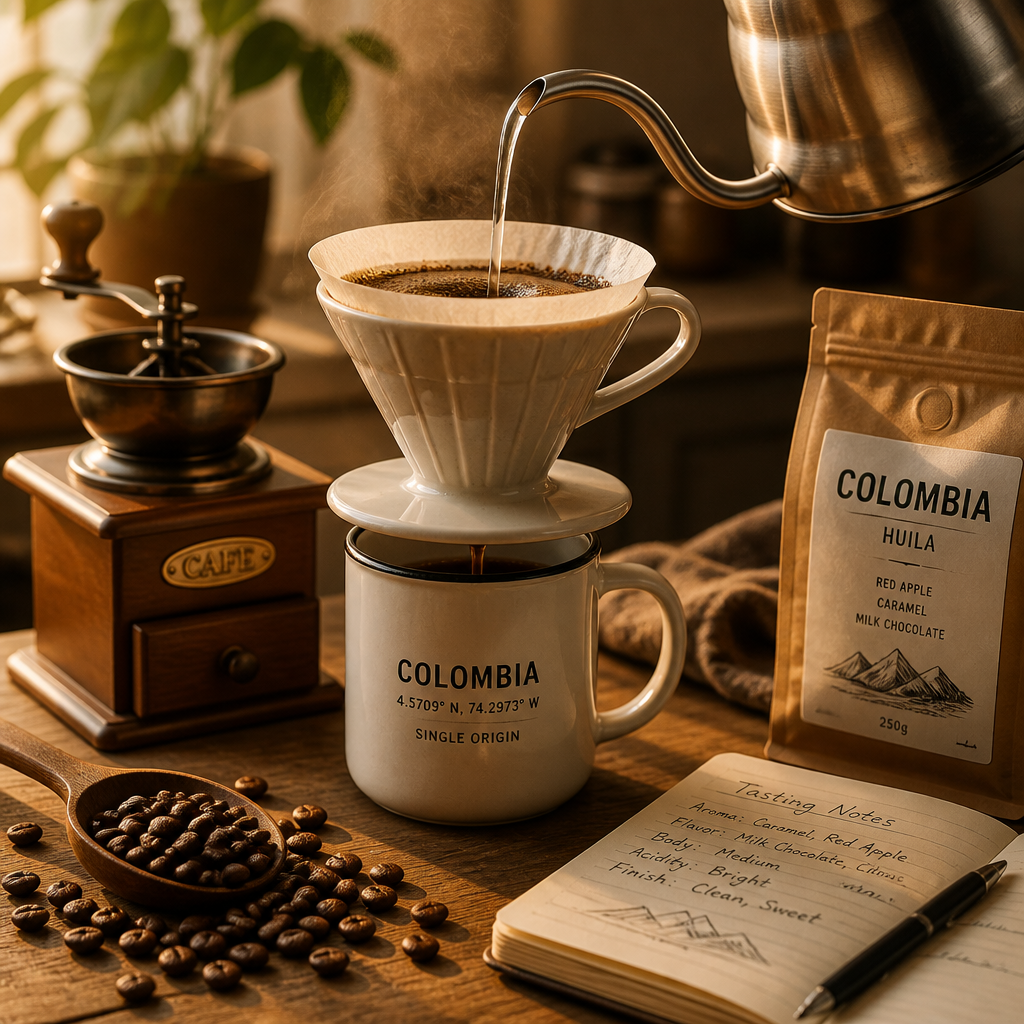
This is where Colombia coffee beans shine most clearly. A medium grind, water around 92 to 94 degrees Celsius, and a slow, even pour will give you a cup that showcases the full flavour range. The clean washed processing means there is no murkiness, and the medium body carries well through a paper filter.
Espresso
Colombian beans perform well as a single origin espresso, particularly from the Huila and Coffee Triangle regions. Expect a rich, chocolatey shot with a bright citrus finish. If you are pulling Colombian espresso with milk, the caramel notes come forward beautifully in a flat white or cortado.
Cafetière
The cafetière allows more of the bean's natural oils into the cup, which adds body and intensifies the chocolate and caramel notes. Use a coarser grind than you would for filter, brew for four minutes, and press gently. Colombian beans handle this method well without turning bitter.
Farrer's has been sourcing and roasting coffee from exceptional origins for over two centuries. If you want to explore what a properly sourced, freshly roasted Colombian bean actually tastes like, their coffee range is the right place to start. And if you want to go further, their roastery experience days in the Lake District offer a genuinely hands-on introduction to how roasting decisions affect the final cup.
Frequently Asked Questions
Is Colombian coffee stronger than other coffees?
Strength depends on brew ratio, roast level, and grind size, not origin alone. Colombian coffee has a naturally full, rich flavour that can feel substantial, but it is not inherently higher in caffeine than coffee from other Arabica origins. If you want a stronger cup, adjust your dose rather than assuming Colombian beans are bolder by default.
What is the difference between Colombian Supremo and Colombian Excelso?
These are Colombian coffee grading terms based on bean size. Supremo refers to the largest screen size, while Excelso covers a blend of smaller sizes. Larger beans are not automatically better in quality, but the grading system does indicate the producer's attention to sorting and consistency. Specialty-grade Colombian coffee typically goes beyond these basic size classifications to include flavour scoring.
Why does Colombian coffee taste different from Brazilian coffee if both are Arabica?
Arabica is a species, not a flavour guarantee. The taste of any coffee is shaped by altitude, soil, climate, processing method, and roast level. Colombia's high-altitude farms and washed processing produce bright, clean, fruit-accented cups. Brazil's lower-altitude farms and natural processing produce heavier, nuttier, low-acid cups. Same species, very different results.
Can I use Colombian coffee beans for espresso?
Absolutely. Colombian beans, particularly those from Huila and the central Coffee Triangle regions, work very well as single origin espresso. The caramel sweetness and mild acidity complement milk-based drinks and hold up well as a straight shot. Look for a medium to medium-dark roast specifically dialled for espresso rather than using the same bag you brew filter with.
How do I know if I am buying genuinely fresh Colombian coffee in the UK?
Check the roast date on the bag. A good roaster will print this clearly, and you want to be brewing within two to six weeks of that date for filter coffee, and ideally seven to twenty-one days post-roast for espresso. If a bag only shows a "best before" date with no roast date, that is a red flag. Roasters who take freshness seriously always display the roast date prominently.
What brewing equipment works best for Colombian coffee?
Pour-over brewers, such as the V60 or Chemex, showcase the clarity and brightness of washed Colombian beans most effectively. A cafetière brings out more body and chocolate weight. Espresso machines work well with medium-roast Colombian beans. The method that works "best" is the one you will use consistently and carefully. Precision matters more than the specific brewer.
Have you tried Colombian coffee from different regions and noticed a difference in the cup? Share your experience in the comments below, we would love to hear which regions or roast levels you have found most impressive.
References
- Overview of Colombian coffee history, production ranking, and regional characteristics for bean buyers
- Guide to Colombian coffee brands including farm-level detail on regional growing areas such as Salento and Manzanares
- Tasting notes and brand comparisons for the top-rated Colombian coffee beans available today


