

Most coffee sold in the UK carries a vague story: "carefully sourced," "responsibly grown," "ethically traded." These phrases fill packaging but reveal nothing about who grew the beans, under what conditions, or why one origin was chosen over another. Coffee sourcing in the UK has become a crowded claim. What separates a roaster with 200 years of craft from a brand that simply prints a map on its bag? For Farrer's, the UK's oldest coffee roaster, operating from the Lake District town of Kendal, the answer lies in a sourcing philosophy built on consistency, traceability, and an honest respect for the entire chain between farmer and cup.
Table of Contents
- What Ethical Coffee Sourcing Actually Means
- Farrer's Approach to Selecting Origins
- The Journey from Farm to Kendal
- Roasting in the Lake District
- How Farrer's Sourcing Compares to Other UK Roasters
- What Farm to Cup Means for Home and Trade Buyers
- Frequently Asked Questions
- References
What Ethical Coffee Sourcing Actually Means
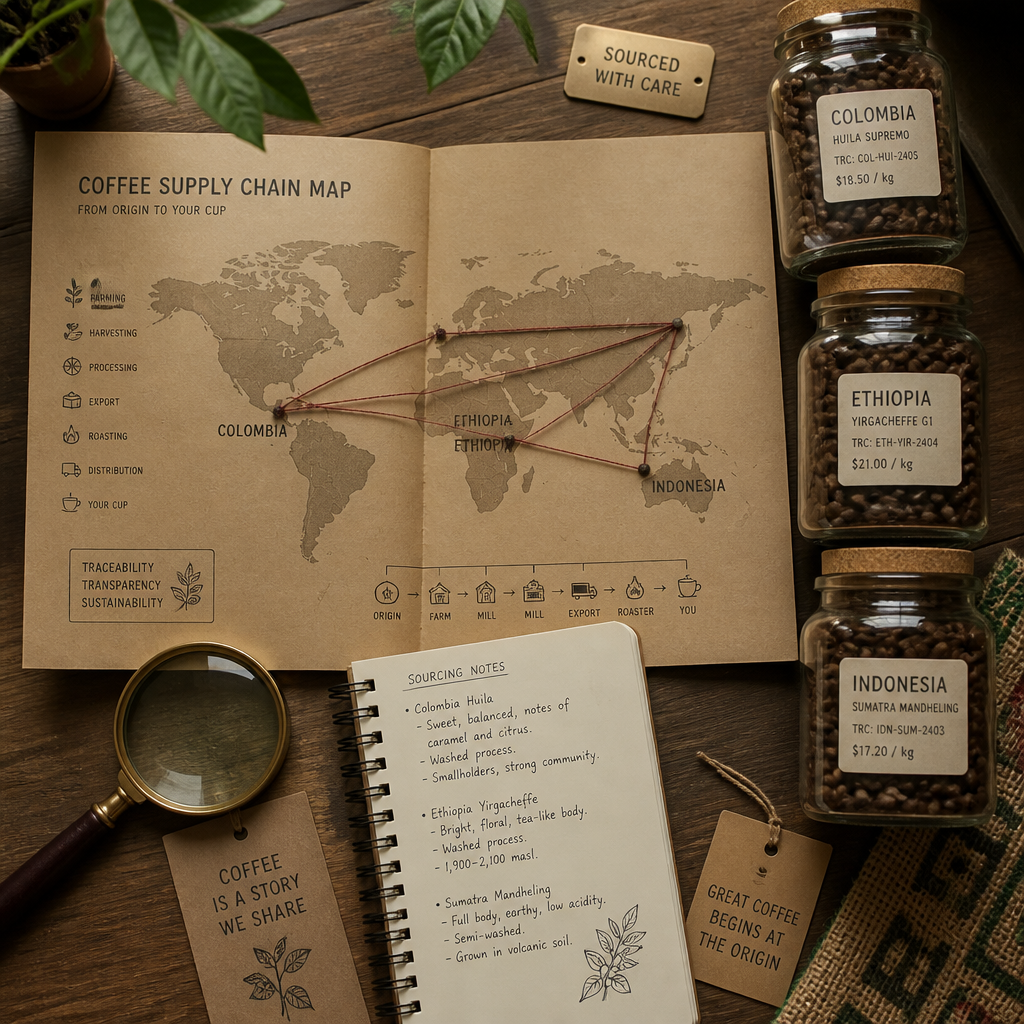
Ethical coffee sourcing is not a label you apply at the end of a supply chain. It is a set of decisions made at every stage: which farms to buy from, what price to pay, how processing is handled, and how transparently the whole story is told to the end customer. In practice, most UK roasters use the term loosely. True ethical sourcing follows coffee from farm to cup with full transparency at each handoff.
The two pillars of ethical sourcing are people and the planet. On the human side, this means paying prices that genuinely cover farmers' cost of production and provide financial stability, not just meeting the floor set by a commodity market that has historically undervalued coffee labour. On the environmental side, it means actively supporting farming methods that protect soil, water, and biodiversity rather than depleting them for short-term yield.
Certifications such as Fairtrade, Rainforest Alliance, and organic accreditations each capture a portion of this picture, but none of them captures all of it. A Fairtrade-certified bean may still travel through a long chain of intermediaries before it reaches a roaster. An organic bean may come from a cooperative that pays below-living wages. The honest position is that certifications are a useful baseline, not a guarantee of quality sourcing practice.
Ethical sourcing is an easy claim to make and a harder one to prove. The difference shows up not in the marketing copy but in how specifically a roaster can describe where each bag of green coffee came from and why.
Pro tip: When evaluating any UK coffee roaster's sourcing claims, ask one direct question: can they name the specific farm or cooperative, the harvest season, and the price paid above commodity rate? If those three answers are not readily available, "ethically sourced" is a positioning statement, not a supply chain fact.
Farrer's Approach to Selecting Origins
Farrer's has been selecting and roasting coffee since the early 19th century. That length of trading history creates something no newcomer roaster can manufacture: accumulated knowledge of which origins produce consistent quality across harvests, and which suppliers have proven reliable over time. For a roaster serving both home enthusiasts and trade customers such as cafes and restaurants, consistency is not a nice-to-have. It is the product.
Prioritising Cup Quality Over Trend-Chasing
A common mistake among newer specialty roasters is to chase the most talked-about single origin of the season, which leads to a rotating menu that confuses trade buyers and frustrates home drinkers who found something they loved and cannot reorder. Farrer's curated selection of blends and single origins reflects a different philosophy: choose origins that deliver reliably across seasons, and build relationships with suppliers who can support that consistency.
This matters especially for the hospitality trade. A cafe that builds its espresso menu around a Farrer's blend needs to know that the flavour profile of that blend will hold month after month. That kind of reliability is only possible when sourcing relationships are long-standing and grounded in honest communication with producers.
The Role of Green Coffee Selection
Before any coffee reaches the Kendal roastery, it goes through green coffee assessment. This involves evaluating the raw, unroasted bean for moisture content, density, defect rate, and sensory potential. Specialty coffee roaster standards generally require a cupping score above 80 on the Specialty Coffee Association scale, but the number alone is not the whole story. A bean that scores 82 from a well-known origin may perform less consistently in a commercial roasting context than a bean that scores 84 from a producer with a clean track record.
In practice, Farrer's blend recipes are built to highlight the strengths of each contributing origin while masking the variability that any single-origin bean carries from year to year. That is the craft of a blender with deep institutional knowledge, and it is genuinely difficult to replicate.
The Journey from Farm to Kendal
The physical journey of a coffee bean from its growing region to the Kendal roastery involves several distinct stages, each of which can add or remove quality. Understanding this chain is useful for any buyer, whether you are a home enthusiast ordering online or a hospitality business placing a regular trade order.
Growing and Processing at Origin
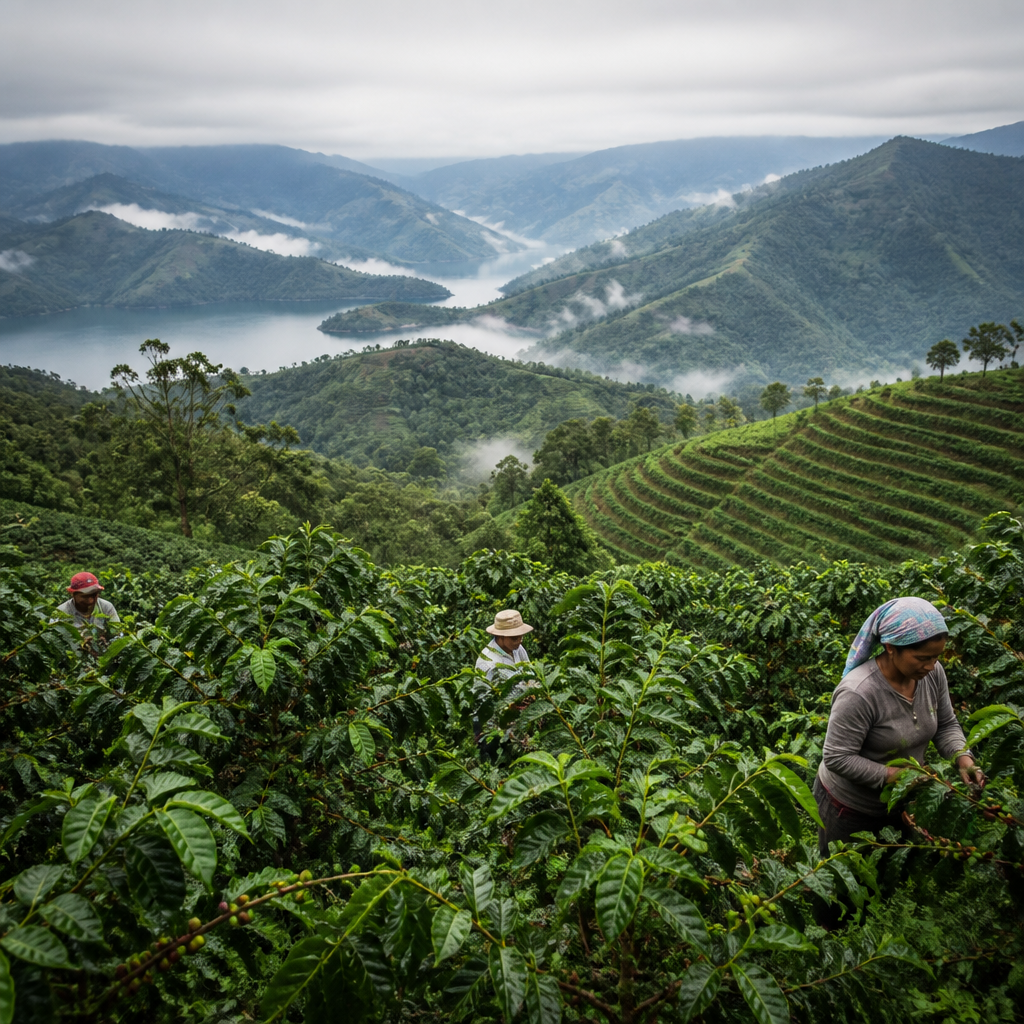
Coffee cherries are harvested, then processed to remove the fruit and prepare the seed for export. The processing method, whether washed, natural, or honey-processed, has a significant effect on the final flavour profile. Farm to cup coffee sourcing means that the roaster understands which processing method was used and can articulate why it suits the intended roast style.
Washed coffees, for example, tend to produce cleaner, brighter cups that highlight floral or citrus notes. Natural-processed coffees carry more fruit-forward, sometimes wine-like characteristics. A roaster who specifies processing method in their product information is demonstrating genuine supply chain knowledge, not marketing decoration.
Export, Import, and Green Coffee Storage
Once processed, green coffee is bagged, usually in grain-pro or jute-lined bags, and shipped in refrigerated or climate-controlled containers to preserve its characteristics. On arrival in the UK, it passes through customs and is typically held in a licensed warehouse before the roaster collects it.
The time between harvest and roasting matters. Green coffee can be stored for up to two years without significant deterioration if conditions are right, but freshness is still a factor. Farrer's next-day dispatch model on orders over £35 is only possible because the roastery is actively producing, not drawing down an ageing warehouse stock. That proximity between roasting and dispatch is one of the real advantages of a working roastery rather than a brand that contracts out its roasting.
Pro tip: When ordering from any specialty roaster, check whether their roast date or dispatch date is visible on the bag. If a roaster is not printing a roast date, they are not confident in their freshness. Farrer's hand-packing process allows for close quality control at this final stage before the coffee leaves Kendal.
Roasting in the Lake District
Kendal sits in Cumbria, and the roastery there has been producing coffee longer than most UK coffee brands have existed. That is not a heritage boast for its own sake. It means the roasting team has developed profile knowledge across a huge range of origins and bean densities, and that institutional knowledge shapes every roasting decision.
Roast Profiling and Its Effect on Sourcing Choices
Roasting is where sourcing decisions become sensory realities. A high-density bean from altitude growing regions in East Africa behaves very differently in the drum than a lower-density bean from a lower-altitude Central American farm. Getting the best out of each origin requires roast profiles that are tuned to the specific bean, not applied generically.
This is why the relationship between sourcing and roasting cannot be separated. A roaster who does not understand their green coffee will not know when to adjust their profile. A sourcer who does not understand roasting will not know which beans will perform as intended. At Farrer's, these functions are integrated at the same site in Kendal, which is an operational advantage that large-scale commodity roasters such as Lavazza or Origin Coffee simply cannot replicate at the same level of individual batch attention.
Hand-Packing as a Quality Control Stage
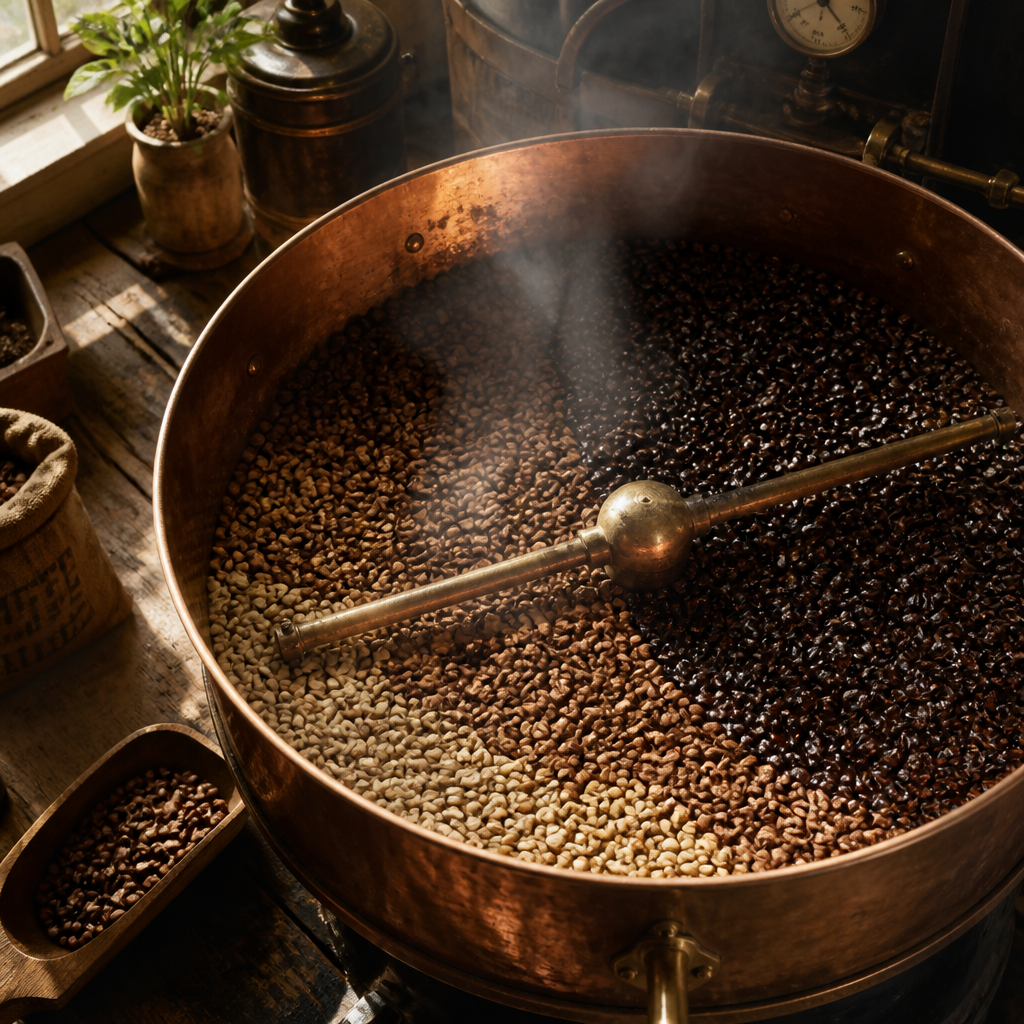
After roasting, Farrer's hand-packs its coffee. This step is often underestimated. Hand-packing allows for visual and sensory quality checks that automated packing lines skip. Off-batch beans, inconsistent roast colour, or anything that does not meet standard gets caught at this stage rather than shipped to a customer.
For trade customers supplying cafes and restaurants, this matters because consistency in the bag translates directly into consistency in the cup. A barista working with a reliable, well-packed coffee can dial in their grinder once and hold that setting. Inconsistent coffee forces constant adjustment and increases waste.
How Farrer's Sourcing Compares to Other UK Roasters
The UK specialty coffee roasting scene is competitive, and several well-regarded names compete for the same home and trade customers. Understanding what differentiates Farrer's sourcing approach requires an honest comparison rather than generic praise.
| Roaster | Sourcing Approach | Key Differentiator for Trade and Home Buyers |
|---|---|---|
| Farrer's Coffee | Heritage-led, consistency-focused, blend expertise built over 200+ years, hand-packed at the Kendal roastery | Longest trading history in UK coffee roasting; integrated sourcing, roasting, and packing under one roof; next-day dispatch on orders over £35 |
| Origin Coffee | Transparent direct-trade relationships, strong single-origin programme, emphasis on producer storytelling and traceability documentation | Strong appeal for specialty enthusiasts who want detailed origin narratives; less emphasis on commercial blend consistency for hospitality volume buyers |
| True Start Coffee | Positioned around health and functional benefits alongside sourcing ethics; focus on lower-acidity and clean-cup profiles | Appeals to wellness-oriented consumers; narrower range than a full-service roaster; less suited to trade buyers requiring volume flexibility |
The comparison above reflects a real trade-off in the UK specialty coffee market. Roasters that prioritise transparency storytelling sometimes do so at the expense of blend reliability. Roasters that prioritise volume sometimes do so at the expense of sourcing rigour. Farrer's occupies a distinct position: the depth of a heritage roaster combined with the operational agility of a working craft roastery that dispatches to both home and trade customers from a single Kendal site.
What Farm to Cup Means for Home and Trade Buyers
The phrase "farm to cup" can mean almost anything if a roaster applies it loosely. For Farrer's customers, it has a specific practical meaning: the coffee you receive was roasted at a known location, by a known team, and dispatched quickly enough that freshness is not a question you need to ask.
For Home Enthusiasts
Home buyers benefit from the Farrer's sourcing model in a straightforward way. When you reorder a blend you enjoyed, the sourcing relationships that underpin that blend mean the flavour profile holds. You are not discovering a different coffee each time because the origin supply changed. That reliability is the real value of long-standing supplier relationships, and it is something mass-market brands such as Lavazza cannot offer at the specialty end of the spectrum.
The Farrer's range includes loose leaf teas alongside coffee, which means the same sourcing rigour that applies to green coffee applies to tea procurement. For enthusiasts who drink both, this matters. A roastery that takes tea seriously enough to source loose leaf rather than commodity tea bags is demonstrating consistent buying standards across its range.
For Cafes, Restaurants, and Hospitality Businesses
Specialty coffee roaster relationships work best when the roaster understands the trade buyer's environment. Farrer's barista training programmes and roastery experience days create a feedback loop that benefits both sides: trade customers understand the sourcing and roasting decisions behind the coffee they are serving, and Farrer's understands the operational realities of a busy cafe kitchen.
This is a tangible advantage over ordering from a large international brand. When a hospitality business works with Farrer's, they are working with a team that can be reached directly, that understands the Cumbrian and wider UK hospitality context, and that can support staff training at a level a commodity roaster will not provide.
A common mistake trade buyers make is choosing a coffee supplier on price alone. The real cost of a cheaper, inconsistently sourced coffee shows up in extraction problems, customer complaints, and the staff time spent troubleshooting. A well-sourced, reliably roasted coffee from a supplier who offers training support pays for itself in reduced waste and more consistent customer experience.
Frequently Asked Questions
What does coffee sourcing in the UK actually involve?
Coffee sourcing in the UK involves selecting green coffee from growing regions worldwide, evaluating quality through cupping and assessment, establishing supplier relationships that ensure consistency across harvests, and transporting green coffee to the roastery. For a roaster like Farrer's, sourcing is not a single purchasing decision but an ongoing relationship management process built over many years.
How does Farrer's maintain consistency across different harvest seasons?
Blend recipes are a key tool here. By combining beans from multiple origins in a single blend, Farrer's can compensate for year-to-year variation in any single origin's cup profile. If one contributing origin has a slightly lighter harvest, the blend recipe can be adjusted to maintain the overall flavour profile the customer expects. This is a skill that takes significant practice and institutional knowledge to execute well.
What is the difference between ethical coffee and Fairtrade coffee?
Fairtrade is a specific certification scheme with defined price floors and standards. Ethical coffee sourcing is a broader commitment that may include Fairtrade but goes further, covering transparency, traceability, farming practice, processing conditions, and the overall sustainability of the supply relationship. A coffee can be Fairtrade-certified without the roaster having direct knowledge of the farm it came from.
Why does roasting location matter for specialty coffee quality?
Roasting at the point of sale, or as close to it as possible, dramatically affects freshness. Coffee releases carbon dioxide after roasting and begins to stale within weeks. A roastery that ships within days of roasting, as Farrer's does with next-day dispatch on qualifying orders, delivers coffee at the peak of its flavour development. A coffee that was roasted weeks ago in a central facility and then distributed through a wholesale chain will never match that freshness.
Can trade buyers visit the Farrer's roastery in Kendal?
Farrer's offers roastery experience days, which give both home enthusiasts and trade customers direct insight into the roasting process. For hospitality businesses considering Farrer's as a supplier, this kind of access is genuinely useful. Seeing how coffee is roasted and hand-packed makes it easier to explain the product to customers and to understand why a particular brewing parameter works better with a specific blend.
How does farm to cup coffee differ from standard commercial coffee buying?
Standard commercial coffee buying treats coffee as a commodity: price is the primary variable, and consistency is achieved through large-scale blending that smooths out quality differences. Farm to cup sourcing treats origin quality as the starting point and pays accordingly, building supply relationships that allow the roaster to understand and communicate the provenance of what is in the bag. The difference shows up directly in the cup and in the roaster's ability to tell an honest story about their product.
Have you visited the Farrer's roastery or ordered from them recently? Share what you noticed about the coffee's freshness or flavour, as your experience helps other buyers make more informed choices.
References
- A complete guide to ethical coffee sourcing for UK buyers, covering transparency and supply chain practices
- How ethical coffee sourcing works in the UK specialty sector, including fair payment and environmental pillars
- What ethically sourced coffee means in practice, including certifications and buyer responsibilities
- What Fairtrade, carbon neutral, and B Corp certifications actually mean for coffee sourcing transparency


