

Most people pick their coffee roast the same way they choose a wine: by what the label looks like. That is how you end up with a bag of dark roast that tastes like charcoal, or a light roast that feels uncomfortably sharp before you have even had breakfast. The light roast vs dark roast debate is not really about which is better. It is about understanding what roasting actually does to a coffee bean, and matching that to how you brew and what you want in the cup. Get it right and every bag from Farrer's roastery in Kendal becomes considerably more rewarding.
Table of Contents
- Quick Takeaways
- What Roasting Actually Does to a Coffee Bean
- Flavour Profiles: Light Roast vs Dark Roast
- The Caffeine Myth You Need to Stop Believing
- Best Roast for Your Brew Method
- Side-by-Side Roast Comparison
- Who Should Choose Light Roast
- Who Should Choose Dark Roast
- Frequently Asked Questions
- References
Quick Takeaways
| Key Insight | Explanation |
|---|---|
| Light roast preserves origin character | Shorter roasting time keeps the bean's natural fruit, floral, and citrus notes intact. These flavours come from the origin, not the roast. |
| Dark roast develops roast-driven flavour | Longer time in the drum creates chocolate, caramel, and smoky notes. The bean's origin fades and the roast itself becomes the dominant flavour. |
| Caffeine difference is minimal in practice | Light roast beans are denser and contain slightly more caffeine by weight, but brewed cup to cup, the difference is negligible at standard dose and ratio. |
| Light roast has higher acidity | Less roasting leaves more chlorogenic acids intact, giving light roasts their bright, sometimes sharp quality. Dark roast is smoother and lower in acidity. |
| Your brew method changes which roast works best | Pour over and filter reward light roasts. French press and moka pot tend to suit medium to dark roasts better. |
| Dark roast is not inherently stronger | Stronger flavour and higher caffeine are not the same thing. Dark roast tastes bolder, but that is roast character, not caffeine concentration. |
| Freshness matters more than roast level | A freshly roasted light or dark bean from a quality roaster will always outperform a stale version of the same roast. Roast date is the first thing to check. |
What Roasting Actually Does to a Coffee Bean
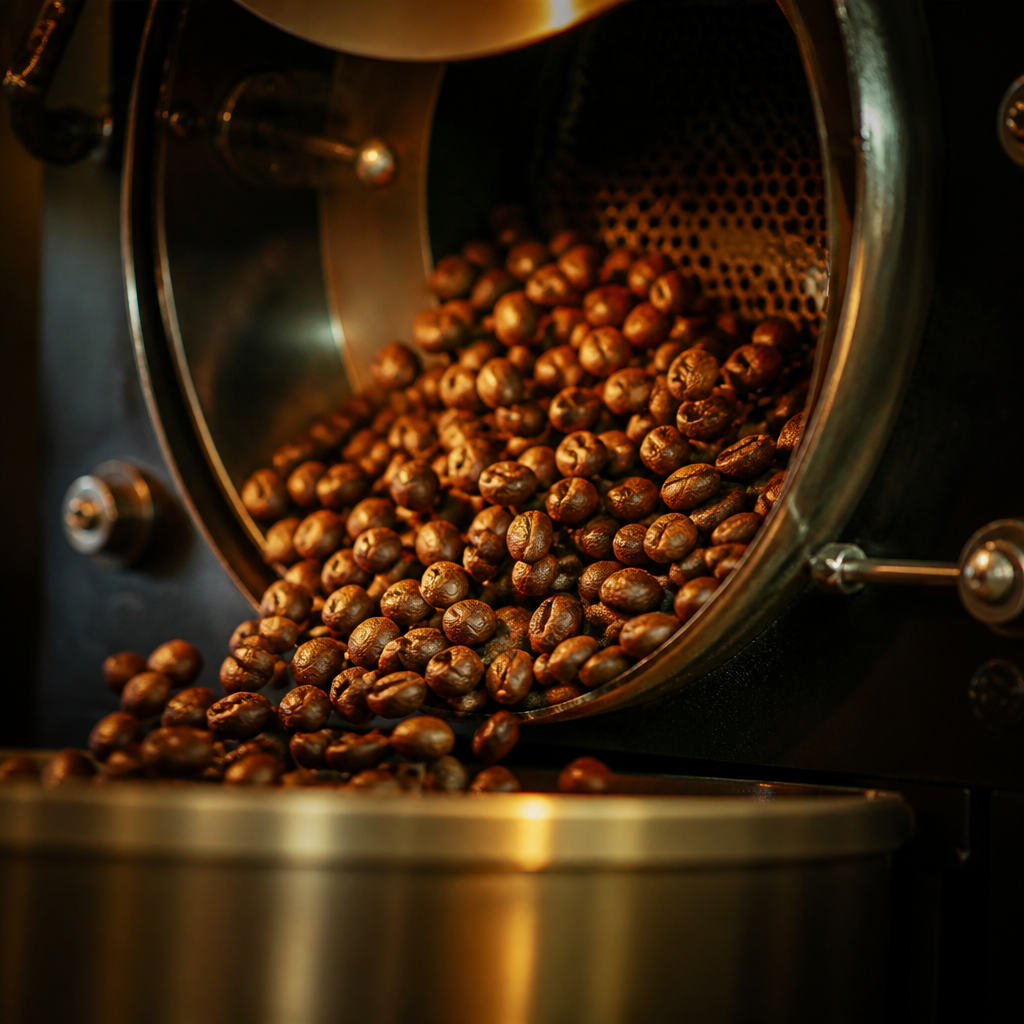
Green coffee beans are dense, grassy, and essentially undrinkable. Roasting transforms them through heat, triggering two key chemical processes: the Maillard reaction, which develops browning and savoury-sweet compounds, and sucrose caramelisation, which generates sweetness and body. The longer the bean spends in the roaster, the further both processes run.
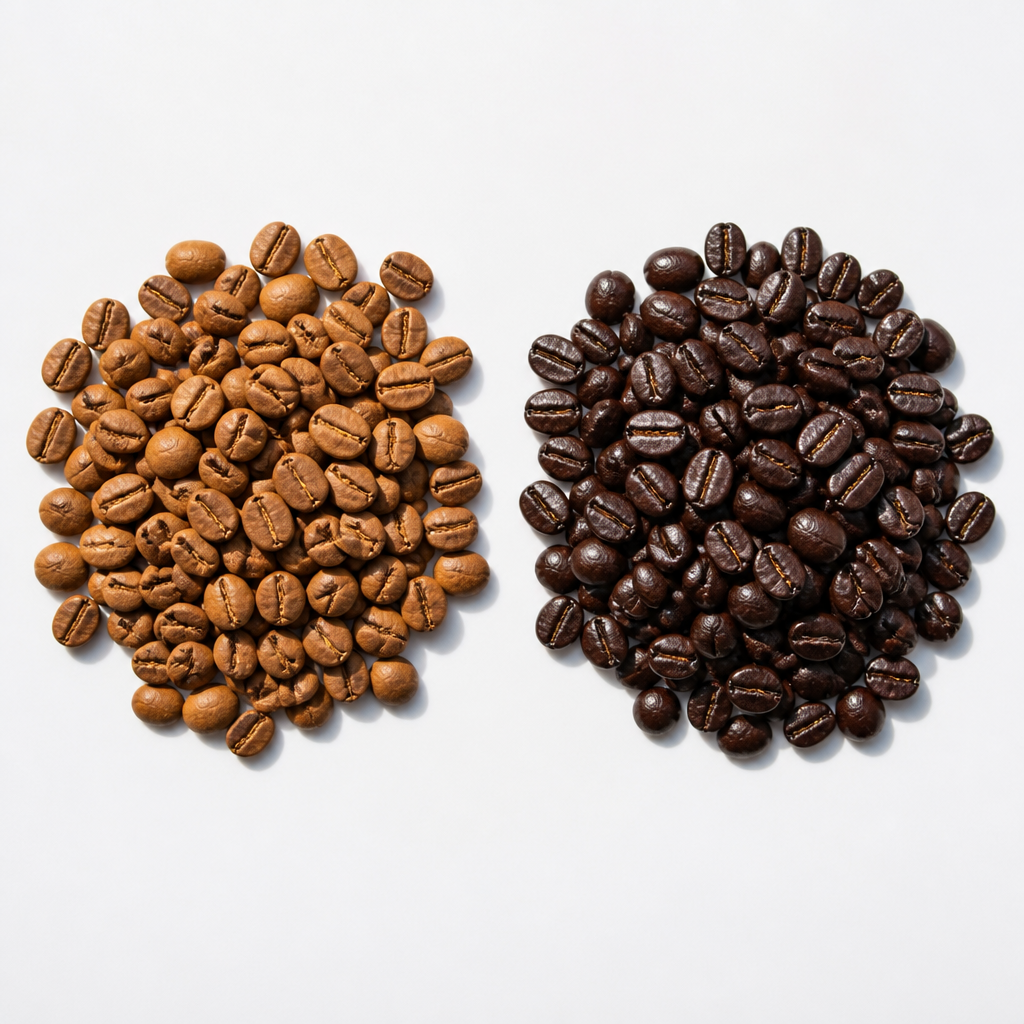
At light roast, the bean is pulled shortly after what roasters call "first crack," an audible moment when moisture expands and the bean's structure opens up. At dark roast, the bean is taken to or beyond "second crack," where oils migrate to the surface, density drops significantly, and roast-generated compounds dominate. Everything in between is a sliding scale of those two processes competing against each other.
This matters because it means roast level is not a flavour seasoning applied on top of the bean. It is a transformation of the bean itself. A dark roast Ethiopian and a dark roast Brazilian will taste far more similar to each other than to their light roast versions, because the roast has overwritten much of what made them distinct.
Flavour Profiles: Light Roast vs Dark Roast
What Light Roast Actually Tastes Like
Light roast coffee preserves more of the characteristics from the bean and its growing region. Expect fruit-forward flavours such as apple, peach, citrus, and berry, alongside floral aromatics and a bright, sometimes tea-like quality. The acidity is noticeably higher, which some people experience as sharpness, especially on an empty stomach.
The body is lighter and the finish is often clean. If you have ever had a filter coffee that reminded you of fruit juice or herbal tea, that was almost certainly a light roast single origin. Many specialty roasters consider this the purest expression of what a coffee can be, because you are tasting the bean, not the drum.
Light roast coffee reflects the work of the farmer and the character of the land. Dark roast reflects the work of the roaster. Neither is superior. They are simply answering different questions.
What Dark Roast Actually Tastes Like
Dark roast develops its flavour from the roasting process itself rather than the bean's origin. The result is bold roasted flavour with notes of dark chocolate, caramel, smoke, and in some cases a slight bitterness from over-caramelised sugars. The body is heavier, the mouthfeel is fuller, and the finish tends to linger.
The surface oils you see on a dark roast bean are not a sign of quality or staling on their own. They are simply the result of prolonged heat driving the bean's internal oils outward. Those oils contribute to mouthfeel and aroma. Dark roast is generally smoother and less acidic than light roast, which is why it works well for people who find lighter coffees too sharp.
Pro tip: If you find dark roast tastes bitter rather than bold, the problem is usually either over-extraction or beans that were low quality to begin with. A well-sourced, freshly roasted dark roast should taste rich and smooth, not burnt.
The Caffeine Myth You Need to Stop Believing
The most persistent misconception in coffee is that dark roast contains more caffeine because it tastes stronger. It does not. By weight, light roast beans actually contain slightly more caffeine than dark roast beans, because caffeine degrades with extended heat. Light roast retains roughly 1.2 to 1.4% caffeine per 100g, while dark roast typically falls in the 1.1 to 1.3% range.
However, this difference becomes even less relevant in practice, because dark roast beans lose density during roasting. They expand and weigh less per bean than light roast beans. If you scoop coffee by volume rather than by weight, you are actually scooping fewer grams of dark roast than light, which partially offsets the caffeine difference in the other direction. The practical conclusion is that caffeine content should not be your reason to choose a roast level. The gap is too small to reliably feel and too dependent on your specific dose and brewing ratio.
What you will reliably feel is the flavour difference, the acidity difference, and how well a given roast performs through your preferred brew method. Focus on those instead.
Best Roast for Your Brew Method
Pour Over and Filter Coffee
Pour over and filter methods highlight clarity, brightness, and delicate flavour notes. They are the ideal vehicle for light roast coffee. The paper filter removes oils and fines, delivering a clean cup that lets fruit and floral characteristics come through without muddiness. A light or light-medium roast on a V60 or Chemex will give you the most expressive result from a quality single origin.
Light roast beans are denser and require slightly more extraction to release their flavours fully. This means you need a finer grind and slightly hotter water compared with dark roast on the same method. If your light roast pour over tastes sour, the fix is usually a finer grind or longer brew time, not a different bag of coffee.
Espresso
Traditional espresso blends use medium to dark roast because the roast character complements the concentration and intensity of the extraction. The heavier body and lower acidity carry well through steamed milk in a flat white or latte. Farrer's Westmorland Blend, a medium roast with notes of nuts and mild chocolate, is a good example of the style that has dominated commercial espresso for generations.
Modern specialty cafes often use lighter roasts for espresso to produce more fruit-forward, complex shots. These are rewarding when dialled in correctly, but they are less forgiving and more sensitive to small changes in grind, temperature, and dose. For home espresso users and trade buyers wanting consistent results across different operators, a medium roast blend is nearly always the more reliable choice.
French Press and Cafetière
French press uses full immersion and a metal filter, which allows natural oils and fine particles into the cup. The result is inherently heavier body and more texture. Medium to dark roasts suit this method well because the boldness of the roast complements the richness the method produces. Light roast can work in a cafetière, but it can taste sharp or thin if not extracted carefully, because the method does not have the clarity of filter to compensate.
Moka Pot and Stovetop
The moka pot brews under pressure and produces a strong, concentrated cup with significant body. Dark roast is the traditional choice and it works well here, with the heavy caramel and chocolate notes holding up to the intensity of the extraction. A medium-dark roast like Farrer's Colombian High Roast, which offers heavier body and deep notes of dark chocolate and caramel, is well suited to this method.
Pro tip: When switching roast levels on the same brew method, recalibrate your grind. Dark roast beans are less dense and more porous, so they extract more quickly. Going from medium to dark on a cafetière or espresso machine without adjusting the grind often leads to over-extraction and bitterness.
Side-by-Side Roast Comparison
| Characteristic | Light Roast | Dark Roast |
|---|---|---|
| Primary flavour source | The bean and its growing origin | The roasting process itself |
| Typical tasting notes | Fruit, citrus, floral, tea-like brightness | Dark chocolate, caramel, smoke, roasted nuts |
| Acidity level | Higher, brighter | Lower, smoother |
| Body and mouthfeel | Light to medium, clean finish | Medium to full, lingering finish |
| Surface appearance | Dry, no surface oils | Oily or shiny surface |
| Caffeine by weight | Slightly higher (negligible in practice) | Slightly lower (negligible in practice) |
| Best brew methods | Pour over, filter, AeroPress | Espresso, moka pot, French press, cafetière |
| Works well with milk | Can be overwhelmed by milk; better black | Holds up well in milk-based drinks |
| Farrer's example | Single origin filter options | Colombian High Roast |
Who Should Choose Light Roast
Light roast rewards curiosity. If you want to understand where your coffee came from, what the growing conditions contributed, and how soil and altitude shape flavour, light roast is the place to explore. A well-sourced Ethiopian light roast and a Colombian light roast can taste wildly different from each other because the origin is the dominant variable. That variety is precisely the point.
Choose light roast if you drink your coffee black or with minimal milk. If you enjoy tea and find that the crisp brightness of a good filter coffee feels similar to brewing a fine loose leaf, you are probably a light roast drinker who has not yet committed to the label. You also tend to be better served by light roast if you drink coffee later in the day and want lower acidity of espresso but still value complexity and origin character.
A common mistake among new light roast drinkers is giving up too quickly because the first cup tasted sour. Sourness is not a feature of light roast; it is a symptom of under-extraction. Grind finer, use slightly hotter water, or extend the brew time, and the sourness resolves into the vibrant brightness the roast is known for.
Who Should Choose Dark Roast
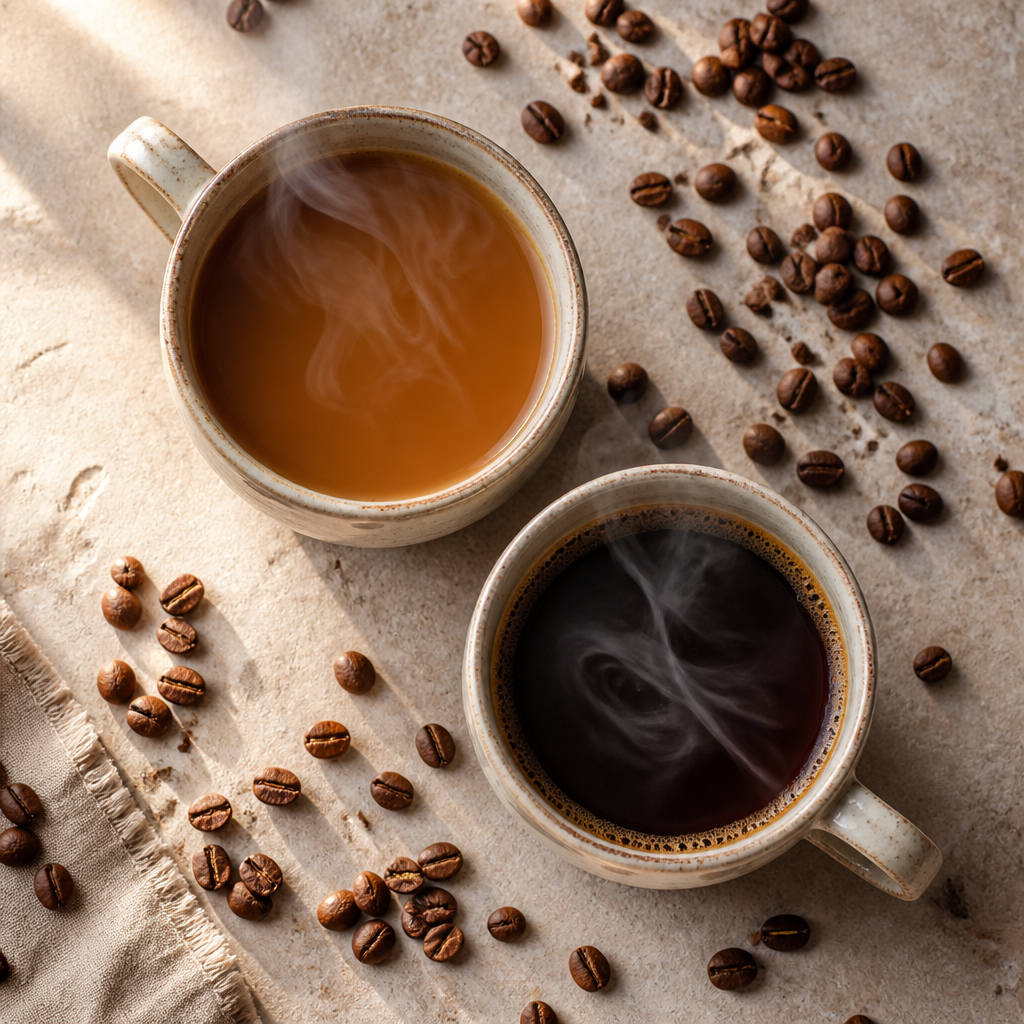
Dark roast is not a consolation prize for people who do not understand specialty coffee. It is a deliberate choice that suits a specific set of preferences and use cases. If you predominantly drink milk-based coffee drinks such as lattes, cappuccinos, or flat whites, a medium to dark roast will serve you far better than a light one. The body and roast character carry through steamed milk in a way that lighter roasts cannot match.
Dark roast also suits anyone who finds bright, acidic coffees uncomfortable on the stomach. The roasting process reduces the chlorogenic acid content, making dark roast a genuinely lower-acid option that many people find easier to drink regularly. This is not a myth or marketing claim; the chemistry supports it.
For trade buyers and hospitality businesses equipping a commercial espresso programme, medium to dark roast blends are almost always the right foundation. They are more consistent across different baristas, more forgiving under varying water hardness, and familiar to the broadest possible customer base. A single origin light roast on the espresso grinder is a rewarding offering for specialty-focused menus, but it needs a skilled team to extract it well every time.
Frequently Asked Questions
Does light roast really have more caffeine than dark roast?
By weight, yes, light roast contains slightly more caffeine because caffeine degrades with extended heat exposure. However, the difference is small, roughly 1.2 to 1.4% caffeine per 100g for light roast versus 1.1 to 1.3% for dark roast. In a brewed cup using the same dose and ratio, the difference is negligible and unlikely to produce any noticeable effect. Do not choose your roast based on caffeine. Choose it based on how you brew and what you enjoy drinking.
Why does dark roast taste stronger if it has less caffeine?
Strength of flavour and caffeine concentration are two different things. Dark roast tastes bold and intense because the roasting process generates powerful compounds including dark chocolate, caramel, and smoky notes that dominate the palate. That is roast character, not caffeine. Light roast can feel sharper because of its higher acidity, which some people interpret as strength, but it is a different kind of intensity entirely.
Which roast level is best for people who find coffee too acidic?
Dark roast is the better choice if acidity is an issue. Longer roasting breaks down more of the chlorogenic acids naturally present in coffee, making dark roast genuinely lower in acidity. If you currently drink light roast and find it uncomfortable, switching to a medium or dark roast will make a real difference. Farrer's Colombian High Roast, with its heavier body and smooth dark chocolate character, is a good starting point for anyone moving away from bright, acidic coffees.
Can I use any roast level for espresso?
Yes, any roast level can technically be pulled as an espresso shot. Medium to dark roast has been the traditional choice because it produces the bold, sweet, low-acid character most people associate with espresso, and it works consistently across a range of grind settings. Lighter roasts in an espresso machine can produce more complex, fruit-forward shots, but they are more sensitive to small changes in grind, temperature, and dose, and they require more dialling in to avoid sourness. For home users, a medium roast espresso blend is the most forgiving starting point.
What is the best roast level if I drink coffee with milk?
Medium to dark roast performs better with milk. The bold roast character, heavier body, and lower acidity hold up when milk is added, producing a balanced, sweet result in lattes, cappuccinos, and flat whites. Light roast can be overwhelmed by the volume and fat content of milk, losing the delicate flavour notes that make it interesting in the first place. If your coffee drink is more milk than coffee, a dark or medium-dark roast blend is the more sensible choice.
How does freshness affect light and dark roast differently?
Freshness matters enormously for both roast levels, but it shows up differently. Light roast coffee tends to hold its nuanced fruit and floral notes for a shorter window after roasting because those delicate compounds degrade quickly with oxidation. Dark roast is slightly more forgiving in terms of how long it stays drinkable, because the bold roast-driven flavours are more robust. That said, a stale dark roast will taste flat and ashy rather than bold. For both roast levels, buying from a roaster like Farrer's that roasts fresh and dispatches promptly is the most important single decision you can make about coffee quality.
Should cafes offer both light and dark roast options?
Yes, if the team has the skills to handle both well. The most practical approach for a cafe espresso programme is a reliable medium roast blend as the house espresso, which serves the widest customer base and works across milk and black drinks. A separate filter or batch brew offering using a lighter single origin allows you to serve specialty-focused customers without asking every barista to dial in a tricky light roast espresso every morning. Farrer's supplies both blends and single origins for trade customers, and their team can advise on what suits a specific cafe setup.
Have you switched roast levels recently and noticed a big difference in your daily cup? Share what you found in the comments or tag Farrer's on social media, we would genuinely like to know what worked for you.


