

Most people choose food and coffee independently, then wonder why the combination tastes flat, too bitter, or weirdly sour.
Coffee and food pairing is not a niche obsession for specialists. It is a simple, practical skill that transforms what you already drink and eat into something considerably better. Coffee carries one of the broadest flavour spectrums of any beverage, spanning bright citrus, ripe berry, deep cocoa, caramelised sugar, toasted nuts, warm spice, and earthy savouriness.
Match those notes deliberately to your food and both the cup and the plate become more expressive. Get it wrong and each cancels the other out. At Farrer's, we have been roasting and tasting coffee for over 200 years. This guide is built on that experience.
Table of Contents
- Quick Takeaways
- The Science Behind Coffee and Food Pairing
- The Two Pairing Strategies That Actually Work
- Pairing by Roast Level: A Practical Starting Point
- Pairing Farrer's Blends with Specific Foods
- Coffee Tasting Guide: Reading the Flavour Notes on the Bag
- Pairing Coffee Beyond Sweet Foods
- Roast Level Pairing Comparison
- Frequently Asked Questions
- References
Quick Takeaways
| Key Insight | Explanation |
|---|---|
| Match intensity first | A delicate light roast gets overwhelmed by rich chocolate cake. A heavy dark roast steamrollers a light fruit tart. Start by matching the weight of the coffee to the weight of the food. |
| Shared flavour compounds amplify both sides | Coffee and caramel share Maillard reaction compounds. Pairing a medium roast with a caramel-based dessert produces a noticeably deeper, richer experience than either alone. |
| Contrast can be as powerful as complementing | Bright, acidic coffee cuts through a buttery croissant or a rich cheese. You are not looking for similarity; you are looking for balance. |
| Roast level is your fastest guide | Light roasts suit fruit, citrus, and delicate pastries. Medium roasts work with nuts, caramel, and milk chocolate. Dark roasts handle rich chocolate, spiced foods, and savoury dishes. |
| Read the bag before you plate the food | The tasting notes printed on a quality roaster's bag are a direct pairing map. If the bag says "blackcurrant and dark chocolate," those are your starting food categories. |
| Brewing method changes the pairing equation | Espresso concentrates all the flavour notes, making pairings more intense. Filter coffee sits lighter on the palate and suits more delicate food partners. |
| Freshness in the cup is non-negotiable | A stale coffee has no discernible tasting notes to pair against. Farrer's next-day dispatch ensures you are working with coffee that still has its flavour intact. |
The Science Behind Coffee and Food Pairing
The reason certain pairings work is not guesswork. Aromatic compounds in coffee fall into identifiable chemical families, and when those families overlap with the aromatic compounds in food, the result is congruence: both the coffee and the food taste more pronounced together than they do separately.
Maillard reaction compounds (the same browning chemistry that creates caramel, toffee, brown sugar, and toasted bread flavours) are present in medium and dark roast coffees. Foods that go through the same browning process, such as baked pastries, caramelised onions, toasted almonds, or grilled bread, share those compounds and pair reliably well. This is not subjective preference. The chemistry is measurable.
Fruity esters, the compounds responsible for berry, citrus, and stone fruit notes, appear predominantly in light roast coffees, especially those from African origins. Pair those with fresh fruit, citrus desserts, or light baked goods and the shared aromatic profile amplifies both sides. Meanwhile, pyrazines, which produce nutty, earthy, roasted character, appear across roast levels and connect coffee naturally to nuts, seeds, and darker baked goods.
"When it comes to pairing, there are two options: pair with notes that go well together, or with opposites, which creates a new and surprising flavour."
Understanding this compound logic turns pairing from a matter of taste into a repeatable process. You stop guessing and start applying a framework that works across different coffees and different meals.
The Two Pairing Strategies That Actually Work
There are two reliable approaches to how to pair coffee with food, and both are worth knowing. Using only one limits your options considerably.
Complementary Pairing: Amplify What Is Already There
A complementary pairing matches the dominant flavour notes of your coffee with similar notes in the food. A medium roast with pronounced caramel character paired with a shortbread biscuit is a complementary pairing. A dark roast with cocoa notes alongside a dark chocolate brownie is another. The principle is that shared flavours reinforce each other. Neither competes. Both get louder.
This is the easier strategy for beginners because it requires only that you read the tasting notes on the bag and match them directly to food that contains similar flavours. A Farrer's Westmorland Blend, with its toasted nut and mild chocolate profile, maps naturally onto almond biscotti, hazelnut cake, or a plain digestive biscuit without any further analysis needed.
Contrasting Pairing: Create Balance Through Opposition
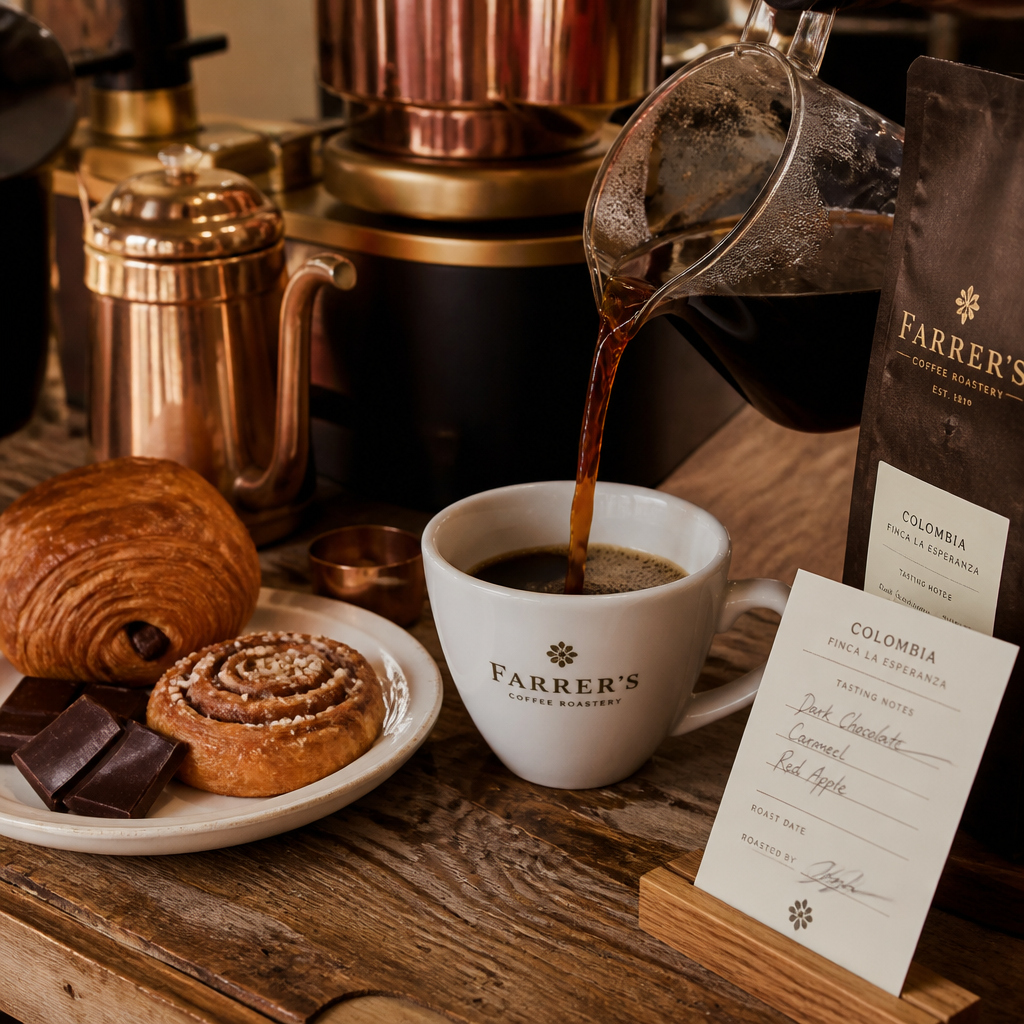
A contrasting pairing works differently. Here, you are using the coffee to balance something in the food, rather than echoing it. A bright, acidic filter coffee cuts through the fat in a buttery croissant. A bitter, smoky espresso balances a very sweet dessert like crème brûlée or toffee pudding. The coffee does not mirror the food. It acts as a counterweight.
This strategy requires slightly more precision, but it produces results that feel more sophisticated. The contrast creates equilibrium rather than amplification. A common mistake is to push this too far: if the contrast is too violent (say, a heavily roasted, aggressively bitter espresso with a delicate fruit sorbet), neither side benefits. The goal is balance, not competition.
Pro tip: If you are hosting a coffee tasting or a food event, use the complementary strategy for the first pairing to establish a reference point, then introduce a contrasting pairing second. The difference in how both work becomes immediately obvious and is a reliable talking point.
Pairing by Roast Level: A Practical Starting Point
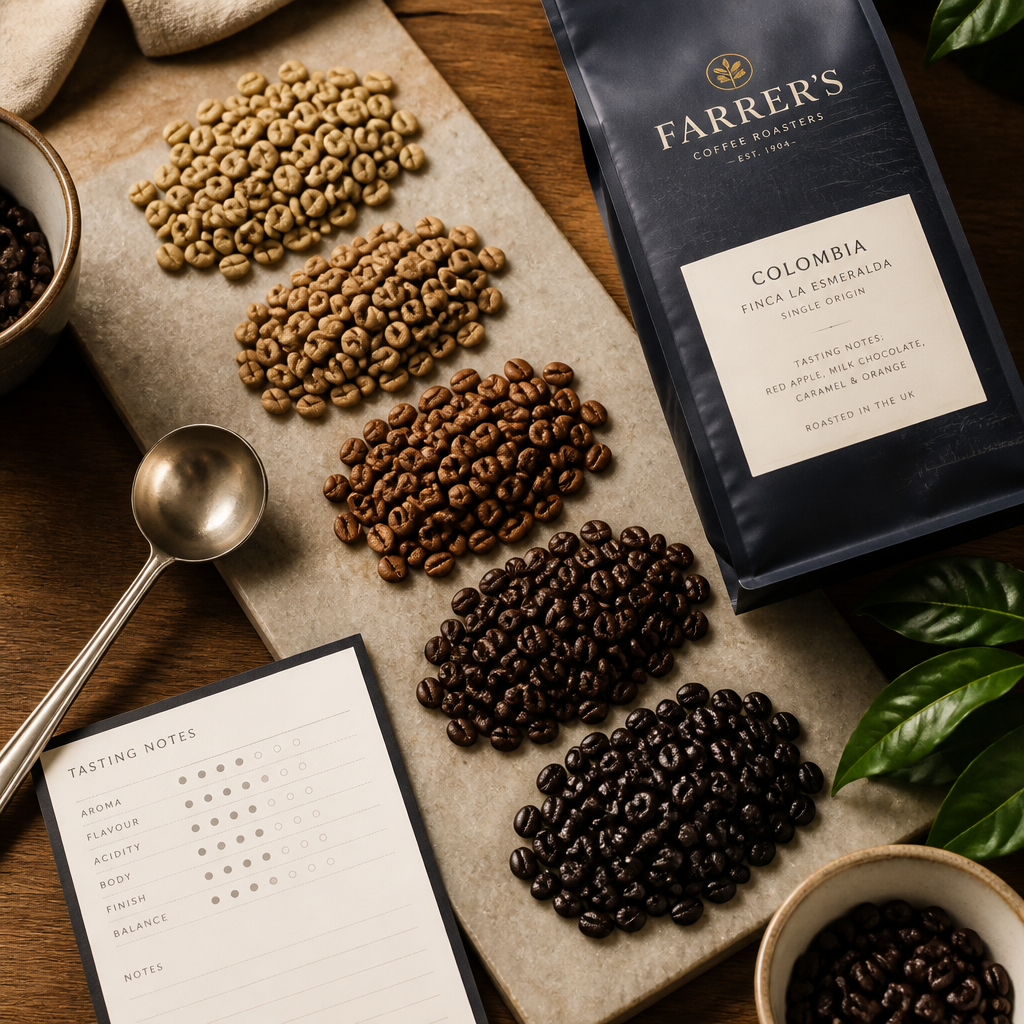
Roast level is the single fastest way to orient your pairing decisions. Before you read individual tasting notes, understanding the general flavour territory of each roast gives you a reliable working guide.
Light Roast Coffee Pairings
Light roasts retain the most of the original bean's character. They tend toward brightness: citrus, berry, stone fruit, florals, and occasionally a tea-like clarity. Their acidity is higher and their body is lighter. The food that suits them best shares that brightness or benefits from a clean, palate-refreshing contrast.
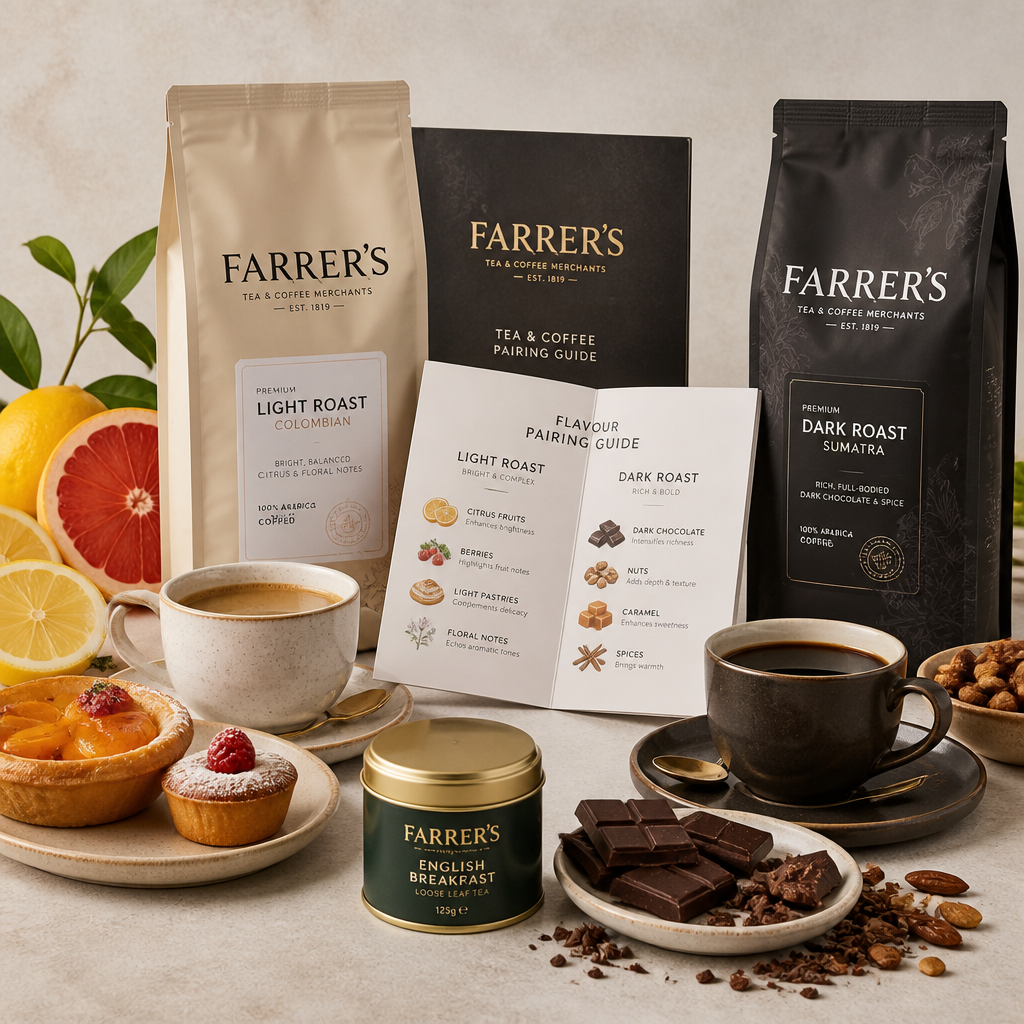
Pair light roasts with: fresh fruit pastries, lemon drizzle cake, berry scones, citrus tarts, natural yoghurt with honey, or plain croissants. For savoury applications, a light roast works with mild soft cheeses and charcuterie boards where delicate flavours should not be overwhelmed. Ethiopian and Kenyan origins, which frequently appear in light roast profiles, carry tea-like and fruity notes that sit beautifully alongside citrus and berry-based foods.
Medium Roast Coffee Pairings
Medium roasts occupy the most versatile territory. They have enough body and sweetness to handle substantial food, but retain enough origin character to pair with nuanced flavours. Expect caramel, milk chocolate, toasted nuts, brown sugar, and a generally rounded, approachable profile.
Pair medium roasts with: shortbread, almond cake, hazelnut biscotti, banana bread, caramel slice, cinnamon buns, carrot cake, or a simple cheese scone. Medium roasts are the anchor of the Farrer's range. The Westmorland Blend, for example, is a medium roast built for everyday versatility, with a toasted nut and mild chocolate profile that suits most cafe-style pairings without requiring careful calibration.
Dark Roast Coffee Pairings
Dark roasts develop deeper, more intense flavour compounds through extended roasting. Bitterness increases, origin character recedes, and you pick up dark chocolate, molasses, smoked caramel, wood, and sometimes a pleasant char. Their weight and intensity means they need food that can hold its own.
Pair dark roasts with: dark chocolate desserts, flourless chocolate cake, spiced gingerbread, rich fruit cake, pecan pie, or savoury dishes with grilled, caramelised, or smoky character. The tart fruitiness of citrus actually works here as a contrasting pairing because the tartness provides a sharpness that highlights the dark roast's depth. A slice of orange polenta cake alongside a dark espresso is a very effective contrasting combination.
Pairing Farrer's Blends with Specific Foods
Talking about roast levels in the abstract is useful for building general knowledge. But the real value in a coffee tasting guide is specificity. Here is how the core Farrer's blends connect to actual food.
Westmorland Blend
The Westmorland is Farrer's most iconic offering, a medium roast with a profile of toasted nuts, mild chocolate, and a clean, rounded finish. It is built for versatility. Food pairings: almond biscotti, shortbread, hazelnut cake, banana loaf, caramel biscuits, or a good oat-based flapjack. As an espresso, it handles milk-based drinks well, which means it pairs just as effectively with the food you would serve alongside a flat white or cappuccino. Explore the full Farrer's coffee range to find blends suited to your preferred food territory.
Fairtrade Espresso Blend
Rich, full-bodied, with notes of caramel and soft acidity. As an espresso, this blend is built to cut through milk and stand up to flavourful food without disappearing. Food pairings: dark chocolate truffles, tiramisu, panna cotta with caramel, or a walnut brownie. The caramel note creates a complementary link to caramel-heavy desserts. The soft acidity prevents it from becoming cloying alongside sweeter options.
Rich Blend
A sophisticated blend featuring Arabica beans from Guatemala and South Africa. This blend carries more body and depth than the Westmorland and suits richer, more robust food pairings. Try it alongside a fruit cake, spiced biscuits, mature cheddar on a cracker, or dark chocolate-covered nuts. It also holds up well with savoury elements, making it a good match for a mid-morning cheese board. For those running a cafe or hospitality business, the Farrer's trade coffee range offers these blends at scale, along with barista training to help your team pair and serve them with confidence.
Coffee Tasting Guide: Reading the Flavour Notes on the Bag
A good roaster's tasting notes are not decoration. They are a working tool. When Farrer's or any quality roaster prints "dark chocolate, blackcurrant, and cedar" on a bag, those are the dominant aromatic compound families present in the roasted bean. They are the compound families you should match or contrast in your food choice.
How to Use Tasting Notes as a Pairing Map
Step one: read the notes before you decide on food. This sounds obvious, but most people buy coffee, drink it with whatever happens to be on the table, and never connect the two intentionally. Step two: identify the dominant note category. Fruity? Chocolatey? Nutty? Spiced? That category tells you the compound family and therefore the food territory. Step three: choose food that either shares that family (complementary) or provides a clean contrast to it (contrasting).
A common mistake is treating tasting notes as marketing language rather than as information. "Blackcurrant" on a coffee bag genuinely means fruity ester compounds are present. Match those compounds to food containing similar esters and the pairing works predictably well. Pair that coffee with a very heavy, savoury, or bitter food and the bright fruit notes disappear entirely, wasted.
Pro tip: When you receive a new bag from Farrer's, taste the coffee black first, on its own, before eating anything. This gives your palate a clean read of the actual flavour notes. Then pair it with food. The contrast between the solo tasting and the paired tasting makes the effect of the pairing immediately legible.
Specialty Coffee Flavour Notes and What They Mean for Food
"Citrus" or "bright acidity" signals fruity ester compounds. Pair with: lemon pastries, berry-based desserts, fresh fruit, light baked goods. "Caramel" or "brown sugar" signals Maillard compounds. Pair with: shortbread, caramelised desserts, toffee, butterscotch, banana bread. "Chocolate" or "cocoa" signals phenolic and Maillard compounds. Pair with: chocolate desserts, nut-based baked goods, or dark fruit like cherry. "Nutty" or "toasted" signals pyrazines. Pair with: roasted almonds, hazelnut-based pastries, sesame crackers, or peanut butter biscuits. "Earthy" or "woody" signals terpenoids and phenols. Pair with: aged cheeses, charcuterie, dark bread, or savoury dishes with umami character.
Pairing Coffee Beyond Sweet Foods
The instinct to pair coffee only with sweet things is understandable but limiting. A well-calibrated coffee pairing works across the full range of food, including savoury dishes, cheese, and even main courses when the context allows.
Coffee with Cheese
Cheese and coffee share more common ground than most people expect. Aged, hard cheeses like mature cheddar or Parmesan have umami depth and a caramelised, crystalline texture that connects well with the Maillard compounds in a medium-dark roast. Soft, creamy cheeses pair better with lighter, more acidic coffees where the brightness cuts through the fat. A goat's cheese on toast alongside a bright filter coffee made with a Farrer's V60 or AeroPress setup is a combination that rewards attention.
Coffee with Savoury Baked Goods
Savoury scones, herb crackers, cheese straws, and similar baked goods contain Maillard compounds from the baking process. Medium and medium-dark roasts share those compounds directly, which is why a well-pulled espresso alongside a cheese scone works better than it sounds on paper. The salt in savoury baked goods also suppresses bitterness perception in the coffee, which makes the sweeter, more caramelised notes more prominent.
Coffee with Chocolate: Beyond the Obvious
The chocolate and coffee pairing is the most discussed, but it is frequently done carelessly. The rule is to match intensity. Milk chocolate is flexible and pairs well with almost every roast level from light to dark. White chocolate, which is very sweet and delicate, suits a light or medium roast where it does not get bulldozed. Dark chocolate, especially above 70% cacao, needs a coffee with equal weight and depth. A dark roast espresso alongside a 75% dark chocolate bar is a complementary pairing of considerable power. A light roast filter coffee against the same chocolate creates an interesting contrast where the coffee's brightness highlights the chocolate's fruit and floral undertones.
For those exploring Farrer's coffee gift sets, pairing the coffee with a complementary chocolate is a simple and reliable way to build a tasting experience that feels considered rather than assembled.
Roast Level Pairing Comparison
| Roast Level | Dominant Flavour Profile | Best Food Pairings |
|---|---|---|
| Light Roast | Bright citrus, berry, stone fruit, floral, tea-like clarity, higher acidity, lighter body | Lemon tart, berry scone, citrus cake, fresh fruit pastries, soft mild cheese, plain croissant |
| Medium Roast | Caramel, milk chocolate, toasted nuts, brown sugar, balanced acidity and body | Shortbread, almond biscotti, banana bread, cinnamon buns, caramel slice, carrot cake, hazelnut cake |
| Dark Roast | Dark chocolate, molasses, smoked caramel, earthy depth, low acidity, full body | Dark chocolate brownie, spiced gingerbread, rich fruit cake, pecan pie, aged cheese, savoury grilled dishes |
Frequently Asked Questions
What is the easiest starting point for coffee and food pairing?
Start with the tasting notes on your coffee bag and match them to the same flavour category in your food. If the coffee says caramel and nuts, pair it with shortbread or almond cake. This complementary approach works reliably without requiring any deep knowledge of flavour chemistry. Once you have a baseline, experiment with contrasting pairings by introducing something that provides balance rather than similarity, such as a bright acidic coffee alongside a rich, buttery pastry.
Does brewing method affect which food to pair with coffee?
Yes, significantly. Espresso concentrates all the flavour compounds and produces a much more intense cup, which means pairings need to be able to handle that intensity. Filter coffee, whether made through a V60, AeroPress, or cafetiere, tends to sit lighter on the palate, with more clarity and less density. Lighter, more delicate food pairings work better with filter because the food does not get overwhelmed. For espresso-based drinks, richer food (chocolate, caramel, nuts) performs more consistently.
Can you pair coffee with savoury food?
Absolutely, and this is one of the most underexplored areas of coffee pairing. Dark roasts with smoky, earthy, or chocolate-forward profiles connect naturally to grilled meats, aged cheeses, dark bread, and savoury dishes with umami depth. Medium roasts pair well with savoury baked goods like cheese scones and herb crackers because both share Maillard compounds from the baking or roasting process. The pairing logic is the same as it is for sweet food; you are either matching compounds or creating contrast.
Why does coffee sometimes clash with food instead of enhancing it?
Clashes usually happen for one of two reasons. First, mismatched intensity: a very heavy, robust dark roast overwhelms a light, delicate food, and neither benefits. Second, competing acidity: a very bright, high-acid coffee combined with a very acidic food (like a vinegar-heavy dish or a very tart citrus dessert) creates a sharp, unpleasant overload. The fix is always to consider weight and balance. Match heavy to heavy, or use contrast deliberately rather than accidentally.
How does the freshness of coffee affect its pairing quality?
A stale coffee has lost most of its volatile aromatic compounds, which means there are no distinct tasting notes left to work with. You cannot pair a "caramel and nut" coffee if it has been sitting in a warehouse for six months, because those notes are gone. Freshly roasted coffee, dispatched quickly as Farrer's does with next-day dispatch on orders over £35, arrives with its flavour profile intact. This is not a secondary consideration in pairing. It is the foundation of the whole exercise.
What coffee from the Farrer's range works best as an all-purpose food pairing option?
A medium roast is the most versatile choice for general food pairing, and within the Farrer's range, the Westmorland Blend fills that role. Its profile of toasted nuts, mild chocolate, and clean finish means it works across a wide range of foods from plain biscuits to caramel-based desserts without requiring careful calibration. It is also consistent as an espresso and as a filter coffee, giving you flexibility across different serving contexts. The Farrer's blends guide covers the full range in detail if you want to move beyond the Westmorland into more specific territory.
Is there a difference between pairing coffee for a home setting versus a cafe setting?
The principles are identical. The execution differs in scale. At home, you are matching one coffee to one food for a personal experience. In a cafe or hospitality setting, you are designing a menu where multiple coffees need to work alongside multiple food offerings, often served by staff who are not all specialists. For trade customers, this is where Farrer's barista training becomes genuinely useful. It gives your team the vocabulary and practical knowledge to describe pairings accurately to customers, which improves both the experience and the average transaction value.
Have you tried pairing a specific Farrer's coffee with a food that surprised you? Share your combination in the comments and let us know what worked.
References
- Specialty coffee and food pairing practices from coffee professionals around the world, via Perfect Daily Grind
- A detailed breakdown of how flavour compounds in coffee interact with food to create effective pairings
- The science of coffee and food pairing, including Maillard compounds, fruity esters, and congruent versus contrasting strategies
- A practical guide to pairing coffee with desserts, baked goods, and breakfast foods by roast type
- Quick reference food and coffee pairing recommendations organised by food category and roast level


