

Most people who try to brew chai at home get it wrong on the first attempt, and the reason is almost always the same: they treat it like ordinary tea. Chai is a spiced milk tea that demands a different technique, a different mindset, and better ingredients than a standard teabag.
The chai tea UK market has exploded in recent years, with speciality loose leaf versions overtaking powdered mixes in home kitchens, but that growth has also flooded the space with shortcuts that produce flat, bitter, or watery results. This guide covers exactly how to brew chai properly, which spices actually matter, and how to source the base tea that makes everything work.
Table of Contents
- Quick Takeaways
- What Chai Actually Is (And What It Is Not)
- The Spices That Matter and the Ones You Can Skip
- Choosing the Right Base Tea for Chai
- How to Brew Chai: The Method That Works
- Comparing Chai Brewing Methods
- Common Mistakes That Ruin Homemade Chai
- Frequently Asked Questions
- References
Quick Takeaways
| Key Insight | Explanation |
|---|---|
| Simmer, do not steep | Chai spices release their oils through heat over time. A five-minute simmer in water before adding milk extracts far more flavour than pouring hot water over a teabag. |
| Cardamom is non-negotiable | Green cardamom pods are the defining spice of a classic chai. Freshly cracked pods outperform pre-ground cardamom by a significant margin in both aroma and flavour. |
| Loose leaf tea beats teabags | A bold Assam or Ceylon loose leaf tea provides the full-bodied base that chai needs. Teabags often contain dust-grade tea that goes bitter quickly under extended heat. |
| The milk ratio changes everything | A 50/50 split of water to whole milk produces a rich, creamy chai. Going higher on water gives a thinner result; going higher on milk can mask the spice notes. |
| Sweetener goes in at the end | Adding sugar or honey during the simmer can cause scorching. Stir sweetener in after removing the pan from heat to preserve the spice profile. |
| Fresh spices are not optional | Ground spice blends sitting in a cupboard for six months produce muted chai. Buy whole spices and crack them yourself for each brew. |
| Strain thoroughly before serving | Leaving spice sediment in the cup continues to extract and can turn bitter within minutes. A fine mesh strainer is an essential piece of kit. |
What Chai Actually Is (And What It Is Not)
The word chai simply means tea in Hindi and several other South Asian languages. When people in the UK say chai, they almost always mean masala chai, the spiced milk tea that has been made in Indian households for generations. The term chai tea is technically redundant, but it has become the standard shorthand in the UK market, and fighting that usage is a losing battle.
What chai is not: a pre-made syrup pumped into steamed milk at a coffee chain. Those products are fine for what they are, but they bear little resemblance to a properly brewed masala chai made from whole spices and quality loose leaf tea. The difference in flavour complexity is not subtle.
The traditional method involves simmering whole or cracked spices in water, adding loose leaf tea, then adding milk and bringing the whole mixture back to a simmer before straining and serving. The exact spice combination varies by region, family tradition, and personal preference, but the technique is consistent: direct heat, not passive steeping.
Pro tip: If you have only ever tasted chai from a powder or a syrup, reserve judgement until you have made a pot from whole spices and loose leaf tea. The gap in quality is significant enough to completely reframe what chai can taste like.
The Spices That Matter and the Ones You Can Skip
There is no single authoritative chai spice blend. What exists is a core group of spices that appear consistently across regional and family recipes, and then a secondary group that shows up in some versions and not others. Knowing which is which saves money and prevents a cluttered spice shelf.
The Core Spices
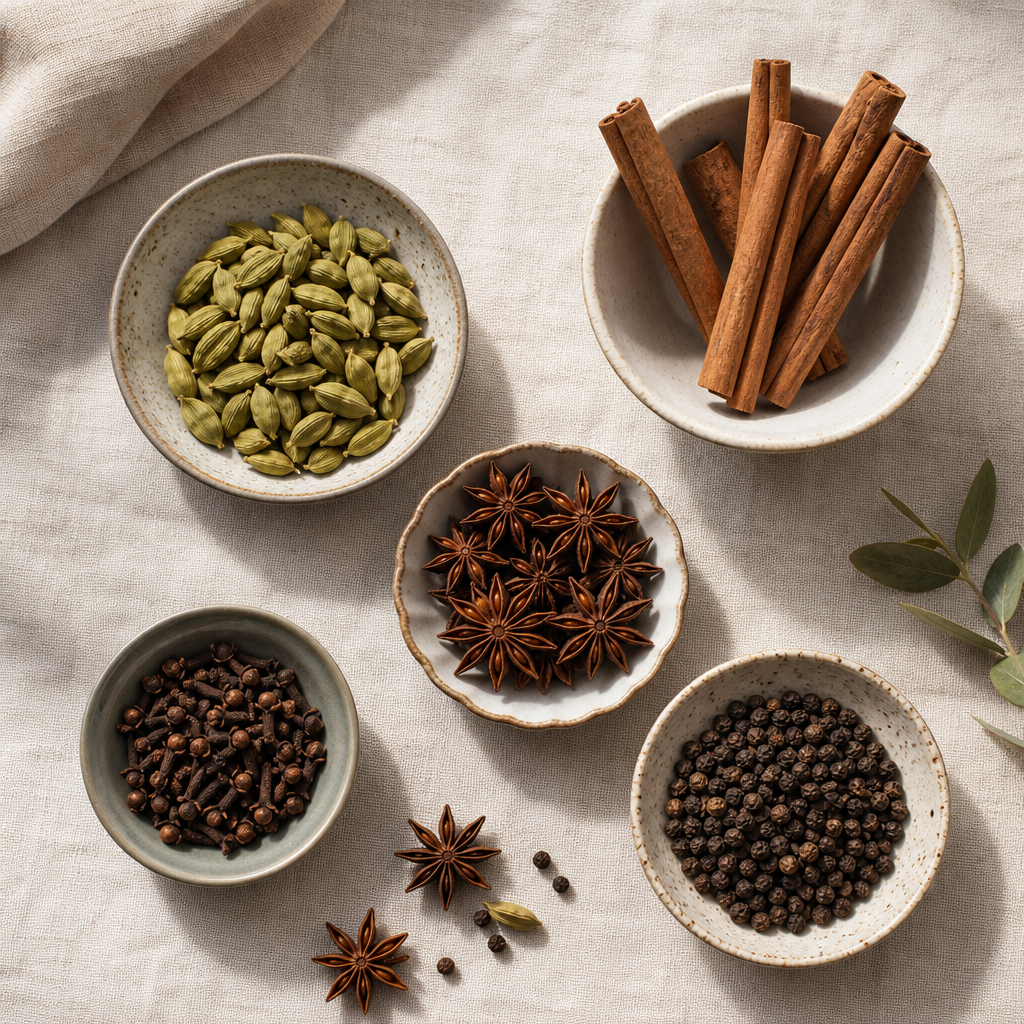
Green cardamom pods are the heartbeat of chai. Crack them with a mortar and pestle or the flat side of a knife to expose the seeds before adding them to the pan. Cinnamon, either a small piece of bark or half a teaspoon of ground, adds warmth without dominating. Fresh ginger, grated or sliced thin, provides heat and brightness that dried ginger does not replicate. Black peppercorns, used sparingly, give a subtle back-of-the-throat warmth that rounds out the sweetness.
Cloves appear in many recipes but require restraint. Two or three whole cloves in a two-cup batch is plenty. More than that and the eugenol in the cloves takes over and the chai tastes medicinal rather than spiced.
Optional Additions Worth Trying
Star anise adds a liquorice note that some people love and others find out of place. Fennel seeds produce a similar effect. Nutmeg, grated fresh over the finished cup rather than cooked in, adds a fragrant finish without turning bitter. Dried rose petals, used sparingly, are a Kashmiri addition that changes the character of the drink entirely. None of these are essential to a base chai recipe, and beginners should master the core five before experimenting.
"The chai you make at home should taste like something you built deliberately, not like something that came out of a box. Every decision, from the spice ratios to the tea variety, leaves a fingerprint in the cup." -- Farrer's Tea Tasting Notes, Lake District Roastery
Choosing the Right Base Tea for Chai
The base tea is where most homemade chai fails, and it is the variable that receives the least attention in generic guides. Chai needs a bold, tannic, full-bodied tea that can hold its own against milk and multiple spices. Delicate teas vanish entirely under those conditions.
Assam Loose Leaf
Assam is the gold standard for chai. Its malty, robust character is built for simmering with spices and milk. The high tannin level that makes Assam sharp when over-brewed actually works in your favour during chai preparation because the tannins bind with the milk proteins and mellow into a thick, rich flavour. A second-flush Assam, meaning leaves harvested from June to July, has the deepest malt notes and is the preferred choice.
Farrer's loose leaf tea range includes strong, full-bodied options that work precisely for this kind of brewing, where the tea needs to anchor a complex flavour profile rather than stand alone in a delicate cup.
Ceylon as an Alternative
A high-grown Ceylon, particularly from the Nuwara Eliya or Dimbula regions, produces a slightly lighter but still substantial chai. It works well if you prefer a less malty, more neutral base that lets the spices speak more clearly. The flavour is brighter and cleaner than Assam, which suits some spice profiles better, particularly ginger-forward blends.
Pro tip: When sourcing premium loose leaf tea for chai, avoid anything labelled fannings or dust. These ultra-fine grades are designed for teabags and go bitter rapidly under the extended heat that chai requires. Full-leaf or broken-leaf grades hold up far better during a five-minute simmer.
How to Brew Chai: The Method That Works
The following method produces a reliable, flavourful two-cup batch of chai. It scales up without any adjustment other than proportional increases in every ingredient.
Ingredients for Two Cups
300ml cold water, 300ml whole milk, 1.5 teaspoons full-leaf Assam loose leaf tea, 4 green cardamom pods (cracked), 1 small cinnamon stick (roughly 5cm), 4 slices of fresh ginger, 4 black peppercorns, 2 whole cloves, sugar or honey to taste.
Step-by-Step Method
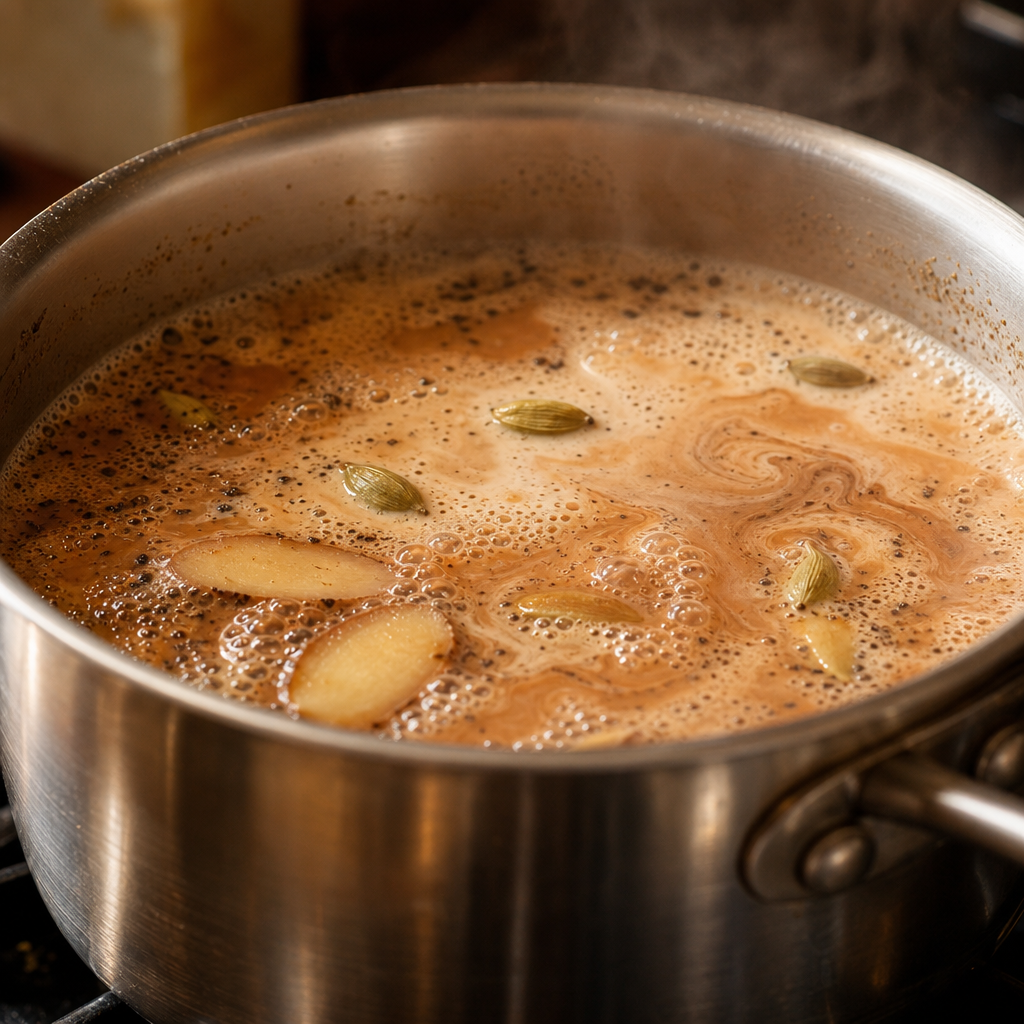
Add the cold water and all spices to a small saucepan. Bring to a simmer over medium heat and let it simmer for four to five minutes. This step extracts the volatile oils from the spices before the tea or milk are involved, which produces a cleaner, more vibrant spice flavour.
Add the loose leaf tea and stir once. Simmer for two more minutes. Do not boil aggressively at this stage, as violent boiling can make the tea go harsh. A gentle simmer is sufficient.
Pour in the milk and raise the heat slightly. Watch the pan carefully. As the chai approaches a boil it will rise quickly. Allow it to come up to just below a full boil, then reduce heat immediately and simmer for one more minute. This stage, called pulling the chai in some traditions, is where the milk integrates with the spice-infused liquid.
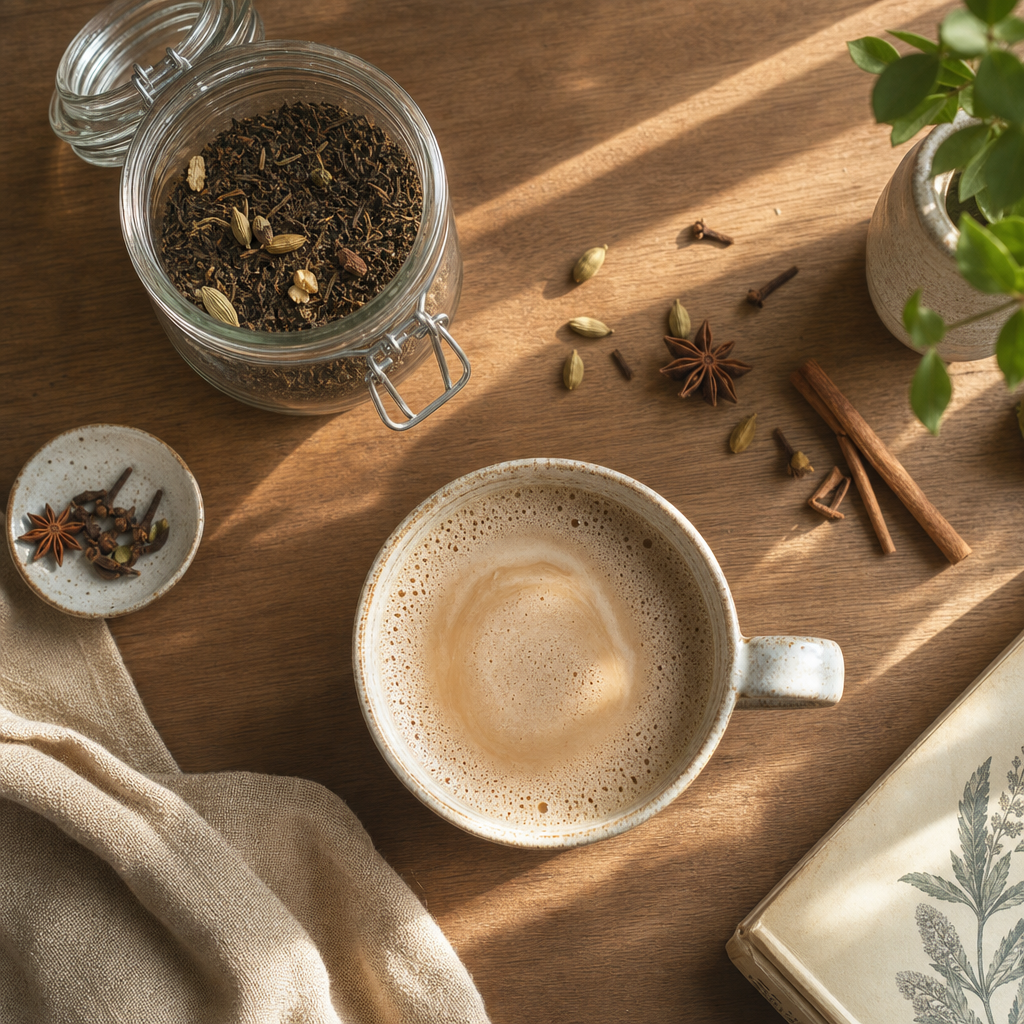
Remove from heat, add sweetener, stir, and strain through a fine mesh strainer directly into cups. Serve immediately.
Comparing Chai Brewing Methods
There are three realistic approaches to making chai at home, and they are not equal. The table below lays out the honest trade-offs between each method.
| Method | Flavour Quality | Time and Effort |
|---|---|---|
| Whole spices and loose leaf tea, simmered from scratch | Highest. Full spice complexity, fresh aroma, balanced bitterness. The standard every other method is measured against. | 10 to 12 minutes active time. Requires a small set of whole spices and a fine mesh strainer. Worth every second. |
| Pre-ground chai spice blend and loose leaf tea | Good to moderate. Convenience spice blends lose volatile oils quickly in storage. A blend bought within the month performs reasonably; a six-month-old blend produces flat results. | 8 minutes. Faster prep because there is no cracking or slicing. The quality ceiling is lower but it is a practical option for busy mornings. |
| Chai teabag or powder mix | Low to moderate. Most UK chai teabags contain dust-grade tea and dehydrated spice powders. The result is a one-dimensional, often over-sweet drink that lacks depth. Some specialist loose leaf chai bags are the exception. | 3 to 5 minutes. Minimal effort. The trade-off is a noticeable drop in flavour quality for anyone who has tried the scratch method. |
In practice, the scratch method is the right choice for anyone who wants to understand what chai genuinely tastes like. Once you have made it ten times, the prep work becomes automatic and feels no more laborious than making standard loose leaf tea properly.
Common Mistakes That Ruin Homemade Chai
A common mistake is adding the milk too early. If you add milk before the spices have had time to release into the water, the fat in the milk coats the spice particles and suppresses extraction. Always simmer the spices in water first, without any dairy present.
Using pre-ground cardamom instead of whole pods is another frequent error. Ground cardamom oxidises rapidly and loses its floral volatile compounds within weeks of being opened. Whole green pods retain their essential oils until you crack them, which means the flavour is dramatically more vivid.
Boiling the tea for too long is the third most common problem. Once loose leaf tea enters a hard boil for more than two minutes, the tannins become aggressively bitter. The fix is straightforward: add tea after the initial spice simmer, keep the heat at medium-low, and do not exceed two minutes of tea simmering before adding milk.
Using skimmed or semi-skimmed milk produces a noticeably thinner chai. The fat content in whole milk serves a functional purpose: it carries fat-soluble spice compounds and creates the creamy body that makes chai satisfying. If you need a non-dairy alternative, full-fat oat milk or coconut milk are the most compatible substitutes in terms of texture and flavour carry.
Finally, most beginners do not use enough tea. Chai is a two-to-one dilution at minimum, with water and milk both present. A single teaspoon of loose leaf tea for a 600ml batch will produce something almost too weak to taste. Start with 1.5 teaspoons and adjust upward from there until the tea flavour registers clearly alongside the spices.
Frequently Asked Questions
What is the difference between chai tea and masala chai?
Chai and masala chai refer to different things technically, but in UK usage they are used interchangeably. Masala chai is specifically the spiced milk tea made with whole spices. Plain chai in India refers to any tea. In the UK market, chai almost always means the spiced version, so the terms are functionally the same when buying or brewing at home.
Can I make chai tea with a teabag instead of loose leaf?
You can, but the result will be inferior. Most chai teabags use fine-grade tea dust that extracts quickly and turns bitter under extended heat. If you must use a teabag, choose a specialist whole-leaf or cut-grade chai bag from a reputable loose leaf tea supplier, and reduce your simmering time to no more than one minute once the bag is in the liquid.
How do I adjust chai for a stronger or spicier flavour?
For more heat, increase the fresh ginger and add an extra peppercorn or two. For more depth and body, increase the tea quantity rather than the spice quantity. For more warmth without additional heat, use a slightly larger piece of cinnamon bark. Adjust one variable at a time so you understand what each change does to the overall profile.
Is chai tea high in caffeine?
A properly brewed two-cup batch using 1.5 teaspoons of Assam loose leaf tea contains roughly 40 to 70mg of caffeine in total, which is comparable to a weak cup of filter coffee. The caffeine content is diluted by the milk and distributed across two servings. If you are caffeine-sensitive, reduce the tea quantity or use a naturally lower-caffeine base such as white tea, though the flavour profile will change significantly.
What milk works best for dairy-free chai?
Full-fat oat milk is the most reliable dairy-free substitute for chai in the UK. It has enough body to carry spice flavours and handles heat well without separating. Coconut milk works particularly well with cardamom and ginger-forward spice blends. Almond milk is thinner and can turn grainy under high heat, making it the least suitable option for the simmering method.
Where can I buy premium loose leaf tea for chai in the UK?
Farrer's, operating as the UK's oldest coffee roaster with over 200 years of history in the Lake District, offers a curated range of premium loose leaf teas including robust full-leaf options well-suited to chai brewing. Ordering online with next-day dispatch on orders over £35 means you can move from purchase to a properly brewed chai within 24 hours. Look specifically for full-leaf Assam or robust Ceylon options rather than blended teabag grades.
What does your homemade chai taste like right now, and which part of the process are you finding most difficult to get right? Share your experience below so other beginners can learn from the specific challenges you have encountered.
References
- Statista: UK tea market data and consumer trends for hot beverage categories
- Forbes: Coverage of speciality tea and artisan beverage market growth in the UK and globally
- Birkbeck, University of London: Food science research on spice compound extraction and flavour chemistry
- Food Standards Agency UK: Guidance on food safety, labelling, and ingredient quality for loose leaf tea and spice products
- USDA Agricultural Marketing Service: Research and grading standards for tea leaf quality classifications including Assam and Ceylon varieties


